
Horse H12 Concept hybrid engine unveiled, claims sub-3.3L/100 km
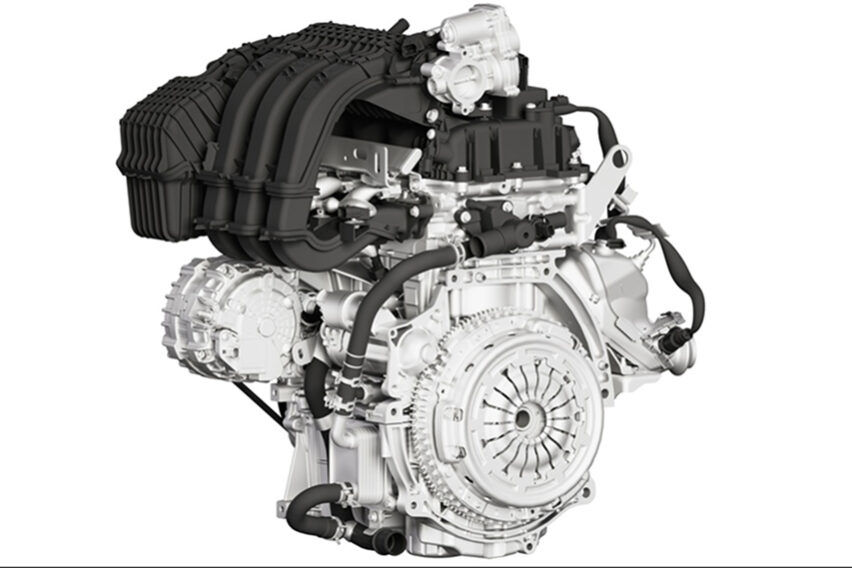
KUALA LUMPUR: Geely's Horse Powertrain and Repsol have revealed a new hybrid powertrain concept in Spain, and the main talking point is simple, it is still combustion-based, but it is built to burn 100% renewable gasoline while chasing much better efficiency than a typical current car.
KEY TAKEAWAYS
What is the HORSE H12 Concept?
The HORSE H12 Concept is a next-generation hybrid powertrain developed by Horse Powertrain’s Horse Technologies division with Repsol. It is designed to run on 100% renewable gasoline while improving fuel efficiency and reducing CO2 emissions.What fuel consumption does the HORSE H12 Concept claim?
Horse and Repsol claim the H12 Concept can achieve fuel consumption below 3.3 litres per 100 km under WLTP testing.Unveiled in Madrid this February 2026, the new setup is called the HORSE H12 Concept. It comes from Horse Technologies, a division under Horse Powertrain, working together with Repsol. The companies say the project is aimed at cutting emissions in the near term, instead of waiting for one single long-term solution to scale across the market.
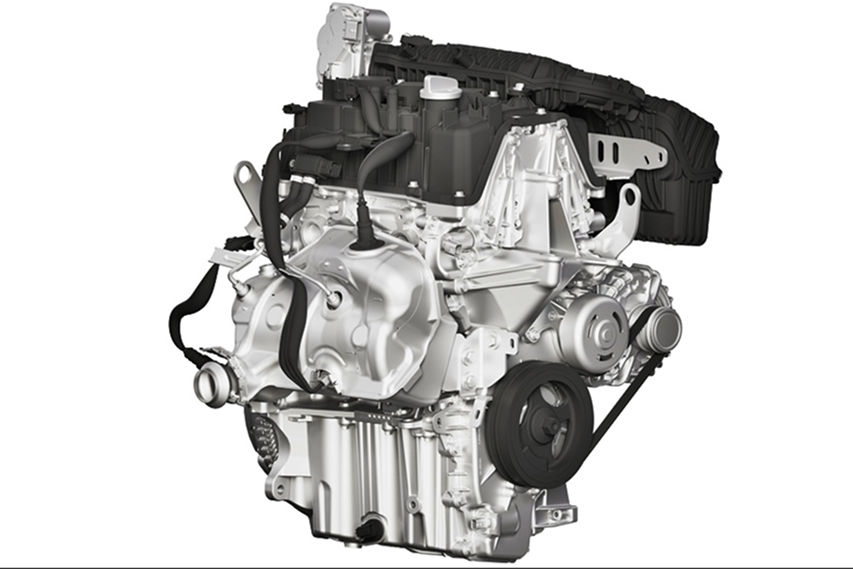 Photo from Horse Powertrain
The headline numbers are the ones they want everyone to focus on. Horse and Repsol claim the H12 concept reaches 44.2% peak brake thermal efficiency, and in WLTP testing it can bring fuel consumption down to below 3.3 litres per 100 km. They also claim this represents a 40% reduction in fuel consumption compared with the average new passenger car registered in Europe in 2023.
That is a big claim, and it is also the core argument behind this project, improving the efficiency of an internal combustion hybrid still matters, especially in markets where combustion vehicles continue to dominate.
According to the companies, a mid-size car using this powertrain and driven around 12,500 km a year would emit 1.77 tonnes less CO2 annually than a comparable vehicle using a conventional combustion powertrain and traditional fuel. The caveat here is important, that reduction figure depends on the use of Repsol’s 100% renewable gasoline.
What changed in the engine
The HORSE H12 Concept is based on an evolution of the HR12 engine, but the companies say it is not just a minor tune-up job. The concept engine gets a new combustion system, a 17:1 compression ratio, a next-generation exhaust gas recirculation system, an optimised turbocharger, and a high-energy ignition system.
Beyond the engine itself, the hybrid system also includes an updated hybrid gearbox with revised energy management. The companies also say internal friction has been reduced, helped by new lubricants developed by Repsol.
In other words, this is not being pitched as one silver-bullet technology. It is a bundle of improvements across combustion, hybrid control, lubrication, and transmission efficiency, all working together to get the final result.
Prototypes already built, demonstrator car due next
Horse and Repsol say the project has already produced two prototypes and that performance has been validated. The work was led by teams from Horse Technologies in Valladolid and the Repsol Technology Lab in Madrid.
The next step is a demonstrator vehicle, which the companies say is expected to be shown in early 2026. They are also framing this as the first step toward industrial production of highly efficient hybrid engines, rather than just a one-off engineering exercise.
Why they are pushing this angle now
The broader message from both companies is not really just about one engine. It is about regulation, and about keeping the door open for multiple pathways to decarbonisation.
Their argument is that Europe still has a mostly combustion-based vehicle fleet today, so if policymakers only focus on one route, especially full electrification, they risk slowing down emissions reductions in the short term. Horse and Repsol are pushing for what they call a technology-neutral framework, one that allows efficient hybrids, renewable fuels, EVs, hydrogen and other low-carbon solutions to develop in parallel.
They point to ACEA data showing that more than 97% of Europe’s existing vehicle parc is still combustion-based. From their perspective, that is why highly efficient engines and renewable fuels should be treated as part of the transition, not as a distraction from it.
They also want Europe’s revised CO2 standards for light-duty vehicles to provide a long-term framework beyond 2035, specifically one that recognises efficient combustion engines running on renewable fuels.
What Repsol is doing on the fuel side
Repsol is also using this announcement to highlight that it now has fuel supply to support this argument, at least in Spain.
The company says it reached an industrial-scale milestone in October by producing gasoline of 100% renewable origin at its Tarragona facility. It adds that this fuel can be used in existing gasoline vehicles without modifications.
Repsol’s 95-octane renewable gasoline, sold as Nexa 95, is already available at 30 service stations in Spain, according to the company. On the diesel side, Repsol says it has renewable diesel at close to 1,500 service stations across Spain and Portugal, which it describes as the largest renewable fuel distribution network in Europe.
It also says it is the leading producer of renewable fuels in the Iberian Peninsula, with a dedicated plant in Cartagena already operating, a second plant in Puertollano due to start in 2026, and a demonstrator e-fuels plant in Bilbao also planned for 2026.
Luis Cabra, Executive Managing Director of Energy Transition, Technology, Institutional Affairs and Deputy CEO of Repsol, states: “This collaboration shows that decarbonization can be accelerated through innovative and accessible technological solutions. The use of 100% renewable fuels is a net zero emission solution, complementary to electric vehicles, for decarbonizing the transport sector. Supporting clear and ambitious regulation that drives investment in renewable fuels and highly efficient engines is essential for Europe to reduce transport emissions faster in a more competitive and effective manner.”
Patrice Haettel, Chief Operating Officer at Horse Powertrain and Chief Executive Officer at Horse Technologies, adds: “The HORSE H12 Concept is an example of how highly efficient engines and renewable fuels can reduce emissions today, without waiting for future solutions. As a company, we believe that relying on a single technology is not the fastest way to cut emissions. This is why we advocate a technology neutral approach that enables innovation across all solutions - electric, hybrid, range extenders and low-carbon fuels.”
The bigger picture
Whether this becomes a production solution at scale depends on two things, cost and regulation. The technical side looks promising on paper, but the real test is whether renewable fuel supply can grow fast enough and whether policymakers continue to allow these kinds of hybrid-combustion solutions to count toward future emissions goals.
Still, this is a useful reminder that the transition story is not only about battery EVs. For companies like Horse and Repsol, the pitch is that cleaner combustion plus renewable fuel can cut emissions now, especially in markets where the existing vehicle fleet is nowhere near ready for a full switch.
Also Read: 2026 Proton S70 gets 1.5T i-GT 4-cylinder, 0-100 km/h in 7.5s, prices from RM68,800

Proton Car Models
-

Proton S70 -
Proton Iriz -
Proton Persona -
Proton X90 -
Proton e.MAS 7 -
Proton X70 -
Proton e.MAS 5 -
Proton X50 -
Proton Saga -
Proton e.MAS 7 PHEV


KLIMS 2026


Malaysia Autoshow
Trending & Fresh Updates
- Latest
- Popular
-

-
-
-
-
-
-
-
-
-
Electric Car: A comprehensive buying guidePurva Jain, Jul 01, 2024
-
Must watch automotive movies for enthusiastsPurva Jain, Feb 21, 2024
-
Car Rust-proofing 101: All you need to knowPurva Jain, Feb 15, 2024












You might also be interested in
- News
- Featured Stories




Proton Featured Cars
- Latest
- Popular
-
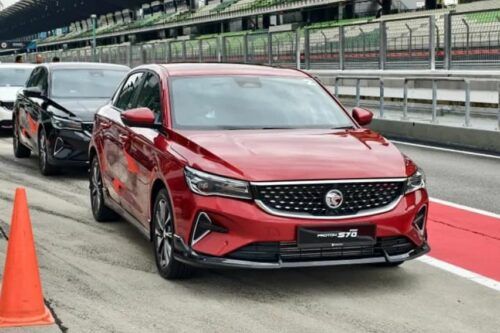
 Proton S70RM 59,800 - 89,800 OTR Price SamarahanEMI : RM 698 x 843.97 (30 Reviews) VIEW OCTOBER OFFERS
 -
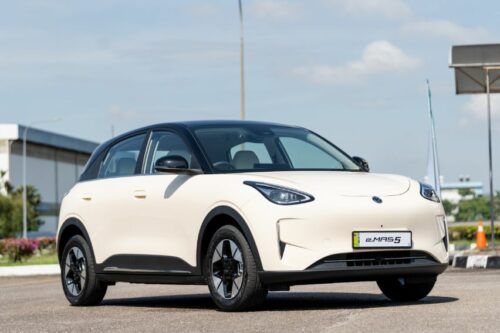
Proton e.MAS 7RM 103,800 - 119,800 OTR Price SamarahanEMI : RM 1,212 x 844.19 (16 Reviews) VIEW OCTOBER OFFERS
-
Proton X90RM 106,800 - 122,800 OTR Price SamarahanEMI : RM 1,247 x 844.26 (27 Reviews) VIEW OCTOBER OFFERS
-
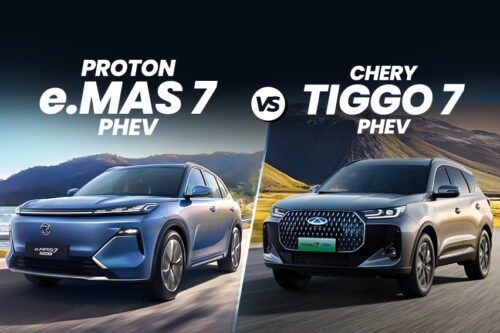
Proton e.MAS 7 PHEVRM 109,800 - 129,800 OTR Price SamarahanEMI : RM 1,282 x 84Write a Review VIEW OCTOBER OFFERS
-
Proton X70RM 99,800 - 112,800 OTR Price SamarahanEMI : RM 1,165 x 844.18 (80 Reviews) VIEW OCTOBER OFFERS
-
Proton SagaRM 38,990 - 49,990 OTR Price SamarahanEMI : RM 455 x 844.23 (79 Reviews) VIEW OCTOBER OFFERS
-
Proton S70RM 59,800 - 89,800 OTR Price SamarahanEMI : RM 698 x 843.97 (30 Reviews) VIEW OCTOBER OFFERS
-
Proton IrizRM 42,800 - 57,300 OTR Price SamarahanEMI : RM 499 x 844.01 (69 Reviews) VIEW OCTOBER OFFERS
-
Proton PersonaRM 47,800 - 58,300 OTR Price SamarahanEMI : RM 558 x 844.15 (75 Reviews) VIEW OCTOBER OFFERS
-
Proton X90RM 106,800 - 122,800 OTR Price SamarahanEMI : RM 1,247 x 844.26 (27 Reviews) VIEW OCTOBER OFFERS
-
Proton e.MAS 7RM 103,800 - 119,800 OTR Price SamarahanEMI : RM 1,212 x 844.19 (16 Reviews) VIEW OCTOBER OFFERS
-
Proton X70RM 99,800 - 112,800 OTR Price SamarahanEMI : RM 1,165 x 844.18 (80 Reviews) VIEW OCTOBER OFFERS
Latest Proton Car Videos on Zigwheels

-
Proton e.MAS 7 PHEV Premium — the smartest car buy in Malaysia right now?25 Jun, 2026 .
-
2025 Proton X50 Facelift Review - Still The One To Buy?26 Sep, 2025 .
-
Proton eMAS 7 launched | Walkaround | Driving impressions | Variant Comparison19 Dec, 2024 .
-
2024 Proton S70 Review - Best bang for buck compact sedan?26 Jun, 2024 .
-
2024 Proton X90 Premium Part-319 Mar, 2024 .
-
2024 Proton X90 Premium Part-219 Mar, 2024 .
-
2024 Proton X90 Premium Part-119 Mar, 2024 .