Review: BMW i5 eDrive40 M Sport Pro CKD - Not just another fast appliance
What exactly is a premium EV supposed to feel like?
KEY TAKEAWAYS
What is the range of the BMW i5 CKD?
BMW quotes the i5 eDrive40 with up to 582 km of WLTP range.What is the charging speed of the BMW i5 CKD?
The i5 supports up to 205 kW DC fast charging and up to 22 kW AC charging.Because the answer, at least in 2026, still isn’t as obvious as it should be.
Some electric cars are fast. Some are packed with tech. Some look futuristic enough to scream, “Look at me, I’m the future.” Some try to wow you with giant screens, mad acceleration figures, lounge-like cabins or gimmicks dressed up as innovation.
But the problem with many modern EVs, especially the expensive ones, is that once the novelty wears off, you start to realise they don’t always feel especially complete. Impressive, yes. Clever, maybe. Fast, often. But cohesive? Not always.
And that is what makes the locally assembled BMW i5 so interesting.
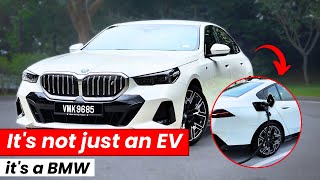
Because this is not an EV that feels like it was built to impress you in the first five minutes and then leave you emotionally stranded after that. This feels like a car shaped by people who still understand what a premium executive sedan is supposed to do. Better still, it feels like a BMW 5 Series first and an EV second, which is probably the biggest compliment I can give it.
Because the 5 Series has always occupied a very specific sweet spot. It is not as overtly sporty as a smaller BMW, nor is it supposed to be. Neither is it meant to be some rolling sofa that isolates you so completely from the road that driving becomes a form of supervised lounging.
The best 5 Series cars have always balanced comfort and control with real finesse. They are meant to feel expensive, intelligent and quietly satisfying. They are meant to handle themselves with composure, whether you are gliding through traffic on the way to a meeting or taking the long way home just because the road ahead looks inviting enough.
The i5 carries that spirit better than I expected.
Now that it is assembled in Malaysia, the conversation around it becomes even more interesting, because the CKD move does more than simply make the price easier to swallow. It also sharpens the i5’s positioning.
This now feels like a more convincing package, a more logical one, and frankly a more relevant one for our market. With local assembly, BMW has not stripped the car of its soul or reduced it into some diluted premium product wearing a famous badge. If anything, the CKD version feels more cleverly put together.
Yes, there are differences versus the earlier imported car. Yes, some things are missing. But this is where the i5 CKD surprises, because none of those omissions feel serious enough to puncture the appeal of the whole thing.
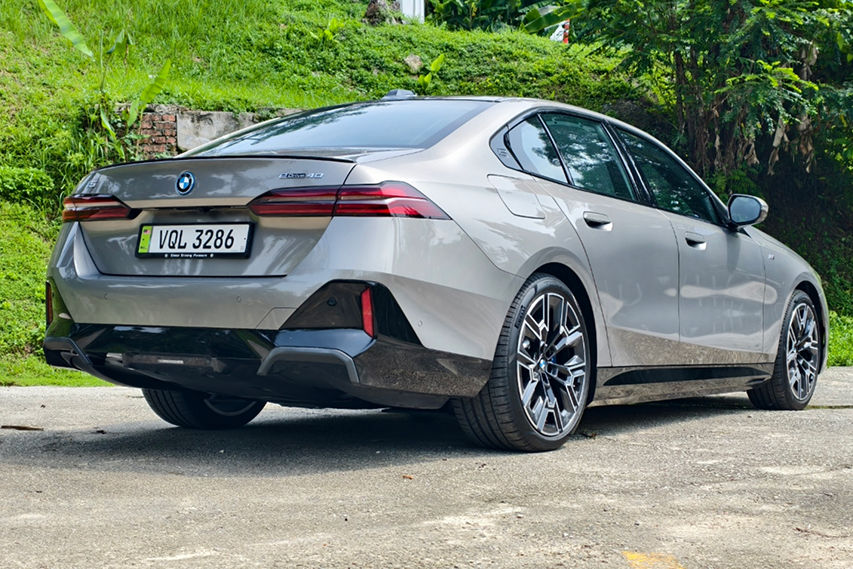
Let’s start with what has changed.
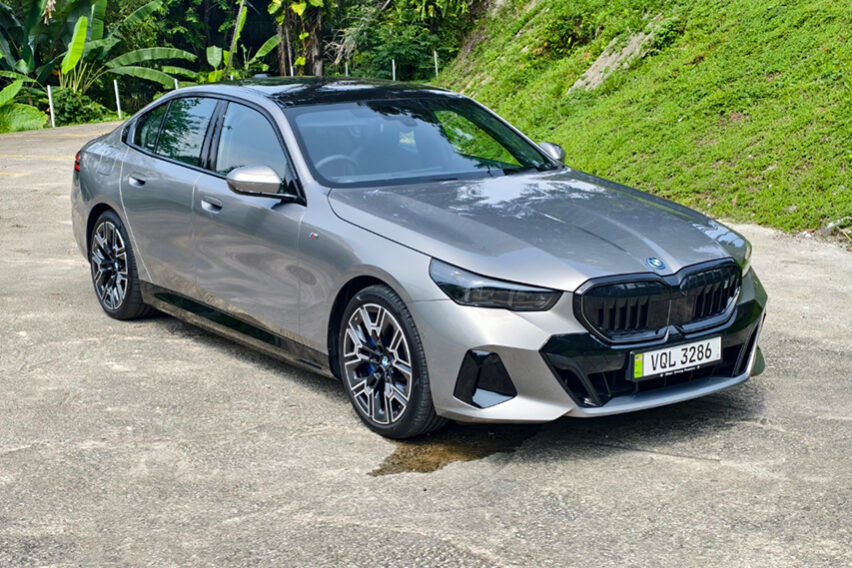
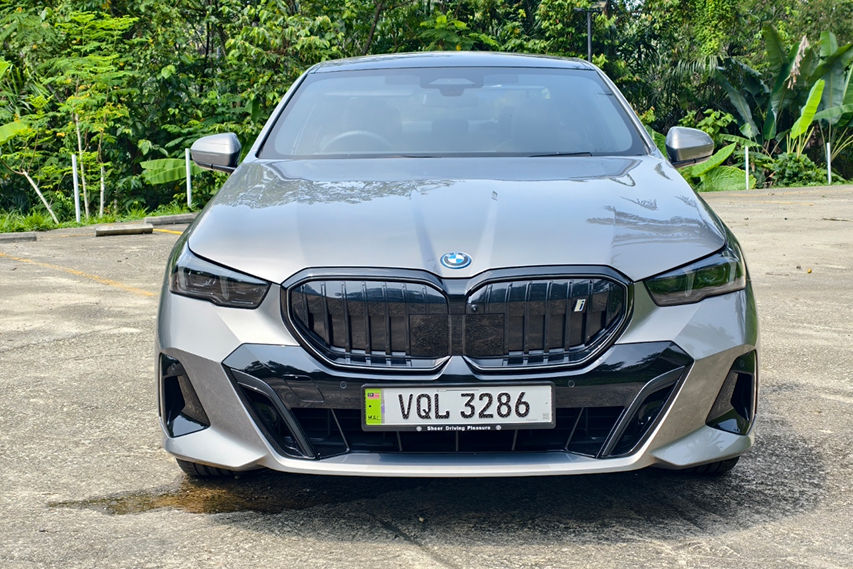
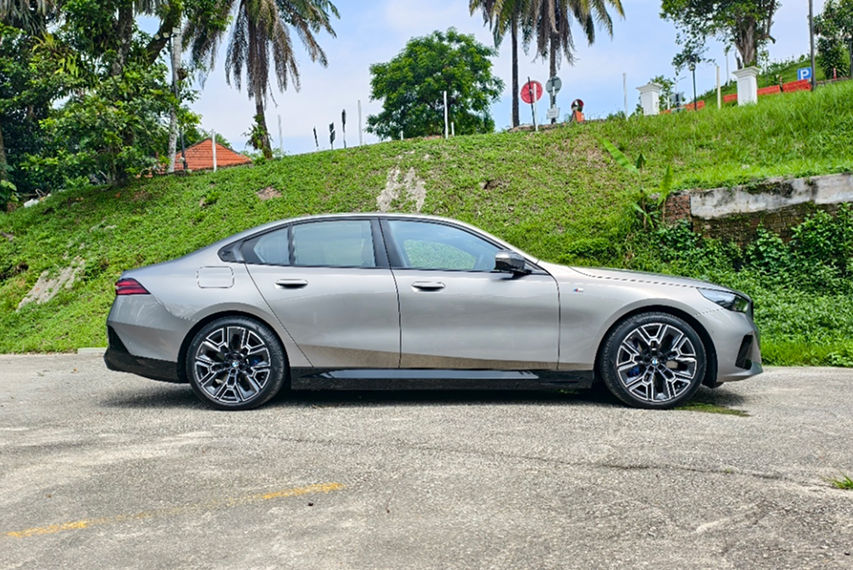
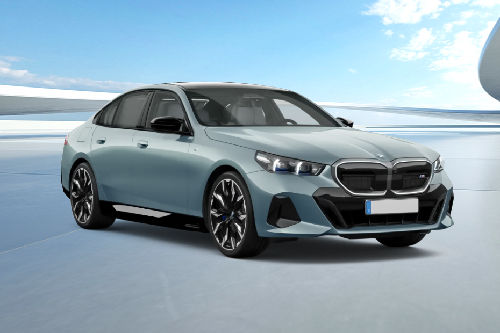
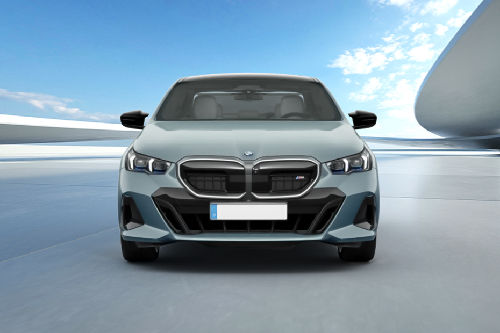
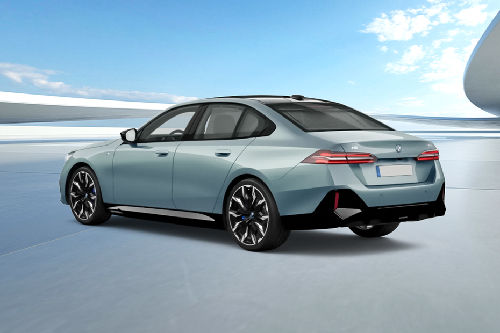
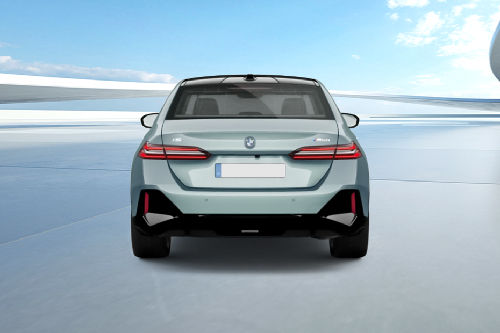
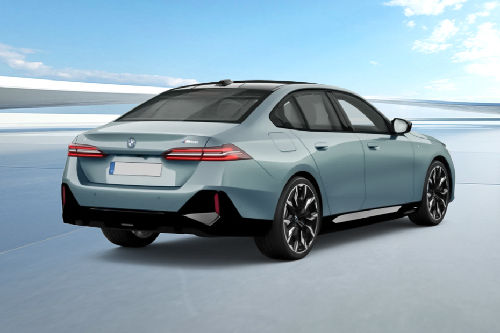
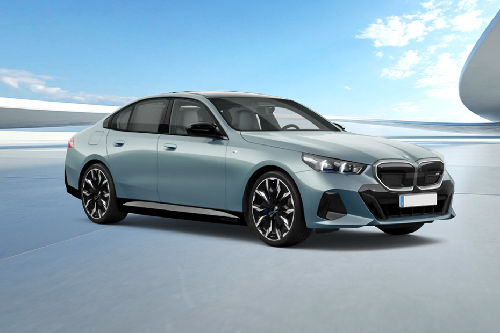
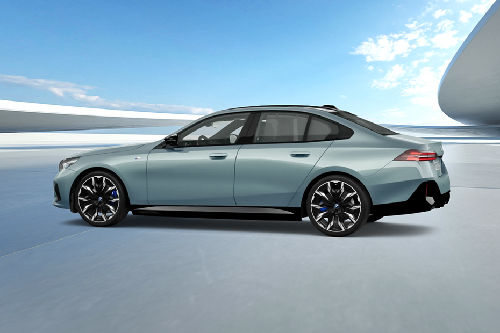
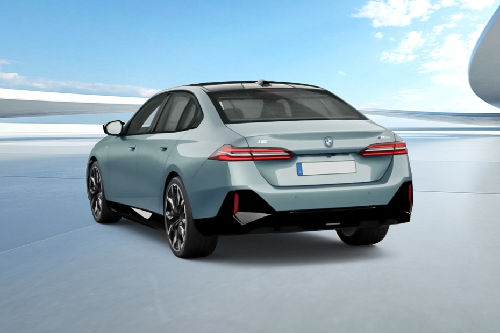
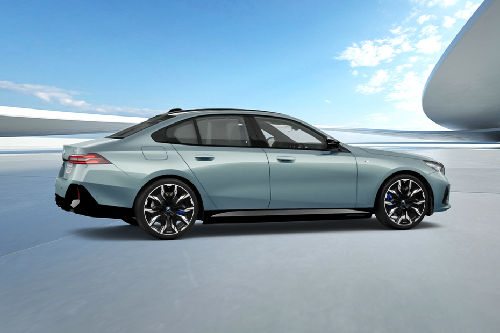
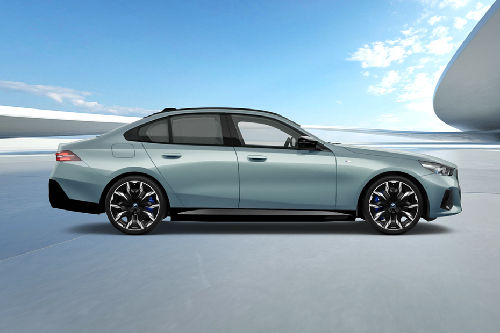
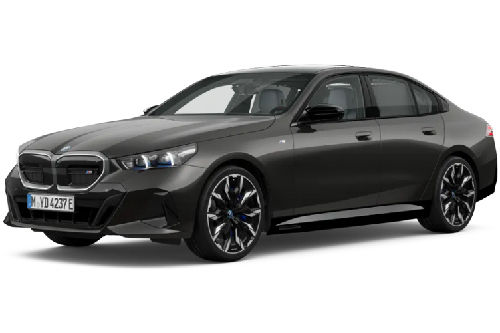
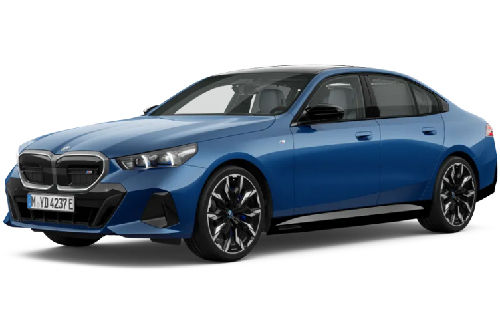
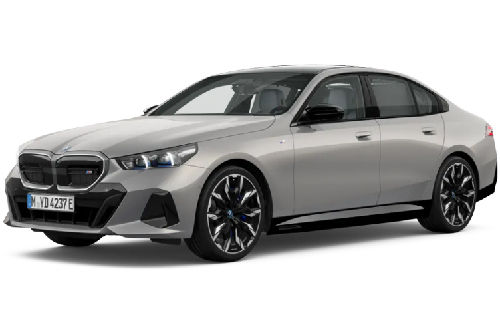
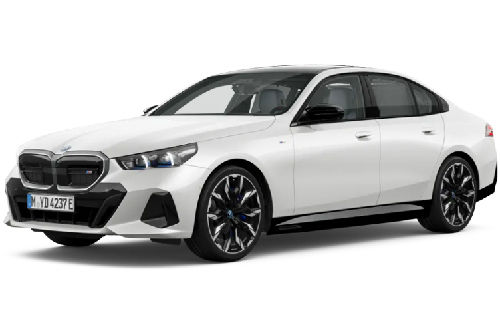
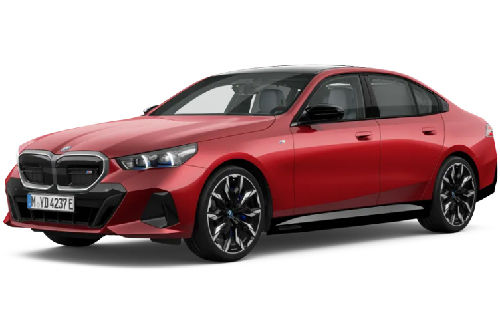
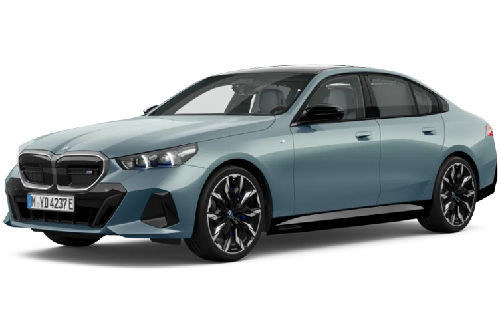
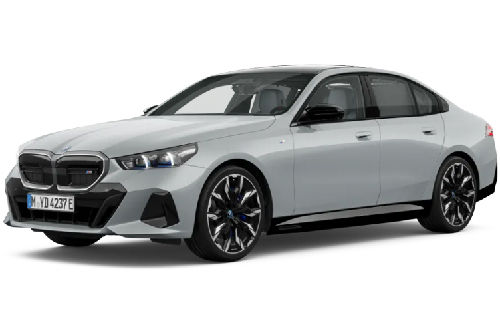
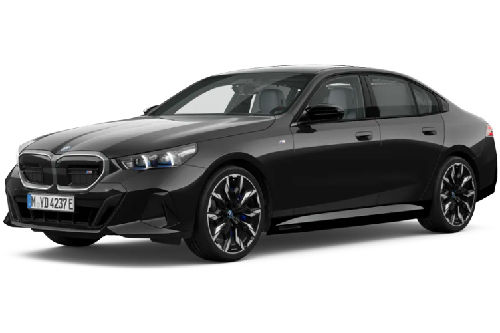
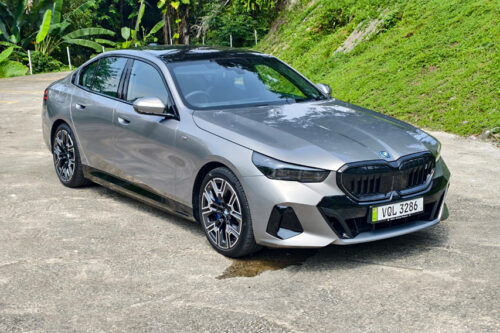
Visually, the CKD i5 gets the M Sport Pro treatment, which adds just enough bite without pushing the car into try-hard territory. The Shadowline treatment for the LED tail lamps looks neat, while the slim gloss-black boot lid spoiler gives the rear end a slightly sharper, more tailored finish.
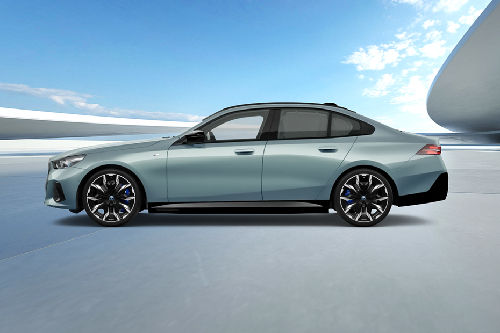
These are not dramatic changes. They are not the sort of updates your neighbours will notice from 50 metres away. But that is exactly the point. The i5 does not need to shout. It already has the proportions and presence of a proper executive sedan. Long body, low stance, expensive surfacing, and enough visual width to make lesser cars around it look a touch apologetic. The M Sport Pro touches simply tighten the suit.
Inside is where the CKD story becomes more meaningful.
The panoramic glass roof is back, and it genuinely helps the i5 feel more special from the inside. Premium cabins are not defined by size alone. They are defined by atmosphere, and the glass roof helps the i5 feel more open, more airy and more special in the way a car of this level should.
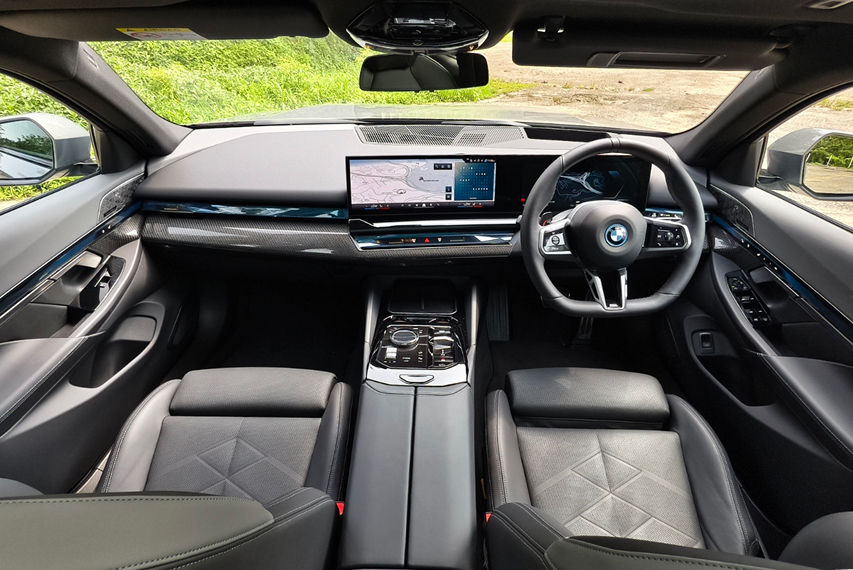
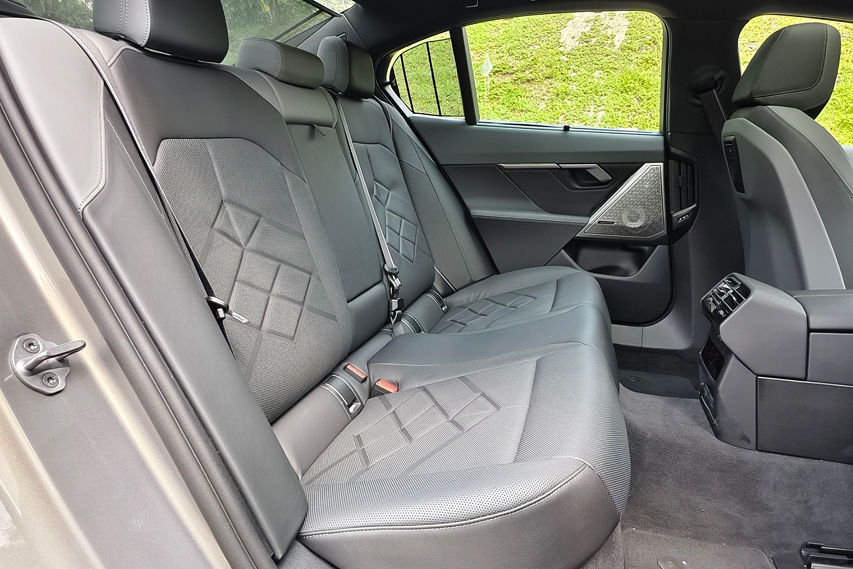
The new dark silver M accent trim with carbon-fibre and high-gloss silver threads also works well, lending the interior a more modern, more sophisticated flavour than plain metallic trim ever could. Then there are the Atlas Grey Merino leather seats, which look rich and mature without feeling overdesigned. There is a calmness to the interior presentation, a sense that BMW knows this buyer does not need visual fireworks to feel impressed.
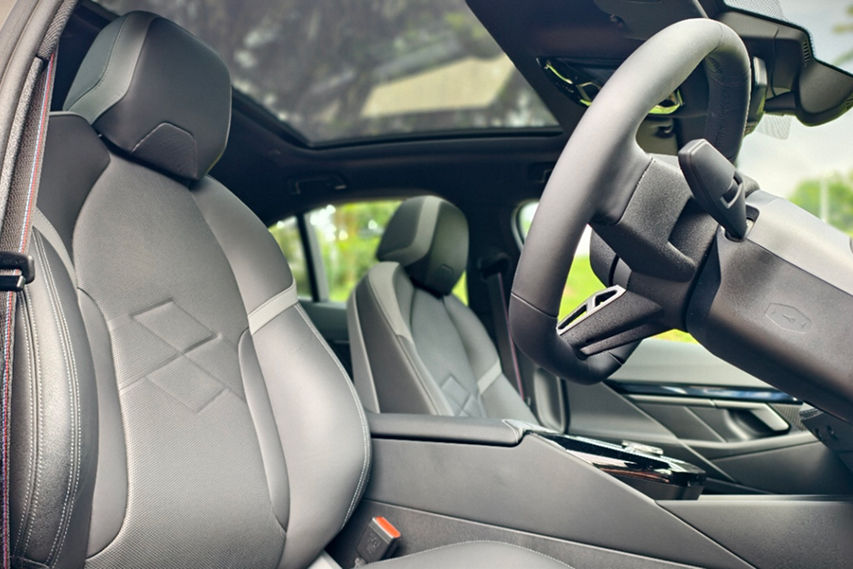
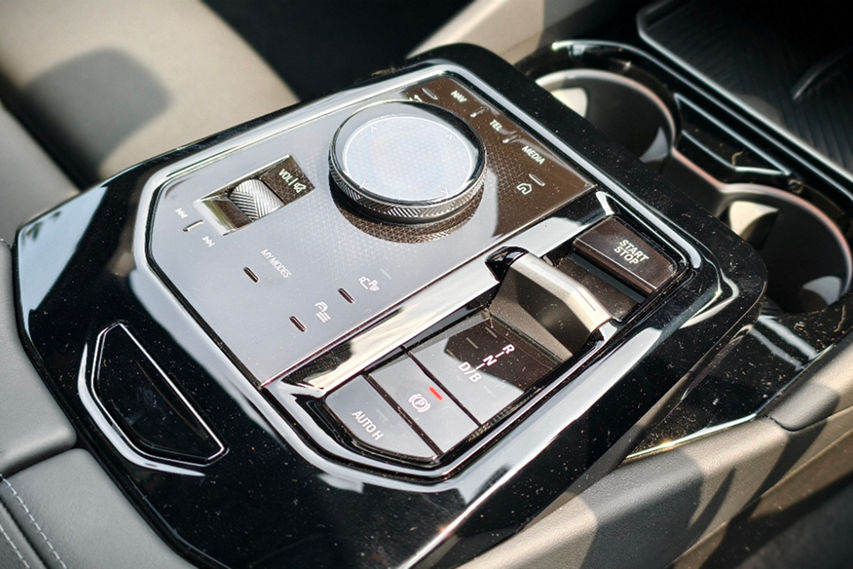
Of course, not everything made the cut. The ventilated seats are still absent, and so is the delightful crystal iDrive knob from the original launch car. If you are the sort who loves ticking off every single luxury item on a spec list, you will notice those omissions. But here is the thing, I really do not think most people will miss them for long.
The crystal knob was lovely. It looked expensive, felt jewel-like and gave the cabin that extra flourish of theatre. But after the initial appreciation, it was never central to the experience of the car. The ventilated seats are more relevant in a hot country like ours, fair enough, but they are not enough to undermine what the i5 still gets. And what it still gets is a lot.
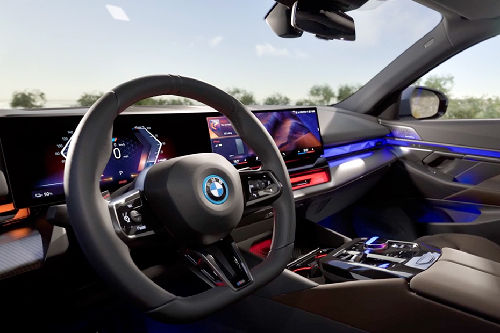
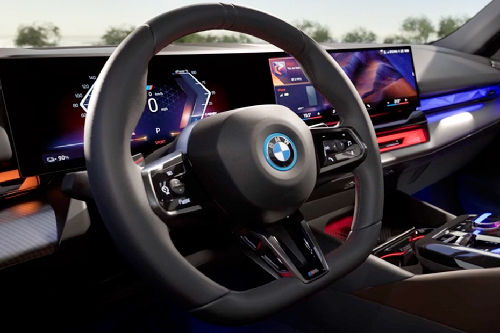
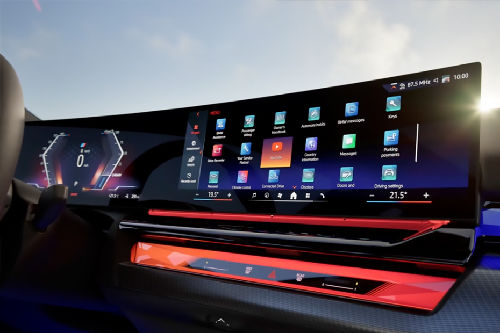
The Curved Display remains, combining a 12.3-inch instrument panel and a 14.9-inch central touchscreen, along with a head-up display.
You still get the Interaction Bar with dynamic ambient lighting, powered front sport seats with memory and lumbar support, four-zone climate control, wireless charging, a 17-speaker Bowers & Wilkins sound system, powered boot, interior camera, rear-wheel steering, adaptive suspension, and a full suite of driver assistance systems. In other words, the big-ticket items, the things that actually shape how the car feels to live with, are all still here.
So no, the CKD i5 does not feel like a cheaper i5. It feels like a smarter-packaged i5.
That distinction matters, because premium buyers in Malaysia are not necessarily looking for the cheapest way into a badge. They are looking for justification. They are looking for a car that feels worth the money, not just expensive for the sake of being expensive. The i5 CKD makes a stronger case on that front because it feels complete where it counts.
It also helps that BMW has given it one of the more underrated ownership advantages in this class, and that is the 22 kW AC charging capability.
This might sound like a small thing compared to the usual EV headline numbers, but it really is not. In fact, for the sort of buyer who is actually going to buy an i5, this may matter more than the DC charging figure. Why? Because most owners are not going to live their lives around public fast chargers. They are going to charge the car at home, where it belongs. That is the point of premium EV ownership. It should integrate into your daily routine, not interrupt it.
The i5 supports DC fast charging up to 205 kW, which is perfectly respectable and enough to get you from 10 to 80 percent in around half an hour. Useful, no doubt. But the real gem here is AC charging. With 11 kW AC, a full charge takes a little over eight hours, which is already manageable overnight.
But with 22 kW AC, that drops to just over four hours. That is not just a number for spec-sheet bragging. That is a genuine lifestyle benefit. It means more flexibility. It means you can top up quicker if your schedule changes. It means the car works harder around your life, rather than the other way around.
Range, too, is sorted. BMW quotes up to 582 km, and whether you hit that exact number in the real world is not really the point. The i5 has enough battery, enough efficiency and enough overall polish to make daily commuting, city driving and even outstation trips feel normal. That is what a premium EV should do. It should normalise electric ownership, not turn it into a series of planning exercises.
But the real reason the i5 works, and the real reason I came away impressed by it, is the way it drives.
This is where many EVs, even expensive ones, still stumble. They can be absurdly quick in a straight line, yet feel dead from the driver’s seat. They can be quiet and comfortable, yet dynamically numb. They can pile on technology, yet never quite give you that sense of mechanical cohesion that defines a truly good car.
The i5 avoids that trap.
The first thing that stands out is the ride. It is silky smooth, to the point where calling it refined almost feels inadequate. This car rides with the kind of polish that makes you instantly understand where the money went.
There is a softness to the way it rounds off imperfections, but it is never loose or floaty. It does not wallow. It does not bounce clumsily after a bump. It does not feel like it is masking weight with suspension trickery. Instead, it settles itself with real discipline. There is composure in the body control, a sense that the engineers did not just aim for comfort but for quality of movement.
And that, to me, is what separates truly expensive cars from those that merely cost a lot.
On Malaysian roads, where surfaces can range from smooth expressways to cratered urban stretches within a single journey, the i5 does not simply survive bad roads, it takes the edge off them. It calms the day down. It makes traffic less irritating. It smooths over the little frustrations that usually chip away at your patience by the end of a long drive. That is a big part of what luxury should be, and the i5 nails it.
Then there is the handling.
No, this is not some lightweight sports sedan. It is a large, heavy, fully electric executive car. But despite that, it still carries itself in a way that feels recognisably 5 Series. And that is important, because the 5 Series has always been defined by balance.
A proper one should feel composed, precise and reassuring. It should not dart around like a terrier, nor should it roll over into corners with the reluctance of a bored old limo. There should be confidence in the front end, discipline in the body and enough steering precision to make the car feel like it is working with you rather than merely transporting you.
The i5 delivers that.
There is a maturity to the way it changes direction, a clean, well-resolved flow to the way it carries speed through corners. It feels tied down. It feels measured. It feels engineered. That may sound obvious for a BMW, but in the EV world it is not. Too many rivals feel effective rather than enjoyable, competent rather than characterful.
They give you performance, but not always connection. The i5, by contrast, still feels like it has a dynamic backbone. It is not trying to wow you with synthetic sportiness or fake aggression. It is simply, and quietly, a very well-resolved car.
That is why I think the i5 CKD will appeal to a very specific, very sensible kind of buyer in Malaysia. Someone who wants an EV, but not one that feels like a gadget.
Someone who appreciates the idea of electrification, but does not want to abandon the traditional virtues of a premium executive sedan. Someone who values badge, refinement and engineering depth more than spectacle. Someone who may spend a great deal of time on the road and wants a car that reduces stress, not just emissions.
This is not the EV for the loudest person in the room. It is not for the buyer chasing the most outrageous design, the most dramatic acceleration, or the biggest performance-for-money headline. It is for someone with taste. Someone who still cares about how a car feels beneath them. Someone who can recognise the difference between technology for the sake of it and genuine sophistication.
And that, more than anything, is what the BMW i5 CKD gets right.
It feels rounded. It feels expensive in the right ways. It feels smartly specified, thoughtfully assembled and dynamically faithful to the name on its boot lid. Yes, the ventilated seats would have been nice. Yes, the crystal iDrive knob had charm. But once you step back and consider the whole car, those things barely register.
Because what you are left with is a handsome, deeply polished, properly premium electric 5 Series that now makes even more sense in Malaysia.
And in a market crowded with EVs trying very hard to feel futuristic, the i5 does something far more difficult.
It feels right.
BMW i5 eDrive40 M Sport Pro CKD Specifications
Drivetrain: Fully electric, rear-wheel drive (RWD)
Max Power Output: 340 hp (250 kW)
Max Torque: 400 Nm
Transmission: Single-speed automatic
Seats: 5
0–100 km/h: 6.0 seconds
Top Speed: 193 km/h
Battery / Range: 81.2 kWh usable battery, up to 582 km (WLTP)
Charging: Up to 205 kW DC fast charging, up to 22 kW AC charging
Safety Features: 6 airbags, TPMS, rear-wheel steering, Adaptive Suspension Professional, full ADAS suite including AEB, adaptive cruise control with stop & go, and lane-keeping / lane-centering related functions
Price: RM368,800


BMW i5 Related Stories
- News
- Expert Review
-
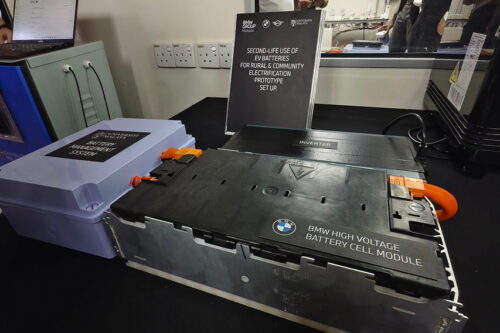
 Old BMW EV and PHEV batteries could soon power rural homes in Malaysia
KUALA LUMPUR: BMW Group Malaysia and Universiti Malaya are exploring how retired electric vehicle batteries can be repurposed into energy...
Read MoreAdam Aubrey, May 07, 2026 -
BMW i5 eDrive40 M Sport Pro Now CKD in Malaysia, First Locally Assembled BMW EV From RM368,800
KUALA LUMPUR: BMW Group Malaysia has introduced the locally assembled BMW i5 eDrive40 M Sport Pro, a big milestone because...
Read MoreAdam Aubrey, Jan 15, 2026 -
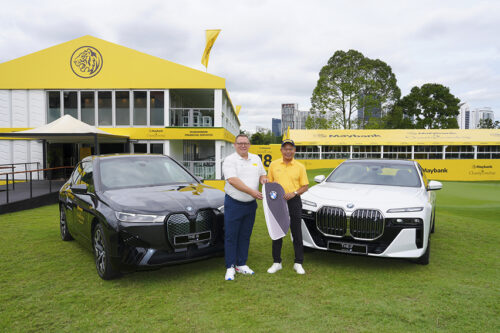
BMW Malaysia becomes official E-Mobility Partner for Maybank Championship 2025
KUALA LUMPUR: BMW Malaysia is committed to sustainability and promoting eco-friendly mobility solutions in the country. In line with this...
Read MoreSippi Vig, Oct 28, 2025
-
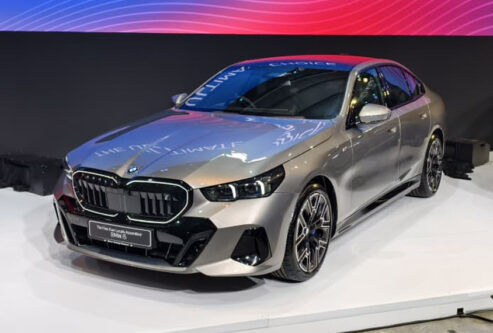
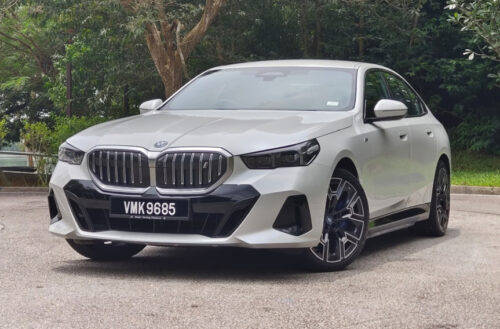
Review: 2024 BMW i5 eDrive40 M Sport - The EV that drives like a true BMW, the ultimate driver's EV?
With the influx of Chinese EVs this year, it’s easy to get swept up in the buzz of value-for-money electric...
Read MoreAdam Aubrey, Aug 30, 2024
BMW Car Models
-

BMW X1 -
BMW 3 Series Sedan -
BMW X3 -
BMW 5 Series Sedan -
BMW 2 Series Gran Coupe -
BMW X4 -
BMW iX1 -
BMW iX2 -
BMW iX -
BMW X7
Don't Miss
KLIMS 2026


Malaysia Autoshow
Trending & Fresh Updates
- Latest
- Popular
-
 Suzuki opens a new 1S centre in JuruSippi Vig, Sep 14, 2026
 -
-
-
-
-
-
-
-
-
Electric Car: A comprehensive buying guidePurva Jain, Jul 01, 2024
-
Must watch automotive movies for enthusiastsPurva Jain, Feb 21, 2024
-
Car Rust-proofing 101: All you need to knowPurva Jain, Feb 15, 2024




BMW Featured Cars
- Latest
- Upcoming
- Popular
-
-
BMW iX1RM 250,800 - 275,800 OTR Price Sg BesiEMI : RM 2,930 x 844.09 (11 Reviews) VIEW SEPTEMBER OFFERS
-
BMW 5 Series SedanRM 332,800 - 349,800 OTR Price Sg BesiExpected Launch TBA Alert Me When Launched
-
-
BMW 3 Series SedanRM 265,800 - 388,800 OTR Price Sg BesiEMI : RM 3,105 x 844.38 (26 Reviews) VIEW SEPTEMBER OFFERS
-
BMW X3RM 304,800 - 357,800 OTR Price Sg BesiEMI : RM 3,561 x 844.36 (25 Reviews) VIEW SEPTEMBER OFFERS
-
BMW 5 Series SedanRM 332,800 - 349,800 OTR Price Sg BesiEMI : RM 3,888 x 844.56 (25 Reviews) VIEW SEPTEMBER OFFERS
-
BMW 2 Series Gran CoupeRM 218,800 OTR Price Sg BesiEMI : RM 2,556 x 844.42 (31 Reviews) VIEW SEPTEMBER OFFERS
-
Latest BMW i5 Car Videos on Zigwheels

-
2026 BMW i5 CKD Review Malaysia - Has BMW Built the EV for People Still Not Sold on EVs?10 Apr, 2026 .
-
BMW i5 REALLY the Best EV for City Driving? Let's find out15 Oct, 2024 .
Compare & Recommended
BMW i5
RM 479,800 - 3.3 Million
BMW i5 Price
|
|
|
|
|
|
Seating Capacity
5
|
5
|
5
|
5
|
5
|
|
Power
601
|
296
|
258
|
204
|
190
|
|
Transmission Type
Automatic
|
Automatic
|
Automatic
|
Automatic
|
Automatic
|
|
Engine
-
|
1997
|
1998
|
1496
|
1984
|
|
|
Trending Sedan
- Latest
- Upcoming
- Popular
-
Mercedes Benz CLA ElectricRM 274,888 OTR Price Sg BesiEMI : RM 3,212 x 84Write a Review VIEW SEPTEMBER OFFERS
-
Hyundai Ioniq 6 NRM 449,888 OTR Price Sg BesiEMI : RM 5,257 x 84Write a Review VIEW SEPTEMBER OFFERS
-
Tesla Model Y LRM 260,000 OTR Price Sg BesiEMI : RM 3,038 x 84Write a Review VIEW SEPTEMBER OFFERS
-
Dongfeng 007RM 169,888 - 195,888 OTR Price Sg BesiEMI : RM 1,985 x 84Write a Review VIEW SEPTEMBER OFFERS
-
-
Toyota Vios Hybrid ElectricRM 103,900 Expected Price Sg BesiEMI : RM 1,213 x 84Write a Review VIEW SEPTEMBER OFFERS
-
-
BMW 5 Series SedanRM 332,800 - 349,800 OTR Price Sg BesiExpected Launch TBA Alert Me When Launched
-
-
-
-
Perodua BezzaRM 34,580 - 49,980 OTR Price Sg BesiEMI : RM 404 x 844.19 (81 Reviews) VIEW SEPTEMBER OFFERS
-
Honda CityRM 84,900 - 111,900 OTR Price Sg BesiEMI : RM 991 x 844.23 (70 Reviews) VIEW SEPTEMBER OFFERS
-
Toyota ViosRM 89,600 - 95,500 OTR Price Sg BesiEMI : RM 1,047 x 844.17 (71 Reviews) VIEW SEPTEMBER OFFERS
-
Proton S70RM 68,800 - 89,800 OTR Price Sg BesiEMI : RM 803 x 843.97 (30 Reviews) VIEW SEPTEMBER OFFERS
-
Nissan AlmeraRM 83,888 - 95,888 OTR Price Sg BesiEMI : RM 980 x 844.13 (56 Reviews) VIEW SEPTEMBER OFFERS
-
Proton PersonaRM 47,800 - 58,300 OTR Price Sg BesiEMI : RM 558 x 844.15 (75 Reviews) VIEW SEPTEMBER OFFERS