How to drive an automatic car
In case you’re a driving enthusiast, a stick devotee, or a feel-connection-with-engine kind of a driver, you better not read any further. As you would have already guessed it by the title of the story, we have handpicked this story for the masses who are looking forward to purchasing and driving an automatic car. People who prefer comfort and convenience over thrill and enthusiasm are in for a treat today as we explain how to get the hang of an automatic without a fuss.
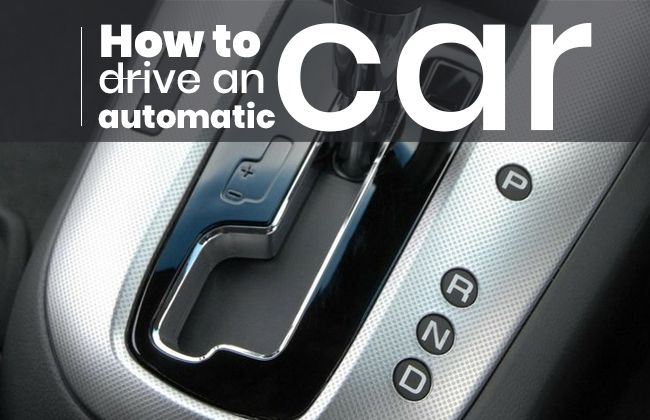
Even though automatic cars do not need you to shift gears, most of them still feature a stick with others having a rotatory drive mode selector. More often than not, the much easy to drive automatic cars come with the following selections on the gear lever or the rotatory gear knob:
- Park (P) - You need to put your automatic car in this mode whenever you leave your vehicle in a parking lot or even your garage. Although the Park mode will lock the transmission of your car, make sure to apply the handbrake as well to prevent your car from rolling.
- Reverse (R) - The reverse mode does nothing extraordinary but engages the reverse gear for you to move your automatic car backward.
- Neutral (N) - Selecting the Neutral gear will simply disengage the gearbox from the engine. You can use this mode in traffic or places where you need to stop for a while without turning the engine off. If your car is on an incline and it doesn't sport the hill hold assist feature, the handbrake can be used along with the (N) mode to prevent it from rolling down.
- Drive - This mode will connect the gearbox with the engine and the gears will keep on changing depending on the speed of your car.
- 2 - Puts the car in 2nd gear.
- 1 - Engages the 1st gear.
Some of the automatics also feature the "1" and "2" gear options. This helps you in selecting and keeping your car in the lower gears if and when needed. This comes handy especially when you're driving in heavy traffic, going down a steep hill, maneuvering, driving on icy roads, and in other situations when a lower gear is required. Moreover, certain automatic cars also flaunt paddle shifters that can be used to select the gear of your choice in the blink of an eye.
Types of automatic gearboxes
In the simplest of terms, all of the automatic cars come without a clutch and do not require you to shift gears. However, not all automatic cars are the same as they feature different kinds of gearboxes. Let's known them one after the other:
Traditional automatic gearbox
The most commonly used automatic transmission, a conventional or traditional automatic gearbox is also known as a torque converter automatic. In this setup, the engine and gearbox work in conjunction with an ECU (engine control unit), and a hydraulic fluid coupling or torque converter is assigned to change the gears instead of a clutch.
Continuously variable transmission (CVT)
Unlike a manual or even other automatic gearboxes, a continuously variable transmission (CVT) uses a system of belts or pulleys instead of conventional steel gears. CVTs come with either a single gear ratio or numerous ratios which are selected based on the engine speed. CVTs are generally found to be more fuel economical than other automatics.
Automated manual gearbox
An automated manual gearbox is simply a manual gearbox with a set of sensors, actuators, processors, and pneumatics assigned to perform the gear changes. In the automobile industry, these gearboxes are also known as semi-automatic transmissions.
Dual-clutch automatic transmission
A dual-clutch automatic transmission functions similarly to a conventional automatic gearbox. However, as the name suggests, a dual-clutch automatic transmission uses two clutches instead of a torque converter. While the first clutch takes care of odd-numbered gears such as 1,3,5, and others, the second clutch, on the other hand, is assigned for the even-numbered gears like 2,4,6, and so on. Since there are different clutches for alternative gears, a dual-clutch automatic gearbox can perform seamless and insanely quick gear shifts.
The "Creep" mode
Some of the automatic cars these days come with a "Creep" mode, which lets the car to keep moving forward at a slow pace. This mode is specifically coined for slow and bumper-to-bumper traffic situations. To stop your automatic car from creeping forward, just put the foot on the brake pedal or engage the handbrake.
The use of the foot
In the case of a manual gearbox, you will use your left foot to control the clutch and the right foot to manage the brake and gas pedals. Also, in an automatic transmission, you will be using your right foot only to control both the brake and gas pedals, but your left foot will stay at rest while driving.
Benefits of automatic car
Convenience - Since there is no clutch and the gears are also shifted automatically, the automatic transmission are fairly easy to use. People learning to drive will find driving an automatic car much easier than a manual one.
Fuel efficiency - While the myths suggest that automatics consume more fuel, the reality is, however, rather different. Modern-day automatic gearboxes feature as many as 8 to 10 gears and allow the engine to spend maximum time in its ideal RPM range. As a result, cars with automatic transmission can actually be more fuel-efficient. The manual gearboxes, on the other hand, come with 5 to 6 gears and the engine is made to rev at higher RPMs for a much longer period.
Demerits of automatic car
Repair & maintenance - To keep it short & simple, automatic transmissions are generally costlier to maintain and repair. Even a simple gearbox oil replacement will cost more in the case of an automatic gearbox. Besides, automatic transmissions do not require frequent maintenance as a manual gearbox does.
Theft - Because cars with automatic transmission are more expensive than those with a manual stick, the chances of their theft increase manyfold. So, if you're also an owner of an automatic car, ensure to park in a safe and secure place.
Safety - Reports have suggested that since automatic cars are less attention and engagement demanding, it becomes easier for the driver to get distracted and, as a result, may lead to unwanted accidents. Newer drivers may engage themselves in using their phones or too much of talking with the passengers while driving an automatic.
How to get the hang of an automatic car?
Well, the answer is simple, practice as much as you can. Start slow, and let your mind and muscles understand the behaviour of an automatic car. Sudden braking, making a U-turn, and parking an automatic car may be a little tricky, to begin with. So, just keep practising until you get it right.
Also read: Tips to protect your car paint

Purva Jain


Purva is a crazy admirer of cars and she has got a lot of expertise in their detailing. Though, she has mastered in Economics but cars have always been her field of interest. She is an introvert in talking but when it comes to cars and the latest news regarding them she talks like hell. Exploring new cars as well as the vintage machines is listed in her hobbies while getting to know about the history behind the same are the things which she enjoys the most. She may seem silent from the outside but inside her is a volcano erupting to engulf the mean machines.
Read Full BioKLIMS 2026


Malaysia Autoshow
Trending & Fresh Updates
- Latest
- Popular
-

-
-
-
-
-
-
-
-
-
Electric Car: A comprehensive buying guidePurva Jain, Jul 01, 2024
-
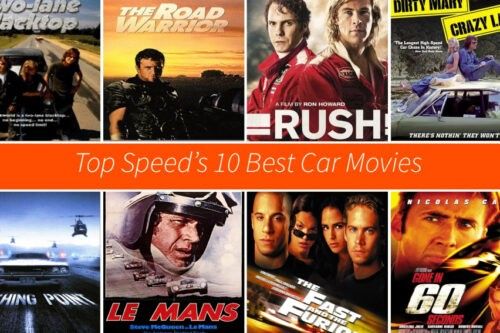
Must watch automotive movies for enthusiastsPurva Jain, Feb 21, 2024
-
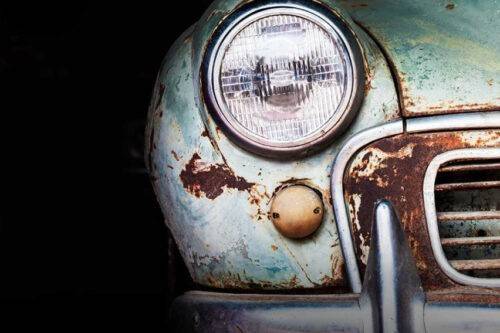
Car Rust-proofing 101: All you need to knowPurva Jain, Feb 15, 2024


You might also be interested in
- News
-
-
-
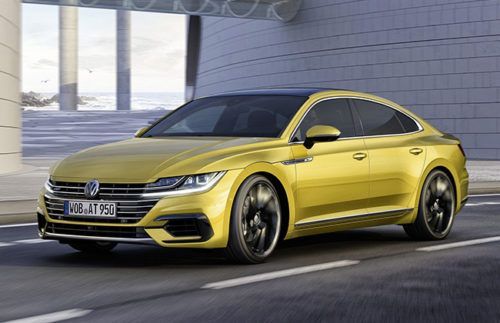
Volkswagen Malaysia to bring Arteon in 2019Purva Jain, Nov 05, 2018
-

Featured Cars
- Latest
- Upcoming
- Popular
-
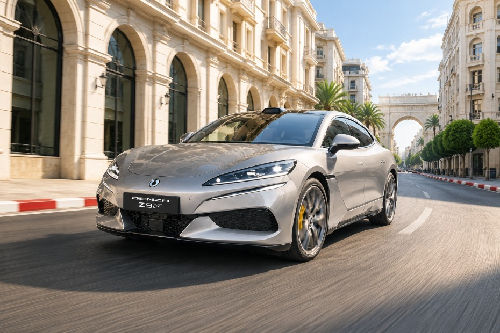
 Mercedes Benz CLA ElectricRM 274,888 OTR Price Kuala LumpurEMI : RM 3,212 x 84Write a Review VIEW AUGUST OFFERS
 -
-
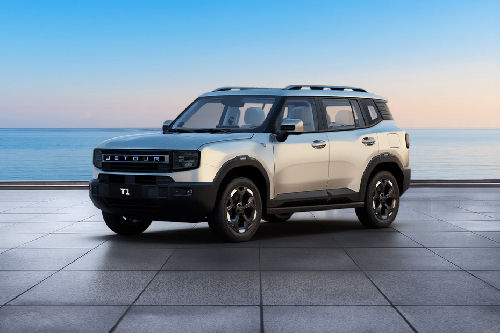
Jetour T1RM 129,800 - 146,800 OTR Price Kuala LumpurEMI : RM 1,516 x 844 (2 Reviews) VIEW AUGUST OFFERS
-
-
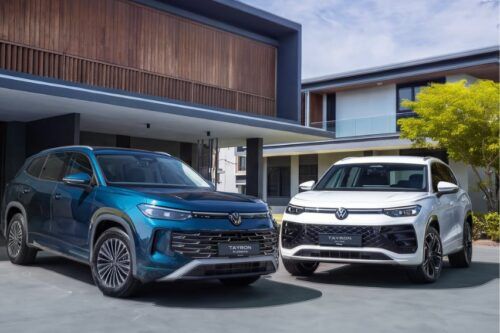
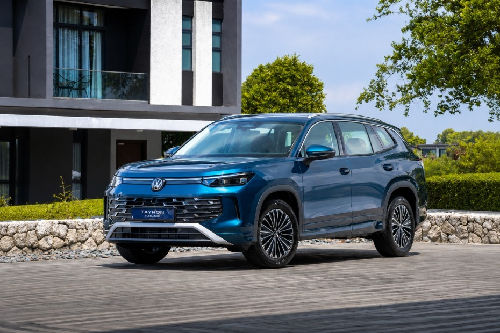
Volkswagen TayronRM 190,510 - 238,574 OTR Price Kuala LumpurEMI : RM 2,226 x 84Write a Review VIEW AUGUST OFFERS
-
MINI ElectricRM 193,888 - 218,888 OTR Price Kuala LumpurEMI : RM 2,265 x 844.33 (15 Reviews) VIEW AUGUST OFFERS
-
MINI 3 DoorRM 193,888 - 318,888 OTR Price Kuala LumpurEMI : RM 2,265 x 844.38 (26 Reviews) VIEW AUGUST OFFERS
-
MINI John Cooper WorksRM 218,888 - 393,888 OTR Price Kuala LumpurEMI : RM 2,557 x 844.38 (13 Reviews) VIEW AUGUST OFFERS
-
MINI Countryman ElectricRM 258,888 By Order Kuala LumpurEMI : RM 3,025 x 844.11 (8 Reviews) VIEW AUGUST OFFERS
-
Perodua BezzaRM 34,580 - 49,980 OTR Price Kuala LumpurEMI : RM 404 x 844.19 (81 Reviews) VIEW AUGUST OFFERS
Latest Car Videos on Zigwheels

-
Jetour T1 1.5L: Tak laju, tapi tu bukan point dia | review Malaysia14 Aug, 2026 .
-
Proton e.MAS 7 PHEV Premium — the smartest car buy in Malaysia right now?25 Jun, 2026 .
-
Leapmotor B10 KL to Penang, Is This Sub-RM120k EV Enough for Everyone?11 May, 2026 .
-
First Drive GWM WEY G9, MPV Premium Paling Berbaloi Sekarang?11 May, 2026 .
-
2026 BMW i5 CKD Review Malaysia - Has BMW Built the EV for People Still Not Sold on EVs?10 Apr, 2026 .
-
Mitsubishi Xforce First Impressions Malaysia – Is This the Surprise SUV of 2026?24 Mar, 2026 .
-
2026 Perodua Traz Review – Is It Worth a Try?04 Feb, 2026 .
-
1 Tank, 3 Days, 1,200 KM… The Chery Tiggo 7 PHEV Actually Did It10 Dec, 2025 .
-
The Jaecoo J8 Might Be the Best SUV Under RM200k… Here’s Why!10 Dec, 2025 .
-
Volvo XC90 T8 Ultra Review – The “One and Done” SUV28 Oct, 2025 .