
Review: 2026 Isuzu D-Max Premium 2.2L 4X4 8AT - Eight gears, more torque, same old-school honesty
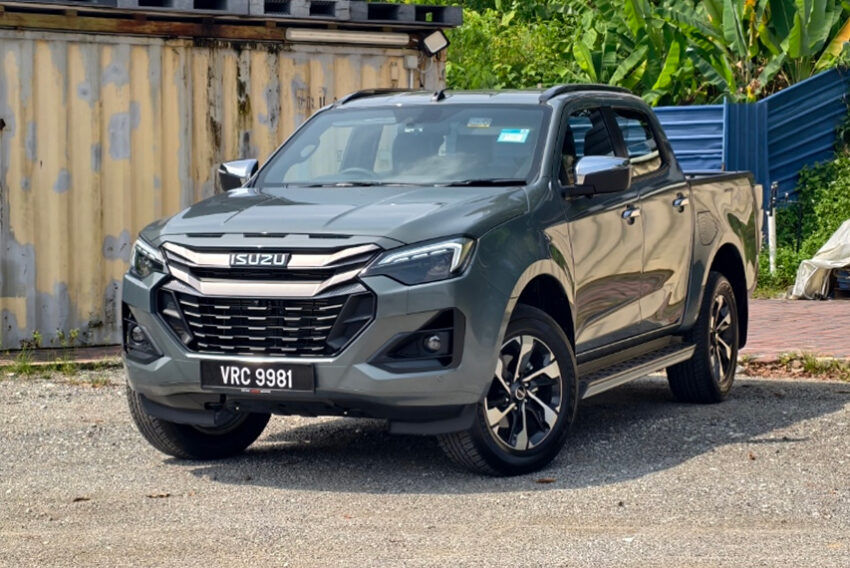
- It isn't just a bigger 1.9
- And then there are those eight gears
- Give it some stick and the diesel reminds you what it is
- The D-Max hasn't forgotten that it's a truck
- Fuel economy remains a party trick
- Inside, function still wins
- Anything to dislike?
- So, do you still need the 3.0?
- The best change is how little you notice it
- Isuzu D-Max 2.2L 4x4 AT Premium specifications
There is something wonderfully straightforward about an Isuzu D-Max.
While other pickup trucks increasingly try to convince you that they are luxury SUVs with a cargo bed attached to the back, the D-Max has always felt like it wakes up every morning knowing exactly what its job is. Turn the key, point it at somewhere far away, throw some things in the back and get on with it.
It has never really been the flamboyant one in the pickup truck car park.
And strangely enough, that has always been part of its charm.
Which makes the latest D-Max rather interesting, because beneath a familiar-looking body Isuzu has made one of the biggest mechanical changes to the truck in years.
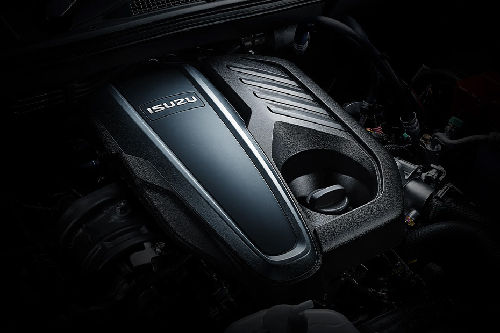
For most of the D-Max lineup, the old 1.9-litre turbodiesel is gone, replaced by an all-new 2.2-litre RZ4F-TC four-cylinder turbodiesel, and if you choose the automatic, the familiar six-speed gearbox has been replaced by an eight-speed.
Eight gears.
In a D-Max.
At first that sounds like somebody at Isuzu drank a little too much Sake and got a little carried away.
But after driving it, though, the eight-speed might actually be one of the most important things about this new truck.
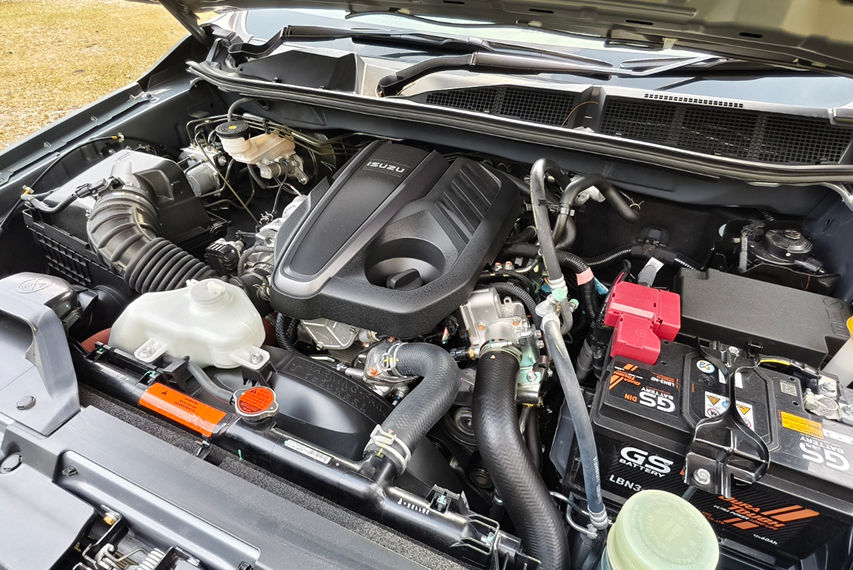
It isn't just a bigger 1.9
First, the numbers.
The new 2,164 cc turbodiesel makes 163 PS and 400 Nm, compared with the previous 1.9-litre's 150 PS and 350 Nm. Peak torque arrives between 1,600 and 2,400 rpm, but perhaps the more useful number is the 255 Nm Isuzu says is already available from just 1,000 rpm.
This isn't simply the old engine with a larger bore either; the new motor gets a new block, cylinder head, crankshaft, pistons, connecting rods, turbocharger and 250 MPa high-pressure injection system.
None of that sounds particularly sexy.
But then again, this is an Isuzu diesel. Sexy was probably quite far down the engineering team's list of priorities.
What matters from behind the steering wheel is that the D-Max no longer feels like you have to wake the engine up before asking it to do something.
The previous 1.9 was a good engine, particularly if fuel economy mattered, but there were moments when you could feel that it was a relatively small diesel being asked to move a fairly substantial pickup truck, especially when it's loaded with people and cargo.
The new 2.2 feels meatier from the bottom end. Pull away from a junction, squeeze into a gap or ask for a little more speed without flooring it and there is simply more muscle underneath your right foot.
It doesn't turn the D-Max into a rocket.
That would be missing the point entirely.
Instead, it makes it feel less bothered by the business of being a pickup truck.
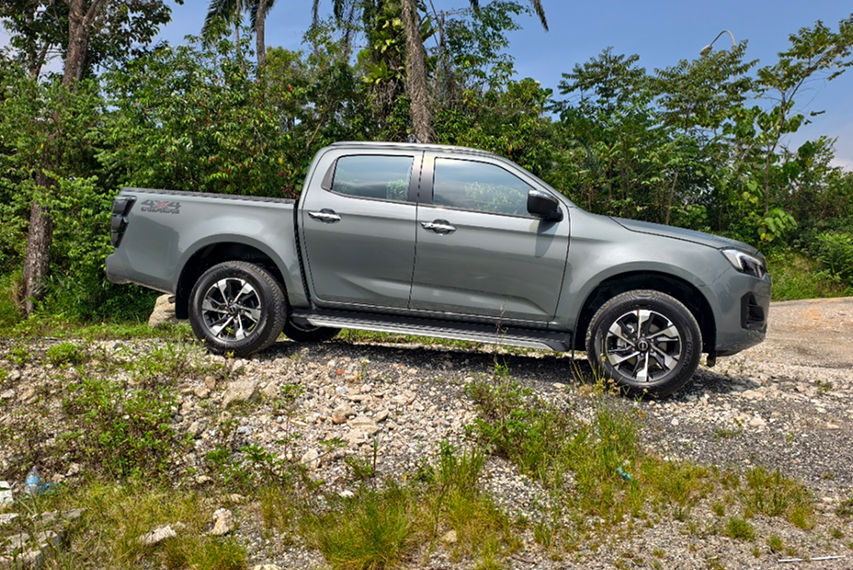
And then there are those eight gears
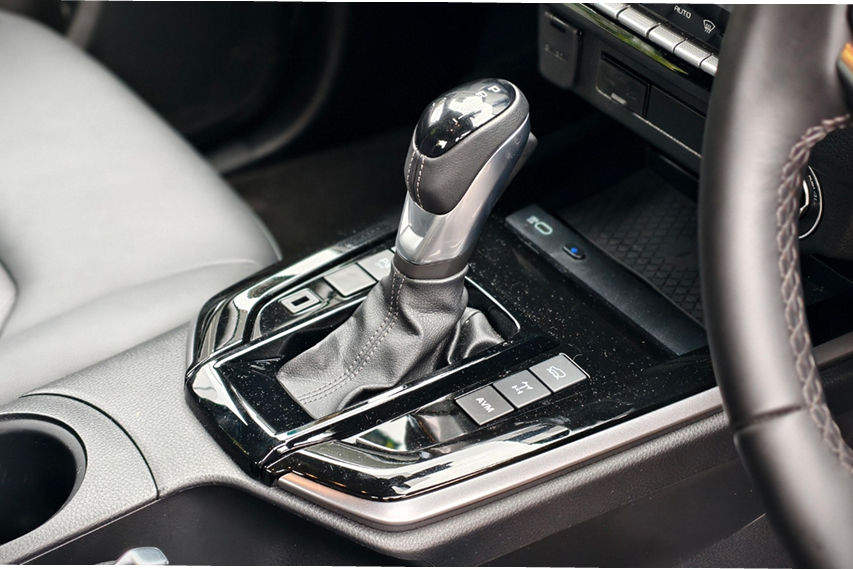
The gearbox is where the whole thing starts to make sense.
Drive gently around town and watch the gear indicator. The transmission seems almost addicted to changing gear. First becomes second, second becomes third and before long the D-Max has quietly worked its way surprisingly high up the gearbox.
You might think an eight-speed automatic would make the truck busy or indecisive, but that's not really the sensation. The individual shifts are subtle enough that most of the time you notice what the gearbox is doing more by watching the rev counter than feeling it through the seat.
And that's because the transmission isn't trying to make the D-Max feel sporty.
It's trying to make life easy for the engine.
Isuzu says the first six ratios are geared towards response while seventh and eighth are overdrive ratios designed with cruising efficiency in mind. That fits perfectly with an engine that already has a meaningful amount of torque barely above idle.
Instead of revving the diesel unnecessarily, the gearbox keeps feeding it another gear.
And another.
And another.
Get onto the highway and the strategy becomes even clearer. Eighth gear lets the engine settle into a lazy cruise, and the engine can now sit at only a little above 1,800 rpm at the national highway speed limit.
That's probably the best explanation for why a pickup truck needs eight gears.
Not because an owner desperately demanded two more numbers on the gear indicator, but because the additional ratios let the engine spend more of its life doing what diesels like doing: producing useful torque at low revs without making a fuss about it.
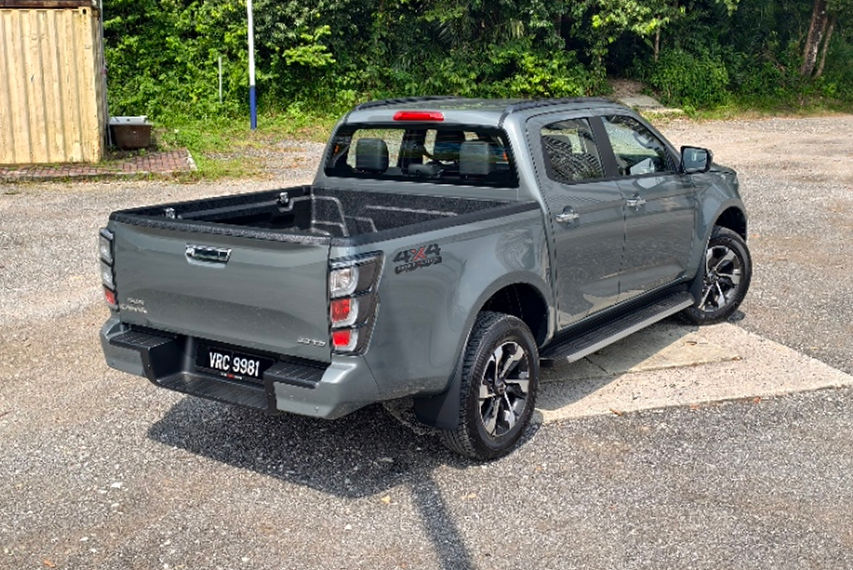
Give it some stick and the diesel reminds you what it is
Put your foot properly down, however, and the D-Max hasn't suddenly transformed into some whisper-quiet German executive car.
The gearbox will drop through its ratios, the rev counter rises and the 2.2 becomes considerably more vocal.
There is still a proper diesel engine living up front.
You hear it. You feel a little of it. And personally, that doesn't feel completely out of place in a truck like this.
The important difference is that you don't have to summon all that noise particularly often. There's enough torque lower down that normal driving tends to happen in the quieter, more relaxed part of the engine's rev range.
Need to overtake and the eight-speed has more ratios available to put the engine where it needs to be. Head uphill and instead of there being a huge gap between gears, the transmission can make smaller adjustments to keep the diesel around its useful torque band.
It makes the whole drivetrain feel more alert without necessarily making it feel more aggressive.
That's a rather important distinction.
The D-Max hasn't forgotten that it's a truck
The rest of the experience is still recognisably D-Max.
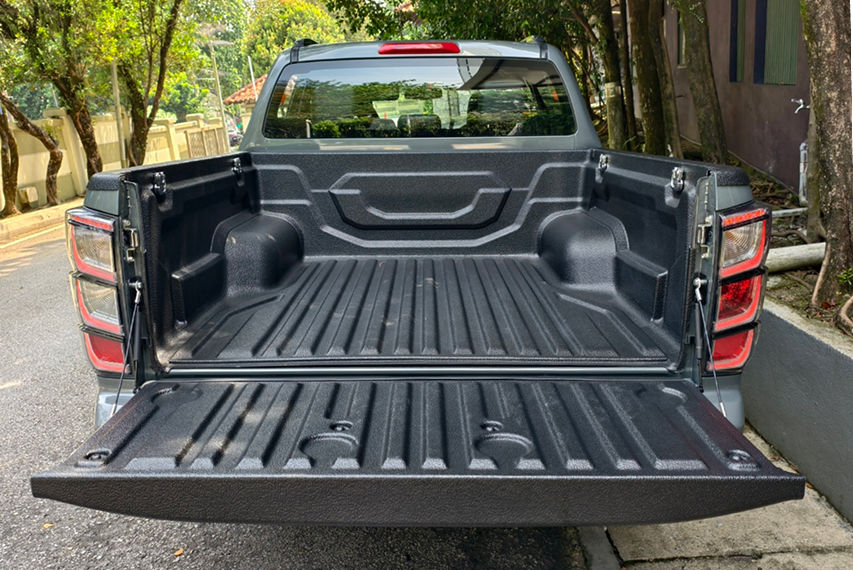
You sit high, there's a substantial bonnet stretching out ahead of you and the driving position gives you that familiar pickup-truck sense of occupying rather a lot of road.
This isn't one of those vehicles that magically shrinks around you.
You know you're driving something tall. You know there is a ladder-frame chassis underneath you. You know there's a proper cargo bed following several feet behind your seat.
And there is something quite likeable about that.
The steering doesn't pretend the D-Max is a sports car and the suspension can't completely disguise the fact that underneath the body is hardware designed to carry loads and venture considerably further off tarmac than your average crossover.
Leave the rear relatively empty and you can still get some of that characteristic pickup movement from the back over rougher surfaces. Big bumps can produce a little shimmy and secondary roads remind you fairly quickly that this isn't an SUV built around a monocoque passenger-car platform.
But the modern D-Max is a considerably more civilised thing than old pickups used to be.
At cruising speeds it settles down nicely, and the more relaxed engine speed delivered by the new gearbox only adds to that sense that this is a truck quite happy to chew through enormous distances.
Which, given that Isuzu has built a large part of the D-Max's reputation around fuel economy and long-distance durability, seems rather appropriate.
Fuel economy remains a party trick
Extra power and two additional gears are nice, but putting a more powerful engine into a D-Max and making it thirsty would be rather like redesigning a Croc so it becomes uncomfortable.
You'd have ruined one of the main reasons people bought it.
And Isuzu clearly knows how important that reputation is. Back in 2024, a D-Max covered 2,000 km from Thailand to Malaysia on a single tank of diesel, earning itself a place in the Malaysian Book of Records for the longest distance travelled by a pickup truck on one tank.
And if Isuzu's latest fuel-economy stunt is anything to go by, the new 2.2 certainly hasn't forgotten where it came from.
In August 2026, two D-Maxes equipped with the new engine and eight-speed automatic — including the same 2.2 Premium 4x4 AT tested here — set off on a counter-clockwise loop of Peninsular Malaysia with one simple rule: no refuelling.
And this wasn't simply 1,700-plus kilometres of sitting at a constant speed on an empty expressway. The route took them through highways, trunk roads, traffic and even the mountainous East-West Highway between Jeli and Gerik.
Now, obviously, this was an organised fuel-economy challenge with drivers actively trying to stretch every litre. Nobody should buy a D-Max expecting to casually reproduce those numbers on Monday morning.
But it does demonstrate something interesting about this new powertrain.
With a 76-litre tank, covering 1,756 km while still having more than four per cent remaining works out to less than roughly 4.2 litres per 100 km of diesel consumed over the run. That's an extraordinary number for a full-sized pickup, even with all the usual caveats surrounding an economy challenge.
And the eight-speed gearbox appears to be an important part of the recipe. Its taller seventh and eighth ratios allow the engine to spend long stretches of highway and trunk-road driving at relatively low revs, while the closer lower ratios help keep the 2.2 within its useful torque band without demanding huge amounts of throttle.
That's probably the most interesting part of this new engine.
The old 1.9-litre D-Max built a large part of its reputation around being remarkably frugal. The replacement has more capacity, another 13 PS and 50 Nm more torque, yet Isuzu hasn't abandoned that obsession with squeezing distance out of every litre.
If anything, it appears to have doubled down on it.
For a D-Max, fuel economy isn't some bonus statistic buried near the bottom of the brochure.
It's practically part of the family name.
Inside, function still wins
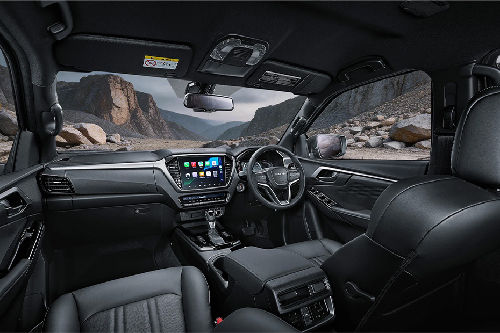
The cabin follows much the same philosophy as the rest of the D-Max.
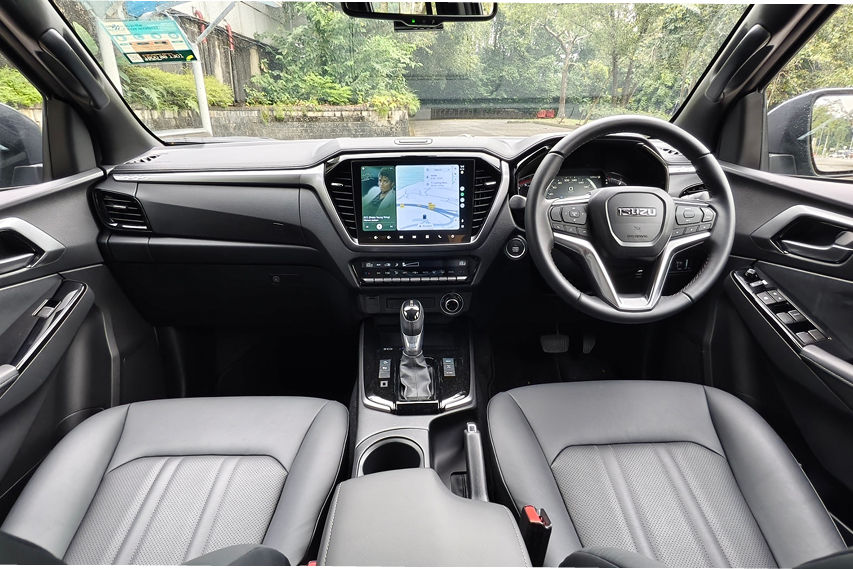
Nobody is going to climb into one and mistake it for a Range Rover, but neither does it feel like you've been sentenced to spend the next five years driving a commercial vehicle.
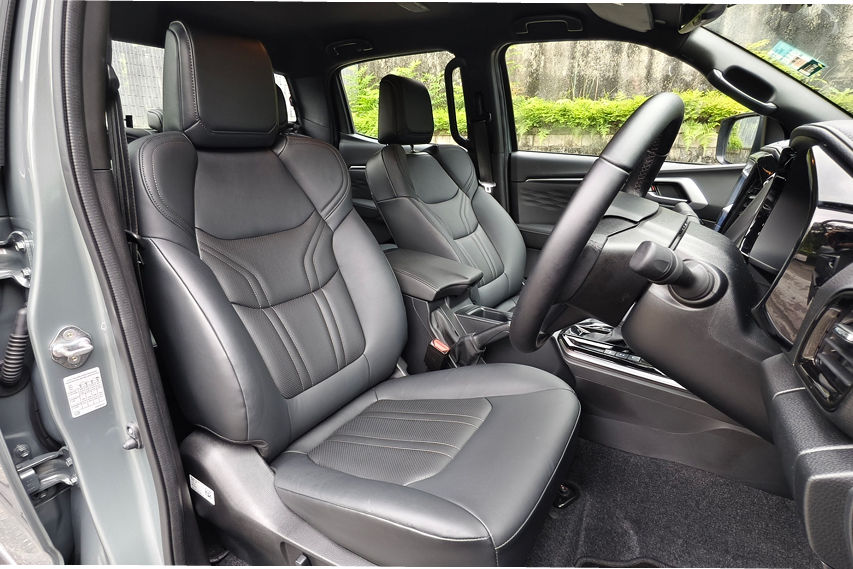
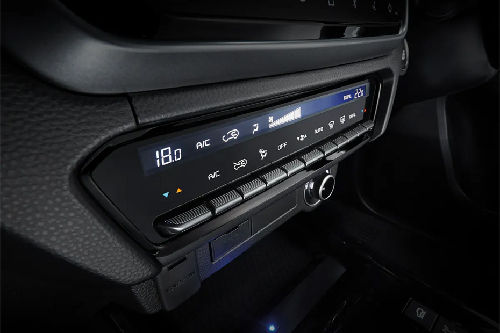
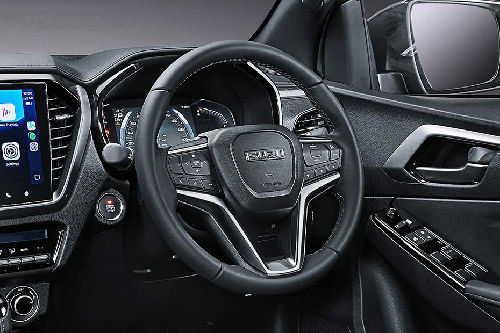
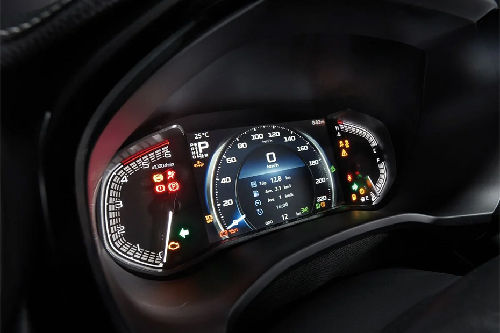
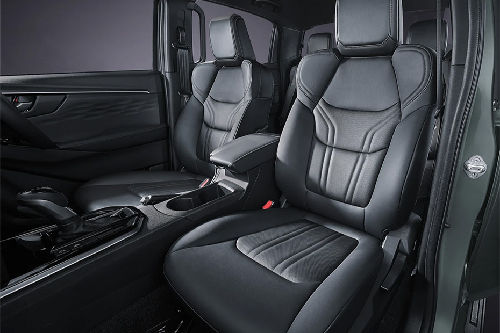
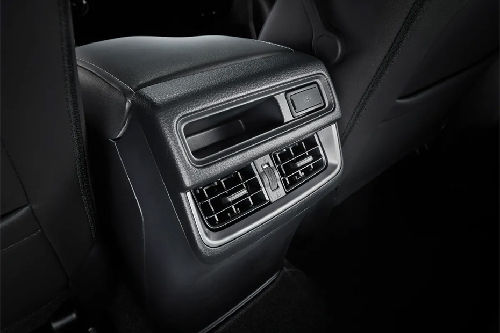
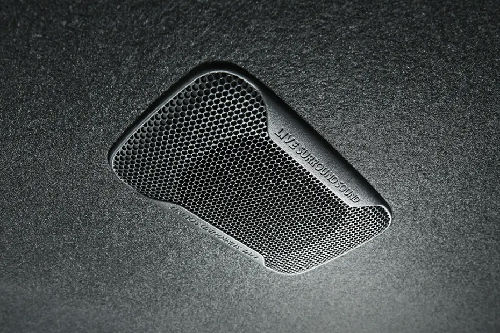
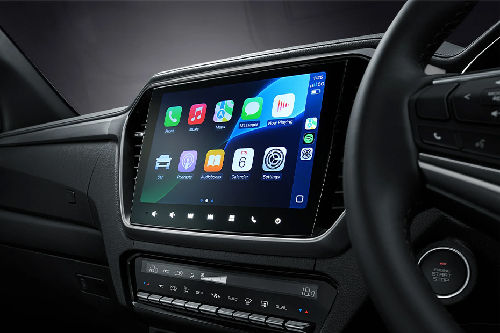
In Premium specification there is a 10-inch infotainment display with wireless Apple CarPlay and Android Auto, a seven-inch multi-information display, combination leather upholstery, an eight-way powered driver's seat with lumbar adjustment, wireless charging, rear air-conditioning vents and an eight-speaker audio system.
There are also lots of places to put things, which sounds incredibly boring until you actually live with a pickup truck.
Then you realise that cupholders, door pockets, charging ports and storage compartments are significantly more useful on Tuesday morning than some animated graphic of a mountain appearing across three curved OLED screens.
The D-Max cabin remains pragmatic.
And I mean that as a compliment.
Anything to dislike?
There isn't much about the new 2.2 powertrain that feels like an obvious backward step, but the Premium's safety equipment does leave one slightly awkward gap.
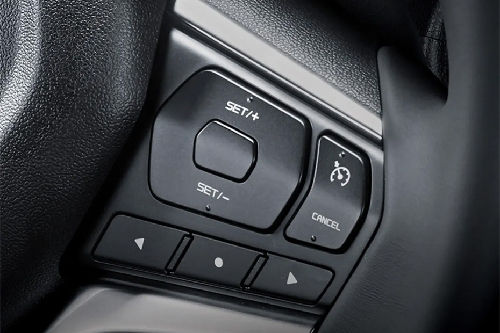
Despite sitting fairly high up the D-Max range, it doesn't get the X-Terrain's full suite of driver-assistance systems, so there is no autonomous emergency braking, adaptive cruise control or lane-departure warning here.
You do still get useful features such as blind-spot monitoring and rear cross-traffic alert, but at more than RM140,000, it would have been nice to see some of those more advanced systems make their way down to the Premium as well.
It doesn't suddenly make the D-Max feel poorly equipped, but it is one of those things that becomes harder to ignore when plenty of modern SUVs — and increasingly rival pickups — are making comprehensive ADAS feel almost expected rather than exceptional.
So, do you still need the 3.0?
This might actually be the awkward question created by the new engine.
The 3.0-litre remains the more powerful choice with 190 PS and 450 Nm, and there will always be buyers who simply live by the no replacement for displacement philosophy. If you're regularly hauling significant weight or towing heavy loads, there is an obvious argument for it.
But the new 2.2 closes the gap considerably.
The 2.2 Premium is RM141,821.20 on the road without insurance for private registration in Peninsular Malaysia, while the equivalent 3.0 Premium costs RM145,138.40. That's only around RM3,300 separating the two, although the smaller engine also brings the newer eight-speed automatic while the 3.0 continues with a six-speed.
Previously, choosing the smaller D-Max engine felt like a decision you made mainly with your calculator.
Now there's a stronger argument that you might actually prefer the way the 2.2 drives.
That's a very different proposition.
The best change is how little you notice it
Perhaps the most successful thing about this updated D-Max is that Isuzu hasn't tried to turn it into something it isn't.
There are no fake gearshifts through a hybrid system, no enormous horsepower headline and no suggestion that the D-Max has suddenly become a performance lifestyle machine.
It's still a D-Max.
It still feels substantial. It still feels mechanical. It still has that slightly agricultural streak buried underneath all the modern equipment that reminds you this thing was built to work for a living.
Except now the engine responds more willingly, there's noticeably more torque available, the gearbox always seems to have an appropriate ratio ready, and when you're just cruising along it can quietly slip into eighth and let the diesel relax.
The numbers say this is a more powerful D-Max.
The experience suggests something slightly different.
It feels like an easier D-Max.
And for a pickup truck that could spend its life doing school runs on Monday, sitting in traffic on Tuesday, carrying tools on Wednesday, crossing a muddy worksite on Thursday and disappearing down the highway with a full load on Friday, making everything require slightly less effort might be more valuable than giving it another 50 horsepower.
Eight gears in a pickup truck sounded excessive.
Turns out, excess isn't really the point.
The point is making a hardworking truck feel like it isn't working quite so hard.
Isuzu D-Max 2.2L 4x4 AT Premium specifications
Drivetrain: 2.2-litre RZ4F-TC four-cylinder common-rail turbodiesel with variable-geometry turbocharger, part-time four-wheel drive with Terrain Command
Engine output: 163 PS at 3,600 rpm
Torque: 400 Nm at 1,600–2,400 rpm
Transmission: 8-speed automatic with sequential shift
Suspension: Independent double-wishbone front with coil springs; semi-elliptical leaf springs rear
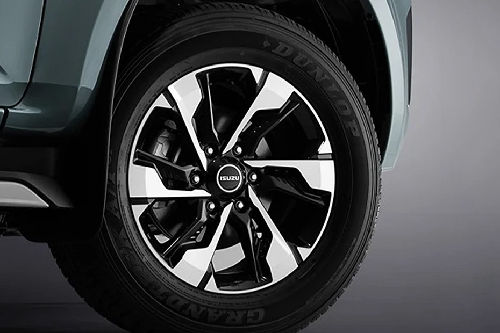
Wheels / tyres: 18-inch alloy wheels, 265/60 R18 all-terrain tyres
Fuel tank: 76 litres
Ground clearance / wading: 240 mm ground clearance, 800 mm water-wading capability
Safety: Six airbags, ABS with EBD and brake assist, electronic stability control, traction control, hill-start assist, hill-descent control, brake override system and emergency stop signal; blind-spot monitor, rear cross-traffic alert, reverse camera and front/rear parking sensors.
Off-road features: Terrain Command selectable 2H/4H/4L four-wheel drive, rear differential lock, Rough Terrain Mode, hill-descent control, steel under-body protection and 800 mm water-wading depth.
Price: RM141,821.20 on-the-road without insurance, private registration in Peninsular Malaysia.

-
Explore Isuzu D-Max
-

Isuzu D-Max Related Stories
- News
- Featured Stories
-
 Isuzu D-Max 2.2 covers 1,756 km around Malaysia on one tank of diesel
KUALA LUMPUR: Two Isuzu D-Max pick-ups have finished a loop of Peninsular Malaysia without stopping once for fuel, covering 1,756...
Read MoreAdam Aubrey, Aug 28, 2026 -
Isuzu D-Max climbs to 17.3% share of Malaysia's pick-up market as the 2.2-litre engine settles in
KUALA LUMPUR: Isuzu Malaysia says the D-Max took 17.3 percent of the country's pick-up truck segment in the second quarter...
Read MoreAdam Aubrey, Aug 03, 2026 -
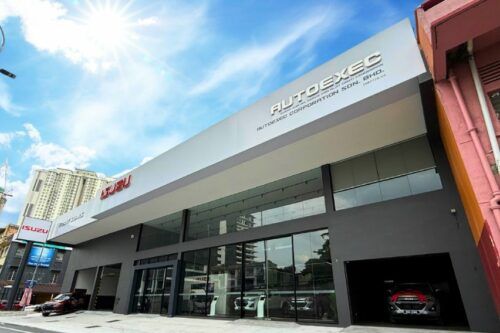
New Isuzu 3S centre opens in Kuala Lumpur
KUALA LUMPUR: Isuzu has expanded its footprint in Malaysia with the opening of a new 3S centre in Kuala Lumpur....
Read MoreSippi Vig, Apr 22, 2026
-
2024 Isuzu D-Max: Variants comparison
The highly-anticipated Isuzu D-Max facelift has made its way to Malaysia with an updated design and equipment kit. Similar to...
Read MoreSippi Vig, May 15, 2024
Isuzu Car Models
-

Isuzu D-Max
Don't Miss
KLIMS 2026


Malaysia Autoshow
Trending & Fresh Updates
- Latest
- Popular
-

-
-
-
-
-
-
-
-
-
Electric Car: A comprehensive buying guidePurva Jain, Jul 01, 2024
-
Must watch automotive movies for enthusiastsPurva Jain, Feb 21, 2024
-
Car Rust-proofing 101: All you need to knowPurva Jain, Feb 15, 2024


Compare & Recommended
Isuzu D-Max
RM 103,121 - 162,938
D-Max Price
|
|
|
|
|
|
Ground Clearance
220 mm
|
269 mm
|
215 mm
|
220 mm
|
230 mm
|
|
Seating Capacity
2
|
2
|
5
|
2
|
2
|
|
Fuel Type
Diesel
|
Diesel
|
Diesel
|
Diesel
|
Diesel
|
|
Engine
2164
|
2393
|
2776
|
2488
|
1996
|
|
Power
161
|
148
|
150
|
161
|
168
|
|
Torque
400 Nm
|
400 Nm
|
360 Nm
|
403 Nm
|
405 Nm
|
|
Transmission Type
Manual
|
Manual
|
Automatic
|
Manual
|
Manual
|
|
|
Trending Pickup Trucks
- Latest
- Upcoming
- Popular
-
Mitsubishi TritonRM 101,980 - 159,980 OTR Price Kuala LumpurEMI : RM 1,191 x 844.19 (52 Reviews) VIEW OCTOBER OFFERS
-
Toyota Hilux BEVRM 226,300 OTR Price Kuala LumpurEMI : RM 2,644 x 84Write a Review VIEW OCTOBER OFFERS
-
Isuzu D-MaxRM 103,121 - 162,938 OTR Price Kuala LumpurEMI : RM 1,205 x 844.48 (27 Reviews) VIEW OCTOBER OFFERS
-
Ford Ranger RaptorRM 248,888 - 273,888 OTR Price Kuala LumpurEMI : RM 2,908 x 844.38 (49 Reviews) VIEW OCTOBER OFFERS
-
-
-
-
GWM CannonRM 118,000 - 127,800 Expected Price Kuala LumpurExpected Launch TBA Alert Me When Launched
-
-
Toyota HiluxRM 103,880 - 169,080 OTR Price Kuala LumpurEMI : RM 1,213 x 844.29 (69 Reviews) VIEW OCTOBER OFFERS
-
Ford RangerRM 98,888 - 183,888 OTR Price Kuala LumpurEMI : RM 1,155 x 844.24 (51 Reviews) VIEW OCTOBER OFFERS
-
Isuzu D-MaxRM 103,121 - 162,938 OTR Price Kuala LumpurEMI : RM 1,205 x 844.48 (27 Reviews) VIEW OCTOBER OFFERS
-
Nissan NavaraRM 98,600 - 154,800 OTR Price Kuala LumpurEMI : RM 1,152 x 844.15 (47 Reviews) VIEW OCTOBER OFFERS
-
-
Ford Ranger RaptorRM 248,888 - 273,888 OTR Price Kuala LumpurEMI : RM 2,908 x 844.38 (49 Reviews) VIEW OCTOBER OFFERS