6th-gen Toyota RAV4 launched in Japan, Z and Adventure prices, GR SPORT and PHEV due by March 2026
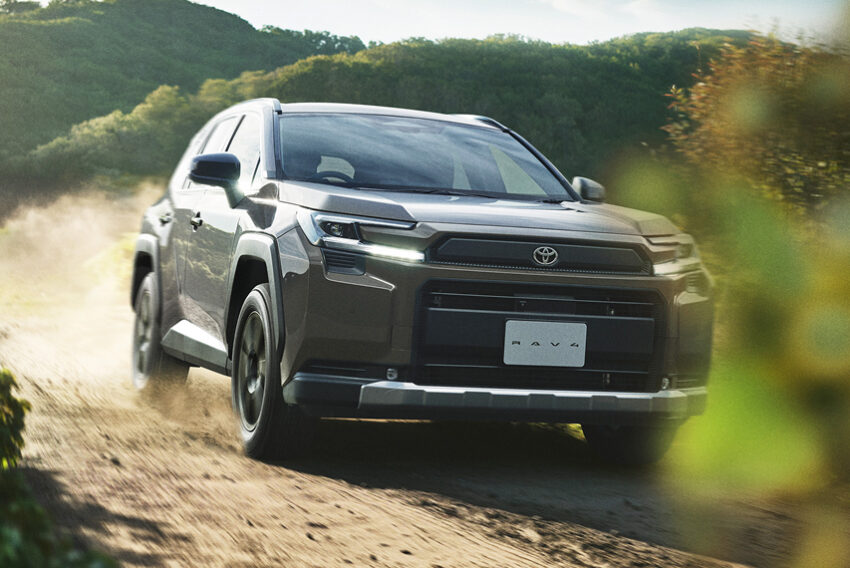
KUALA LUMPUR: Toyota has plaunched the all-new, sixth-generation RAV4 in Japan, positioning it around the tagline “Life is an Adventure,” and three development pillars, “Diversification, Electrification, and Intelligence.”
KEY TAKEAWAYS
Is the new RAV4 available as a plug-in hybrid yet?
Not at launch in Japan, Toyota says a newly developed PHEV model is scheduled to arrive within fiscal 2025, ending March 2026.What’s the main difference between Z and Adventure?
Z leans more refined with a cleaner, body-coloured look, while Adventure goes for a tougher design with chunkier mouldings and an outdoor-themed interior treatment.In simple terms, it is the same familiar midsize SUV idea, but now split into clearer personalities, pushed harder toward electrified powertrains, and built around a new software backbone that Toyota says will speed up how features like Toyota Safety Sense and cockpit functions are developed and rolled out.
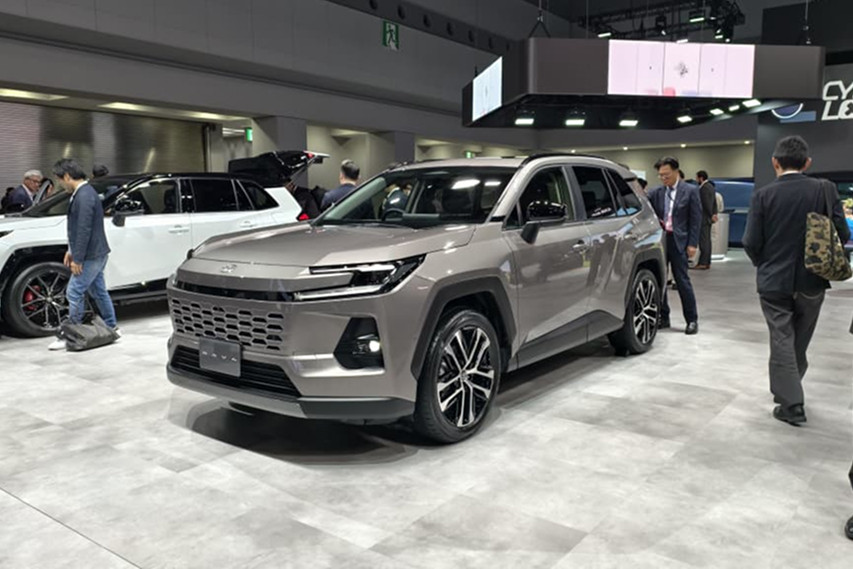 Photo by Adam Aubrey
Also Read: Toyota Veloz Hybrid makes world premiere at Gaikindo Jakarta Auto Week
Three looks, one RAV4 core
Under “Diversification,” Toyota is offering three distinct styles. There’s the Z, pitched as the more sophisticated, road-focused look, the Adventure, which leans into a tougher image and is meant to handle off-road driving, and a GR SPORT that’s focused on driving performance. Toyota says the GR SPORT is scheduled for release within fiscal 2025, which ends March 2026.
Design-wise, Toyota says the new RAV4’s shape is built around three elements called “Big Foot,” “Lift-up,” and “Utility,” basically a planted stance with large-diameter tyres, a more capable off-road vibe, and cargo practicality. The Z gets a “hammerhead” style front with body-coloured bumpers and a mesh grille, while the Adventure adds chunkier wheel arch mouldings and a higher nose profile. Inside, the Adventure also gets an exclusive “Mineral” colour scheme, plus orange accents and camouflage patterns on parts of the trim.
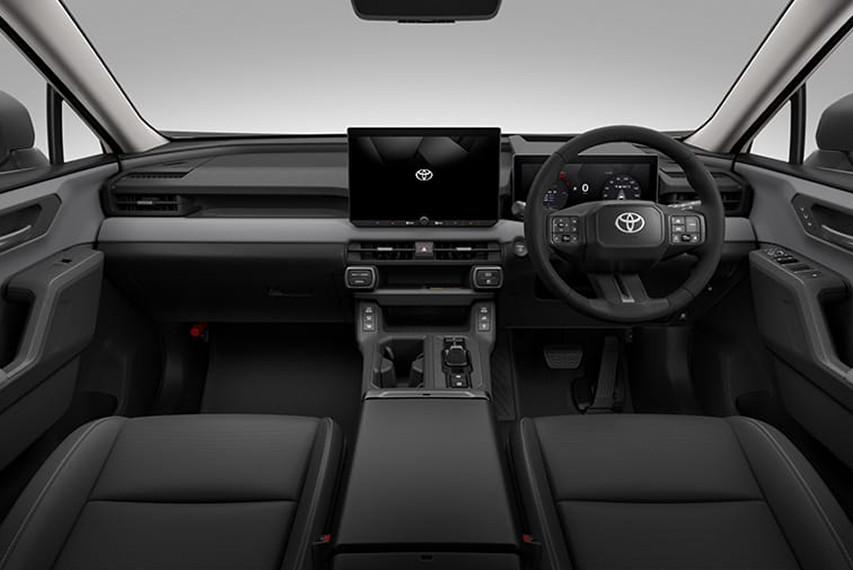 Photo from Toyota
Size stays familiar, boot space grows
Toyota is keeping the overall footprint about the same for everyday usability. The Z is listed at 4,600 mm long, 1,855 mm wide, and 1,680 mm tall, while the Adventure is slightly larger at 4,620 mm long and 1,880 mm wide, with the same 1,680 mm height.
One practical change is luggage space. Toyota quotes a boot capacity of 749 L (VDA method), and says that’s 16 L more than the previous G grade’s 733 L. It also claims a flatter load floor when the rear seats are folded, by reducing the slope of the floor.
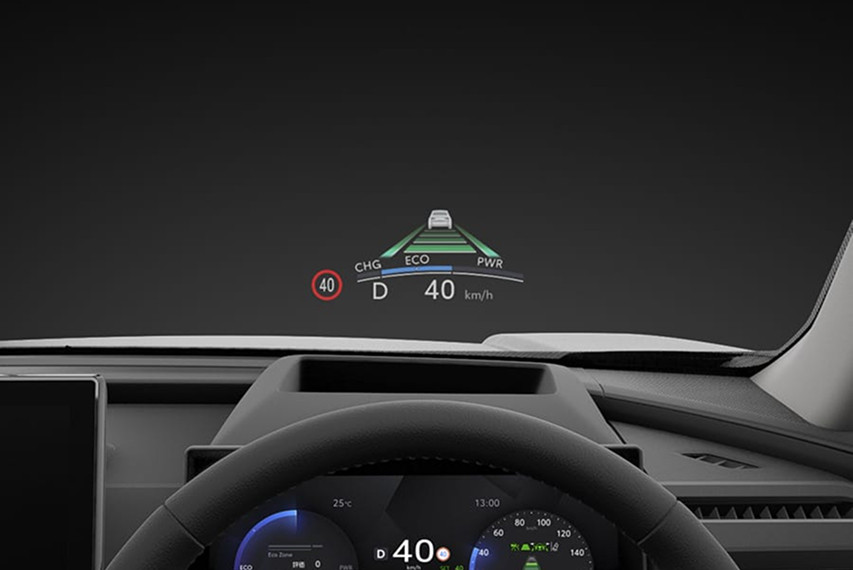 Photo from Toyota
Cabin changes, new shift setup and HUD
Inside, Toyota has moved to what it calls an “island architecture,” grouping the main controls and displays into clustered “islands” to reduce eye movement. Two new items are highlighted as Toyota firsts, with Toyota noting these claims are “As of December 2025 according to Toyota Motor Corporation research.”
-
Color heads up display, now an angled display rather than an upright style, with three display modes (Full, Standard, Minimum).
-
Electro-Shiftmatic, a one-direction shift-operation system that also clusters the gear selector with the electric parking brake and brake hold switch, aiming to cut down on driver hand movement and glances.
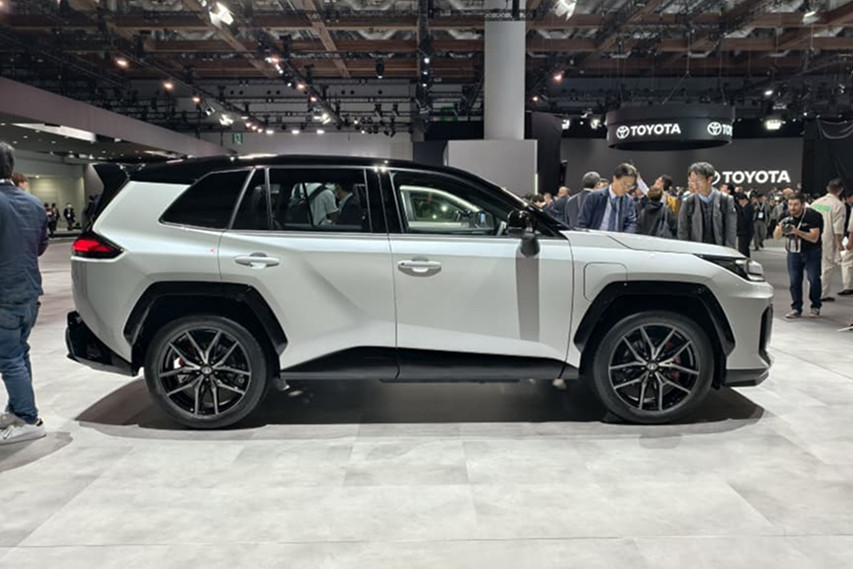 Photo by Adam Aubrey
Hybrid now, PHEV later
Under “Electrification,” Toyota is confirming an HEV and a newly developed PHEV system, with the PHEV scheduled for release within fiscal 2025, ending March 2026. For the hybrid, Toyota is quoting a 2.5-litre inline four-cylinder setup with a maximum system output of 177 kW (240 hp).
Toyota’s E-Four electric AWD system is said to vary front to rear drive distribution between 100:0 and 20:80. There are also TRAIL and SNOW modes that use brake-based traction control to manage wheelspin and shuffle torque side-to-side.
Toyota also claims a more premium ride through an improved platform and newly adopted shock absorbers, though it does not go into detail here beyond the hardware mention.
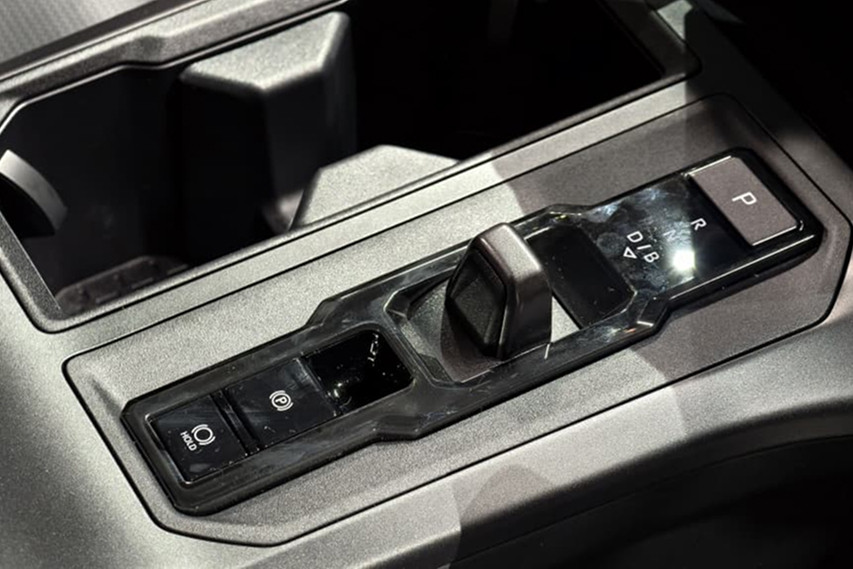 Photo by Adam Aubrey
“Intelligence” means Arene, Toyota’s software push
The headline tech story is Toyota’s move to use its Arene software development platform in the RAV4 for the first time. Toyota’s claim is that Arene shortens development time for key UI software, including Toyota Safety Sense and cockpit systems, and should also support faster installation of these features into the vehicle.
Longer term, Toyota says Arene is expected to enable simultaneous updates of multiple functions, plus customer-specific customisation, as part of its Software-Defined Vehicle (SDV) direction.
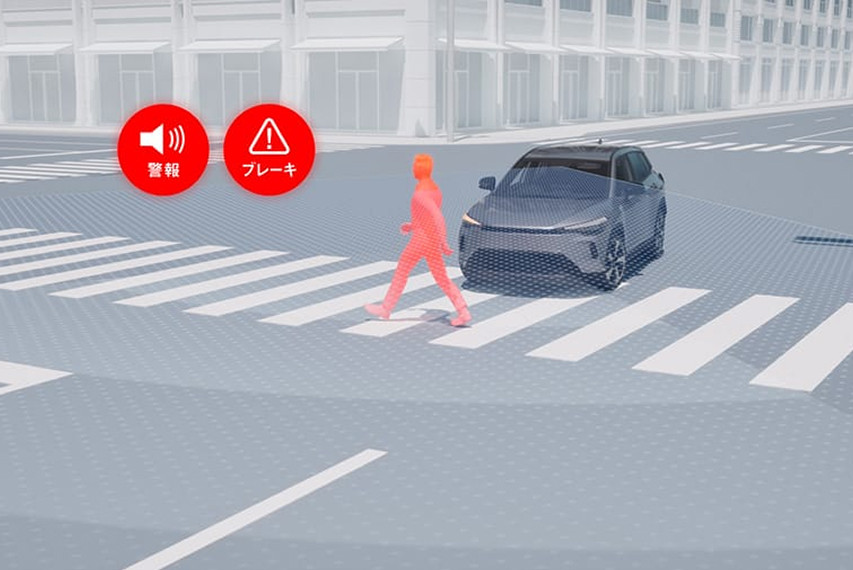 Photo from Toyota
Toyota Safety Sense update, plus 3D view camera and faster voice response
Toyota says the latest Toyota Safety Sense evolves through software work done with Arene, including modularisation, software evaluation, and improvements to image recognition and automatic braking control, alongside better camera and radar performance.
Key changes Toyota highlights include:
-
Pre-collision Safety that detects deceleration of vehicles ahead more quickly, and can also detect vehicles emerging from behind other cars at intersections, plus an updated low-speed Acceleration Suppression Function that works while turning as well as straight-line driving.
-
Radar Cruise Control with earlier recognition of surrounding vehicles, including better detection of merging vehicles at close range in low-speed traffic, and earlier detection of turn signals.
-
Driver emergency response system gains a shoulder stop function, where the car warns the driver, activates hazard lights, then slows and stops in-lane or on the shoulder if an emergency is detected.
Toyota also calls out a Panoramic View Monitor with 3D View, another Toyota first claim (again tied to “As of December 2025 according to Toyota Motor Corporation research”), where users can swipe the screen to view the surroundings from different angles.
On infotainment, Toyota is fitting a 12.9-inch display audio as standard across all models, and says the voice recognition response is about three times faster than before, responding within about one second after the user speaks.
 Photo by Adam Aubrey
Japan pricing and sales target
For Japan, Toyota has published pricing (including consumption tax, excluding recycling fees, with separate pricing for Okinawa):
-
Z (HEV, E-Four): 4,900,000 yen (RM128,870)
-
Adventure: 4,500,000 yen (RM118,350)
Toyota also lists a base sales volume target for Japan of 3,000 HEV units per month. A PHEV model is scheduled to launch within FY2026.
Accessories and appearance packages will be offered through Toyota genuine parts and accessories, MODELLISTA, and TZ accessories, with multiple package themes depending on grade.
Also Read: All-new 9th-gen Toyota Hilux debuts - Both BEV and ICE variants on offer

Toyota Car Models
-

Toyota Veloz -
Toyota Yaris -
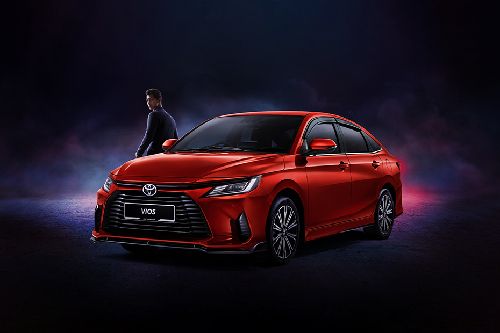
Toyota Vios -
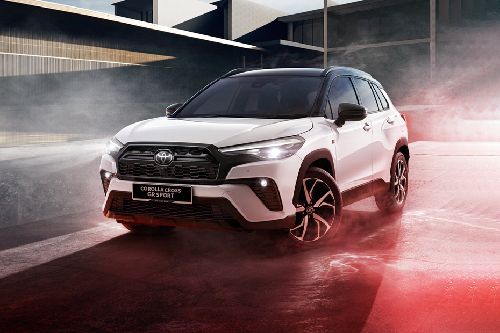
Toyota Corolla Cross -
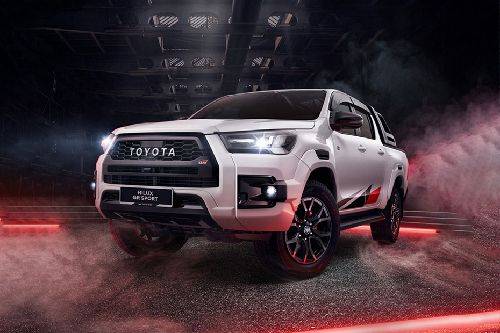
Toyota Hilux -
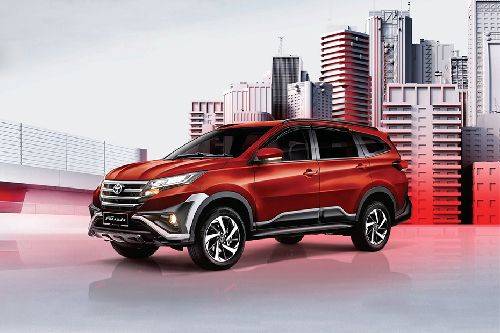
Toyota Rush -
Toyota Yaris Cross -
Toyota Fortuner -
Toyota Innova Zenix -
Toyota Harrier

KLIMS 2026


Malaysia Autoshow
Trending & Fresh Updates
- Latest
- Popular
-

-
-
Suzuki opens a new 1S centre in JuruSippi Vig, Sep 14, 2026
-
-
-
-
-
-
-
Electric Car: A comprehensive buying guidePurva Jain, Jul 01, 2024
-
Must watch automotive movies for enthusiastsPurva Jain, Feb 21, 2024
-
Car Rust-proofing 101: All you need to knowPurva Jain, Feb 15, 2024





You might also be interested in
- News
- Featured Stories



Toyota Featured Cars
- Latest
- Upcoming
- Popular
-
 Toyota Yaris CrossRM 99,900 - 109,900 OTR Price Kuala LumpurEMI : RM 1,167 x 844 (1 Reviews) VIEW SEPTEMBER OFFERS
 -
Toyota Hilux BEVRM 226,300 OTR Price Kuala LumpurEMI : RM 2,644 x 84Write a Review VIEW SEPTEMBER OFFERS
-
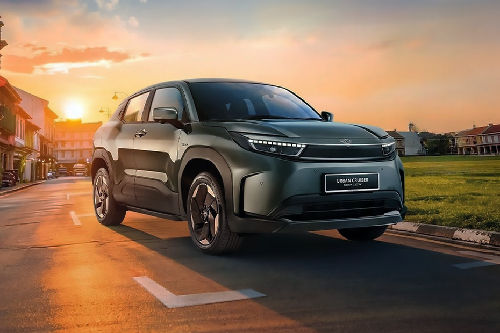
Toyota Urban Cruiser EVRM 198,000 OTR Price Kuala LumpurEMI : RM 2,313 x 84Write a Review VIEW SEPTEMBER OFFERS
-
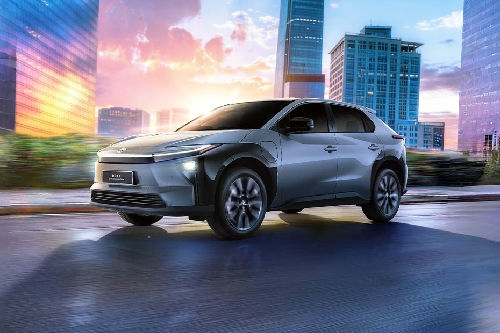
Toyota bZ4XRM 220,000 OTR Price Kuala LumpurEMI : RM 2,571 x 844 (1 Reviews) VIEW SEPTEMBER OFFERS
-
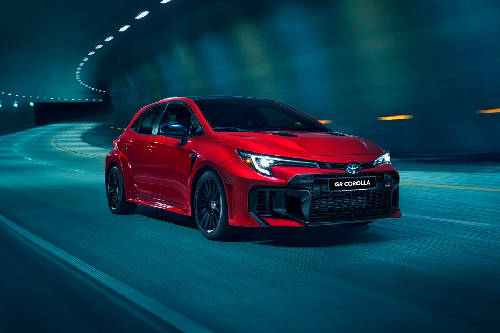
Toyota GR CorollaRM 367,000 - 378,950 OTR Price Kuala LumpurEMI : RM 4,289 x 844.48 (21 Reviews) VIEW SEPTEMBER OFFERS
-
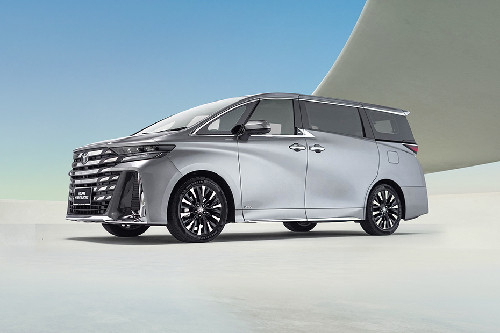
Toyota Vellfire HEVRM 549,900 OTR Price Kuala LumpurEMI : RM 6,426 x 845 (1 Reviews) VIEW SEPTEMBER OFFERS
-
-
-
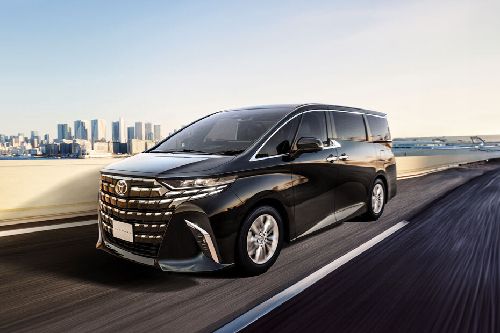
Toyota Alphard HEVRM 570,000 Expected Price Kuala LumpurExpected Launch TBA Alert Me When Launched
-
Toyota VelozRM 95,000 OTR Price Kuala LumpurEMI : RM 1,110 x 844.44 (34 Reviews) VIEW SEPTEMBER OFFERS
-
Toyota YarisRM 70,490 OTR Price Kuala LumpurEMI : RM 1,028 x 844.28 (63 Reviews) VIEW SEPTEMBER OFFERS
-
Toyota ViosRM 89,600 - 95,500 OTR Price Kuala LumpurEMI : RM 1,047 x 844.17 (71 Reviews) VIEW SEPTEMBER OFFERS
-
Toyota Corolla CrossRM 130,900 - 146,000 OTR Price Kuala LumpurEMI : RM 1,529 x 844.26 (47 Reviews) VIEW SEPTEMBER OFFERS
-
Toyota HiluxRM 103,880 - 169,080 OTR Price Kuala LumpurEMI : RM 1,213 x 844.29 (69 Reviews) VIEW SEPTEMBER OFFERS
-
Toyota RushRM 93,000 - 97,000 OTR Price Kuala LumpurEMI : RM 1,086 x 844.27 (61 Reviews) VIEW SEPTEMBER OFFERS
Latest Toyota Car Videos on Zigwheels

-
2024 Toyota Innova Zenix Hybrid | Part 306 May, 2024 .
-
2024 Toyota Innova Zenix Hybrid | Part 206 May, 2024 .
-
2024 Toyota Innova Zenix Hybrid | Part 106 May, 2024 .
-
Diesel vs Hybrid: Toyota Fortuner vs Corolla Cross Comparo | Zigwheels.Ph13 Sep, 2021 .
-
2021 Toyota Fortuner G 4x2 Review | Zigwheels.Ph13 Sep, 2021 .
-
2021 Toyota Corolla Cross | ZCinema13 Sep, 2021 .
-
GR Yaris or GR Supra? | Zigwheels.Ph13 Sep, 2021 .
-
2021 Toyota Vios GR-S | ZCinema13 Sep, 2021 .
-
2021 Toyota Corolla Cross Hybrid Review09 Aug, 2021 .
-
Trackday with the GR Yaris09 Aug, 2021 .