UMW Toyota pushes tech-neutral approach at CETA 2025, points to Mirai and Putrajaya hydrogen pilot

KUALA LUMPUR: UMW Toyota Motor (UMWT) used the Clean Energy Transition Asia Summit (CETA) in Kuala Lumpur, held from December 10 to 12, 2025, to restate where it stands on Malaysia’s shift to lower-emission transport, which is that the transition will not move in a straight line unless policy, infrastructure, industry capability, and public readiness improve together.
KEY TAKEAWAYS
What is Toyota’s “Multipathway” approach mentioned by UMWT at CETA 2025?
It’s Toyota’s tech-neutral strategy that supports multiple powertrains in parallel, including more efficient ICE, hybrids, battery EVs and hydrogen fuel-cell vehicles, depending on what suits local needs and infrastructure.What hydrogen projects did UMWT highlight at the summit?
UMWT pointed to Toyota Mirai units supplied for Sarawak Government use via SEDC, plus a Mobile Hydrogen Refueling Station (MHRS) pilot in Putrajaya under Malaysia’s Hydrogen Economy and Technology Roadmap (HETR), with nine Toyota fuel-cell vehicles said to be deployed nationwide.As a Foundation Partner of the summit through MobilityX, UMWT said it joined government, industry players, and regional stakeholders to push for “cleaner and more accessible mobility” across Malaysia and ASEAN, while positioning Toyota’s so-called Multipathway approach as a match for national frameworks like the National Energy Transition Roadmap (NETR) and the Low Carbon Mobility Blueprint (LCMB).
Also Read: 6th-gen Toyota RAV4 launched in Japan, Z and Adventure prices, GR SPORT and PHEV due by March 2026
Toyota’s pitch remains familiar, there is no single technology that fits all markets, especially in a region as varied as Malaysia and ASEAN. UMWT President Datuk Ravindran K. framed it as a practical responsibility rather than a theoretical one.
“As one of Malaysia’s longest-standing mobility partners, Toyota carries a responsibility to support national goals with solutions that are realistic, scalable, and beneficial to Malaysians today,” said Datuk Ravindran K., President of UMW Toyota Motor. “Our commitment includes advancing skills, strengthening infrastructure readiness, and building an ecosystem where every customer can transition confidently towards cleaner mobility. This is the essence of Toyota’s Multipathway strategy and our promise to Malaysia.”
In simple terms, UMWT is arguing for technology-neutral policies that allow multiple solutions to run in parallel, rather than forcing the market into a single direction too early. The company reiterated Toyota’s “Mobility for All” positioning, and listed internal combustion engines (ICE), hybrid electric vehicles (HEV), battery electric vehicles (BEV), and fuel cell electric vehicles (FCEV) as the pillars of that approach, with each serving different users and industries.
UMWT also leaned on the argument that ICE efficiency upgrades and hybridisation can deliver immediate CO₂ reductions, while BEVs depend heavily on the wider energy system, charging rollout, renewable energy growth, and grid upgrades, all of which are key themes under NETR. It added that Toyota Beyond Zero Malaysia was launched in 2024 as part of the brand’s longer-term direction.
Hydrogen, meanwhile, was positioned as more than just a future talking point. UMWT said it has already started pilot work locally, including supplying Toyota Mirai fuel cell vehicles to the Sarawak Government fleet via SEDC, and running what it described as Malaysia’s first Mobile Hydrogen Refueling Station (MHRS) pilot in Putrajaya under the Hydrogen Economy and Technology Roadmap (HETR). According to UMWT, nine Toyota hydrogen fuel cell vehicles are currently deployed nationwide.
CETA 2025 also doubled as the platform for the official launch of R.A.C.E to ZERO 2026, officiated by Deputy Prime Minister YAB Datuk Amar Haji Fadillah bin Haji Yusof, who is also the Minister of the Ministry of Energy Transition and Water Transformation (PETRA). UMWT said Datuk Ravindran K. accompanied him during the event, and described the initiative as a nationwide push to accelerate Malaysia’s net-zero transition, support clean energy projects, and develop capabilities across the country.
Beyond the headline themes, UMWT said it has been providing selected ministries and agencies with early exposure to electrified vehicles, which it framed as a way for decision-makers to better understand how these technologies perform under local driving conditions. On the MobilityX stage, UMWT Executive Director Mohd Shamsor Mohd Zain delivered a keynote on ASEAN’s mobility transition, and later joined Toyota Motor Asia Executive Vice President and CISO Pras Ganesh in a fireside discussion on regional technology pathways and what opportunities Malaysia could realistically pursue.
UMWT also used the summit to reiterate that Toyota’s Malaysia story is meant to be more than just sales and product launches. The company pointed to decades of local manufacturing investment and know-how transfer, and said this is part of building a workforce that can support more advanced mobility technologies as they enter the market. It added that collaboration remains central to the Multipathway narrative, citing the Mirai demonstrations in Sarawak and hydrogen refuelling pilots in Putrajaya as examples of how these trials require government, industry, and other partners to move in sync.
UMWT said CETA 2025 helped it deepen engagement with government, industry, and academia, and that it will continue focusing on solutions, services, and talent development tied to Malaysia’s clean-mobility targets and long-term competitiveness.
Also Read: UMW Toyota sold 8,574 units in November; opens two new facilities in Johor

Toyota Car Models
-

Toyota Veloz -
Toyota Yaris -
Toyota Vios -
Toyota Corolla Cross -
Toyota Hilux -
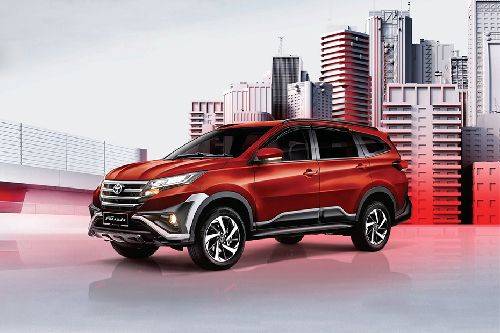
Toyota Rush -
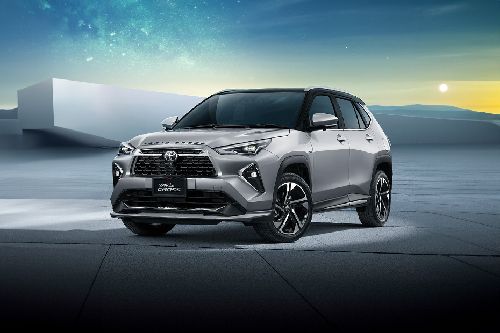
Toyota Yaris Cross -
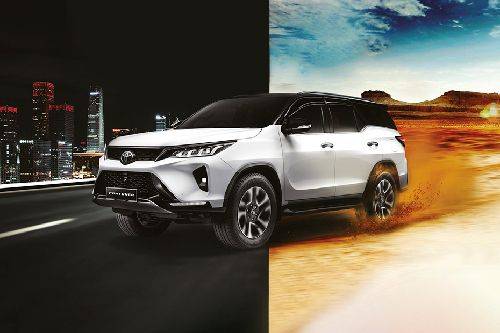
Toyota Fortuner -
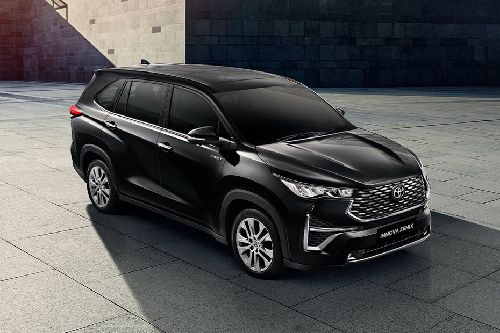
Toyota Innova Zenix -
Toyota Harrier
Malaysia Autoshow


Trending & Fresh Updates
- Latest
- Popular
-

-
-
-
-
-
-
-
-
-
Electric Car: A comprehensive buying guidePurva Jain, Jul 01, 2024
-
Must watch automotive movies for enthusiastsPurva Jain, Feb 21, 2024
-
Car Rust-proofing 101: All you need to knowPurva Jain, Feb 15, 2024




You might also be interested in
- News
- Featured Stories


Toyota Featured Cars
- Latest
- Upcoming
- Popular
-
 Toyota Yaris CrossRM 99,900 - 109,900 OTR Price SegambutEMI : RM 1,167 x 844 (1 Reviews) VIEW MAY OFFERS
 -
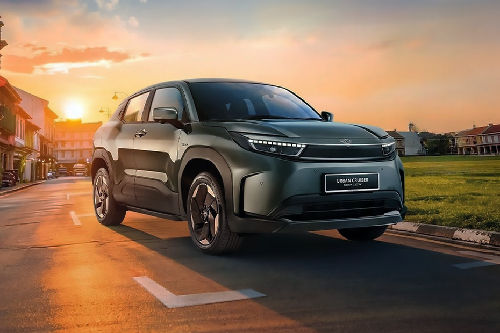
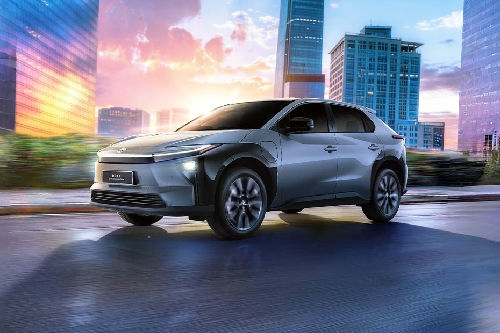
Toyota Urban Cruiser EVRM 198,000 OTR Price SegambutEMI : RM 2,313 x 84Write a Review VIEW MAY OFFERS
-
-
-
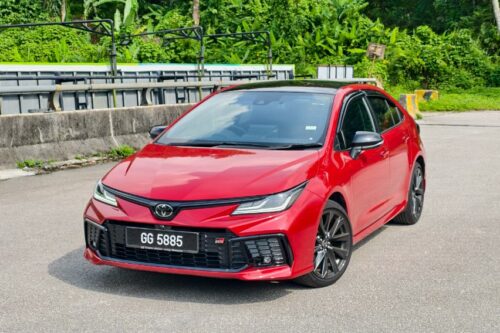
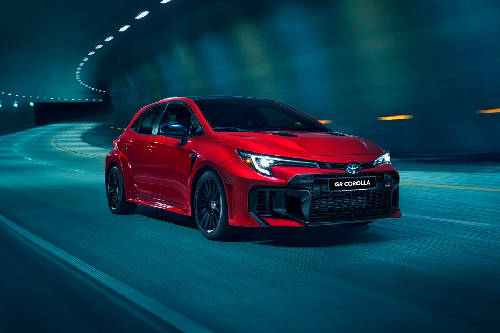
Toyota GR CorollaRM 367,000 - 378,950 OTR Price SegambutEMI : RM 4,289 x 844.48 (21 Reviews) VIEW MAY OFFERS
-
-
-
Toyota YarisRM 88,000 - 99,600 OTR Price SegambutEMI : RM 1,028 x 844.28 (63 Reviews) VIEW MAY OFFERS
-
Toyota ViosRM 89,600 - 95,500 OTR Price SegambutEMI : RM 1,047 x 844.17 (71 Reviews) VIEW MAY OFFERS
-
Toyota Corolla CrossRM 130,900 - 146,000 OTR Price SegambutEMI : RM 1,529 x 844.26 (47 Reviews) VIEW MAY OFFERS
-
Toyota HiluxRM 103,880 - 169,080 OTR Price SegambutEMI : RM 1,213 x 844.29 (69 Reviews) VIEW MAY OFFERS
-
Toyota RushRM 93,000 - 97,000 OTR Price SegambutEMI : RM 1,086 x 844.27 (61 Reviews) VIEW MAY OFFERS
Latest Toyota Car Videos on Zigwheels

-
2024 Toyota Innova Zenix Hybrid | Part 306 May, 2024 .
-
2024 Toyota Innova Zenix Hybrid | Part 206 May, 2024 .
-
2024 Toyota Innova Zenix Hybrid | Part 106 May, 2024 .
-
Diesel vs Hybrid: Toyota Fortuner vs Corolla Cross Comparo | Zigwheels.Ph13 Sep, 2021 .
-
2021 Toyota Fortuner G 4x2 Review | Zigwheels.Ph13 Sep, 2021 .
-
2021 Toyota Corolla Cross | ZCinema13 Sep, 2021 .
-
GR Yaris or GR Supra? | Zigwheels.Ph13 Sep, 2021 .
-
2021 Toyota Vios GR-S | ZCinema13 Sep, 2021 .
-
2021 Toyota Corolla Cross Hybrid Review09 Aug, 2021 .
-
Trackday with the GR Yaris09 Aug, 2021 .