
NVIDIA launches “Alpamayo” open AI models and tools aimed at safer reasoning-based autonomous driving
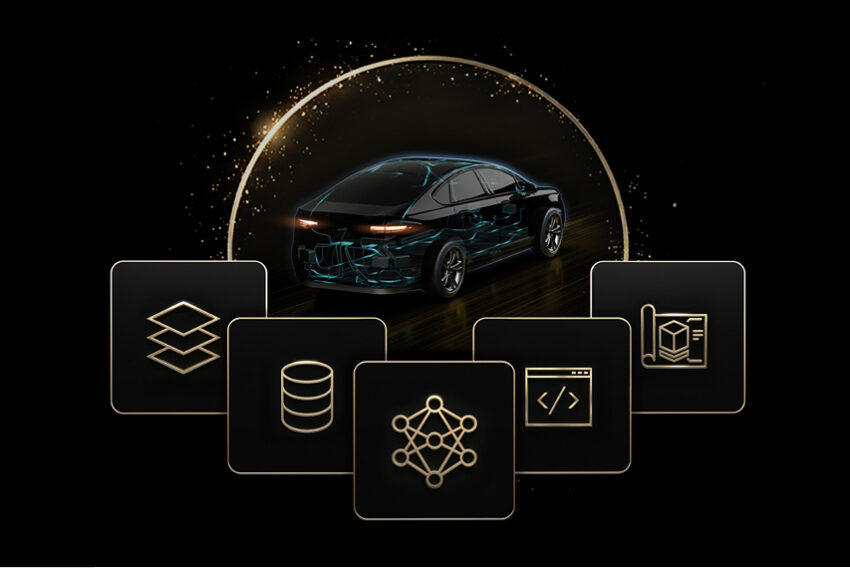
KUALA LUMPUR: NVIDIA has unveiled the NVIDIA Alpamayo family, a new set of open AI models, simulation tools and datasets designed to speed up the next phase of autonomous vehicle (AV) development, with a specific focus on safety and the toughest “long tail” edge cases.
KEY TAKEAWAYS
What is NVIDIA Alpamayo?
An open set of AI models, simulation tools and datasets aimed at reasoning-based autonomous driving development.Does Alpamayo run directly in a car?
No, NVIDIA frames it as a large “teacher” model developers distill into smaller runtime models for their AV stacks.Those long-tail scenarios are the rare, complex situations that don’t appear often in training data but can expose weaknesses in autonomous systems, things like unusual road layouts, unpredictable human behaviour, or messy combinations of weather, traffic and obstructed visibility.
 Photo from Mercedes-Benz
Also Read: Hyundai Motor Group pushes human-robot collaboration roadmap, Atlas to start factory work from 2028
NVIDIA argues that traditional AV stacks, which often separate perception and planning, can hit scalability limits when new or unusual situations appear. End-to-end learning has improved quickly, but the company says handling the long tail still requires models that can reason about cause and effect, especially when conditions fall outside what the system has previously learned.
Alpamayo is NVIDIA’s push toward “reasoning-based” autonomy, using chain-of-thought, reasoning-based vision language action (VLA) models that can work through novel scenarios step by step, then output reasoning traces that explain why a driving decision was made.
NVIDIA says this improves capability and explainability, both important if autonomy is going to scale beyond controlled deployments, and adds that the work is underpinned by its NVIDIA Halos safety system.

“The ChatGPT moment for physical AI is here — when machines begin to understand, reason and act in the real world,” said Jensen Huang, founder and CEO of NVIDIA. “Robotaxis are among the first to benefit. Alpamayo brings reasoning to autonomous vehicles, allowing them to think through rare scenarios, drive safely in complex environments and explain their driving decisions — it’s the foundation for safe, scalable autonomy.”
Crucially, NVIDIA isn’t positioning Alpamayo as something that runs directly in production vehicles. Instead, Alpamayo models are framed as large “teacher” models, intended to be fine-tuned and distilled into smaller models that can become the backbone of an AV stack, or used to build development tools such as reasoning-based evaluators and auto-labeling systems.
Three-part open ecosystem: models, simulation, datasets
NVIDIA says Alpamayo is built around three pillars, released as an open ecosystem that developers and researchers can build on.
Alpamayo 1 is described as the industry’s first chain-of-thought reasoning VLA model for the AV research community, now available on Hugging Face. NVIDIA says it uses video input to generate trajectories alongside reasoning traces, and is based on a 10-billion-parameter architecture. The release includes open model weights and open-source inferencing scripts. NVIDIA also says future models in the family will grow in parameter count and reasoning depth, expand input and output flexibility, and include options for commercial usage.
AlpaSim is a fully open-source, end-to-end simulation framework for high-fidelity AV development, available on GitHub. NVIDIA says it supports realistic sensor modelling, configurable traffic dynamics and scalable closed-loop testing, which are essential for validating behaviour and refining driving policies without waiting for rare real-world events.
Physical AI Open Datasets are also being released on Hugging Face. NVIDIA says this is a large-scale open dataset for autonomous driving with more than 1,700 hours of driving data collected across a wide range of geographies and conditions, including rare edge cases relevant to reasoning-based architectures.
NVIDIA’s claim is that the combination supports a self-reinforcing loop, open models help improve training and evaluation, datasets expand coverage of edge cases, and simulation accelerates validation and iteration.
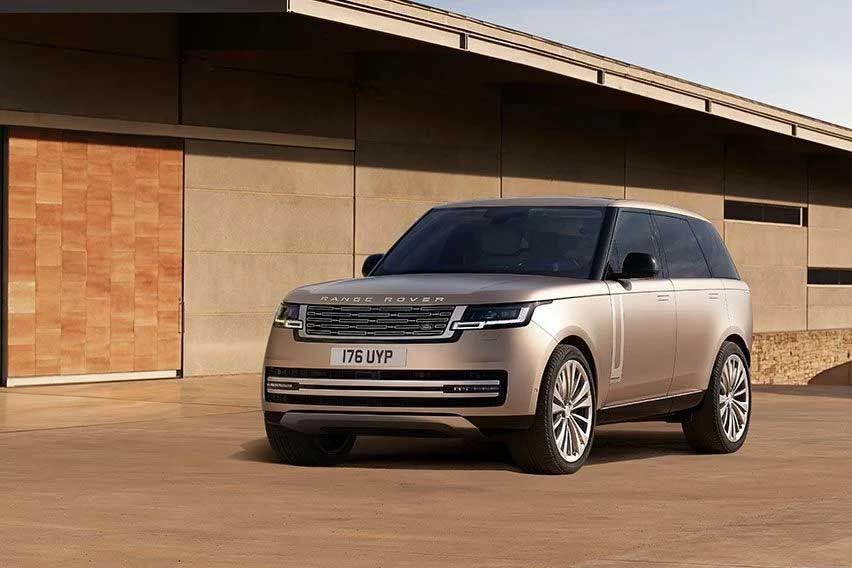 Photo from Land Rover
Industry interest, Lucid, JLR, Uber and Berkeley DeepDrive
NVIDIA says mobility players and industry experts including Lucid, JLR, Uber and Berkeley DeepDrive are showing interest in Alpamayo for building reasoning-based AV stacks aimed at level 4 autonomy.
“The shift toward physical AI highlights the growing need for AI systems that can reason about real-world behavior, not just process data,” said Kai Stepper, vice president of ADAS and autonomous driving at Lucid Motors. “Advanced simulation environments, rich datasets and reasoning models are important elements of the evolution.”
“Open, transparent AI development is essential to advancing autonomous mobility responsibly,” said Thomas Müller, executive director of product engineering at JLR. “By open-sourcing models like Alpamayo, NVIDIA is helping to accelerate innovation across the autonomous driving ecosystem, giving developers and researchers new tools to tackle complex real-world scenarios safely.”
“Handling long-tail and unpredictable driving scenarios is one of the defining challenges of autonomy,” said Sarfraz Maredia, global head of autonomous mobility and delivery at Uber. “Alpamayo creates exciting new opportunities for the industry to accelerate physical AI, improve transparency and increase safe level 4 deployments.”
Where Alpamayo sits in NVIDIA’s wider stack
Beyond Alpamayo, NVIDIA is pointing developers toward its broader platforms, including NVIDIA Cosmos and NVIDIA Omniverse, plus its NVIDIA DRIVE ecosystem. The workflow it’s pushing is to fine-tune on proprietary fleet data, integrate into NVIDIA DRIVE Hyperion using NVIDIA DRIVE AGX Thor compute, then validate performance in simulation before commercial rollout.
For the industry, the real question is whether reasoning traces and open tooling can meaningfully reduce long-tail risk in practice, not just on paper. Alpamayo is NVIDIA’s bet that autonomy won’t scale on perception alone, it needs systems that can reason through the weird stuff and explain what they did.
Also Read: Mercedes-Benz CLA EV Malaysia preview set for Jan 15, here’s what the C178 specs might look like

Malaysia Autoshow


Trending & Fresh Updates
- Latest
- Popular
-

-
-
-
-
-
-
-
-
-
Electric Car: A comprehensive buying guidePurva Jain, Jul 01, 2024
-
Must watch automotive movies for enthusiastsPurva Jain, Feb 21, 2024
-
Car Rust-proofing 101: All you need to knowPurva Jain, Feb 15, 2024









You might also be interested in
- News
- Featured Stories








Featured Cars
- Latest
- Upcoming
- Popular
-

-
-
Nissan Serena e-PowerRM 154,800 - 179,800 OTR Price Kuala LumpurEMI : RM 1,808 x 84Write a Review VIEW MARCH OFFERS
-
Honda CR-VRM 178,200 - 195,900 OTR Price Kuala LumpurEMI : RM 2,083 x 844.29 (62 Reviews) VIEW MARCH OFFERS
-
Proton e.MAS 7 PHEVRM 109,800 - 129,800 OTR Price Kuala LumpurEMI : RM 1,282 x 84Write a Review VIEW MARCH OFFERS

-
Toyota Yaris CrossRM 130,400 Expected Price Kuala LumpurExpected Launch TBA Alert Me When Launched
-
-
-
-


-
Perodua BezzaRM 34,580 - 49,980 OTR Price Kuala LumpurEMI : RM 404 x 844.19 (81 Reviews) VIEW MARCH OFFERS
-
Toyota VelozRM 95,000 OTR Price Kuala LumpurEMI : RM 1,110 x 844.44 (34 Reviews) VIEW MARCH OFFERS
-
Perodua AlzaRM 62,500 - 75,500 OTR Price Kuala LumpurEMI : RM 730 x 844.19 (78 Reviews) VIEW MARCH OFFERS
-
Perodua AxiaRM 22,000 - 49,500 OTR Price Kuala LumpurEMI : RM 257 x 844.12 (75 Reviews) VIEW MARCH OFFERS
-
Honda CityRM 84,900 - 111,900 OTR Price Kuala LumpurEMI : RM 991 x 844.23 (70 Reviews) VIEW MARCH OFFERS

Latest Car Videos on Zigwheels

-
2026 Perodua Traz Review – Is It Worth a Try?04 Feb, 2026 .
-
1 Tank, 3 Days, 1,200 KM… The Chery Tiggo 7 PHEV Actually Did It10 Dec, 2025 .
-
The Jaecoo J8 Might Be the Best SUV Under RM200k… Here’s Why!10 Dec, 2025 .
-
Volvo XC90 T8 Ultra Review – The “One and Done” SUV28 Oct, 2025 .
-
2025 Proton X50 Facelift Review - Still The One To Buy?26 Sep, 2025 .
-
BMW M340i 50 Jahre Review | The Car That Makes You Take the Long Way Home12 Sep, 2025 .
-
2025 BYD Seal facelift Malaysia review – Adaptive Suspension fixes Its biggest weakness?10 Sep, 2025 .
-
Chery Tiggo Cross Malaysia – Hibrid vs Turbo, Mana Lagi Best?02 Sep, 2025 .
-
MINI JCW Aceman Malaysia Review – Fun, Flawed, and Fully Electric19 Aug, 2025 .
-
MG S5 EV First Drive Review – The driver’s EV Malaysia didn’t expect?06 Aug, 2025 .