100 new Hyundais by 2030, and the ones that matter for Malaysia
KUALA LUMPUR: Every carmaker does one of these eventually. A room in Seoul, a CEO on a stage, a deck aimed squarely at the people who own the stock rather than the cars.
KEY TAKEAWAYS
What did Hyundai announce at its 2026 CEO Investor Day?
Hyundai reaffirmed its target of 5.55 million global sales a year by 2030, roughly 6 percent of the global market. It also confirmed more than 100 launches and refreshes by 2030, its first extended-range EV, and a push into segments it currently skips, including a midsize pickup.How many new Hyundai models are coming by 2030?
More than 100 launches and refreshes globally, split 58 in North America, 49 in Korea, 41 in Europe, 26 in India and 22 in China. Of those, 18 or more are entries into products and segments Hyundai doesn't currently sell in. Seven arrive within the next eight months.Hyundai's 2026 CEO Investor Day on 26 August was mostly that. Buried under the margin talk, though, was a fairly serious product list, and a few lines in it are worth a closer look from where we sit.
The top line is 5.55 million cars a year by 2030, roughly 6 percent of the global market. Hyundai has been repeating that figure for a while now and repeated it again here, which in investor-day language means nothing has gone wrong yet.
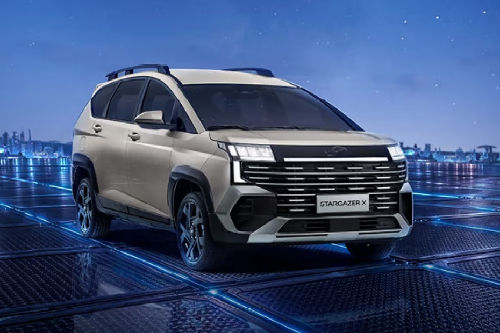
Also Read: Top 5 things to know about the upcoming Hyundai Stargazer
A hundred cars, and where they're actually going
More than 100 launches and refreshes globally by 2030. The split is 58 in North America, 49 in Korea, 41 in Europe, 26 in India and 22 in China. Buried in that number are 18 or more entries into segments Hyundai doesn't currently play in at all.
Read the regional split again and you'll spot the problem. Southeast Asia doesn't get its own line. Not a snub exactly, just a reflection of where the money is we suppose, but it does mean anything that reaches Malaysia arrives as spillover from a Korean, Indian or global programme. Nobody in Seoul is drawing a car for us specifically.
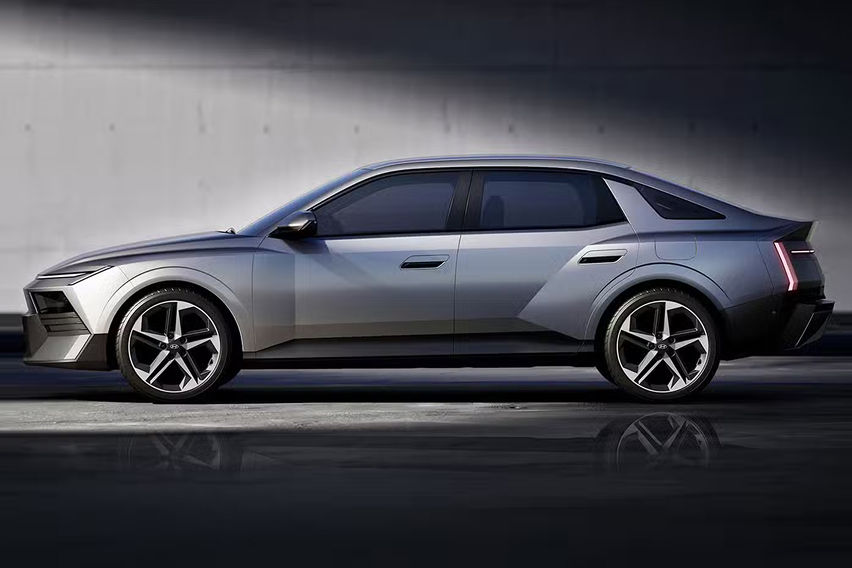
Seven of those models turn up in the next eight months. Hyundai named the all-new Elantra, the all-new Ioniq 3, the all-new Tucson and Tucson Hybrid, the first Santa Fe EREV, an A-segment electric SUV built for India, an all-new global B-segment SUV, and a separate B-segment SUV for Europe.
Electrified models are supposed to hit 60 percent of the sales mix by 2030. That was 23 percent in 2025, so it's a steep climb, and hybrids rather than pure EVs are doing most of the work.
"Our fundamentals have never been stronger. Hyundai Motor Group is the third-largest automotive group and the second-most profitable, which gives us the ability to invest while others are pulling back. We are bringing more than 100 new models to market by 2030 with multiple powertrain options and raising our operating margin above 9 percent. We are leveraging partnerships to scale new technologies and opportunities and becoming a physical AI company which will produce and deploy robots and robotaxis."
José Muñoz, President and CEO of Hyundai Motor Company
Photo from Hyundai
The small SUV Malaysia doesn't have
That all-new global B-segment SUV is the one I'd keep tabs on.
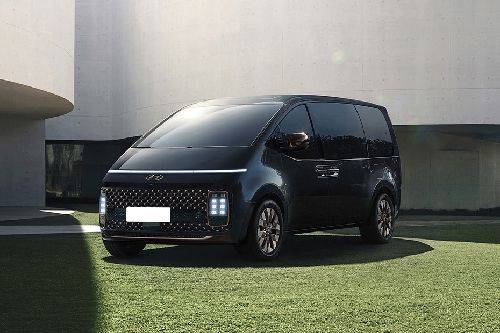
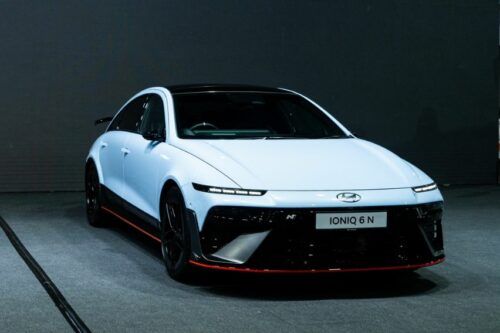
Hyundai Motor Malaysia's showroom right now is Tucson from RM143,888, Santa Fe from RM225,000, Staria from RM179,888, the Ioniq 5 N at RM443,888, the Ioniq 6 N at RM449,888, and the Stargazer MPV that has had two previews with estimated pricing from around RM99,000.
Look at that list and there's an obvious gap sitting exactly where the Proton X50, Perodua Ativa, Honda HR-V and Chery Tiggo Cross live. That's the segment where the volume is in this country, and Hyundai has nothing in it.
The word "global" in the model description matters, because the India and Europe B-SUVs are clearly built for their own markets. A global car at least has a chance of finding its way here. No markets confirmed, no timing given, so don't start saving yet.
EREV, and why the first one isn't coming here
The extended-range EV is the headline technology. Simple idea, and a good one: there's an engine on board, it never drives the wheels, it just generates electricity. You get the EV driving experience without the range panic.
The Santa Fe EREV lands in the first half of 2027 targeting more than 600 miles of total range, call it around 965 km. Genesis follows with an EREV SUV in early 2027 aiming past 640 miles, somewhere near 1,030 km.
The catch is where it's being built. Hyundai Motor Manufacturing Alabama, for American buyers, which means left-hand drive and no right-hand-drive case that anyone has bothered to mention. Nobody should be waiting on this one.
What's more interesting is the engineering. Hyundai says the EREV uses less than half the battery capacity of a comparable EV while giving the same battery performance and EV feel. Half the battery is a lot of cost taken out of the car, and for a country where the charging network gets thin the moment you leave the expressway corridors, that trade-off makes a great deal of sense. If a right-hand-drive version ever exists, it suits us better than another big-battery EV does.
The pickup
Hyundai calls them "white spaces", the segments where it barely competes today. It reckons they account for around 29 percent of all automotive sales, and the list includes body-on-frame vehicles, light commercial vehicles, and a midsize pickup.
Pickups are proper volume in Malaysia, and the Toyota Hilux, Ford Ranger, Isuzu D-Max and Mitsubishi Triton have spent decades building the dealer coverage and fleet trust that segment runs on. A new nameplate walking in cold would have a rough few years.
Then again, this is a company that took its Malaysian operation in-house in 2025 and immediately committed to seven CKD models out of the Inokom plant in Kulim, Kedah. The Staria went local first and the Tucson and Santa Fe were scheduled to follow in the second quarter of this year. Hyundai localises when it means it. No timing on the pickup beyond the 2030 horizon, though.
N is finally getting something cheaper
Hyundai wants 100,000 N sales a year by 2030, and a new volume high-performance tier is joining the range underneath the existing cars.
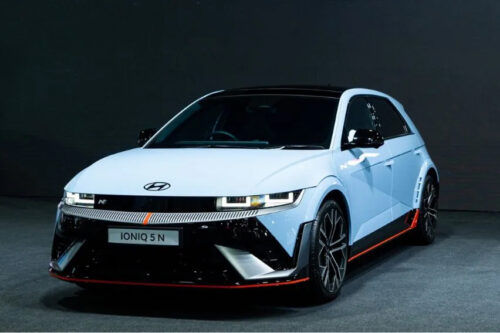
The Ioniq 5 N and 6 N are here, they're superb, and at RM443,888 and RM449,888 almost nobody is going to own one. A cheaper rung on the N ladder is what turns the badge from something people admire on Instagram into something that turns up on a shortlist next to a Golf GTI or a GR Yaris. Still no models, no pricing, no dates.
The battery stuff
Hyundai has developed its own cells in-house. They put out more than double what the company's previous high-nickel cells managed and charge 40 percent quicker, and they go into the 2027 EREV first.
The line that should interest ordinary buyers is further down. EVs launching next year move to mid-nickel NCM cells, which Hyundai says cost around 30 percent less while holding up fine in real-world driving. Batteries are most of what makes an EV expensive, so that's a number that eventually reaches a price list.
There's safety work too. A cloud-based battery management system is meant to add an average 20 percent to battery life by 2028. Thermal Runaway Protection goes further than the usual approach of buying you time in a battery fire, blocking heat transfer between cells at the source using a barrier structure and a heat-dissipating battery design. Hyundai ran it through more than 200 repeated tests on prismatic and pouch NCM batteries. It debuts on the Genesis GV90.
What Malaysia realistically gets
None of this lands here next year. What we get is decided by what Kulim can justify building, and that maths favours MPVs and SUVs under RM200,000 over EREVs and flagship EVs.
The Stargazer is the test. If a B-segment MPV can hold its own against the Perodua Alza and Mitsubishi Xpander, the argument for bringing that global B-segment SUV to Malaysia becomes a much easier one to make internally. The midsize pickup and the cheaper N tier are the other two threads worth pulling, and both are 2028 conversations at the earliest.
In the meantime Hyundai Malaysia has the unglamorous work to finish: get the CKD line running smoothly, widen the dealer and service network, and give buyers a reason to believe the resale value will hold. Everything on those Seoul slides depends on that part going right first.
Also Read: Hyundai Stargazer Malaysia opens for booking at KLIMS 2026, from RM99k

Hyundai Car Models
-

Hyundai Staria -
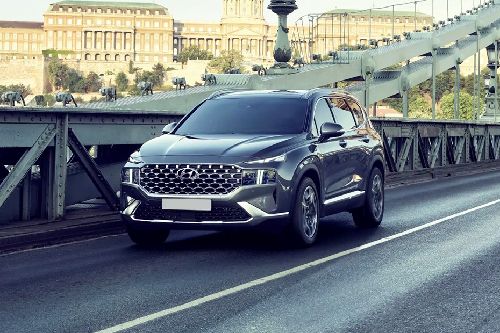
Hyundai Santa Fe -
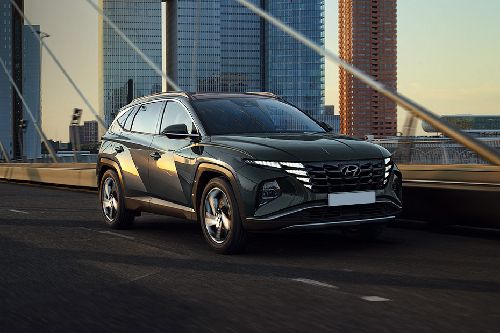
Hyundai Tucson -
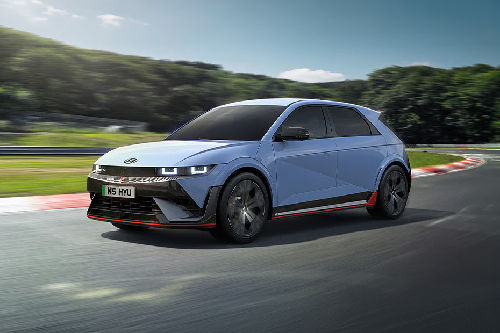
Hyundai Ioniq 5 N -
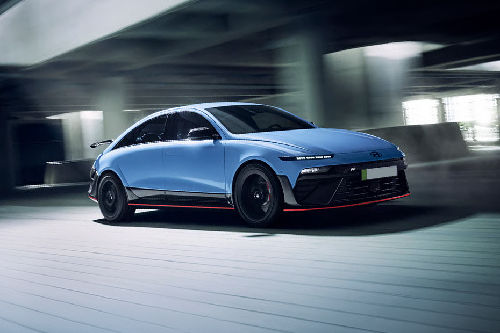
Hyundai Ioniq 6 N -
Hyundai Stargazer
KLIMS 2026


Malaysia Autoshow
Trending & Fresh Updates
- Latest
- Popular
-

-
-
-
-
-
-
-
-
-
Electric Car: A comprehensive buying guidePurva Jain, Jul 01, 2024
-
Must watch automotive movies for enthusiastsPurva Jain, Feb 21, 2024
-
Car Rust-proofing 101: All you need to knowPurva Jain, Feb 15, 2024

You might also be interested in
- News
- Featured Stories
-
-
-
-
Top 10 best-selling EVs in Malaysia for 2025Sippi Vig, Dec 26, 2025
-
-
Top car launches of 2025 in MalaysiaSippi Vig, Dec 17, 2025
Hyundai Featured Cars
- Latest
- Popular
-

-
Hyundai Ioniq 5 NRM 443,888 OTR Price Shah AlamEMI : RM 5,187 x 84Write a Review VIEW SEPTEMBER OFFERS
-
Hyundai Ioniq 6 NRM 449,888 OTR Price Shah AlamEMI : RM 5,257 x 84Write a Review VIEW SEPTEMBER OFFERS
-
Hyundai StariaRM 179,888 - 267,888 OTR Price Shah AlamEMI : RM 2,101 x 844.5 (14 Reviews) VIEW SEPTEMBER OFFERS
-
Hyundai StariaRM 179,888 - 267,888 OTR Price Shah AlamEMI : RM 2,101 x 844.5 (14 Reviews) VIEW SEPTEMBER OFFERS
-
Hyundai Santa FeRM 185,888 - 205,888 OTR Price Shah AlamEMI : RM 2,172 x 844.45 (20 Reviews) VIEW SEPTEMBER OFFERS
-
Hyundai TucsonRM 158,888 - 195,888 OTR Price Shah AlamEMI : RM 1,856 x 844.33 (9 Reviews) VIEW SEPTEMBER OFFERS
-
Hyundai Ioniq 5 NRM 443,888 OTR Price Shah AlamEMI : RM 5,187 x 84Write a Review VIEW SEPTEMBER OFFERS
-
Hyundai Ioniq 6 NRM 449,888 OTR Price Shah AlamEMI : RM 5,257 x 84Write a Review VIEW SEPTEMBER OFFERS
-
Latest Hyundai Car Videos on Zigwheels

-
2025 Hyundai Santa Fe Hybrid Review | The Hidden Gem Among SUVs16 Jan, 2025 .
-
Hyundai i20 N Line - Hot Or Not? | Walkaround | PowerDrift13 Sep, 2021 .