New 2027 BMW 3 Series (G50) nearly finished: six-cylinder lives, 443 hp M350 xDrive leads the range
- KEY TAKEAWAYS
- Petrol and electric are now separate models
- Neue Klasse styling for both
- Longer wheelbase, wider tracks and some enormous wheels
- M350 xDrive replaces the M340i
- Drift Moment sounds fun, but read the small print
- The software difference between 3 Series and i3 is perhaps even more interesting
- BMW M350 xDrive: key specifications
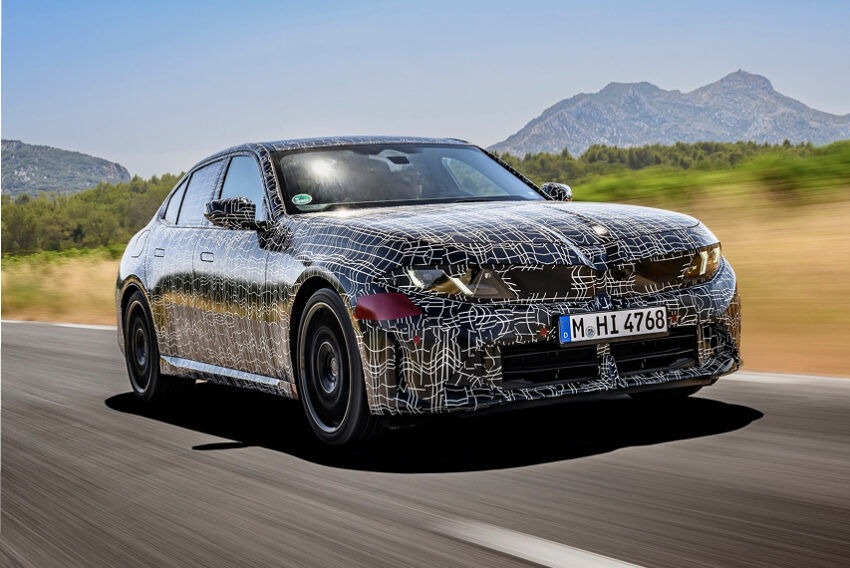
KUALA LUMPUR: BMW has completed its final round of summer chassis testing for the next-generation 3 Series, bringing the petrol-powered model very close to the end of its development programme.
KEY TAKEAWAYS
When will the new BMW 3 Series launch?
BMW has not announced the full launch timing yet, but production of the M350 xDrive is scheduled to begin in the second half of 2026.What engine does the BMW M350 xDrive use?
The M350 xDrive uses a 3.0-litre BMW TwinPower Turbo inline-six with 48V mild-hybrid assistance, producing a combined 443 hp and 580 Nm.BMW describes the car as being in “the final phase of series production development”. Put more simply, most of the hardware is now settled. From here, engineers are largely working on the final calibration and fine-tuning before production begins.
The latest testing took place at BMW’s proving ground near Miramas in southern France, where the prototype was driven across everything from a high-speed oval to handling circuits and roads with different surface conditions.
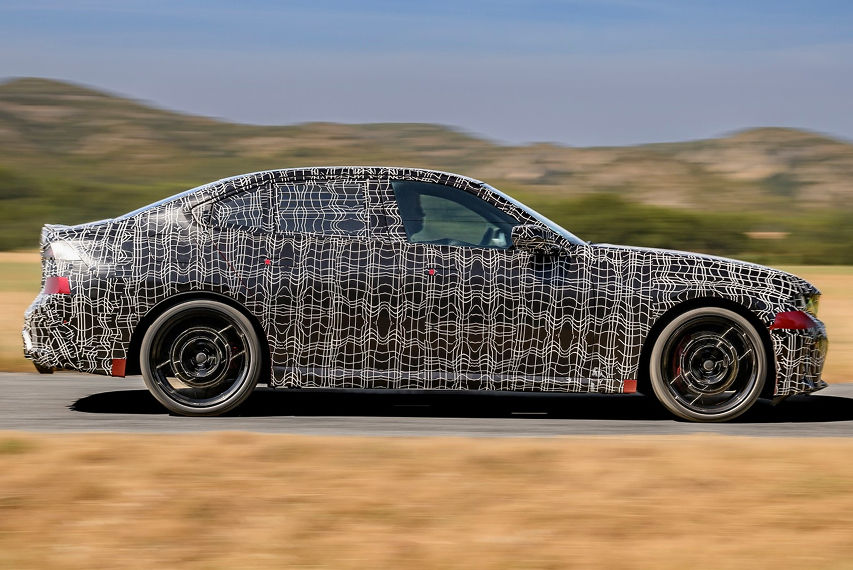 Photo from BMW
Also Read: 50 more units of new BMW 218 Gran Coupé M Sport allocated for Malaysia
That follows earlier winter testing in Arjeplog and development work at the Nürburgring. None of this is particularly unusual for a new BMW sedan, but it does give us a good indication of just how far along the new 3 Series now is.
Here is what BMW has confirmed so far.
Petrol and electric are now separate models
Perhaps the biggest change is that the combustion-powered 3 Series and the fully electric i3 are no longer simply different powertrain versions of the same car.
Instead, they are two distinct models that will be sold alongside one another.
The electric i3 made its design debut in March 2026, while the petrol-powered 3 Series, codenamed G50, continues with four- and six-cylinder combustion engines supported by 48V mild-hybrid technology.
BMW calls this its “technology-open” approach to drivetrains.
For customers, the explanation is much simpler. If you want BMW’s electric compact executive sedan, you buy the i3. If you still want an internal-combustion engine, you buy the 3 Series.
They belong to the same family, but they are now fundamentally different cars.
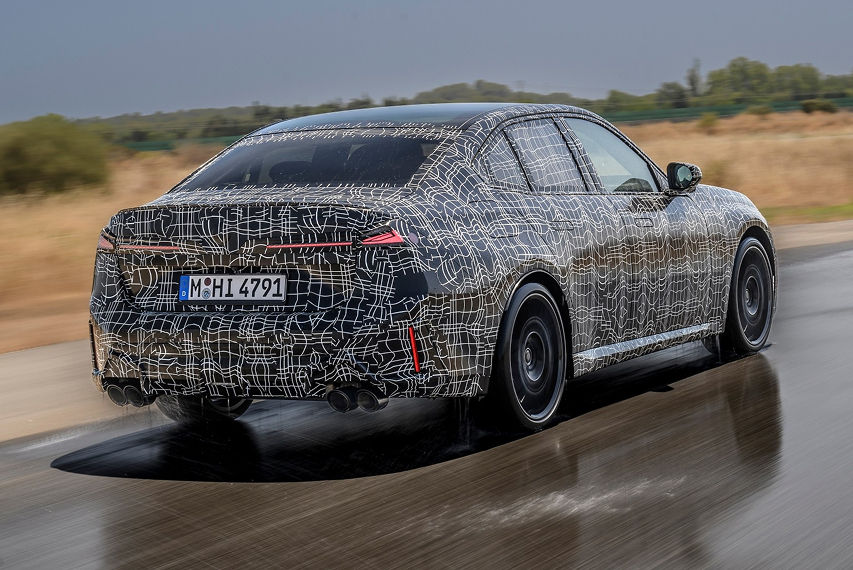 Photo from BMW
Neue Klasse styling for both
Visually, both models adopt BMW’s Neue Klasse design language, including a modern interpretation of the brand’s familiar four-eye front-end treatment.
The traditional 3 Series proportions remain, with a long wheelbase, short overhangs and what BMW refers to as a “2.5-box” silhouette.
Or, in less corporate language, it still looks like a sports sedan.
BMW says the i3 and combustion-powered 3 Series will differ mainly in details related to their respective drivetrains.
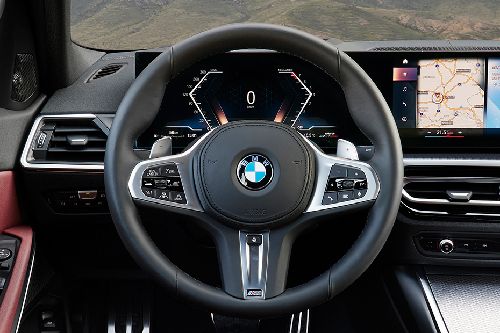
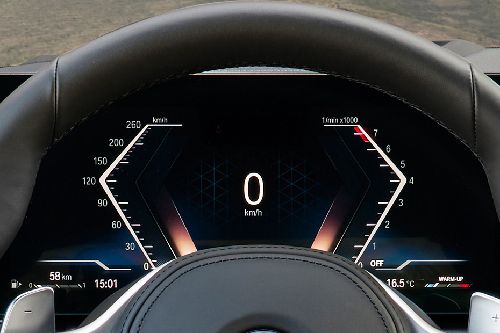
The cabin also moves into BMW’s latest generation of interior technology, centred around Panoramic iDrive and Operating System X.
One of its defining features is the projected information strip running across the lower edge of the windscreen. It is a genuinely different approach to displaying information inside a car, although whether everyone prefers it to a conventional instrument cluster will come down to personal taste.
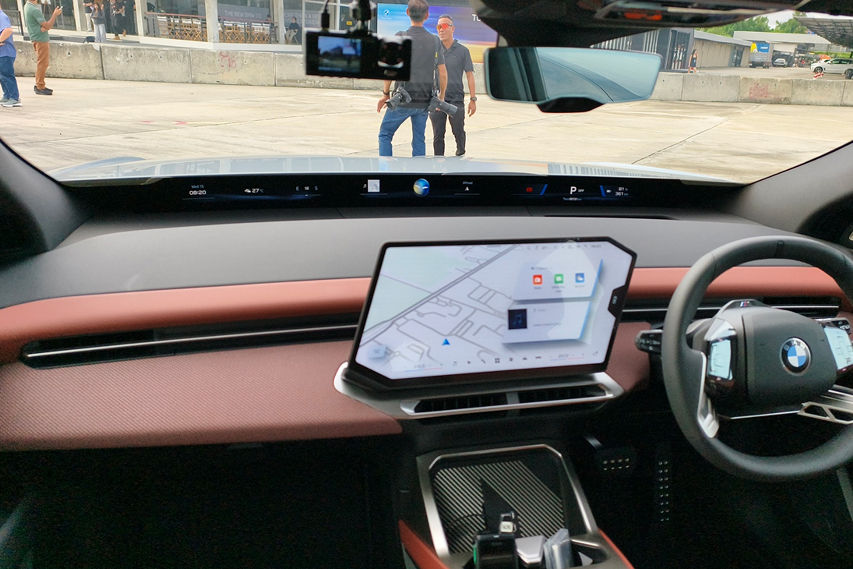 Photo by Adam Aubrey
Longer wheelbase, wider tracks and some enormous wheels
Underneath the new body, the 3 Series gets a longer wheelbase than the outgoing model, together with wider front and rear tracks.
Suspension consists of a double-joint spring-strut front axle and a five-link rear arrangement, while high-preload anti-roll bar mounts are used at both ends to improve body control.
Standard versions receive newly developed lift-related dampers, while adaptive suspension and adaptive M suspension will be available depending on specification.
BMW has also upgraded the integrated braking system and revised the steering ratio.
Then there is the optional sports tyre package.
It uses 245/35 R20 tyres at the front and 275/30 R20 rubber at the rear.
On a beautifully surfaced German B-road, that sounds fantastic. On the average Malaysian federal road, however, a 30-profile rear tyre wrapped around a 20-inch wheel sounds like something you might want to approach with slightly more caution.
Replacement tyres are unlikely to be cheap either.
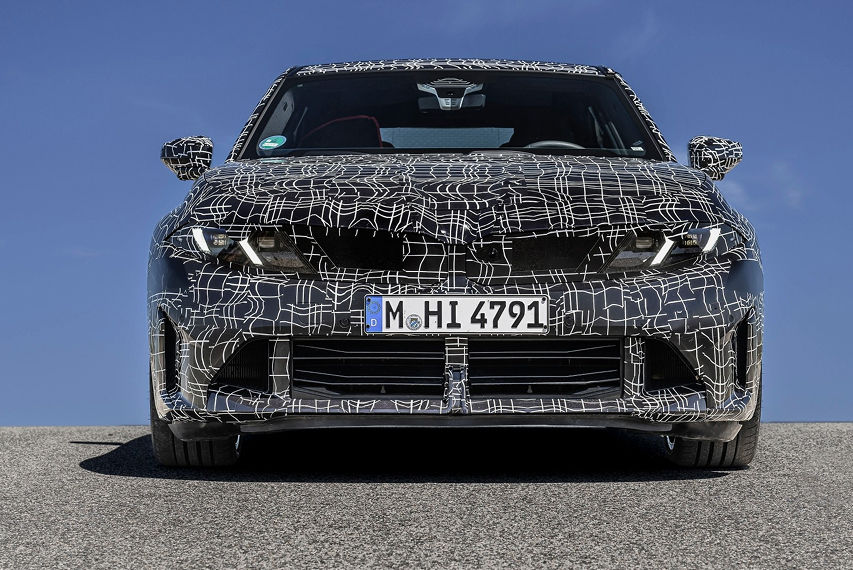 Photo from BMW
M350 xDrive replaces the M340i
Sitting at the top of the regular 3 Series range will be the new M350 xDrive, replacing the familiar M340i.
It will also be the only version of the new 3 Series offered with a straight-six engine.
BMW has given the M350 model-specific chassis tuning together with improvements in torsional and vertical stiffness. An eight-speed Steptronic automatic transmission and xDrive all-wheel drive are standard.
Its 3.0-litre BMW TwinPower Turbo inline-six works together with the 48V mild-hybrid system to produce a combined 326 kW, equivalent to 443 hp, along with 580 Nm of torque.
BMW quotes a provisional 0-100 km/h time of 4.1 seconds and a top speed of 250 km/h.
Adaptive M suspension, the M Sport differential and variable sport steering are all fitted as standard.
Production is scheduled to begin in the second half of 2026.
For comparison, the M340i xDrive M Sport Pro currently sold in Malaysia produces 387 hp and 500 Nm and reaches 100 km/h in 4.4 seconds.
That means the new M350 brings another 56 hp and 80 Nm to the table while shaving three-tenths of a second from the century sprint.
BMW has not revealed outputs for the four-cylinder versions yet. For now, the M350 is clearly the model it wants everyone paying attention to.
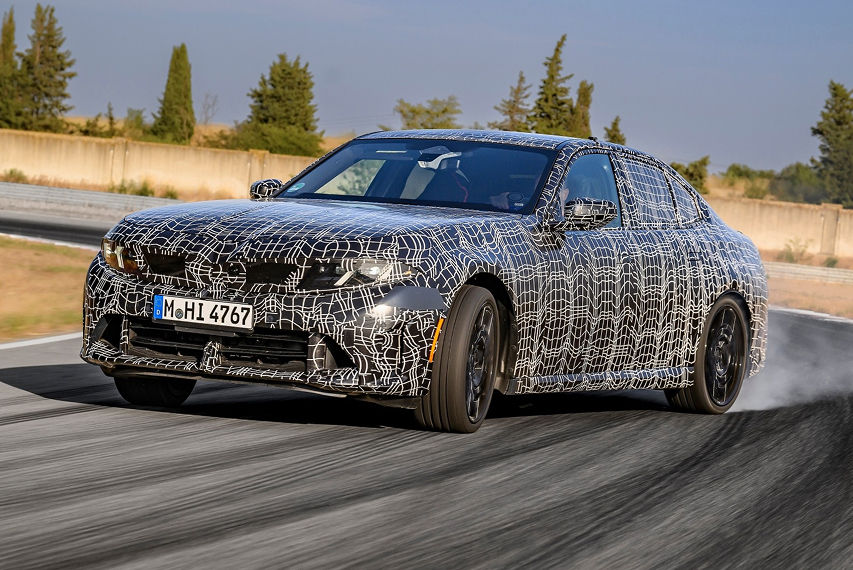 Photo from BMW
Drift Moment sounds fun, but read the small print
One of the headline features is something BMW calls Drift Moment.
Activated through the Central Display, the function can send the engine’s full output to the rear wheels. Together with the multi-plate clutch control system and DSC switched off, BMW says it allows the 3 Series to deliver the sort of sideways driving experience previously associated with full M cars.
There is one important catch.
Drift Moment will not be available when the car launches.
BMW says the feature will arrive sometime during 2027 and will also be sent to cars that have already been delivered through a Remote Software Upgrade.
So early buyers will technically be purchasing a car with hardware capable of doing something that the software will only unlock later.
That is becoming an increasingly familiar idea across the car industry.
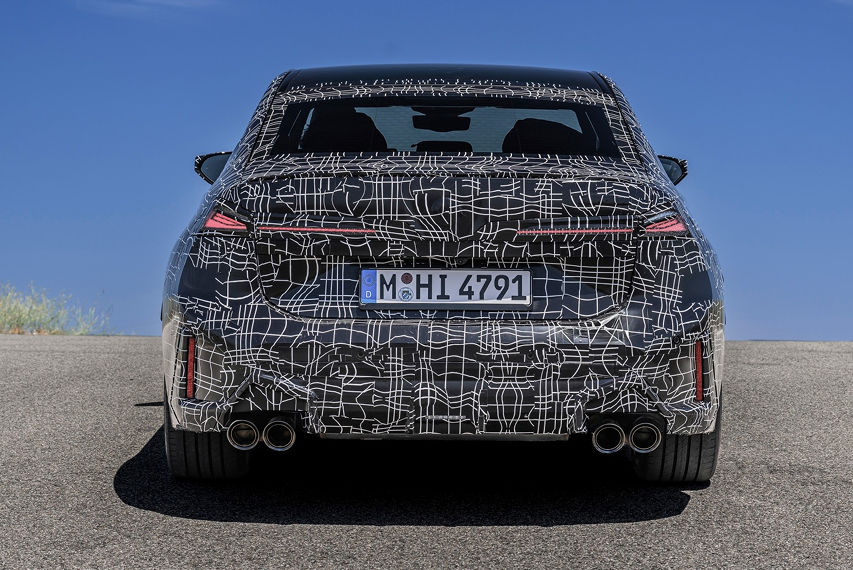 Photo from BMW
The software difference between 3 Series and i3 is perhaps even more interesting
Underneath everything, the electric i3 and combustion-powered 3 Series also take different approaches to vehicle dynamics software.
The i3 uses BMW’s new Heart of Joy central computer together with BMW Dynamic Performance Control, a system developed specifically for the company’s sixth-generation electric architecture.
The petrol-powered 3 Series does not use Heart of Joy.
Instead, it gets an optimised version of BMW’s Driving Stack, including a transverse dynamics management system that groups together various agility functions, including control of the all-wheel-drive system.
Vehicle stabilisation and engine management continue to be handled through BMW’s existing network of specialised control units, technology the company has spent decades refining.
BMW argues that both systems are high-end solutions developed specifically for their respective drivetrains, which is a reasonable position.
The simpler interpretation, however, is that BMW’s completely new centralised dynamics computer remains an EV-specific technology for the time being.
“The BMW 3 Series has set standards for driving dynamics for several decades now – and thus serves as a symbol of Sheer Driving Pleasure,” said Dr Mihiar Ayoubi, Senior Vice President Driving Experience Development.
“With the new generation, we are building on this strength once again through the perfect interplay of chassis hardware and a continuously optimised and intelligent BMW Driving Stack. In this way, we are elevating the driving experience in the new BMW 3 Series to a new level – precise, assured und unmistakably BMW.”
Efficiency also gets some attention.
The new 3 Series uses a 48V electrical system together with My Mode Efficient, active air-flap control and BMW’s Efficiency Coach, which essentially encourages the driver to adopt a more economical driving style.
For now, nothing has been confirmed locally. BMW Group Malaysia has not announced when the next-generation 3 Series will reach our market.
Considering that production of the M350 xDrive itself only begins in the second half of 2026, seeing the new generation in Malaysia before 2027 would appear optimistic.
That is an estimate rather than confirmed timing. In the meantime, the current G20-generation 3 Series remains available in Malaysia and is locally assembled in Kulim.
Prices currently run from RM265,800 for the 320i Sport to RM388,800 for the M340i xDrive M Sport Pro.
Its most obvious rival remains the Mercedes-Benz C-Class, which starts at around RM276,888 locally.
If the new 3 Series eventually follows the same CKD strategy, the more affordable versions could conceivably remain somewhere around the same general price territory.
That said, all-new generations rarely arrive cheaper than the models they replace.
Anyone in Malaysia waiting for the electric version should also remember that the new i3 is now a completely separate model rather than simply another variant of the 3 Series.
BMW M350 xDrive: key specifications
- Start of production: second half of 2026
- Engine: 3.0-litre BMW TwinPower Turbo inline-six
- Electrification: 48V mild hybrid
- Transmission: eight-speed BMW Steptronic
- Maximum output: 326 kW / 443 hp
- Torque: 580 Nm
- 0-100 km/h: 4.1 seconds
- Top speed: 250 km/h
- Drivetrain: BMW xDrive all-wheel drive
Also Read: BMW Malaysia and UM turn dead EV batteries into a solar phone charger on campus

-
Explore BMW 3 Series Sedan
-


BMW 3 Series Sedan Related Stories
- News
- Featured Stories
- Expert Review
-
 New BMW I3 EV breaks cover - Neue Klasse platform, AWD, 900 km range
KUALA LUMPUR: For over five decades, the BMW 3 Series has been known for its sporty driving pleasure, attractive design...
Read MoreSippi Vig, Mar 19, 2026 -
BMW Group Malaysia delivered 10,800 vehicles in 2025, EV share rises to 25.2%
KUALA LUMPUR: BMW Group Malaysia says it delivered more than 10,800 vehicles across BMW, MINI and BMW Motorrad in 2025,...
Read MoreAdam Aubrey, Jan 16, 2026 -
2025 BMW X3 20 xDrive M Sport & BMW 320i Sport - Pricing announced
KUALA LUMPUR: BMW Group Malaysia has announced the official pricing for the all-new BMW X3 20 xDrive M Sport and...
Read MoreSippi Vig, Jun 25, 2025
-
2023 BMW 3 Series facelift in Malaysia: Here’s all you need to know
KUALA LUMPUR: BMW Malaysia lineup is upgraded with a new BMW 3 Series facelift. It was back in October 2018,...
Read MorePurva Jain, Jan 10, 2023
-
Review: BMW M340i 50 Jahre – A piece of history you can drive every day
Fifty years. That’s how long the BMW 3 Series has been shaping what we think a sports sedan should be....
Read MoreAdam Aubrey, Sep 10, 2025 -
BMW 218i: Road Test
I bet most of us could still recall a time when BMW published an advert where a rabbit is pictured...
Read MoreYamin Vong, Feb 02, 2017
BMW Car Models
-

BMW X1 -
BMW 3 Series Sedan -
BMW X3 -
BMW 5 Series Sedan -
BMW 2 Series Gran Coupe -
BMW X4 -
BMW iX1 -
BMW iX2 -
BMW iX -
BMW X7
Don't Miss
KLIMS 2026


Malaysia Autoshow
Trending & Fresh Updates
- Latest
- Popular
-

-
-
-
-
-
-
-
-
-
Electric Car: A comprehensive buying guidePurva Jain, Jul 01, 2024
-
Must watch automotive movies for enthusiastsPurva Jain, Feb 21, 2024
-
Car Rust-proofing 101: All you need to knowPurva Jain, Feb 15, 2024






You might also be interested in
- News
- Featured Stories

BMW Featured Cars
- Latest
- Upcoming
- Popular
-
BMW iX3RM 378,800 OTR Price Kuala LumpurEMI : RM 4,426 x 844.67 (18 Reviews) VIEW SEPTEMBER OFFERS
-
BMW iX1RM 250,800 - 275,800 OTR Price Kuala LumpurEMI : RM 2,930 x 844.09 (11 Reviews) VIEW SEPTEMBER OFFERS
-
BMW 5 Series SedanRM 332,800 - 349,800 OTR Price Kuala LumpurExpected Launch TBA Alert Me When Launched
-
BMW X1RM 250,800 OTR Price Kuala LumpurEMI : RM 2,930 x 844.19 (26 Reviews) VIEW SEPTEMBER OFFERS
-
BMW X3RM 304,800 - 357,800 OTR Price Kuala LumpurEMI : RM 3,561 x 844.36 (25 Reviews) VIEW SEPTEMBER OFFERS
-
BMW 5 Series SedanRM 332,800 - 349,800 OTR Price Kuala LumpurEMI : RM 3,888 x 844.56 (25 Reviews) VIEW SEPTEMBER OFFERS
-
BMW 2 Series Gran CoupeRM 218,800 OTR Price Kuala LumpurEMI : RM 2,556 x 844.42 (31 Reviews) VIEW SEPTEMBER OFFERS
-
Latest BMW 3 Series Sedan Car Videos on Zigwheels

-
BMW M340i 50 Jahre Review | The Car That Makes You Take the Long Way Home12 Sep, 2025 .
Compare & Recommended
BMW 3 Series Sedan
RM 265,800 - 388,800
3 Series Sedan Price
|
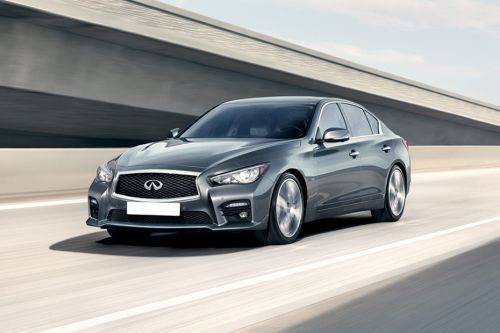
|
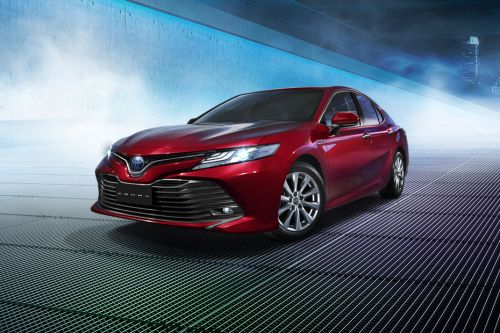
|
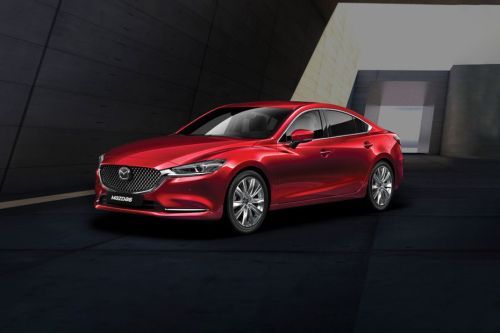
|
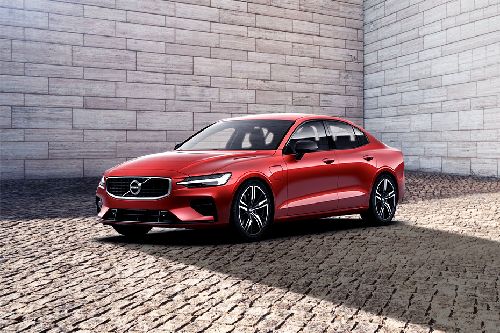
|
|
Seating Capacity
5
|
5
|
5
|
5
|
5
|
|
Fuel Type
Petrol
|
Petrol
|
Petrol
|
Petrol
|
Petrol
|
|
Engine
1998
|
1991
|
2487
|
1998
|
1969
|
|
Power
181
|
211
|
201
|
162
|
407
|
|
Torque
300 Nm
|
350 Nm
|
246 Nm
|
213 Nm
|
640 Nm
|
|
Transmission Type
Automatic
|
Automatic
|
Automatic
|
Automatic
|
Automatic
|
|
Ground Clearance
-
|
-
|
135 mm
|
-
|
-
|
|
|
Trending Sedan
- Latest
- Upcoming
- Popular
-
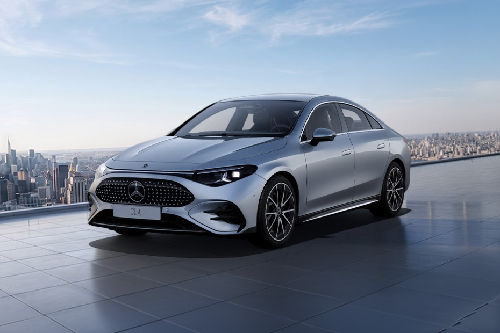
Mercedes Benz CLA ElectricRM 274,888 OTR Price Kuala LumpurEMI : RM 3,212 x 84Write a Review VIEW SEPTEMBER OFFERS
-
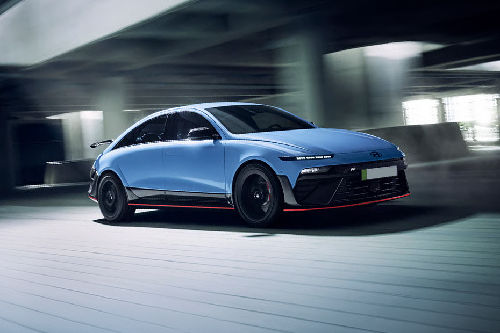
Hyundai Ioniq 6 NRM 449,888 OTR Price Kuala LumpurEMI : RM 5,257 x 84Write a Review VIEW SEPTEMBER OFFERS
-
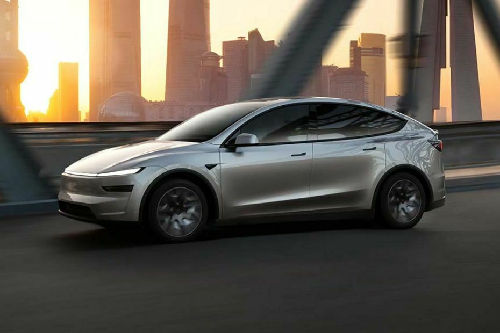
Tesla Model Y LRM 260,000 OTR Price Kuala LumpurEMI : RM 3,038 x 84Write a Review VIEW SEPTEMBER OFFERS
-
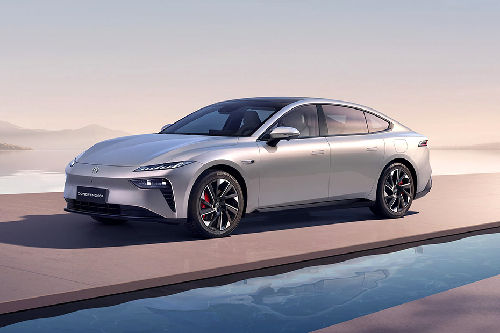
Dongfeng 007RM 169,888 - 195,888 OTR Price Kuala LumpurEMI : RM 1,985 x 84Write a Review VIEW SEPTEMBER OFFERS
-
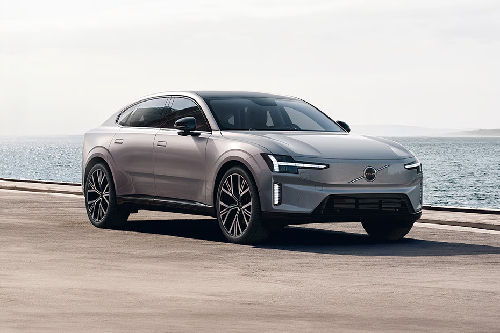
Volvo ES90RM 339,888 OTR Price Kuala LumpurEMI : RM 3,971 x 84Write a Review VIEW SEPTEMBER OFFERS
-
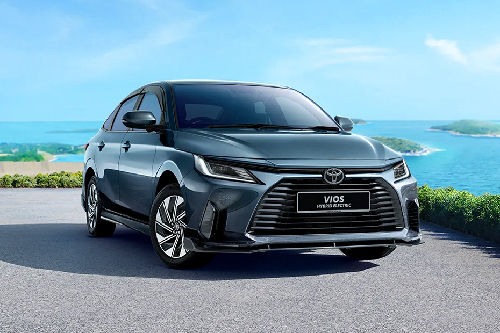
Toyota Vios Hybrid ElectricRM 103,900 Expected Price Kuala LumpurEMI : RM 1,213 x 84Write a Review VIEW SEPTEMBER OFFERS
-
-
BMW 5 Series SedanRM 332,800 - 349,800 OTR Price Kuala LumpurExpected Launch TBA Alert Me When Launched
-
-
-
-
Perodua BezzaRM 34,580 - 49,980 OTR Price Kuala LumpurEMI : RM 404 x 844.19 (81 Reviews) VIEW SEPTEMBER OFFERS
-
Honda CityRM 84,900 - 111,900 OTR Price Kuala LumpurEMI : RM 991 x 844.23 (70 Reviews) VIEW SEPTEMBER OFFERS
-
Toyota ViosRM 89,600 - 95,500 OTR Price Kuala LumpurEMI : RM 1,047 x 844.17 (71 Reviews) VIEW SEPTEMBER OFFERS
-
Proton S70RM 68,800 - 89,800 OTR Price Kuala LumpurEMI : RM 803 x 843.97 (30 Reviews) VIEW SEPTEMBER OFFERS
-
Nissan AlmeraRM 83,888 - 95,888 OTR Price Kuala LumpurEMI : RM 980 x 844.13 (56 Reviews) VIEW SEPTEMBER OFFERS
-
Proton PersonaRM 47,800 - 58,300 OTR Price Kuala LumpurEMI : RM 558 x 844.15 (75 Reviews) VIEW SEPTEMBER OFFERS