Review: 2026 Toyota Yaris Cross Hybrid - Forget fuel economy, this thing rides surprisingly well
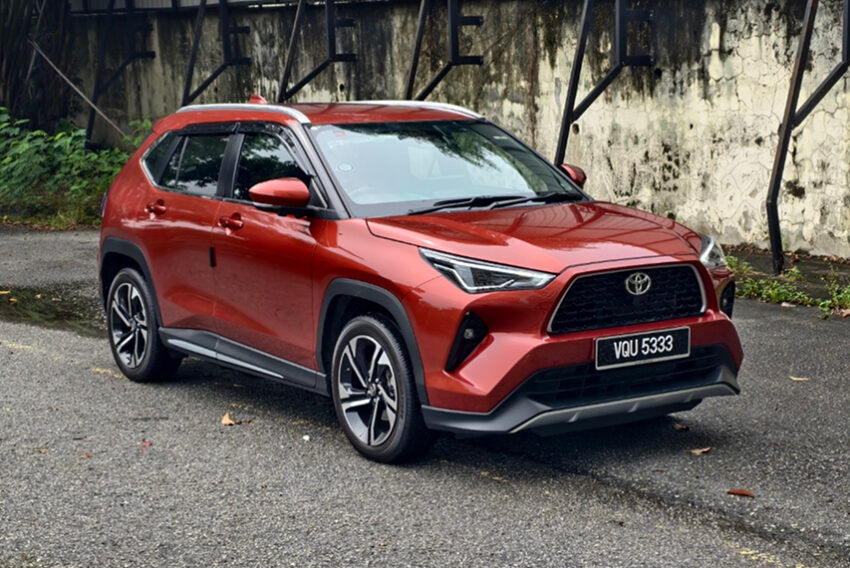
There are certain things you expect from a Toyota hybrid. Excellent fuel economy, sensible engineering and the comforting knowledge that you're probably making a responsible financial decision.
KEY TAKEAWAYS
Is the Toyota Yaris Cross Hybrid comfortable to drive?
Yes. Its suspension absorbs speed bumps and uneven roads particularly well, settling quickly without excessive bouncing. However, its handling and steering feedback are less impressive.Is the Toyota Yaris Cross Hybrid underpowered?
Despite its modest 111 PS combined output, the electric motor provides noticeable assistance during acceleration, making it responsive enough for everyday city and highway driving.Excitement, however, isn't usually very high on that list.
Yet after driving the new Yaris Cross Hybrid, the thing I kept talking about had nothing to do with petrol consumption. It was the suspension. Specifically, how this little SUV tackles speed bumps and battered Malaysian roads.
It almost feels like Toyota has fitted cushions underneath it.
And there's another surprise: despite an unremarkable power figure, the hybrid system gives it a rather satisfying little shove when you accelerate.
Unfortunately, the steering has about as much feedback as a disconnected telephone. Is this a genuinely good car to drive, or merely a comfortable appliance?
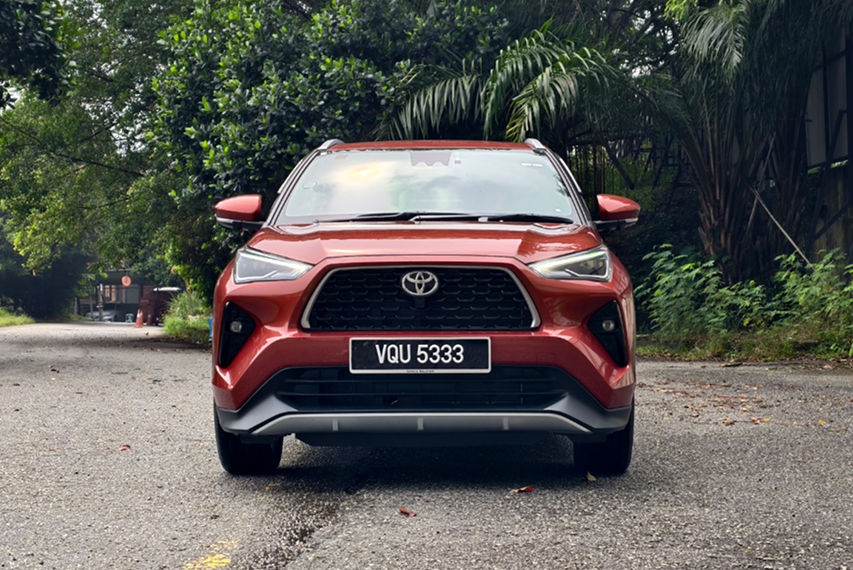
A familiar face in a crowded market
At RM109,900, the Yaris Cross Hybrid costs RM10,000 more than the regular 1.5S petrol variant. That's substantial money alongside the Honda HR-V, Proton X50, Mitsubishi Xforce and Chinese alternatives.
It's worth remembering that Malaysia gets the ASEAN-specific Yaris Cross, built on the DNGA platform rather than the TNGA architecture used for its European and Japanese namesakes. It's locally assembled, too.
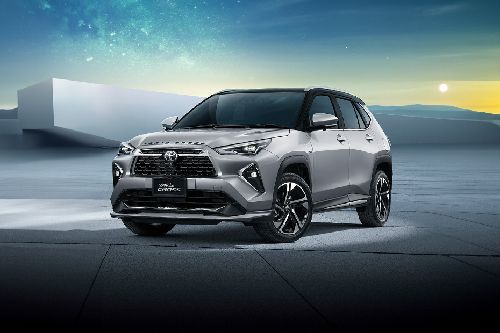
Design-wise, Toyota hasn't gone mad. There's a bold grille, sharp lights, chunky wheel arches and 18-inch alloys. There's a touch of RAV4 about it. Handsome without trying too hard, it looks at home outside a shopping mall or suburban terrace.
But the styling isn't why this car stuck in my head.
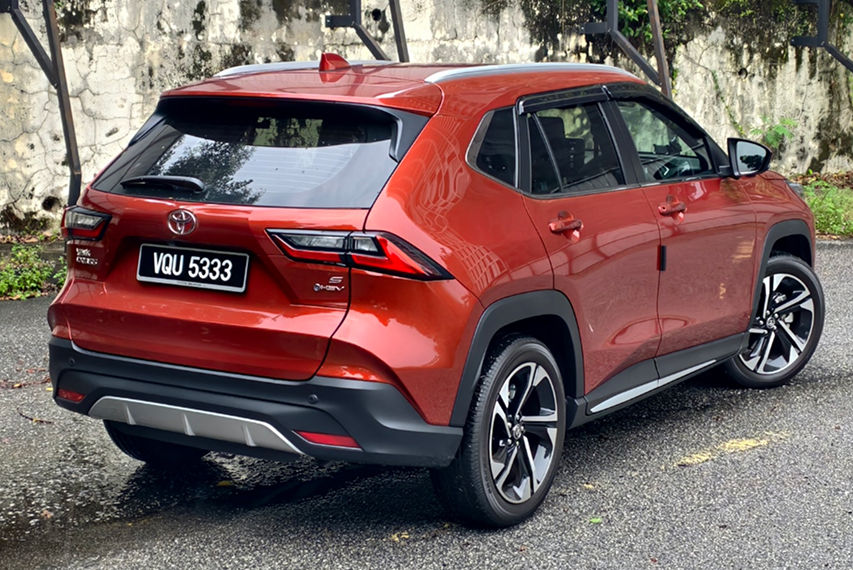
It's like driving around on cushions
I genuinely think the Yaris Cross Hybrid rides superbly.
Not merely "comfortable for its class" or "acceptable considering the price". Superb.
Over broken tarmac, the suspension takes the sting out of the surface. But the really impressive bit comes at a speed bump.
Some cars absorb the first impact nicely, only to land with an almighty thud on the other side. Others land softly and then keep bobbing about, like a boat that hasn't realised it's reached the jetty.
The Yaris Cross just goes up, comes back down with this soft, reassuring movement, and settles almost immediately. Done. On to the next speed bump.
It's plush without needing several seconds to recover.
Toyota hasn't used anything exotic here: MacPherson struts at the front and a torsion beam at the rear. What matters is how the suspension is tuned, and on the roads most Malaysians face every day, the result is excellent.
Housing areas with endless speed bumps, patches of broken asphalt, sudden depressions in the road: this car seems determined not to make a drama out of any of them.
Nobody buys a compact SUV because they're passionate about rebound damping. But live with one long enough, and a car that settles cleanly over bad roads becomes something you appreciate every single day.
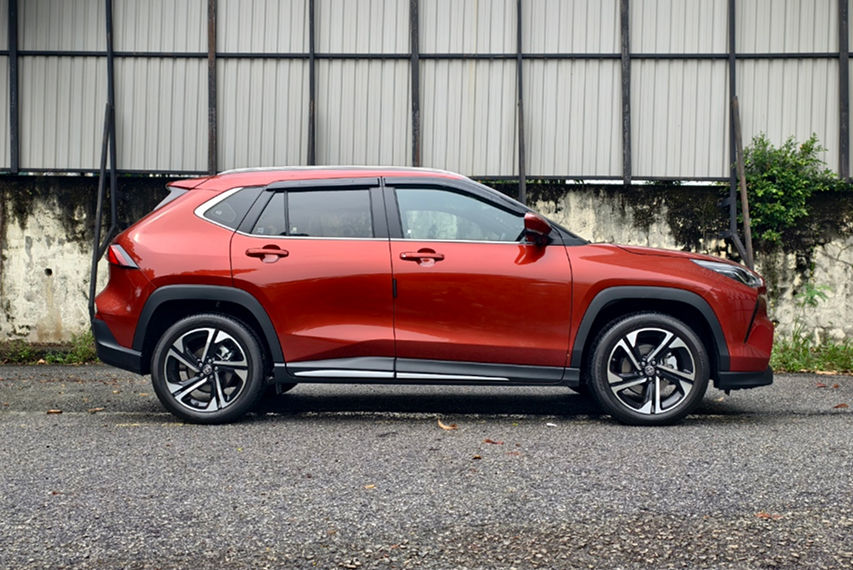
The hybrid gives it a little kick
On paper, the powertrain isn't going to set anybody's trousers on fire.
There's a 1.5-litre naturally aspirated petrol engine producing 91 PS and 121 Nm, supported by an electric motor producing 80 PS and 141 Nm. Combined system output is 111 PS, delivered to the front wheels through an e-CVT.
111 PS. Hardly the stuff of bedroom posters.
But specifications don't always tell you how a car responds to your right foot, and this Toyota is a good example.
Accelerate and you get a pleasing little surge from the electric motor. It's not some dramatic, neck-snapping shove, but there's an immediacy to it that makes the Yaris Cross feel more eager than the numbers suggest.
Better still, I noticed that response even when the car was already moving. Ask it to pick up speed and there's that helpful electric assistance again.
Joining traffic or leaving a junction, it's genuinely decent. I wouldn't call it fast, and if you demand sustained hard acceleration, the petrol engine makes its presence known. But I wouldn't call it underpowered in everyday driving either.
I actually enjoyed the response. You don't necessarily need a mountain of horsepower when the power you have arrives in a satisfying way.
Then you come to a corner…
Here's where the compliments stop.
For all its brilliance over rough roads, the Yaris Cross Hybrid isn't a particularly enthusiastic handler. Push through a series of corners and the body doesn't feel as tidy or eager as it does when absorbing bumps.
The car clearly prefers a relaxed pace. And that's fine; not every compact SUV needs to believe it's a hot hatch.
But the steering? Oh dear.
It's numb. Properly numb. There's precious little feedback telling you what the front tyres are doing, so you turn the wheel, the car changes direction, and that's the end of the conversation.
It's rather like talking to someone who has already decided not to listen.
Light steering can be a blessing in tight car parks, but light and lifeless aren't the same thing. I wish Toyota had given this one more feel.
My suspicion is that comfort and easy city driving were the priorities. That's a reasonable trade-off for its intended audience, though it explains the character rather than excusing the steering.
If Sunday morning means hunting for winding roads, look elsewhere. If it means avoiding another pothole on the way to breakfast, the Yaris Cross makes considerably more sense.
Sensible on the inside, too
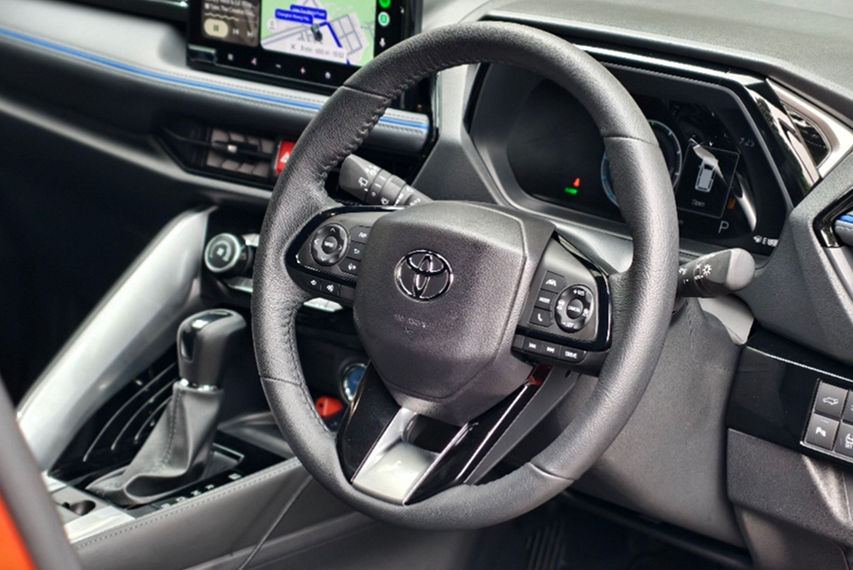
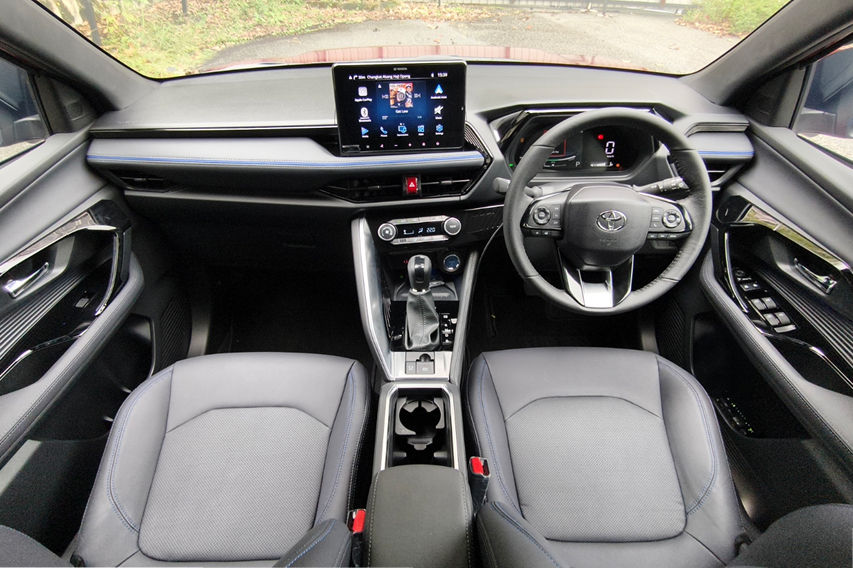
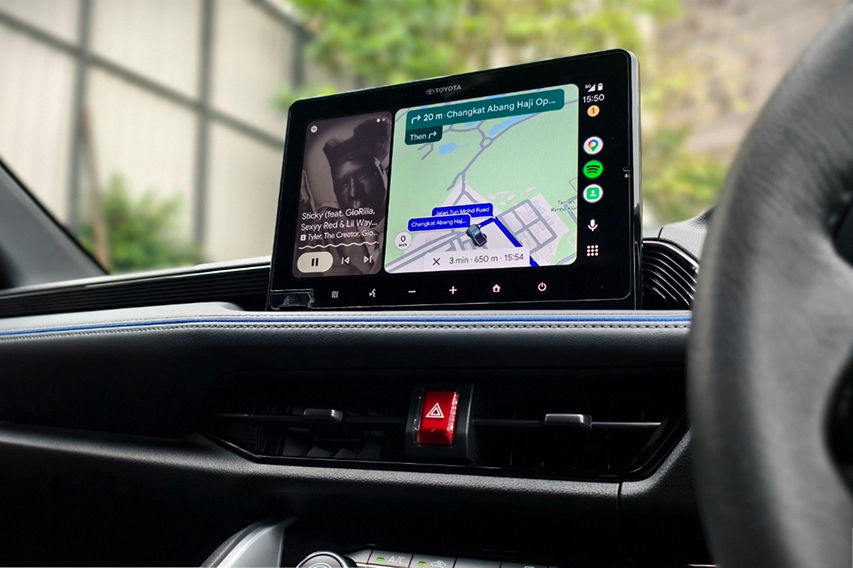
The cabin follows the same no-nonsense philosophy. You get a 10.1-inch touchscreen with wireless Apple CarPlay and Android Auto, a 7-inch instrument display, automatic climate control, rear air vents and a wireless phone charger.
More importantly, Toyota hasn't hidden every useful function behind a touchscreen menu. Proper controls are easier when you're driving.
It's not all rosy. There are hard plastics, and at nearly RM110,000, some rivals feel richer or look considerably more adventurous. It won't win any showroom glamour contests.
But it's easy to understand and easy to live with. That counts for something.
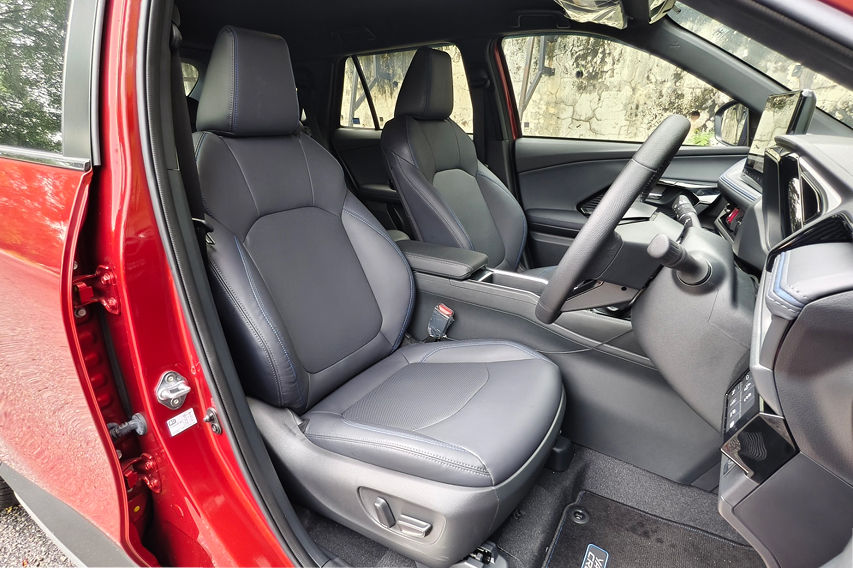
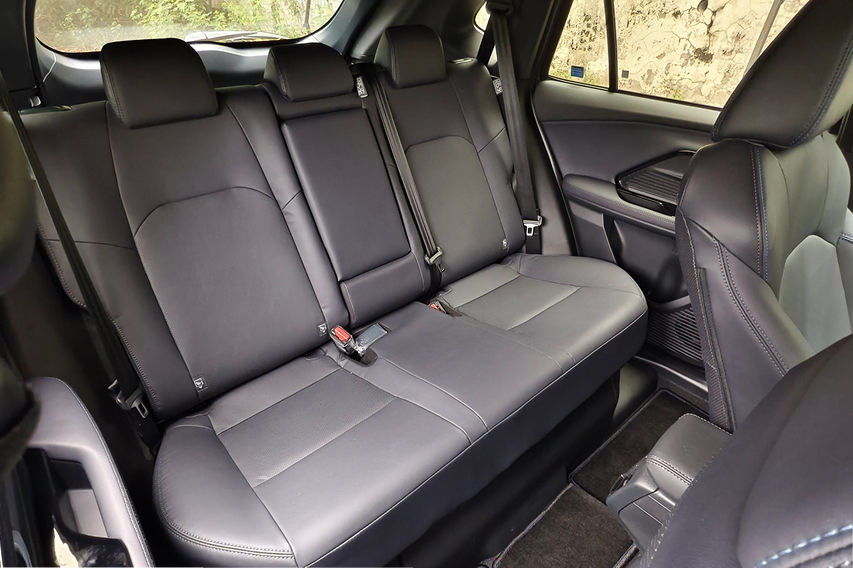
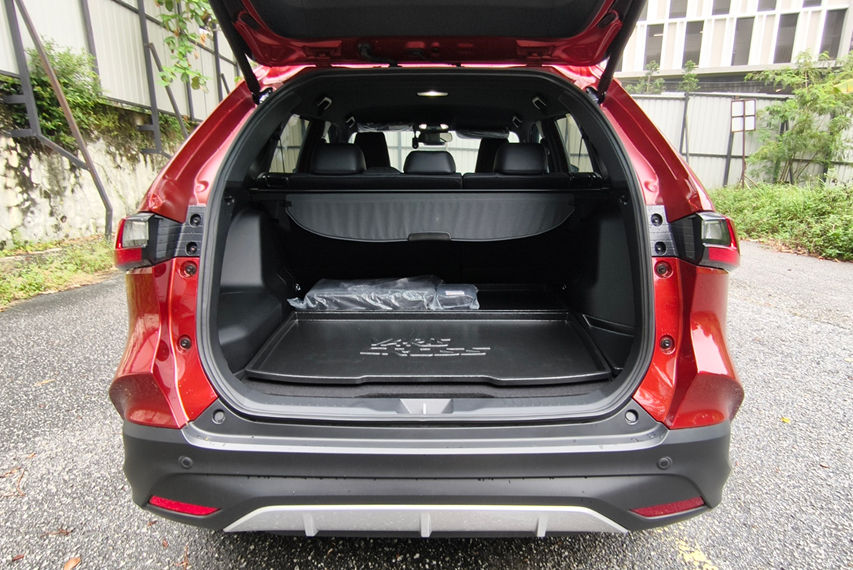
Practicality is another strong point. The 465-litre boot is generous for this size of SUV, and the hybrid battery doesn't swallow up the luggage compartment. Rear passengers get air vents and charging ports, while an electric tailgate adds a bit of convenience when your hands are full of shopping.
This isn't a huge family SUV, but for school runs, groceries and weekend bags, it makes good use of its footprint.
Yes, it saves petrol as well
We should probably address the reason many people walked into the showroom in the first place.
Toyota claims 27.8 km/L, roughly 3.6 litres per 100 km. That's a manufacturer claim, not our tested figure; real-world results will vary.
The appeal is straightforward. The car recovers energy under braking, uses electric assistance to reduce the petrol engine's workload and doesn't need plugging in. You just fill it up and drive.
But for me, the hybrid premium isn't only about how often you visit the petrol station. Yes to some this is the main draw but that electric motor also improves the way the car feels when you accelerate. You're paying for an efficiency benefit and a more agreeable everyday response.
There's some reassurance on the ownership side, too: Toyota provides a five-year, unlimited-mileage vehicle warranty and eight years of coverage for key hybrid components, with an optional extension available.
There's another question we believe that needs to be answered. So, should you save RM10,000 and buy the regular petrol Yaris Cross instead?
Personally, I wouldn't.
At this point, I genuinely think Toyota's hybrid technology has become one of the biggest reasons to buy its cars. It's no longer just about saving petrol. The electric motor gives you that lovely extra response when accelerating, while the ability to run quietly on electric power at low speeds adds another layer of refinement.
And of course, there's the excellent fuel economy.
Unless that RM10,000 difference is really stretching your budget, I'd go for the Hybrid every time.
You're not just paying to visit the petrol station less often. You're paying for what I think is the better driving experience.
Verdict: It knows exactly what it wants to be
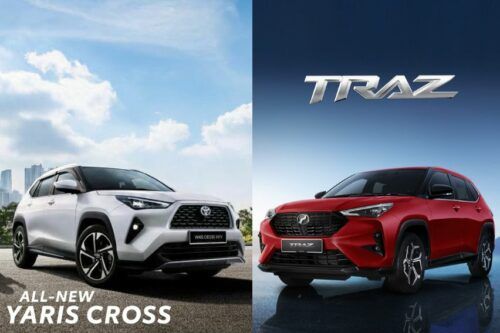
At RM109,900, the Yaris Cross Hybrid isn't an automatic bargain. More powerful, flashier and better-handling alternatives exist. The related Perodua Traz also makes the value question impossible to ignore.
And if you're the sort who enjoys steering feedback and a chassis that comes alive in corners, this Toyota will leave you cold. It certainly left me wishing the steering wheel would tell me something. Anything.
But I keep coming back to two things: that nicely judged little electric boost, and the way the suspension lands after a bump as though it's got a cushion waiting underneath.
Neither makes for a spectacular brochure headline. Both make a real difference on an ordinary Monday to Friday in Kuala Lumpur.
The Yaris Cross Hybrid isn't trying to make every trip feel like a driving holiday. It's trying to make the school run, the commute and the dreadful road outside your 'taman' feel a little less tiresome.
And judged on that mission, it's very convincing.
The biggest surprise isn't that Toyota has built another fuel-efficient hybrid. It's that this one is so pleasant to drive, even when you're not thinking about saving petrol.
Toyota Yaris Cross 1.5S Hybrid (HEV) specifications
Drivetrain: 1.5-litre naturally aspirated four-cylinder petrol engine with hybrid electric motor, front-wheel drive
Engine output: 91 PS (petrol engine), 80 PS (electric motor); 111 PS combined system output
Torque: 121 Nm (petrol engine), 141 Nm (electric motor)
Transmission: Electronic continuously variable transmission (e-CVT)
Suspension: MacPherson strut front, torsion beam rear, both with stabiliser bars
Wheels / tyres: 18-inch machined-finish alloy wheels, 215/55 R18 tyres
Boot space: 465 litres
Safety: Six airbags; Toyota Safety Sense with Pre-Collision System, full-speed adaptive cruise control, Lane Departure Warning, Lane Departure Prevention with steering assist, Lane Keeping Control, automatic high beam, blind-spot monitoring, rear cross-traffic alert, front pedal misoperation control, Vehicle Stability Control, Hill-start Assist Control, front and rear parking sensors, and 3D Panoramic View Monitor.
Price: RM109,900 (official starting price); RM110,250 on-the-road without insurance in Peninsular Malaysia.

-
Explore Toyota Yaris Cross
-

Toyota Yaris Cross Related Stories
- News
- Featured Stories
-
 Toyota Malaysia sells 36,200 cars in six months juggling petrol, hybrid and EV all at once
KUALA LUMPUR: UMW Toyota Motor (UMWT) has closed off the second quarter of 2026 with more than 20,800 vehicles sold,...
Read MoreAdam Aubrey, Jul 10, 2026 -
2,298 Toyota Yaris Cross bookings recorded within two weeks of launch
KUALA LUMPUR: UMW Toyota entered the popular B-segment SUV category with the introduction of the Yaris Cross earlier this month....
Read MoreSippi Vig, May 26, 2026 -
Weekly wrap-up: Toyota Yaris Cross, Subaru Crosstrek, Audi Q5 launched, Big changes coming for imported EVs, and more
The past seven days continued the busy momentum in the Malaysian automotive industry with a slew of launches, including the...
Read MoreSippi Vig, May 08, 2026

-
Toyota Yaris Cross vs Perodua Traz: Same roots, Different appeal - Which one should you pick?
Malaysia’s crowded B-segment SUV market has become even more competitive with the launch of the Toyota Yaris Cross. And as...
Read MoreSippi Vig, Jun 03, 2026 -
Toyota Yaris Cross variants explained - Petrol vs Hybrid – Which one should you choose?
The Toyota Yaris Cross has entered one of the most competitive segments (B-SUV) in the Malaysian automotive market, where demand...
Read MoreSippi Vig, May 12, 2026
Toyota Car Models
-

Toyota Veloz -
Toyota Yaris -
Toyota Vios -
Toyota Corolla Cross -
Toyota Hilux -
Toyota Rush -
Toyota Yaris Cross -
Toyota Fortuner -
Toyota Innova Zenix -
Toyota Harrier
Don't Miss
KLIMS 2026


Malaysia Autoshow
Trending & Fresh Updates
- Latest
- Popular
-

-
-
-
-
-
-
-
-
-
Electric Car: A comprehensive buying guidePurva Jain, Jul 01, 2024
-
Must watch automotive movies for enthusiastsPurva Jain, Feb 21, 2024
-
Car Rust-proofing 101: All you need to knowPurva Jain, Feb 15, 2024









Toyota Featured Cars
- Latest
- Upcoming
- Popular
-
Toyota Hilux BEVRM 226,300 OTR Price Kuala LumpurEMI : RM 2,644 x 84Write a Review VIEW OCTOBER OFFERS
-
Toyota Urban Cruiser EVRM 198,000 OTR Price Kuala LumpurEMI : RM 2,313 x 84Write a Review VIEW OCTOBER OFFERS
-
-
Toyota GR CorollaRM 367,000 - 378,950 OTR Price Kuala LumpurEMI : RM 4,289 x 844.48 (21 Reviews) VIEW OCTOBER OFFERS
-
Toyota Vellfire HEVRM 549,900 OTR Price Kuala LumpurEMI : RM 6,426 x 845 (1 Reviews) VIEW OCTOBER OFFERS
-
-
-
Toyota Alphard HEVRM 570,000 Expected Price Kuala LumpurExpected Launch TBA Alert Me When Launched
-
Toyota VelozRM 95,000 OTR Price Kuala LumpurEMI : RM 1,110 x 844.44 (34 Reviews) VIEW OCTOBER OFFERS
-
Toyota YarisRM 70,490 OTR Price Kuala LumpurEMI : RM 1,028 x 844.28 (63 Reviews) VIEW OCTOBER OFFERS
-
Toyota ViosRM 89,600 - 95,500 OTR Price Kuala LumpurEMI : RM 1,047 x 844.17 (71 Reviews) VIEW OCTOBER OFFERS
-
Toyota Corolla CrossRM 130,900 - 146,000 OTR Price Kuala LumpurEMI : RM 1,529 x 844.26 (47 Reviews) VIEW OCTOBER OFFERS
-
Toyota HiluxRM 103,880 - 169,080 OTR Price Kuala LumpurEMI : RM 1,213 x 844.29 (69 Reviews) VIEW OCTOBER OFFERS
-
Toyota RushRM 93,000 - 97,000 OTR Price Kuala LumpurEMI : RM 1,086 x 844.27 (61 Reviews) VIEW OCTOBER OFFERS
Compare & Recommended
Toyota Yaris Cross
RM 99,900 - 109,900
Yaris Cross Price
|
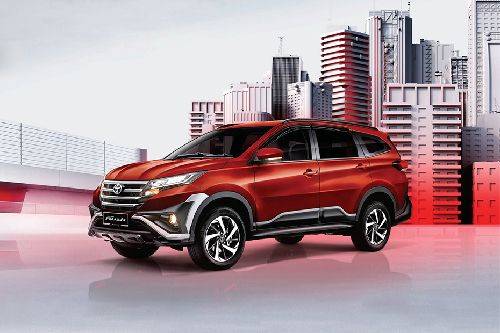
|
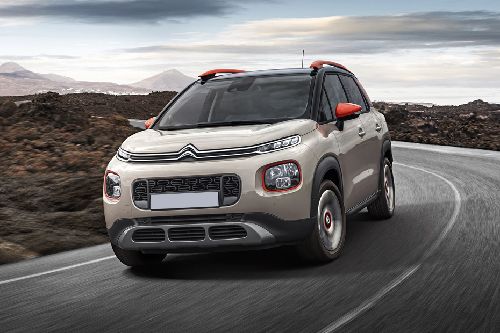
|
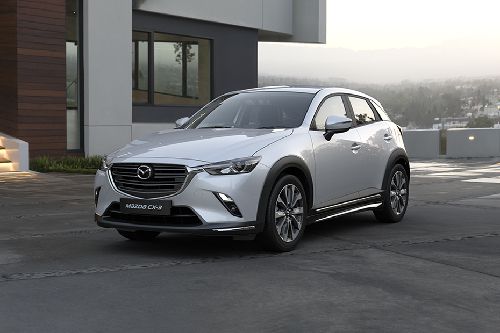
|
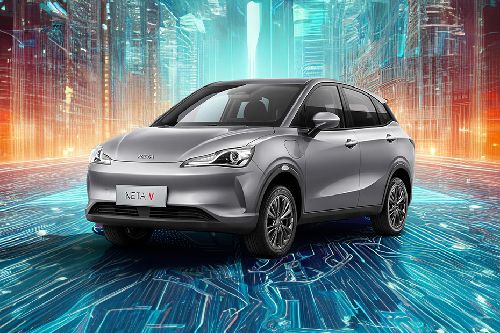
|
|
Ground Clearance
210 mm
|
220 mm
|
-
|
145 mm
|
-
|
|
Seating Capacity
5
|
7
|
5
|
5
|
5
|
|
Fuel Type
Petrol
|
Petrol
|
Petrol
|
Petrol
|
Electric
|
|
Engine
1496
|
1496
|
1199
|
1496
|
-
|
|
Power
105
|
104
|
110
|
114
|
94
|
|
Torque
138 Nm
|
136 Nm
|
205 Nm
|
149 Nm
|
160 Nm
|
|
Transmission Type
CVT
|
Automatic
|
Automatic
|
Automatic
|
Automatic
|
|
|
Trending SUV
- Latest
- Upcoming
- Popular
-
Mazda CX-5 2026RM 168,510 - 171,510 OTR Price Kuala LumpurEMI : RM 1,969 x 844.36 (65 Reviews) VIEW OCTOBER OFFERS
-
Jetour T2 i-DMRM 162,800 OTR Price Kuala LumpurEMI : RM 1,902 x 84Write a Review VIEW OCTOBER OFFERS
-
Volvo EX30RM 198,888 - 218,888 OTR Price Kuala LumpurEMI : RM 2,324 x 844.33 (9 Reviews) VIEW OCTOBER OFFERS
-
JAECOO J5 EVRM 118,800 OTR Price Kuala LumpurEMI : RM 1,387 x 84Write a Review VIEW OCTOBER OFFERS
-
Porsche Cayenne ElectricRM 699,000 - 999,999 OTR Price Kuala LumpurEMI : RM 8,169 x 84Write a Review VIEW OCTOBER OFFERS
-

-
MINI John Cooper WorksRM 218,888 - 393,888 OTR Price Kuala LumpurEMI : RM 2,557 x 844.38 (13 Reviews) VIEW OCTOBER OFFERS
-
Peugeot 3008RM 138,000 OTR Price Kuala LumpurEMI : RM 1,612 x 844.35 (23 Reviews) VIEW OCTOBER OFFERS
-
Toyota Corolla CrossRM 130,900 - 146,000 OTR Price Kuala LumpurEMI : RM 1,529 x 844.26 (47 Reviews) VIEW OCTOBER OFFERS
-
Toyota RushRM 93,000 - 97,000 OTR Price Kuala LumpurEMI : RM 1,086 x 844.27 (61 Reviews) VIEW OCTOBER OFFERS
-
Perodua AtivaRM 62,500 - 73,400 OTR Price Kuala LumpurEMI : RM 730 x 844.17 (46 Reviews) VIEW OCTOBER OFFERS
-
Mazda CX-5RM 143,300 - 187,200 OTR Price Kuala LumpurEMI : RM 1,674 x 844.36 (65 Reviews) VIEW OCTOBER OFFERS