Proton e.MAS 7 PHEV launched in Malaysia, three variants from RM106k
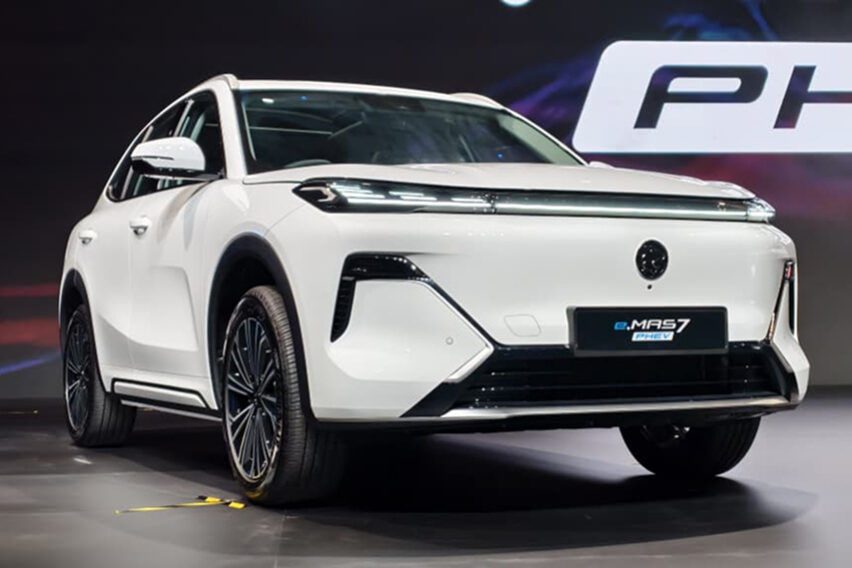
KUALA LUMPUR: Proton has officially launched the e.MAS 7 PHEV, its first ever plug-in hybrid model and its first step into “chargeable hybrid” territory under the e.MAS sub-brand.
KEY TAKEAWAYS
How much is the Proton e.MAS 7 PHEV in Malaysia?
Prices (OTR without insurance) are RM109,800 (Prime), RM123,800 (Premium) and RM129,800 (Premium Plus).Is there a launch promo for the e.MAS 7 PHEV?
Yes, Proton is offering a RM4,000 special launch rebate limited to the first 5,000 bookings, terms and conditions apply.The real-world pitch is simple, this is a PHEV SUV you can treat like an EV for daily driving, then let petrol take over when you run out of battery on longer trips.
Also Read: Proton e.MAS 7 PHEV now open for booking, RM110k–RM130k tentative price
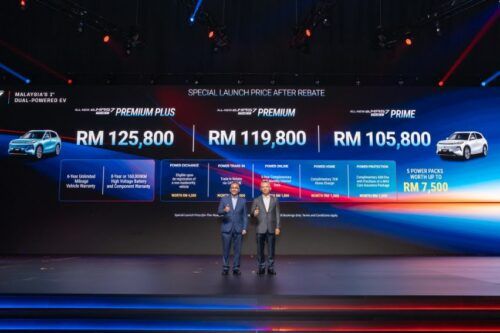
Proton has now confirmed the e.MAS 7 PHEV’s pricing, with on-the-road (without insurance) figures set at RM109,800 for the Prime, RM123,800 for the Premium, and RM129,800 for the Premium Plus.
There is also a special launch rebate of RM4,000, limited to the first 5,000 bookings, which brings the effective on-the-road prices (without insurance) down to RM105,800 (Prime), RM119,800 (Premium) and RM125,800 (Premium Plus), terms and conditions apply.
Alongside the pricing, Proton is bundling what it calls “5 Power Packs” worth up to RM7,500, positioned as a launch sweetener that covers both ownership support and day-to-day conveniences.
This includes a “Power Exchange” incentive worth RM4,000, which is only applicable upon de-registration of a non-roadworthy vehicle, plus a “Power Trade-In” rebate worth RM1,000 via Carsome. On the connectivity and home-charging side, buyers also get “Power Online”, a five-year complimentary 2GB monthly internet data bundle worth RM1,000, and “Power Home”, a complimentary 7kW home charger worth RM1,500.
The final piece is “Power Protection”, listed as RM1,000 worth of complimentary add-ons tied to the purchase of the e.MAS Care insurance package.
Separately, the ownership warranty includes a six-year unlimited mileage vehicle warranty, and an eight-year or 160,000 km high-voltage battery and component warranty, giving the e.MAS 7 PHEV a more EV-like coverage story to match its “use it like an EV” positioning.
Three variants
As mentioned, the e.MAS 7 PHEV comes in three variants, Prime, Premium, and Premium+. While the naming sounds straightforward, the actual separation is unusually meaningful for a Proton variant walk, because the things that change are the exact things that define a PHEV lifestyle, battery size, EV range, and DC fast charging speed.
Prime and Premium are positioned as the “useful EV commute buffer” choices, Premium+ is the one that pushes the car closer to an EV-first routine, because it pairs a much bigger battery with quicker DC charging.
Powertrain, one setup across the line, front-wheel drive throughout
All three variants share the same core hybrid layout, a 1.5-litre dedicated hybrid petrol engine paired to a front electric motor, driving the front wheels through an 11-in-1 dedicated hybrid transmission (E-DHT). Proton also references Geely’s EM-i Super Hybrid system in the briefing material.
Across the range, Proton quotes the system output at 193 kW (262 PS) and 262 Nm, with a 0–100 km/h time of 8.0 seconds for Prime and Premium, and 8.2 seconds for Premium+ (top speed is listed at 170 km/h for all).
That tiny 0–100 difference isn’t about power, it tracks with weight. Prime is listed at 1,735 kg, Premium at 1,760 kg, and Premium+ at 1,835 kg.
Drive modes are PURE, HYBRID, and POWER, basically Proton spelling out the three personalities a PHEV buyer expects, EV-only running when you want it, blended operation when it makes sense, and a more performance-forward mode when you ask for it.
Batteries and charging, this is where Premium+ earns its name
If you only remember one thing about the e.MAS 7 PHEV variant split, it should be this, Prime and Premium share the smaller pack, Premium+ gets the big one.
Prime and Premium run an 18.4 kWh LFP battery, paired to 6.6 kW AC charging and 30 kW DC fast charging. Proton quotes 30–80% in under 20 minutes, with an EV range figure of 105 km (NEDC). Total range is quoted by Proton at around the 1,000 km mark on the NEDC cycle, depending on the specific material being referenced.
Premium+ steps up to a 29.8 kWh LFP battery, still with 6.6 kW AC charging, but now with 60 kW DC fast charging, and 30–80% is claimed in under 16 minutes. The headline number here is EV range, Premium+ is quoted at 170 km (NEDC), and Proton’s total-range messaging stretches further as well, up to 1,065 km (NEDC) in its variant comparison.
That’s the practical reason Premium+ is the variant that “changes the story”, it’s the one that reduces how often petrol needs to enter the conversation at all, and it shortens your DC top-up time.
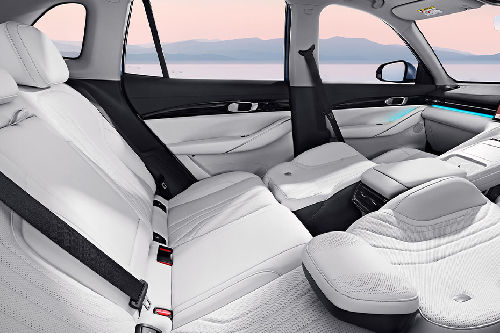
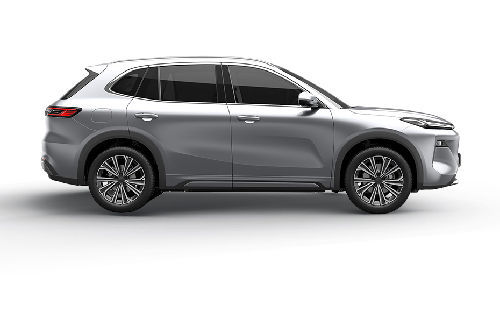
Dimensionally, Proton positions it squarely as a family-sized SUV. The listed figures are 4,740 mm long, 1,940 mm wide, 1,685 mm tall, with a 2,755 mm wheelbase. Turning radius is quoted at 5.2 m, and the fuel tank is listed at 51 litres.
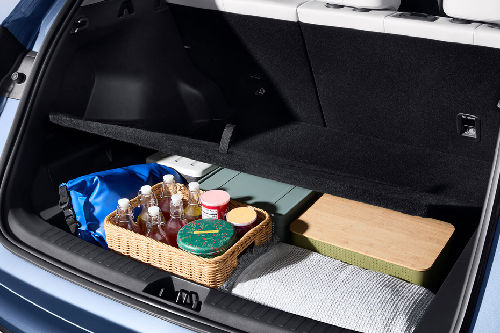
Boot space is quoted at 528 litres, expanding to 2,065 litres with the rear seats folded. Proton also cites additional storage volume under the rear seat area (listed at 100 litres).
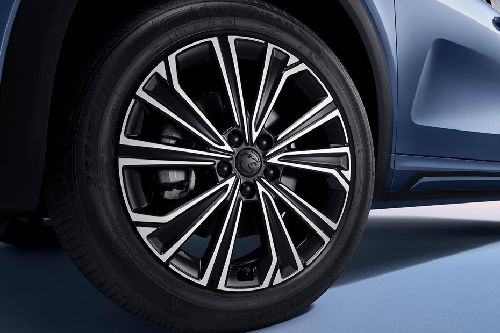
Wheel sizing follows the comfort-to-style ladder you’d expect. Prime runs 18-inch wheels with 225/55 R18 tyres, Premium and Premium+ step up to 19-inch wheels with 235/50 R19 tyres.
Design, still e.MAS, but with more “normal SUV” cues
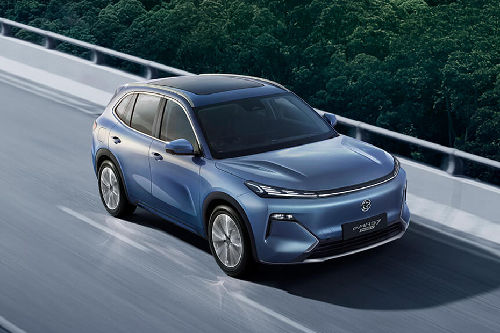
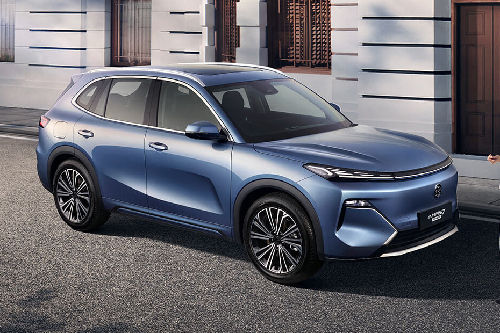
Proton previously kept the car partially under wraps in camouflage ahead of launch, but the production look is meant to read as familiar e.MAS 7, with several changes that lean it closer to conventional SUV detailing.
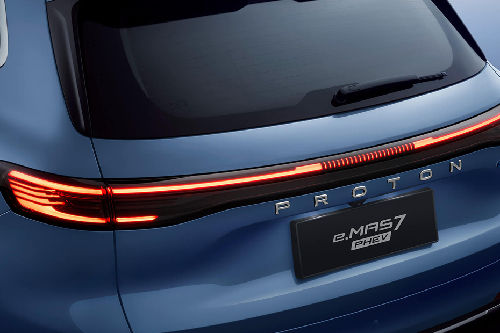
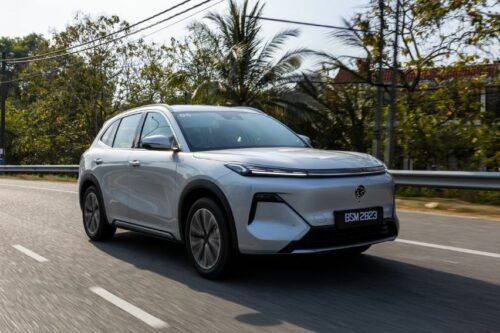
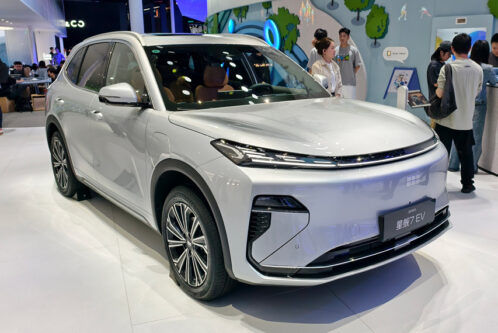
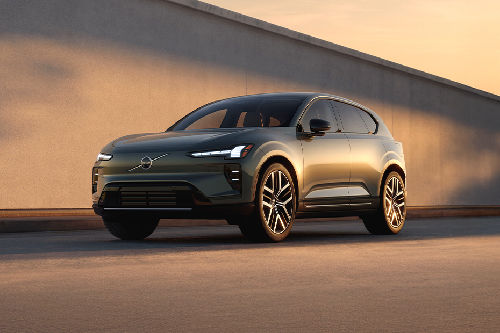
The listed exterior cues include a split headlamp layout with a full-width LED light bar(except Prime), conventional door handles (instead of flush pop-out items), and a revised rear with the number plate positioned on the tailgate rather than the bumper. Aerodynamically, Proton quotes a 0.288 Cd drag coefficient, close to the e.MAS 7 EV’s 0.275 Cd figure.
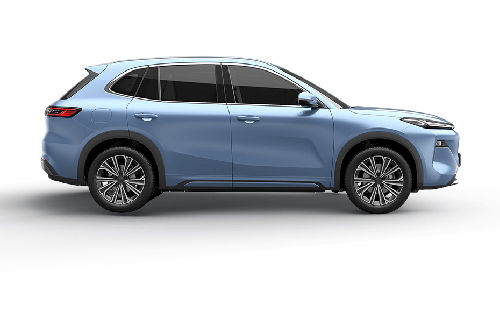
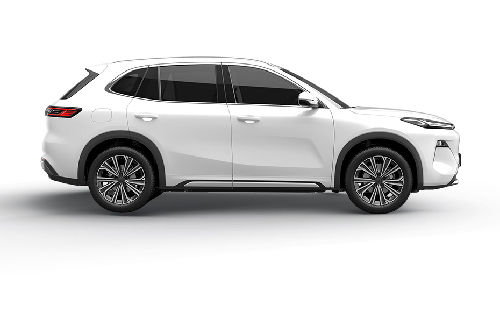
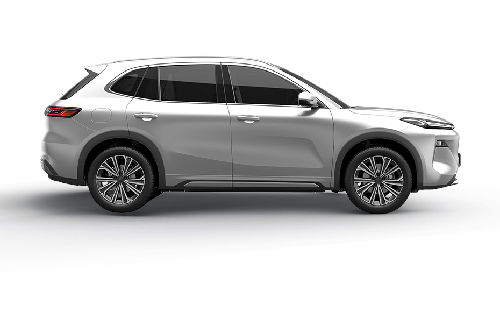
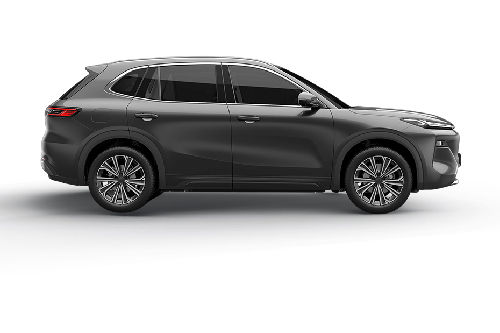
Exterior colours for the Malaysian market are Obsidian Black, Lithium White, Mercury Silver, Galena Grey, and Aquamarine Blue. Interior colour options are Alabaster White and Onyx Black.
Cabin tech, Flyme-based infotainment, with CarPlay and Android Auto from day one
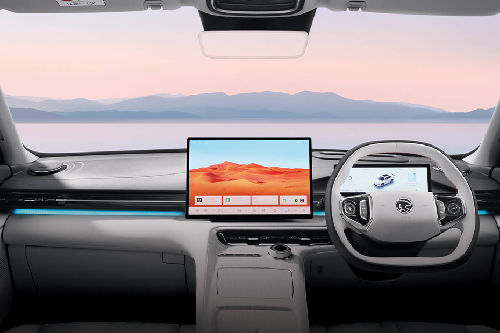
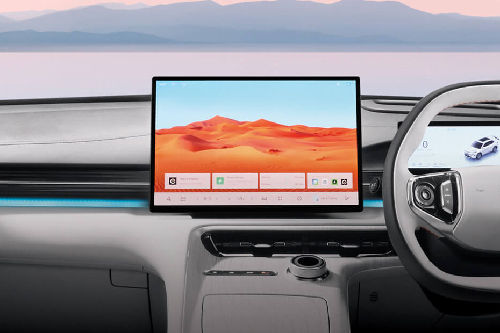
Inside, Proton continues pushing the “software-led cabin” angle. The centrepiece is a 15.4-inch 2.5K touchscreen running Flyme Auto / Flyme OS with English and Malay interfaces, backed by a 7 nm automotive-grade chip, plus 4G and WiFi connectivity, voice control, online navigation, app support, and over-the-air updates.
Importantly for real Malaysian ownership expectations, Apple CarPlay and Android Auto are stated as available from launch, not “coming soon”. There’s also a Proton e.MAS app for vehicle status and remote functions, including scheduled trip and scheduled charging features.
The PHEV also keeps the EV party tricks, V2L (vehicle-to-load) is available, and V2V (vehicle-to-vehicle) is also mentioned as part of the feature set.
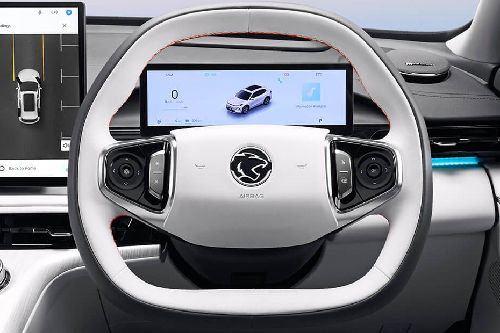
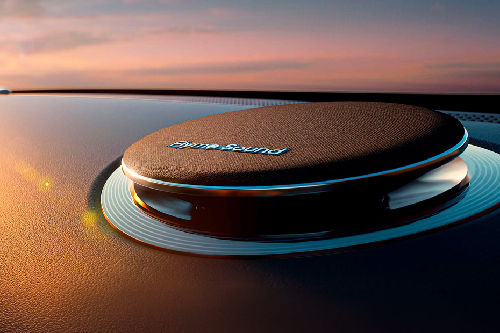
Equipment-wise, Prime is listed with a six-speaker audio system, while Premium and Premium+ step up to a 16-speaker Flyme Sound system, with higher variants also adding a 13.8-inch head-up display.
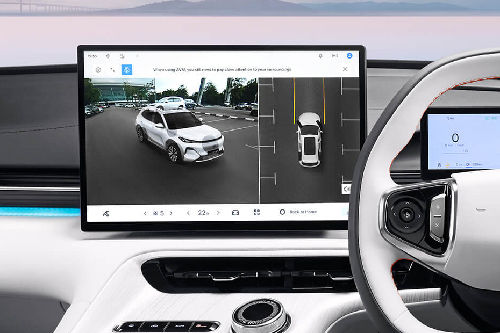
Proton’s own positioning is that Premium is where the cabin and convenience kit starts to feel more “finished”, with the sort of features buyers actually notice daily, including items like HUD, wireless charging, premium audio, and the more advanced camera and driver assistance hardware.
Safety, Level 2 ADAS, and a far-side / centre airbag mention
Proton equips the e.MAS 7 PHEV with a Level 2 ADAS suite, with functions referenced including ICC, ACC, AEB, FCW, plus lane and sign-related features such as LDW, LDP, LVDA, and TSR. Prime has a reduced suite, and the fuller set is only on Premium and Premium+.
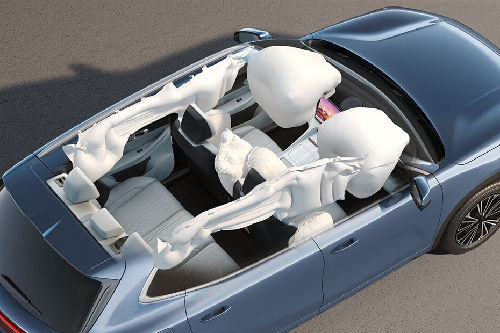
Proton also cites seven airbags including a front centre airbag / far-side type protection in the broader safety list(Premium and Premium+. Prime gets six), and states 12 ADAS functions in total, mirroring the way it presents the e.MAS 7 EV’s safety tech.
Proton is clearly leaning into the “you can go far without thinking about chargers” storyline, and it has a headline demo drive to support it.
The company says the e.MAS 7 PHEV covered 1,104.5 km with 189 km still remaining, and it quotes an average fuel consumption figure of 3.7 L/100 km, based on one fully charged battery and one full tank. The route taken ran from Penang to Johor Bahru, with Shah Alam and Proton’s COE marked along the way.
Official fuel consumption figures are quoted on NEDC at 4.3 L/100 km for Prime and Premium, and 4.4 L/100 km for Premium+. Service interval is listed at 12 months or 20,000 km.
On costs, Proton claims the PHEV is 41% cheaper to run over a 10-year period versus a comparable ICE SUV in the same segment, based on its internal estimates.
The figures shown put fuel plus charging at RM21,200 and maintenance at RM8,000 (RM29,200 total) for the PHEV, versus RM33,800 fuel and RM16,000 maintenance (RM49,800 total) for the ICE comparison, with Proton stating these are estimated costs.
As a product, the e.MAS 7 PHEV is Proton aiming for the big middle ground, EV-style driving for daily routines, but with petrol as the safety net for long runs, balik kampung weekends, or simply not planning life around chargers.
Prime and Premium make sense if you want plug-in capability, meaningful EV commuting range, and a more approachable entry point. Premium+ is the one that actually shifts behaviour, because battery size, EV range, and DC charging speed all move together, and that’s what makes a PHEV feel EV-first most of the week.
Also Read: Proton’s first PHEV under e.MAS, here’s how the e.MAS 7 PHEV variants splits
- KEY TAKEAWAYS
- Three variants
- Powertrain, one setup across the line, front-wheel drive throughout
- Batteries and charging, this is where Premium+ earns its name
- Design, still e.MAS, but with more “normal SUV” cues
- Cabin tech, Flyme-based infotainment, with CarPlay and Android Auto from day one
- Safety, Level 2 ADAS, and a far-side / centre airbag mention

-
Explore Proton e.MAS 7 PHEV
-



Proton e.MAS 7 PHEV Related Stories
- News
- Featured Stories
-
 Proton e.MAS 7 PHEV bags 6,500 bookings in 2 months, reflecting changing buyer preferences
KUALA LUMPUR: Due to rising fuel costs and recent quota reduction in BUDI95 subsidies, more and more Malaysians are opting...
Read MoreSippi Vig, Apr 29, 2026 -
Geely Galaxy Starship 7 EV prototype shown at 2026 Beijing Auto Show, could future Proton e.MAS 7 benefit?
KUALA LUMPUR: At the 2026 Beijing International Automotive Exhibition, Geely’s Galaxy Park display was filled with the usual big-stage messaging...
Read MoreAdam Aubrey, Apr 24, 2026 -
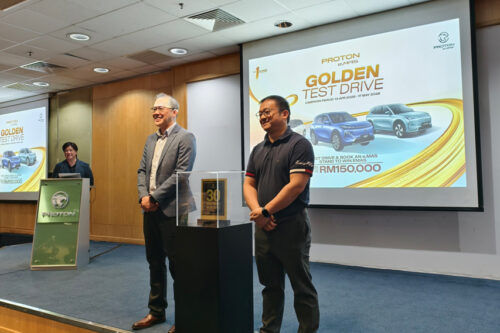
Proton rolls out Golden Test Drive campaign, gold bars and Australia trip offered
KUALA LUMPUR: PRO-NET, the wholly owned subsidiary of Proton, has launched the Proton e.MAS Golden Test Drive Campaign, a nationwide...
Read MoreAdam Aubrey, Apr 14, 2026
-
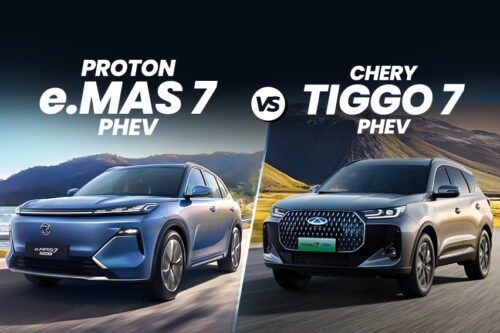
Proton e.MAS 7 PHEV vs Chery Tiggo 7 PHEV: Which offers the better deal?
The plug-in hybrid SUV market in Malaysia has been intensified with the introduction of the Proton e.MAS 7 PHEV, set...
Read MoreSippi Vig, Feb 17, 2026 -
Proton e.MAS 7 PHEV variants explained – Which one should you choose?
After disrupting Malaysia's BEV market, Proton has entered the hybrid category with the launch of the e.MAS 7 PHEV. Dubbed...
Read MoreSippi Vig, Feb 11, 2026
Proton Car Models
-

Proton S70 -
Proton Iriz -
Proton Persona -
Proton X90 -
Proton e.MAS 7 -
Proton X70 -
Proton e.MAS 5 -
Proton X50 -
Proton Saga -
Proton e.MAS 7 PHEV
Don't Miss
-
Proton e.MAS 7 PHEV bags 6,500 bookings in 2 months, reflecting changing buyer preferences
-
Geely Galaxy Starship 7 EV prototype shown at 2026 Beijing Auto Show, could future Proton e.MAS 7 benefit?
-
Proton rolls out Golden Test Drive campaign, gold bars and Australia trip offered
-
Thinking about the Proton e.MAS 7 PHEV? Here’s what buyers should know before signing up
-
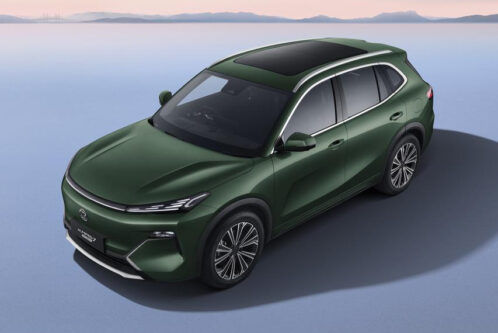
Proton e.MAS 7 PHEV gets new Emerald Green colour, bookings now open
Malaysia Autoshow


Trending & Fresh Updates
- Latest
- Popular
-

-
-
-
-
-
-
-
-
-
Electric Car: A comprehensive buying guidePurva Jain, Jul 01, 2024
-
Must watch automotive movies for enthusiastsPurva Jain, Feb 21, 2024
-
Car Rust-proofing 101: All you need to knowPurva Jain, Feb 15, 2024



You might also be interested in
- News
- Featured Stories
Proton Featured Cars
- Latest
- Popular
-
Proton X90RM 106,800 - 122,800 OTR Price MaranEMI : RM 1,247 x 844.26 (27 Reviews) VIEW MAY OFFERS
-
Proton X70RM 99,800 - 112,800 OTR Price MaranEMI : RM 1,165 x 844.18 (80 Reviews) VIEW MAY OFFERS
-
-
-
Proton X50RM 85,800 - 109,300 OTR Price MaranEMI : RM 1,002 x 844.26 (71 Reviews) VIEW MAY OFFERS
-
-
-
Proton PersonaRM 47,800 - 58,300 OTR Price MaranEMI : RM 558 x 844.15 (75 Reviews) VIEW MAY OFFERS
-
Proton X90RM 106,800 - 122,800 OTR Price MaranEMI : RM 1,247 x 844.26 (27 Reviews) VIEW MAY OFFERS
-
Proton e.MAS 7RM 103,800 - 119,800 OTR Price MaranEMI : RM 1,212 x 844.19 (16 Reviews) VIEW MAY OFFERS
-
Proton X70RM 99,800 - 112,800 OTR Price MaranEMI : RM 1,165 x 844.18 (80 Reviews) VIEW MAY OFFERS
Compare & Recommended
Proton e.MAS 7 PHEV
RM 109,800 - 129,800
Write a Review
e.MAS 7 PHEV Price
|
|
|
|
|
|
Seating Capacity
5
|
7
|
5
|
5
|
5
|
|
Fuel Type
Petrol
|
Petrol
|
Petrol
|
Electric
|
Petrol
|
|
Engine
1498
|
1496
|
1199
|
-
|
1999
|
|
Power
98
|
104
|
110
|
174
|
147
|
|
Torque
125 Nm
|
136 Nm
|
205 Nm
|
280 Nm
|
180 Nm
|
|
Transmission Type
Automatic
|
Automatic
|
Automatic
|
Automatic
|
CVT
|
|
Ground Clearance
-
|
220 mm
|
-
|
161 mm
|
-
|
|
|
Trending SUV
- Latest
- Upcoming
- Popular
-
Mitsubishi XForceRM 109,980 - 119,980 OTR Price MaranEMI : RM 1,285 x 84Write a Review VIEW MAY OFFERS
-
-
-
-
Proton X90RM 106,800 - 122,800 OTR Price MaranEMI : RM 1,247 x 844.26 (27 Reviews) VIEW MAY OFFERS
-
-
Toyota Yaris CrossRM 99,900 - 109,900 Expected Price MaranExpected Launch TBA Alert Me When Launched
-
-
-
-
-
-
-
Toyota Corolla CrossRM 130,900 - 146,000 OTR Price MaranEMI : RM 1,529 x 844.26 (47 Reviews) VIEW MAY OFFERS
-
Perodua AtivaRM 62,500 - 73,400 OTR Price MaranEMI : RM 730 x 844.17 (46 Reviews) VIEW MAY OFFERS
-
Toyota RushRM 93,000 - 97,000 OTR Price MaranEMI : RM 1,086 x 844.27 (61 Reviews) VIEW MAY OFFERS
-
Mazda CX-5RM 143,300 - 187,200 OTR Price MaranEMI : RM 1,674 x 844.36 (65 Reviews) VIEW MAY OFFERS
-
Mazda CX-30RM 131,000 - 159,000 OTR Price MaranEMI : RM 1,530 x 844.45 (38 Reviews) VIEW MAY OFFERS