Geely Galaxy Starship 7 EV prototype shown at 2026 Beijing Auto Show, could future Proton e.MAS 7 benefit?
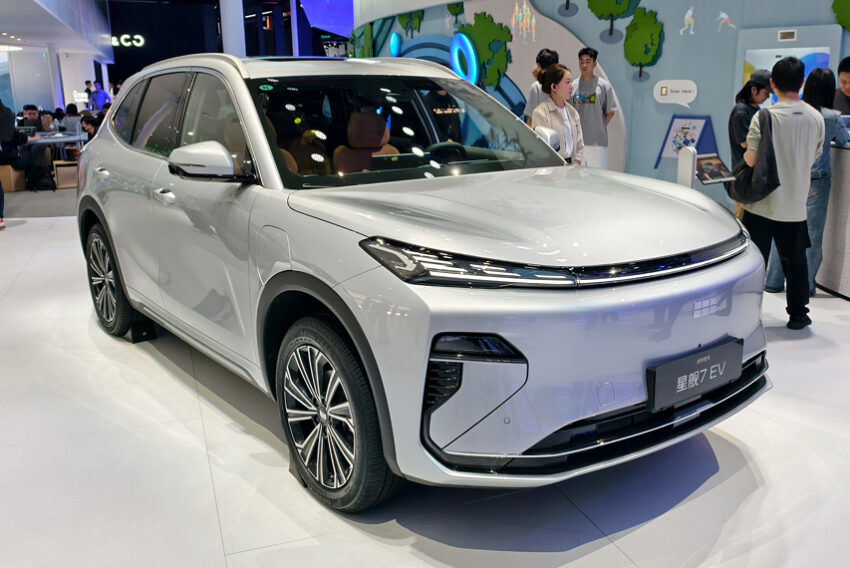
KUALA LUMPUR: At the 2026 Beijing International Automotive Exhibition, Geely’s Galaxy Park display was filled with the usual big-stage messaging around future mobility, electrification and next-generation technology.
KEY TAKEAWAYS
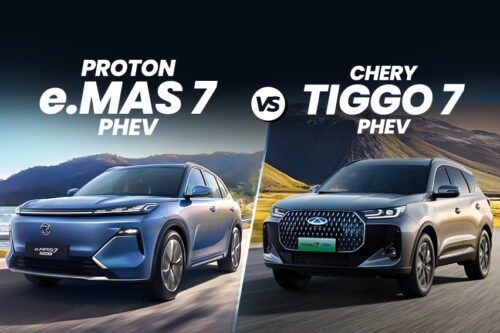
Is the Proton e.MAS 7 PHEV the same as the e.MAS 7 EV?
No. The e.MAS 7 EV is based on the Geely Galaxy E5, while the e.MAS 7 PHEV is based on the larger Geely Galaxy Starship 7.Is the Galaxy Starship 7 EV confirmed for production?
No. The vehicle shown at the 2026 Beijing International Automotive Exhibition is a prototype.Could this battery tech come to Proton e.MAS models?
There is no confirmation yet, but the technology could eventually be applied to future Proton e.MAS vehicles.But one of the more interesting discoveries was not sitting under a spotlight.
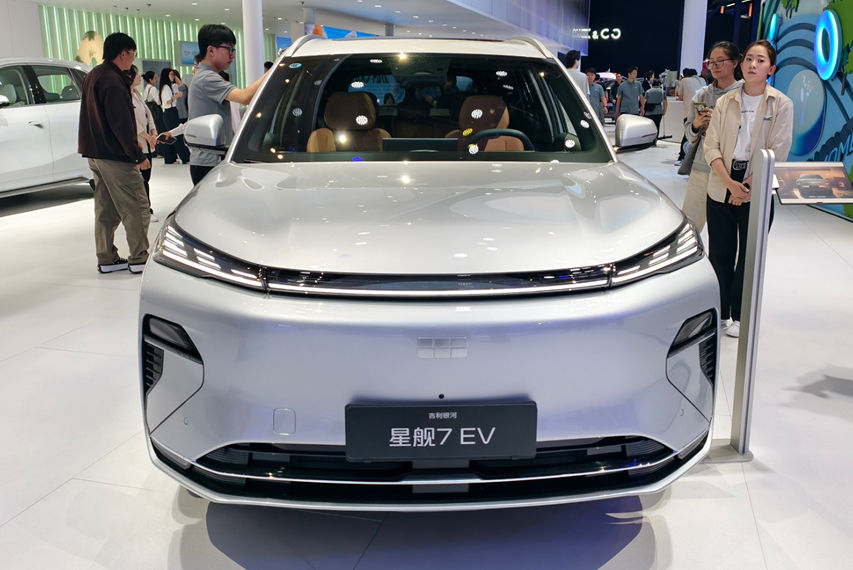 Photo by Adam Aubrey
Also Read: 500,000 cars, 1 million parts, what Is Geely really planning for Proton and Malaysia?
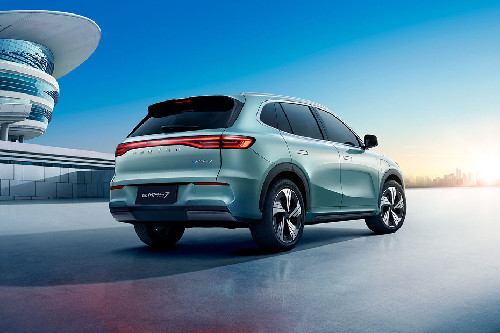
Tucked quietly towards the back of the exhibition was an electric version of the Geely Galaxy Starship 7, the same model line that forms the basis of Malaysia’s Proton e.MAS 7 PHEV.
That alone made it interesting. In China, the Proton e.MAS 7 PHEV is known as the Geely Galaxy Starship 7, while the fully electric Proton e.MAS 7 is based on a different model, the Geely Galaxy E5.
This is an important distinction because many Malaysians may assume the e.MAS 7 EV and e.MAS 7 PHEV are essentially the same SUV with different powertrains. They are not.
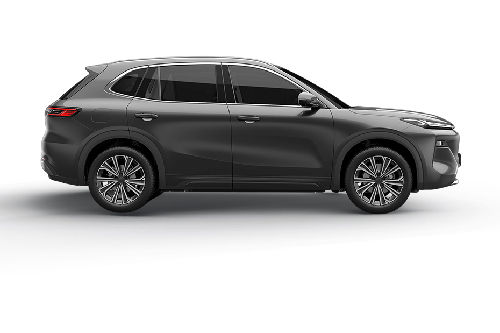
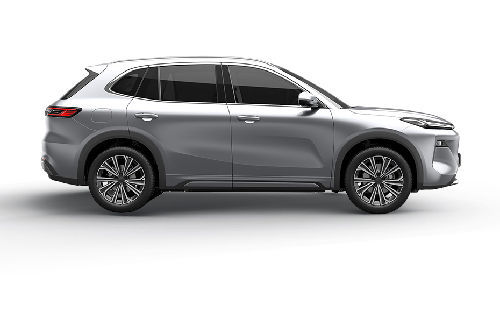
The e.MAS 7 EV and e.MAS 7 PHEV come from two different Geely models. The EV is derived from the Galaxy E5, while the PHEV is based on the larger Galaxy Starship 7. That explains why the e.MAS 7 PHEV is physically bigger, and why its proportions are slightly different from the EV.
So seeing an EV version of the Starship 7 immediately changes the conversation.
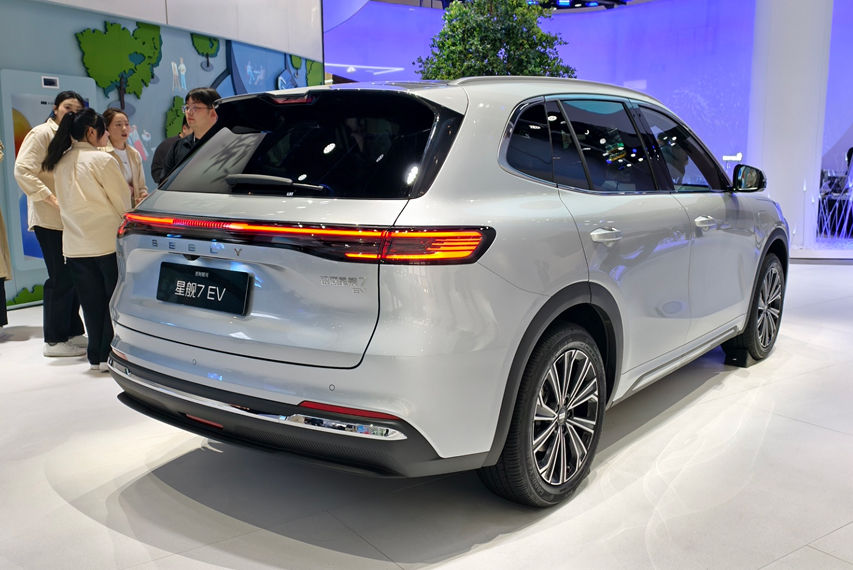 Photo from Adam Aubrey
According to a representative at the stand, the vehicle shown at Galaxy Park is not a final production model. It is currently a prototype. That means there is no confirmed launch plan yet, no final market positioning, and no indication of whether this version will eventually be offered outside China.
Still, its existence is difficult to ignore.
If Geely already has the Galaxy E5 as its electric SUV, why build an EV version of the larger Starship 7? That is where the battery display beside the vehicle becomes important.
Next to the prototype, Geely displayed its Shendun Golden Battery Family, complete with several damaged battery cell samples from extreme safety tests. These were not simple marketing cutaways. The display showed physical cells that had gone through compression, bullet penetration and multi-point puncture testing.
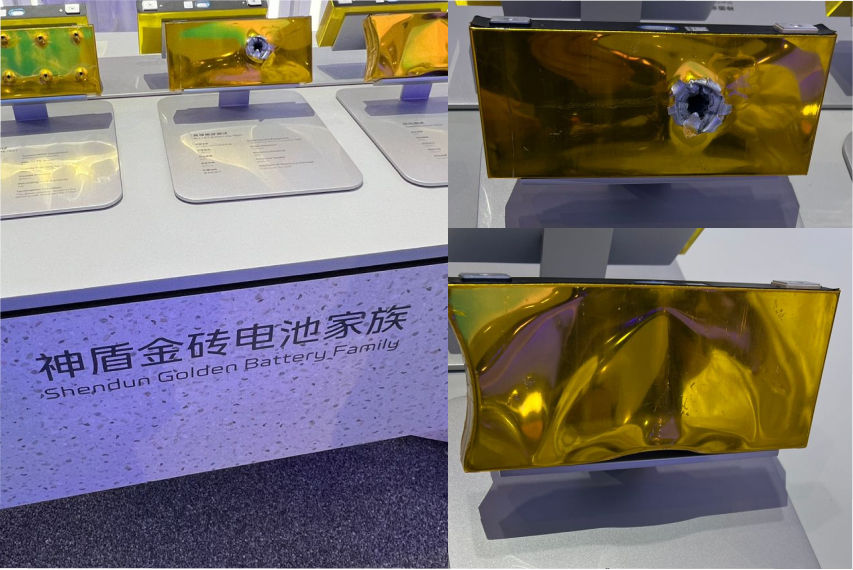
The compression test sample showed a visibly crushed battery cell. According to the display, the test was carried out at 25 degrees Celsius, with a sampling frequency of 0.5 seconds, compression pressure of 150 kN, a compression radius of 75 mm, and a compression speed of 2 mm per second.
That is a serious deformation test. In simple terms, the cell is being squeezed under extreme load to simulate severe physical damage. The point of such a test is to evaluate whether the battery cell can resist thermal runaway or catastrophic failure when subjected to crushing forces, the kind of scenario that could happen in a serious accident.
Another sample showed a battery cell with a large bullet impact hole. The display identified this as a bullet shooting test, carried out using a Type 97A 5.56 mm automatic rifle, with a 5.56 mm bullet, fired from a 25-metre distance. The stated puncture speed was 912 m/s, and the resulting mechanical structure damage was described as explosive damage.
This is far more extreme than normal regulatory testing. A bullet penetration test is not something an owner will ever encounter in everyday use, but it demonstrates how far Geely is pushing abuse testing for its battery cells. The idea is to show that even after a violent, high-energy puncture, the battery structure is being studied for containment and failure behaviour.
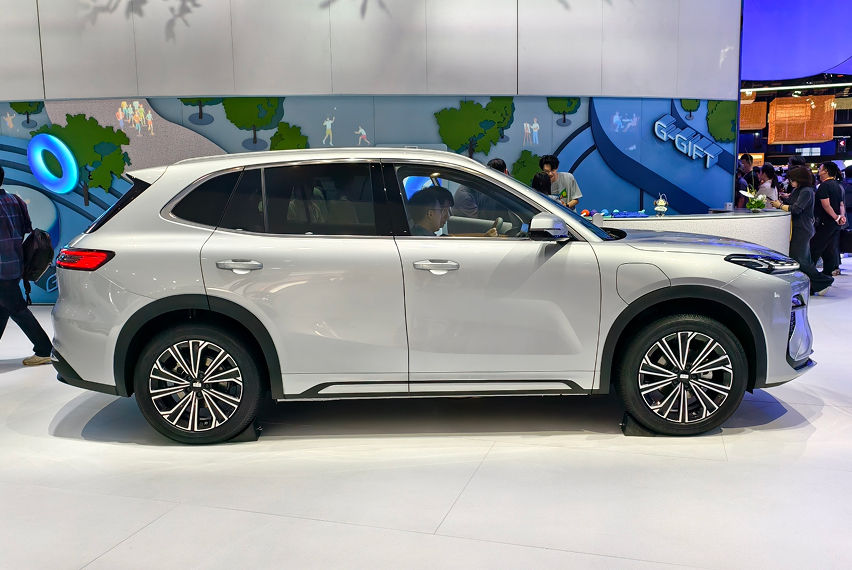 Photo by Adam Aubrey
The third display was an 8-pin puncture test, using eight 5 mm steel needles with a 45-degree needle tip angle. The needle puncture speed was listed at 25 mm per second, with the needles left inside the battery cell while the voltage and temperature were recorded. The test condition stated that the steel needles remained in the cell and the battery was observed for one hour.
That is a particularly relevant test for EV safety because needle puncture is one of the most direct ways to force an internal short circuit inside a cell. In battery engineering, this is one of the worst-case scenarios because internal short circuits can lead to rapid heating and, in weaker designs, thermal runaway.
Geely’s Shendun or Shendun Gold Brick battery is basically being presented as a newer battery system focused on safety, durability and performance.
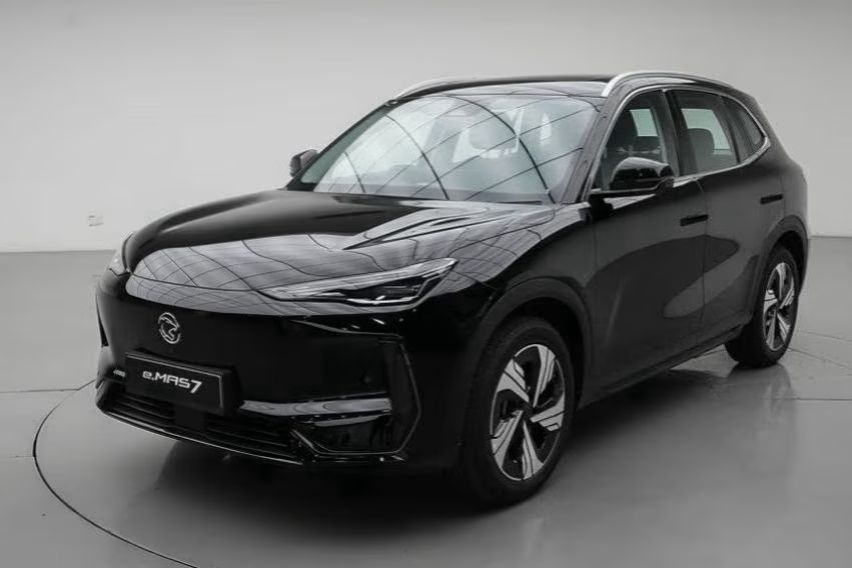 Photo from Proton
In simple terms, Geely claims it can charge very quickly, store more energy for its size, last for more than 6,000 charge cycles and operate with over 95 percent efficiency. For future Proton e.MAS models, that could mean faster charging, better driving range, longer battery lifespan and stronger safety confidence for everyday EV users.
This is where the Starship 7 EV prototype becomes more intriguing.The representative at the stand said the prototype uses a new battery, different from the one used in the Galaxy E5, which is the model that underpins the current Proton e.MAS 7 EV.
That suggests this is not simply a larger body with the existing Galaxy E5 electric hardware carried over. Geely appears to be experimenting with a different battery package, possibly one developed for a larger SUV body, different energy requirements, improved safety performance, or future product expansion.
For Proton, this could become a very interesting development to watch.
At the moment, the Malaysian e.MAS story is quite clear. The e.MAS 7 EV comes from the Galaxy E5, while the e.MAS 7 PHEV comes from the Galaxy Starship 7. One is the electric SUV, the other is the plug-in hybrid SUV.
The current Proton e.MAS 7 EV uses Geely’s AEGIS Short Blade LFP battery, while the e.MAS 7 PHEV uses a smaller LFP battery pack suited to its plug-in hybrid setup.
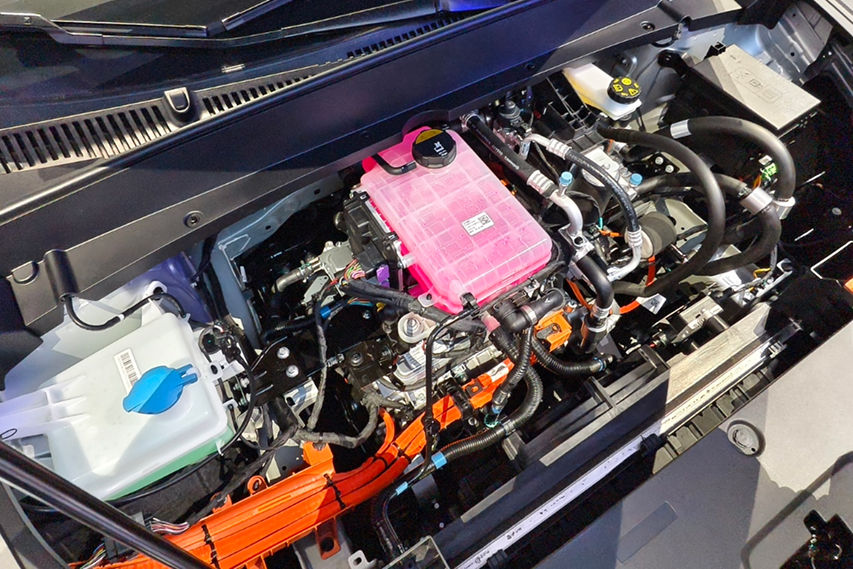 Photo by Adam Aubrey
But this prototype blurs that separation. If the Galaxy Starship 7 eventually gets a full EV version, Geely could end up with two electric SUVs that sit close to each other in concept, but with different body sizes, different packaging and potentially different battery technology.
That could open the door to a larger EV positioned above the current e.MAS 7 EV, but the more realistic takeaway for Malaysia may be the battery technology itself.
If Geely is already testing a new battery package in a Starship 7-based EV prototype, the bigger story may not be whether this exact SUV comes to Malaysia. It may be whether this battery technology eventually finds its way into future Proton e.MAS models.
For now, none of this is confirmed. The vehicle shown at Galaxy Park remains a prototype, and there is no confirmation that it will reach production, let alone be considered for Malaysia.
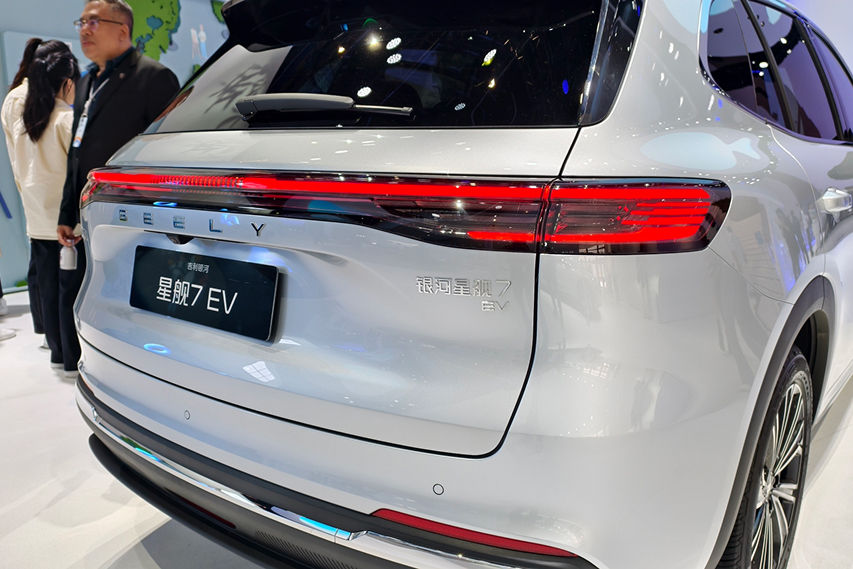 Photo by Adam Aubrey
But as a quiet display at the back of Geely’s stand, it says a lot.
China’s EV development cycle is moving at a pace where today’s prototype can quickly become tomorrow’s production car. And in Geely’s case, what appears first in China can become relevant to Proton later.
The Galaxy Starship 7 EV may not be a production model yet, but its battery could be the more important clue.
Because even if this exact car never reaches Malaysia, the technology behind it could eventually help shape a better, safer, or more capable Proton e.MAS 7 in the future.
Also Read: Proton hosts industrial visit for young talent, strengthens TVET efforts

-
Explore Proton e.MAS 7
-
-
Explore Proton e.MAS 7 PHEV
-
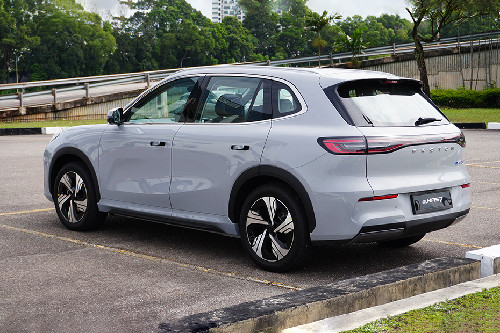
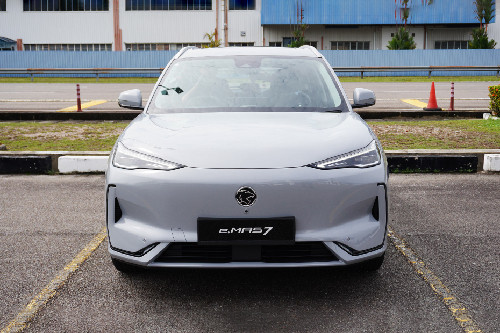
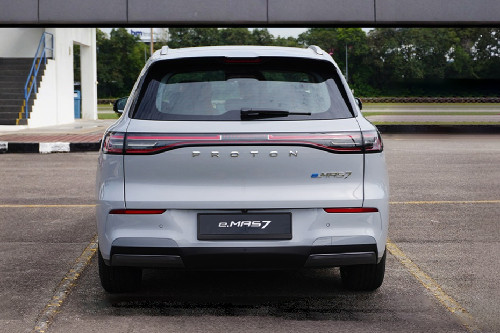
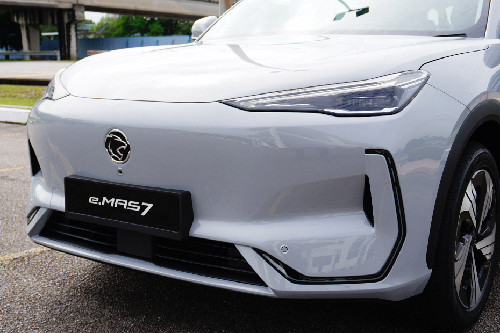

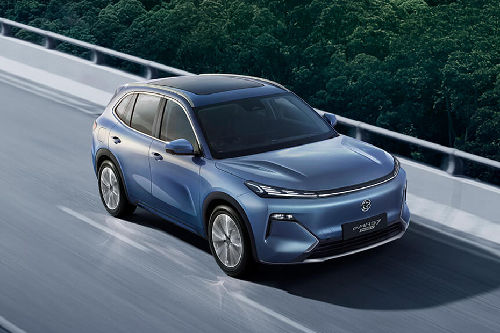
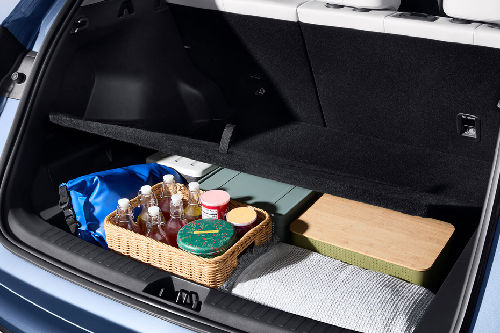
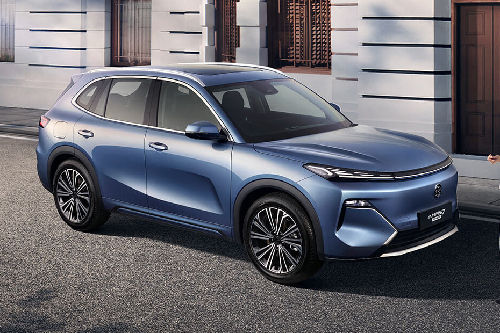
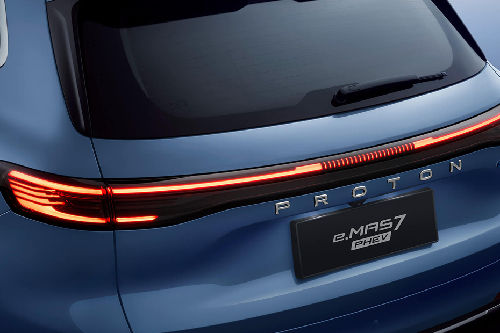

Proton e.MAS 7 Related Stories
- News
- Featured Stories
-
 Proton e.MAS sets new monthly sales record - one unit sold every 7 minutes
KUALA LUMPUR: Proton e.MAS has been creating new highs with each passing month. After becoming the fastest automotive brand in...
Read MoreSippi Vig, Sep 09, 2026 -
Proton records 14.9% growth in July 2026; exports reach a new high
KUALA LUMPUR: Proton has revealed its sales numbers for the month of July. During the first month of H2 2026,...
Read MoreSippi Vig, Aug 06, 2026 -
Proton e.MAS crosses 20k mark in less than 7 months, e.MAS 5 leading the charge
KUALA LUMPUR: EV adoption in the Malaysian automotive market has entered a new phase, with a total of 26,192 pure...
Read MoreSippi Vig, Jul 29, 2026


-
Malaysia’s automotive market in H1 2026: 6 Key trends and insights
The Malaysian Automotive Association (MAA) has released the data on total vehicle sales in the country from January to June...
Read MoreSippi Vig, Jul 24, 2026 -
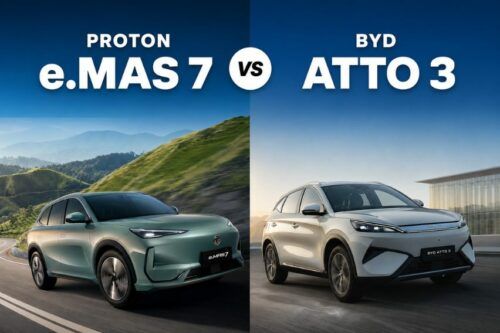
2026 Proton e.MAS 7 vs 2026 BYD Atto 3: Head-to-head comparison
The Malaysian electric SUV market has entered a new phase, with competition intensifying as leading brands step up their game...
Read MoreSippi Vig, Jul 09, 2026 -
Top 10 best-selling EVs in Malaysia for 2025
Malaysia's electric vehicle market has been growing at a fast rate, driven by the launch of exciting and affordable EVs,...
Read MoreSippi Vig, Dec 26, 2025

Proton Car Models
-

Proton S70 -
Proton Iriz -
Proton Persona -
Proton X90 -
Proton e.MAS 7 -
Proton X70 -
Proton e.MAS 5 -
Proton X50 -
Proton Saga -
Proton e.MAS 7 PHEV
Don't Miss
-
Proton e.MAS sets new monthly sales record - one unit sold every 7 minutes
-
Proton records 14.9% growth in July 2026; exports reach a new high
-
Proton e.MAS crosses 20k mark in less than 7 months, e.MAS 5 leading the charge
-
Proton e.MAS records 26,492 cumulative sales; remains No.1 EV brand in Malaysia
-
Proton e.MAS expands into Brunei, appoints Grand Motors as official distributor
KLIMS 2026


Malaysia Autoshow
Trending & Fresh Updates
- Latest
- Popular
-
 Suzuki opens a new 1S centre in JuruSippi Vig, Sep 14, 2026
 -
-
-
-
-
-
-
-
-
Electric Car: A comprehensive buying guidePurva Jain, Jul 01, 2024
-
Must watch automotive movies for enthusiastsPurva Jain, Feb 21, 2024
-
Car Rust-proofing 101: All you need to knowPurva Jain, Feb 15, 2024



You might also be interested in
- News
- Featured Stories
Proton Featured Cars
- Latest
- Popular
-
Proton X90RM 106,800 - 122,800 OTR Price KajangEMI : RM 1,247 x 844.26 (27 Reviews) VIEW SEPTEMBER OFFERS
-
Proton e.MAS 7 PHEVRM 109,800 - 129,800 OTR Price KajangEMI : RM 1,282 x 84Write a Review VIEW SEPTEMBER OFFERS
-
Proton X70RM 99,800 - 112,800 OTR Price KajangEMI : RM 1,165 x 844.18 (80 Reviews) VIEW SEPTEMBER OFFERS
-
Proton SagaRM 38,990 - 49,990 OTR Price KajangEMI : RM 455 x 844.23 (79 Reviews) VIEW SEPTEMBER OFFERS
-
Proton e.MAS 5RM 59,800 - 72,800 OTR Price KajangEMI : RM 698 x 844.5 (2 Reviews) VIEW SEPTEMBER OFFERS
-
Proton S70RM 68,800 - 89,800 OTR Price KajangEMI : RM 803 x 843.97 (30 Reviews) VIEW SEPTEMBER OFFERS
-
Proton IrizRM 42,800 - 57,300 OTR Price KajangEMI : RM 499 x 844.01 (69 Reviews) VIEW SEPTEMBER OFFERS
-
Proton PersonaRM 47,800 - 58,300 OTR Price KajangEMI : RM 558 x 844.15 (75 Reviews) VIEW SEPTEMBER OFFERS
-
Proton X90RM 106,800 - 122,800 OTR Price KajangEMI : RM 1,247 x 844.26 (27 Reviews) VIEW SEPTEMBER OFFERS
-
Proton X70RM 99,800 - 112,800 OTR Price KajangEMI : RM 1,165 x 844.18 (80 Reviews) VIEW SEPTEMBER OFFERS
Latest Proton e.MAS 7 Car Videos on Zigwheels

-
Proton eMAS 7 launched | Walkaround | Driving impressions | Variant Comparison19 Dec, 2024 .
Compare & Recommended
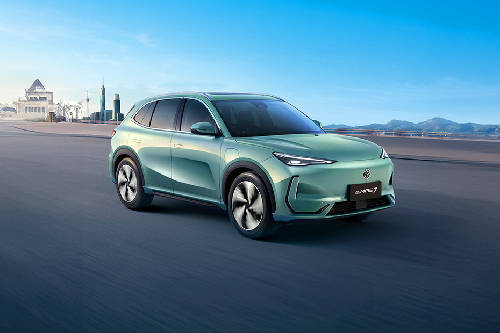
Proton e.MAS 7
RM 103,800 - 119,800
e.MAS 7 Price
|
|
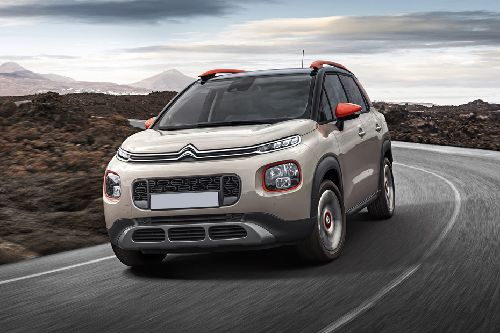
|
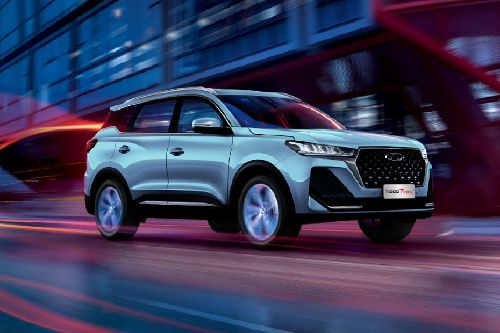
|
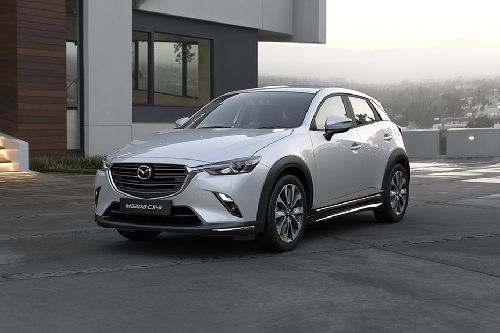
|
|
Seating Capacity
5
|
7
|
5
|
5
|
5
|
|
Fuel Type
Electric
|
Petrol
|
Petrol
|
Petrol
|
Petrol
|
|
Power
215
|
104
|
110
|
194
|
114
|
|
Torque
320 Nm
|
136 Nm
|
205 Nm
|
290 Nm
|
149 Nm
|
|
Transmission Type
Automatic
|
Automatic
|
Automatic
|
Dual Clutch
|
Automatic
|
|
Ground Clearance
-
|
220 mm
|
-
|
-
|
145 mm
|
|
Engine
-
|
1496
|
1199
|
1598
|
1496
|
|
|
Trending SUV
- Latest
- Upcoming
- Popular
-
-
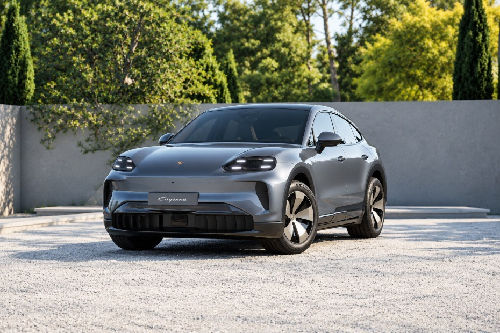
Porsche Cayenne ElectricRM 699,000 - 999,999 OTR Price KajangEMI : RM 8,169 x 84Write a Review VIEW SEPTEMBER OFFERS
-
-
Jetour T1RM 129,800 - 146,800 OTR Price KajangEMI : RM 1,516 x 844 (2 Reviews) VIEW SEPTEMBER OFFERS
-
Volkswagen TayronRM 190,510 - 238,574 OTR Price KajangEMI : RM 2,226 x 84Write a Review VIEW SEPTEMBER OFFERS
-

-
MINI John Cooper WorksRM 218,888 - 393,888 OTR Price KajangEMI : RM 2,557 x 844.38 (13 Reviews) VIEW SEPTEMBER OFFERS
-
Peugeot 3008RM 138,000 OTR Price KajangEMI : RM 1,612 x 844.35 (23 Reviews) VIEW SEPTEMBER OFFERS
-
Toyota Corolla CrossRM 130,900 - 146,000 OTR Price KajangEMI : RM 1,529 x 844.26 (47 Reviews) VIEW SEPTEMBER OFFERS
-
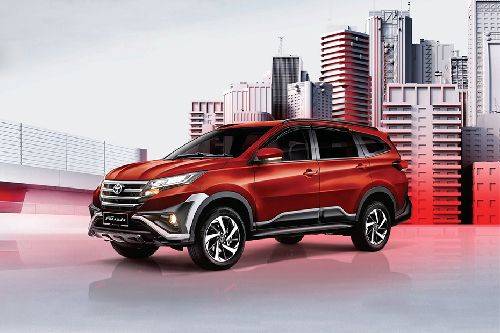
Toyota RushRM 93,000 - 97,000 OTR Price KajangEMI : RM 1,086 x 844.27 (61 Reviews) VIEW SEPTEMBER OFFERS
-
Perodua AtivaRM 62,500 - 73,400 OTR Price KajangEMI : RM 730 x 844.17 (46 Reviews) VIEW SEPTEMBER OFFERS
-
Mazda CX-5RM 143,300 - 187,200 OTR Price KajangEMI : RM 1,674 x 844.36 (65 Reviews) VIEW SEPTEMBER OFFERS