What’s next for Proton e.MAS? Geely battery roadmap hints at faster charging and longer range
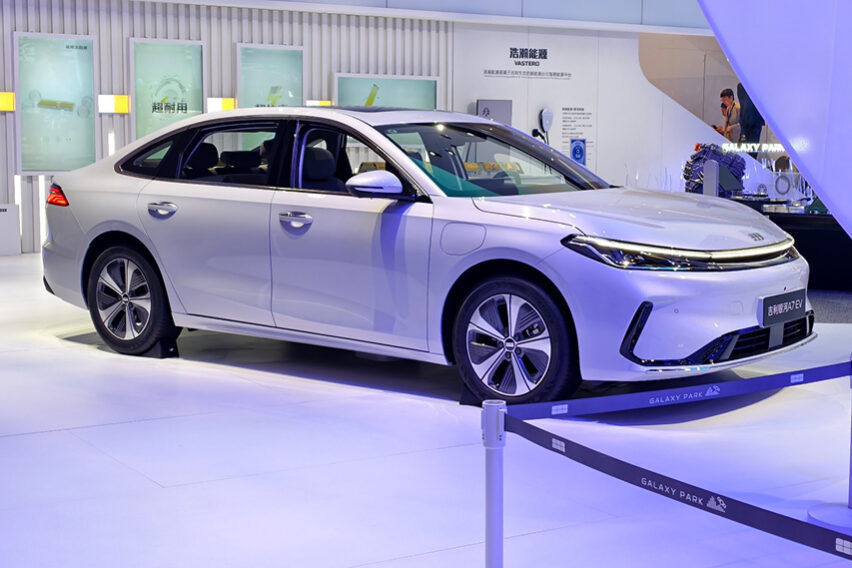
KUALA LUMPUR: The quiet appearance of an electric version of the Geely Galaxy Starship 7( sibling to e.MAS 7 PHEV) at the 2026 Beijing International Automotive Exhibition raised an interesting question. If the e.MAS 7 EV and e.MAS 7 PHEV are built on different foundations today, could that gap start to close in the future?
KEY TAKEAWAYS
What battery technology is Geely developing for future EVs?
Geely is developing a wider battery portfolio that includes the Shendun Gold Brick Battery system and future all-solid-state battery technology.Could this battery technology be used in future Proton e.MAS models?
There is no confirmation yet, but Proton e.MAS models are based on Geely technology, so future battery developments could eventually become relevant to Proton EVs.Will current Proton e.MAS models become outdated quickly?
No. The current e.MAS models represent the start of Proton’s EV journey, while future versions could continue improving as Geely’s battery technology develops.That moment, tucked away at the back of Geely’s Galaxy Park display, was enough to spark a broader thought about where the Proton e.MAS brand is heading next, not just in terms of cars, but the battery technology underneath them.
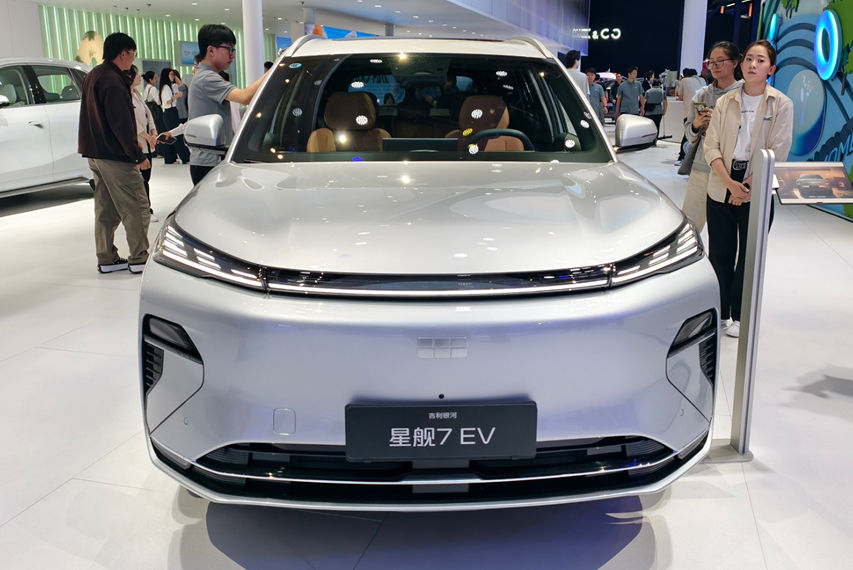 Photo by Adam Aubrey
Also Read: 500,000 cars, 1 million parts, what Is Geely really planning for Proton and Malaysia?
Some of those answers may have already been hinted at earlier.
At a pre-Auto China 2026 Geely gathering, the company laid out its wider battery strategy, showcasing what it calls a full-portfolio approach alongside its next-generation Shendun Gold Brick battery system and a roadmap towards all-solid-state batteries.
Taken together, it offers a clearer picture of how the e.MAS lineup could evolve over time.
A platform that can evolve
One considerable takeaway is that Geely is not developing a single battery for all cars, but a range of battery solutions designed for different use cases.
This includes high-performance batteries capable of extremely fast charging, as well as more cost-focused packs designed for durability and long-term use.
The Shendun system itself is built around improving safety, longevity and efficiency, areas that matter most to everyday EV buyers.
For current e.MAS buyers, the point is not that they should wait for the next battery. It is that Proton’s EV lineup is being built on a technology pipeline that is still moving quickly.
The e.MAS models on sale today mark the starting point, while future versions could benefit from the next wave of Geely battery development, whether through faster charging, better range, longer battery life or stronger safety performance.
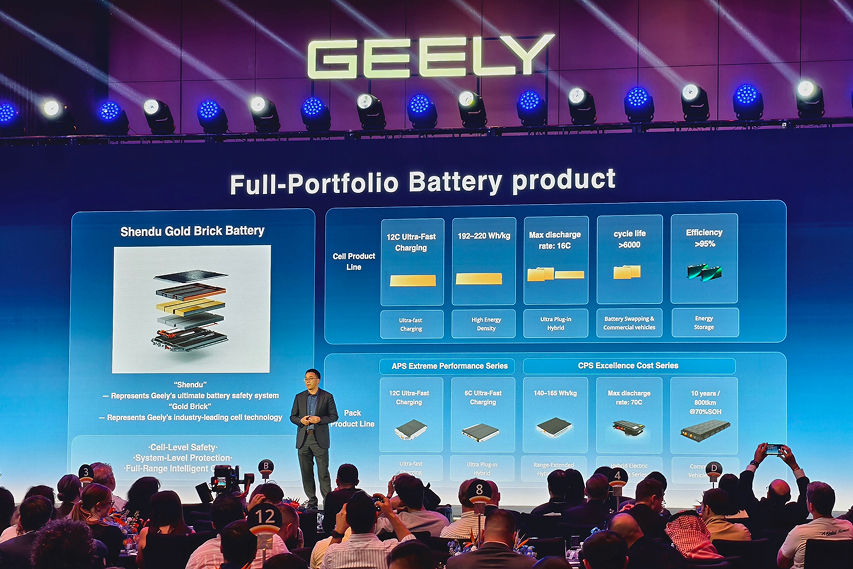 Photo by Adam Aubrey
Faster charging and longer-lasting batteries
From what was shown, Geely is pushing towards batteries that can charge significantly faster while also lasting longer over years of use.
In simple terms, that could mean less time spent at chargers and more confidence in how the battery holds up over the long run. Combined with improved efficiency, it also opens the door to better real-world range without necessarily increasing battery size.
For Proton’s e.MAS lineup, these are the kinds of improvements that matter most in Malaysia, where charging convenience and long-term ownership costs are still key considerations for buyers.
Safety remains a major focus
Equally important is how much emphasis Geely is placing on safety.
The Shendun battery system was shown alongside extreme durability tests, including compression, puncture and even ballistic impact scenarios. While these are far beyond real-world conditions, they point to a clear direction, building batteries that are more resistant to damage and less prone to critical failure.
For buyers who are still cautious about EV safety, this kind of development plays a key role in building confidence over time.
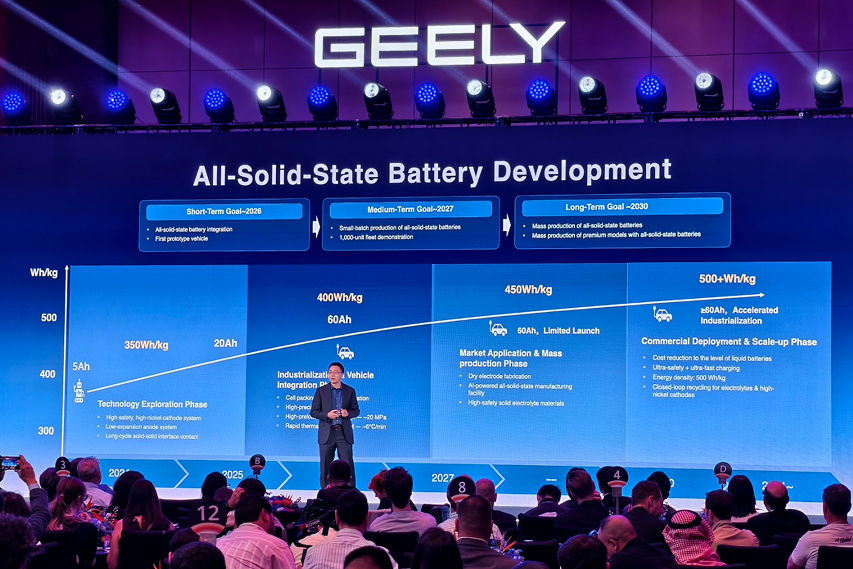 Photo by Adam Aubrey
Looking further ahead, solid-state batteries
Beyond current-generation batteries, Geely also outlined its roadmap for all-solid-state battery development.
The timeline points to early integration and prototype vehicles around 2026, followed by small-scale production and fleet testing by 2027, before eventually moving towards mass production closer to 2030.
These next-generation batteries promise significantly higher energy density, which could translate to longer driving range, while also improving safety due to their more stable structure compared to conventional lithium-ion batteries.
For now, this remains a long-term development, but it shows that the e.MAS brand is being built with future technologies already in mind.
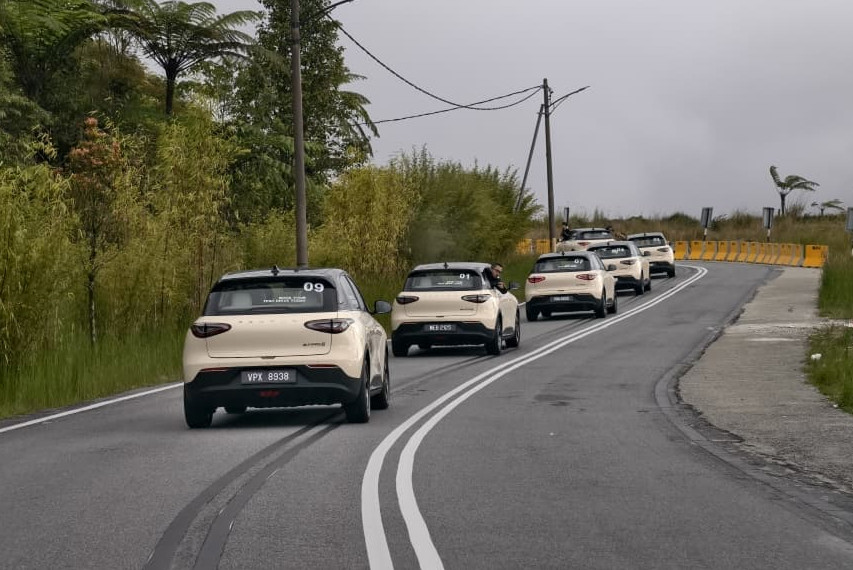 Photo by Adam Aubrey
What this means for Proton e.MAS
For Proton, the takeaway is not that current models will quickly become outdated, but that they are part of a continuously evolving technology pipeline.
The e.MAS 7 EV and e.MAS 7 PHEV already represent two different approaches to electrification, and both sit on Geely platforms that are actively being developed further in China.
What the Starship 7 EV prototype showed at the auto show, combined with what was shared earlier at Geely’s pre-show gathering, is how those platforms could improve over time, especially at the battery level.
And in Malaysia, where EV adoption is still growing, these are the areas that will make the biggest difference to buyers.
Because the real question is no longer just what an EV can do today, but how much better it can become over the next few years.
If Geely’s battery roadmap is anything to go by, the Proton e.MAS story is only just getting started.
Also Read: 2026 Proton X70 Sport Edition launched in Malaysia

-
Explore Proton e.MAS 7
-
-
Explore Proton e.MAS 5
-
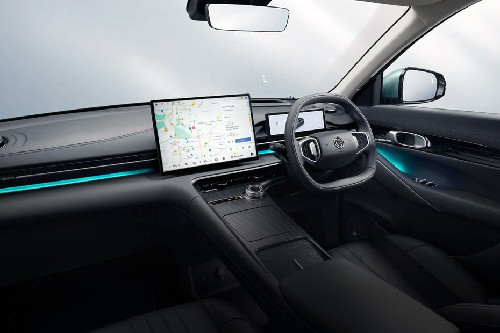
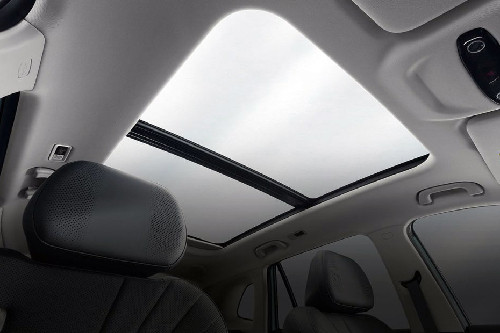
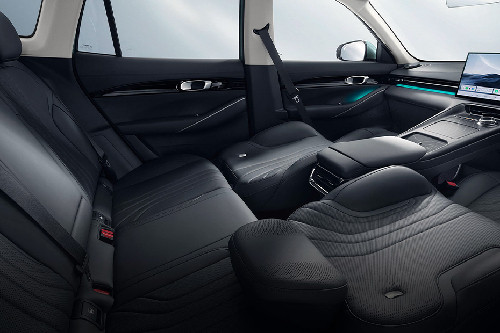
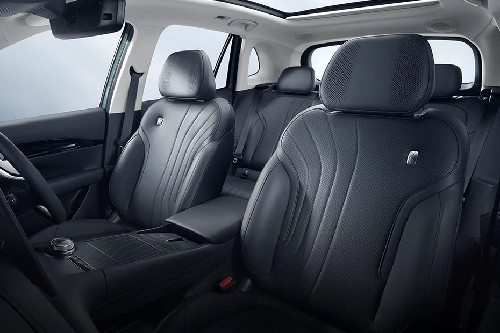

Proton e.MAS 7 Related Stories
- News
- Featured Stories
-
 Proton e.MAS sets new monthly sales record - one unit sold every 7 minutes
KUALA LUMPUR: Proton e.MAS has been creating new highs with each passing month. After becoming the fastest automotive brand in...
Read MoreSippi Vig, Sep 09, 2026 -
Proton records 14.9% growth in July 2026; exports reach a new high
KUALA LUMPUR: Proton has revealed its sales numbers for the month of July. During the first month of H2 2026,...
Read MoreSippi Vig, Aug 06, 2026 -
Proton e.MAS crosses 20k mark in less than 7 months, e.MAS 5 leading the charge
KUALA LUMPUR: EV adoption in the Malaysian automotive market has entered a new phase, with a total of 26,192 pure...
Read MoreSippi Vig, Jul 29, 2026

-
Malaysia’s automotive market in H1 2026: 6 Key trends and insights
The Malaysian Automotive Association (MAA) has released the data on total vehicle sales in the country from January to June...
Read MoreSippi Vig, Jul 24, 2026 -
2026 Proton e.MAS 7 vs 2026 BYD Atto 3: Head-to-head comparison
The Malaysian electric SUV market has entered a new phase, with competition intensifying as leading brands step up their game...
Read MoreSippi Vig, Jul 09, 2026 -
Top 10 best-selling EVs in Malaysia for 2025
Malaysia's electric vehicle market has been growing at a fast rate, driven by the launch of exciting and affordable EVs,...
Read MoreSippi Vig, Dec 26, 2025
Proton Car Models
-

Proton S70 -
Proton Iriz -
Proton Persona -
Proton X90 -
Proton e.MAS 7 -
Proton X70 -
Proton e.MAS 5 -
Proton X50 -
Proton Saga -
Proton e.MAS 7 PHEV
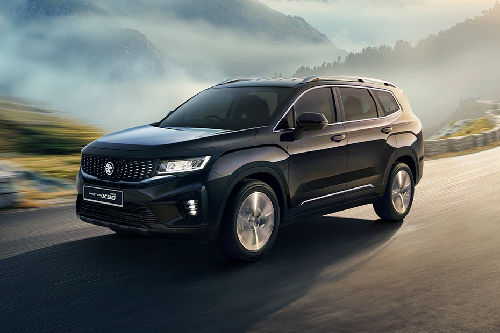
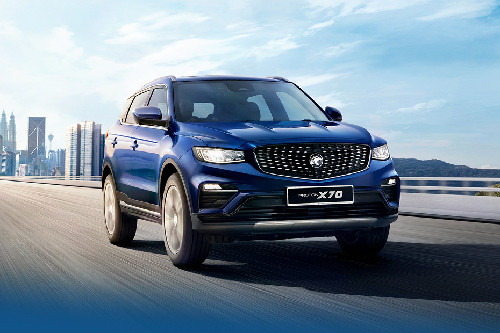
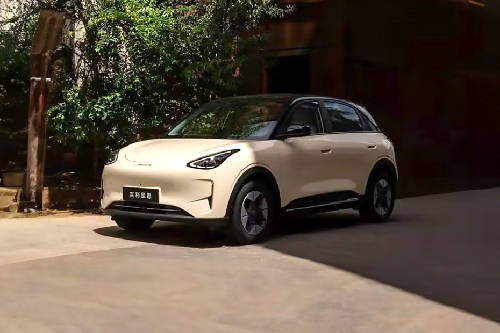
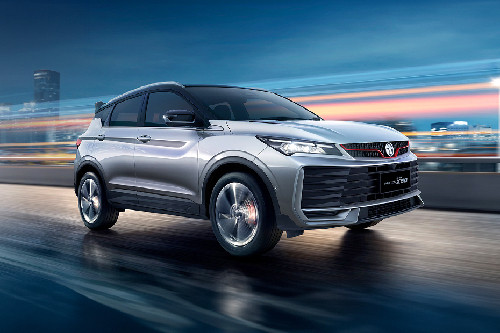
Don't Miss
-
Proton e.MAS sets new monthly sales record - one unit sold every 7 minutes
-
Proton records 14.9% growth in July 2026; exports reach a new high
-
Proton e.MAS crosses 20k mark in less than 7 months, e.MAS 5 leading the charge
-
Proton e.MAS records 26,492 cumulative sales; remains No.1 EV brand in Malaysia
-
Proton e.MAS expands into Brunei, appoints Grand Motors as official distributor
KLIMS 2026


Malaysia Autoshow
Trending & Fresh Updates
- Latest
- Popular
-
 Suzuki opens a new 1S centre in JuruSippi Vig, Sep 14, 2026
 -
-
-
-
-
-
-
-
-
Electric Car: A comprehensive buying guidePurva Jain, Jul 01, 2024
-
Must watch automotive movies for enthusiastsPurva Jain, Feb 21, 2024
-
Car Rust-proofing 101: All you need to knowPurva Jain, Feb 15, 2024

You might also be interested in
- News
- Featured Stories
Proton Featured Cars
- Latest
- Popular
-
Proton X90RM 106,800 - 122,800 OTR Price SamarahanEMI : RM 1,247 x 844.26 (27 Reviews) VIEW SEPTEMBER OFFERS
-
Proton e.MAS 7 PHEVRM 109,800 - 129,800 OTR Price SamarahanEMI : RM 1,282 x 84Write a Review VIEW SEPTEMBER OFFERS
-
Proton X70RM 99,800 - 112,800 OTR Price SamarahanEMI : RM 1,165 x 844.18 (80 Reviews) VIEW SEPTEMBER OFFERS
-
Proton SagaRM 38,990 - 49,990 OTR Price SamarahanEMI : RM 455 x 844.23 (79 Reviews) VIEW SEPTEMBER OFFERS
-
Proton e.MAS 5RM 59,800 - 72,800 OTR Price SamarahanEMI : RM 698 x 844.5 (2 Reviews) VIEW SEPTEMBER OFFERS
-
Proton S70RM 68,800 - 89,800 OTR Price SamarahanEMI : RM 803 x 843.97 (30 Reviews) VIEW SEPTEMBER OFFERS
-
Proton IrizRM 42,800 - 57,300 OTR Price SamarahanEMI : RM 499 x 844.01 (69 Reviews) VIEW SEPTEMBER OFFERS
-
Proton PersonaRM 47,800 - 58,300 OTR Price SamarahanEMI : RM 558 x 844.15 (75 Reviews) VIEW SEPTEMBER OFFERS
-
Proton X90RM 106,800 - 122,800 OTR Price SamarahanEMI : RM 1,247 x 844.26 (27 Reviews) VIEW SEPTEMBER OFFERS
-
Proton X70RM 99,800 - 112,800 OTR Price SamarahanEMI : RM 1,165 x 844.18 (80 Reviews) VIEW SEPTEMBER OFFERS
Latest Proton e.MAS 7 Car Videos on Zigwheels

-
Proton eMAS 7 launched | Walkaround | Driving impressions | Variant Comparison19 Dec, 2024 .
Compare & Recommended
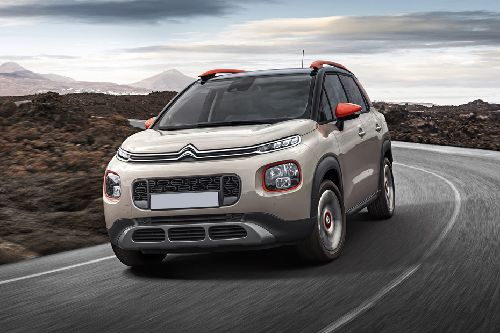
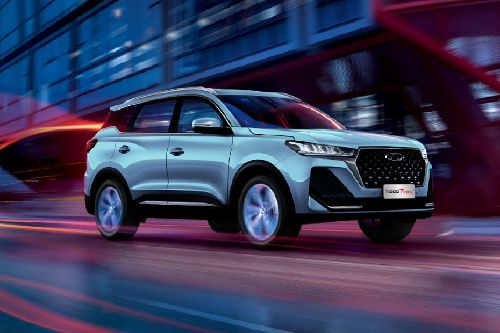
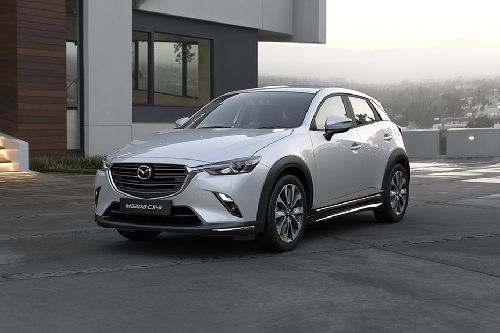
Proton e.MAS 7
RM 103,800 - 119,800
e.MAS 7 Price
|
|
|
|
|
|
Seating Capacity
5
|
7
|
5
|
5
|
5
|
|
Fuel Type
Electric
|
Petrol
|
Petrol
|
Petrol
|
Petrol
|
|
Power
215
|
104
|
110
|
194
|
114
|
|
Torque
320 Nm
|
136 Nm
|
205 Nm
|
290 Nm
|
149 Nm
|
|
Transmission Type
Automatic
|
Automatic
|
Automatic
|
Dual Clutch
|
Automatic
|
|
Ground Clearance
-
|
220 mm
|
-
|
-
|
145 mm
|
|
Engine
-
|
1496
|
1199
|
1598
|
1496
|
|
|
Trending SUV
- Latest
- Upcoming
- Popular
-
JAECOO J5 EVRM 118,800 OTR Price SamarahanEMI : RM 1,387 x 84Write a Review VIEW SEPTEMBER OFFERS
-
Porsche Cayenne ElectricRM 699,000 - 999,999 OTR Price SamarahanEMI : RM 8,169 x 84Write a Review VIEW SEPTEMBER OFFERS
-
-
Jetour T1RM 129,800 - 146,800 OTR Price SamarahanEMI : RM 1,516 x 844 (2 Reviews) VIEW SEPTEMBER OFFERS
-
Volkswagen TayronRM 190,510 - 238,574 OTR Price SamarahanEMI : RM 2,226 x 84Write a Review VIEW SEPTEMBER OFFERS
-
Chery Tiggo 9RM 166,800 OTR Price SamarahanEMI : RM 1,948 x 84Write a Review VIEW SEPTEMBER OFFERS
-
MINI John Cooper WorksRM 218,888 - 393,888 OTR Price SamarahanEMI : RM 2,557 x 844.38 (13 Reviews) VIEW SEPTEMBER OFFERS
-
Peugeot 3008RM 138,000 OTR Price SamarahanEMI : RM 1,612 x 844.35 (23 Reviews) VIEW SEPTEMBER OFFERS
-
Toyota Corolla CrossRM 130,900 - 146,000 OTR Price SamarahanEMI : RM 1,529 x 844.26 (47 Reviews) VIEW SEPTEMBER OFFERS
-
Toyota RushRM 93,000 - 97,000 OTR Price SamarahanEMI : RM 1,086 x 844.27 (61 Reviews) VIEW SEPTEMBER OFFERS
-
Perodua AtivaRM 62,500 - 73,400 OTR Price SamarahanEMI : RM 730 x 844.17 (46 Reviews) VIEW SEPTEMBER OFFERS
-
Mazda CX-5RM 143,300 - 187,200 OTR Price SamarahanEMI : RM 1,674 x 844.36 (65 Reviews) VIEW SEPTEMBER OFFERS