Proton e.MAS 7 PHEV now open for booking, RM110k–RM130k tentative price
- KEY TAKEAWAYS
- Three variants, but the real split is battery, range, and charging
- Premium Plus gets the big battery
- Prime and Premium share the smaller pack
- Powertrain, 262 PS system output, front-wheel drive
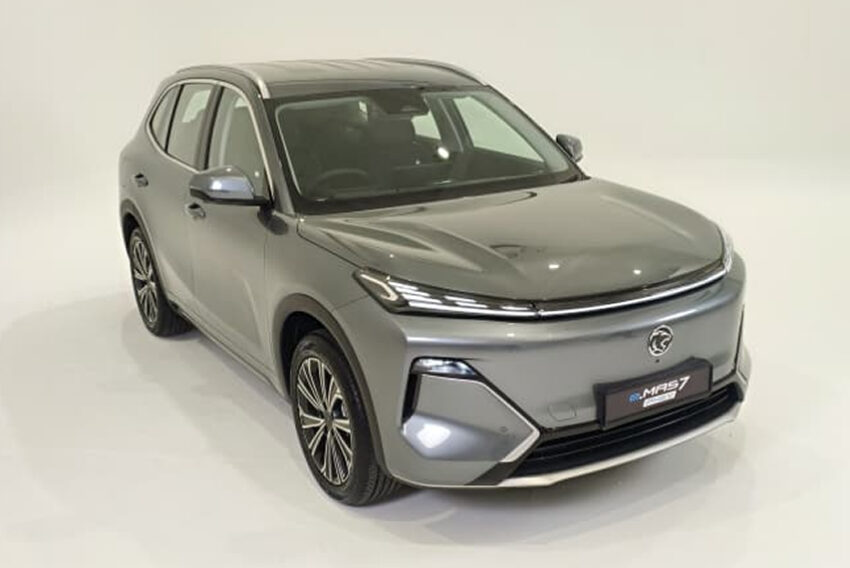
- Familiar e.MAS design, with more “normal SUV” details
- Cabin tech, CarPlay and Android Auto included from launch
KUALA LUMPUR: Proton has opened bookings for the e.MAS 7 PHEV in Malaysia, signaling the brand’s first move into plug-in hybrid territory under the e.MAS nameplate.
KEY TAKEAWAYS
Is the Proton e.MAS 7 PHEV launched in Malaysia?
Bookings are open now with a RM99 booking fee, and Proton is quoting a tentative RM110k–RM130k price range, subject to terms and conditions.What’s the EV range for the e.MAS 7 PHEV?
Prime and Premium are quoted at 105 km EV range (NEDC), while Premium Plus is quoted at 170 km EV range (NEDC).Proton has opened bookings for the all-new e.MAS 7 PHEV with a RM99 booking fee and are also offering a RM500 booking fee rebate for the first 5,000 customers,
For now, the company is only quoting a tentative price range of RM110,000 to RM130,000, with terms and conditions applying.
The SUV will be offered in three variants, giving buyers a chargeable electrified option that can handle daily commutes on electric power, with petrol backup for longer runs.
Proton is also pushing the e.MAS 7 PHEV’s long-distance angle with a real-world style drive claim. The company says the SUV managed 1,104.5 km of travel with 189 km still remaining, and quotes an average fuel consumption figure of 4.0 L/100 km.
The journey shown by Proton runs from Penang to Johor Bahru, with Shah Alam and Proton’s COE marked along the way, and Proton’s point here is that this result is based on one fully charged EV battery and one full tank of petrol.
On the ownership side, Proton is positioning the PHEV as a cheaper-to-run alternative to a conventional SUV in the same segment. The brand claims the e.MAS 7 PHEV is 41% cheaper over a 10-year period, based on its internal cost comparison.
In the breakdown shown, Proton estimates fuel plus charging cost at RM21,200 and maintenance at RM8,000, for a total of RM29,200 over 10 years. For a comparable ICE SUV, the slide lists RM33,800 for fuel, RM16,000 for maintenance, and a RM49,800 total, with the figures stated as estimated costs.
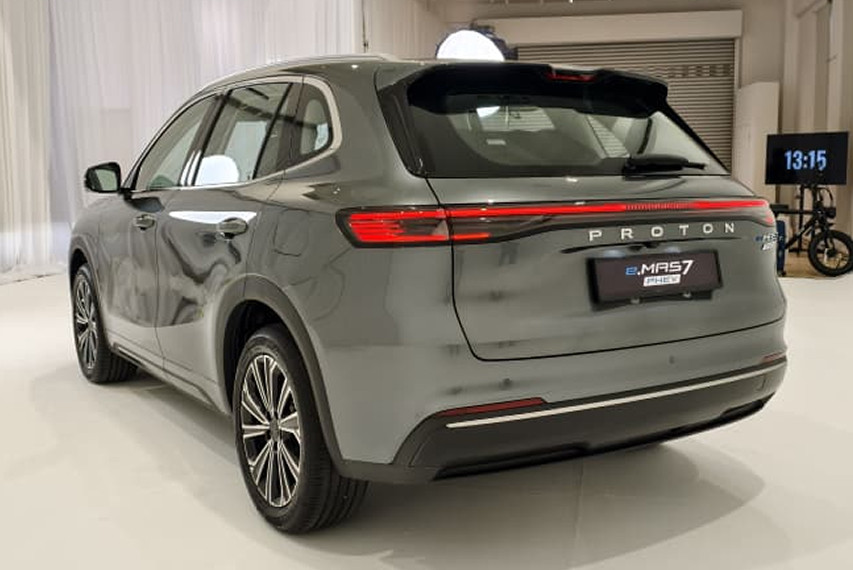 Photo by Adam Aubrey
Also Read: Proton’s first PHEV under e.MAS, here’s how the e.MAS 7 PHEV variants splits
Proton has also been describing the model as a “dual-powered EV”, but in practical terms, this is a plug-in hybrid SUV that can be charged like an EV, driven on electricity for daily use, then switched seamlessly to petrol power when the battery is depleted.
Three variants, but the real split is battery, range, and charging
While the variant names are straightforward, the meaningful differences sit in battery size, EV range, combined range, and DC fast charging speed.
Premium Plus gets the big battery
The range-topping Premium Plus uses a 29.8 kWh LFP battery, delivering:
- 170 km EV range (NEDC)
- 996 km combined range
- 60 kW DC fast charging, with 30 to 80% SoC in under 16 minutes
- 6.6 kW AC charging
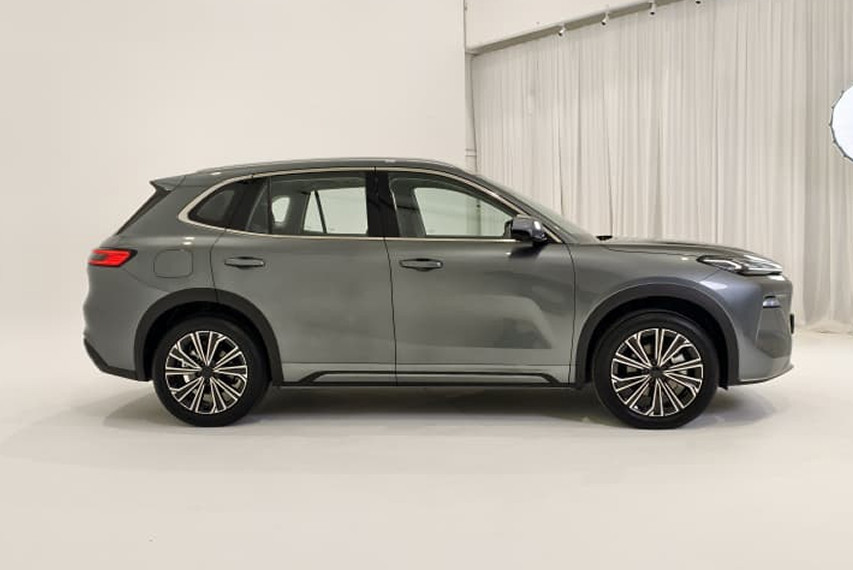 Photo by Adam Aubrey
Prime and Premium share the smaller pack
Both the Prime and Premium run an 18.4 kWh LFP battery, with:
- 105 km EV range (NEDC)
- 943 km combined range
- 30 kW DC fast charging, with 30 to 80% SoC in under 20 minutes
- 6.6 kW AC charging
For buyers, that means the Premium Plus is the one to look at if you want the highest EV range and the quicker DC charging capability. Prime and Premium still offer a useful electric-only driving buffer for commuting, just with a smaller battery and gentler charging ceiling.
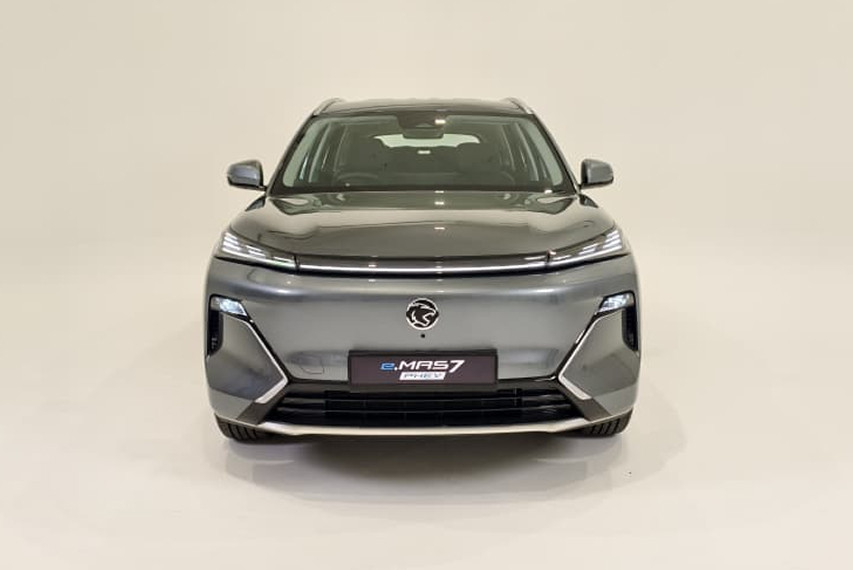 Photo by Adam Aubrey
Powertrain, 262 PS system output, front-wheel drive
All variants use Geely’s EM-i Super Hybrid system, pairing a 1.5-litre naturally aspirated petrol engine with a front electric motor, driving the front wheels.
Key figures:
- Engine, 99 PS and 125 Nm
- Front motor, 218 PS and 262 Nm
- Total system output, 262 PS and 262 Nm
- 0 to 100 km/h, 8.0 seconds (Prime, Premium), 8.2 seconds (Premium Plus)
- Top speed, 170 km/h
The PHEV uses an electrified dedicated hybrid transmission (E-DHT) designed to run primarily on electric drive at lower speeds, then bring the engine in more directly at higher speeds where it is more efficient.
Practicality is also a talking point, with the PHEV gaining luggage capacity:
- Boot space, 528 litres
- Seats folded, 2,065 litres
- Underfloor storage, 100 litres (Inside, under rear seats)
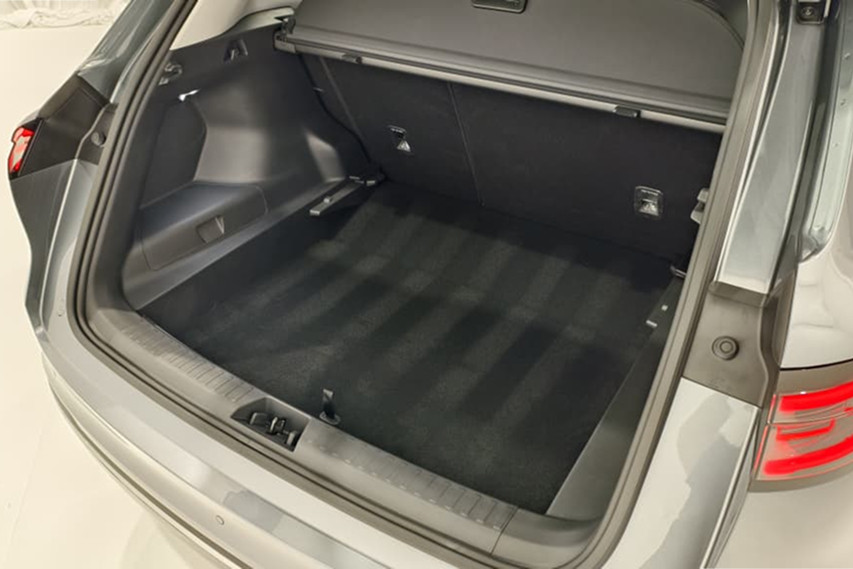 Photo by Adam Aubrey
Familiar e.MAS design, with more “normal SUV” details
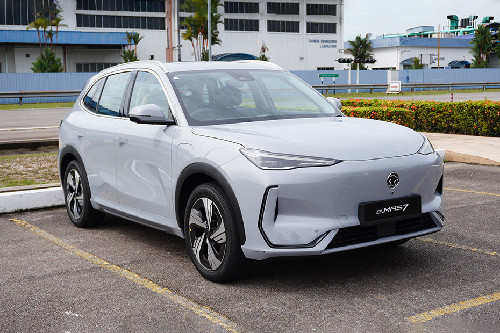
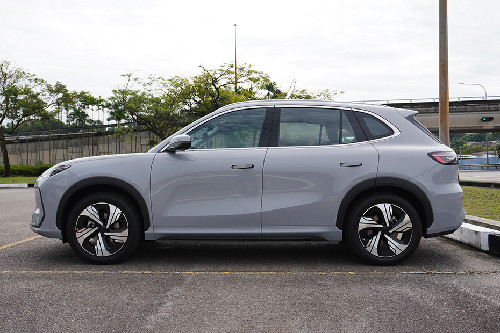
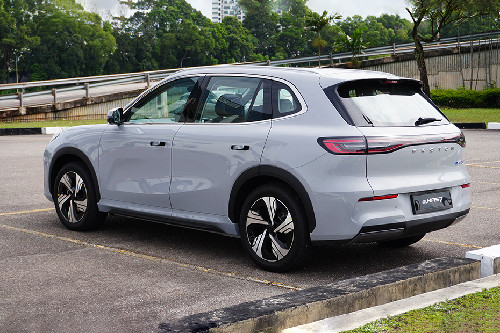
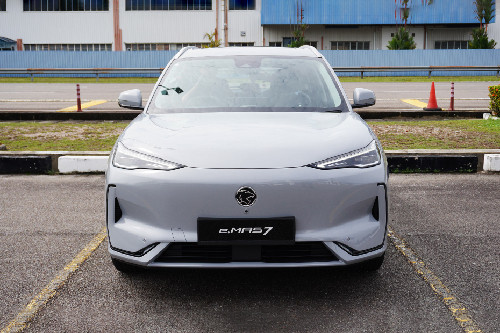
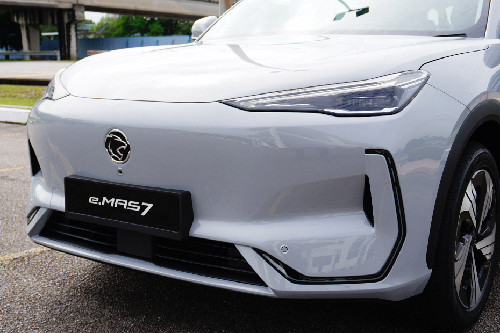
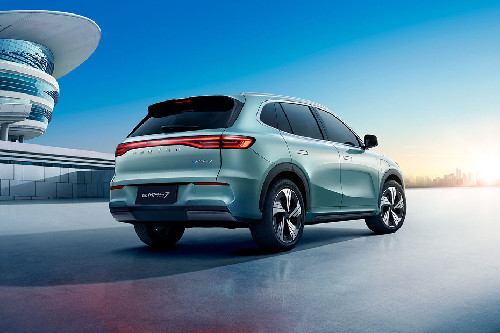
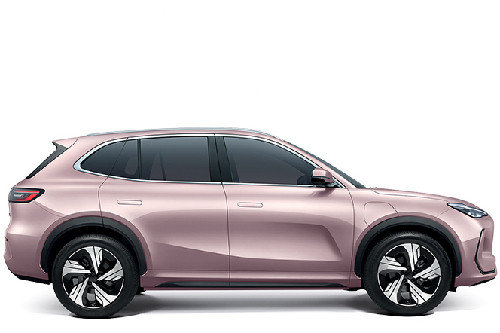
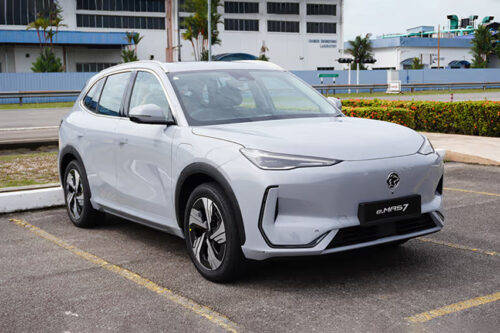
Visually, the e.MAS 7 PHEV keeps the overall look you would expect from the e.MAS 7 line, but with several changes that lean into a more conventional, less concept-like SUV feel.
Notable exterior touches include:
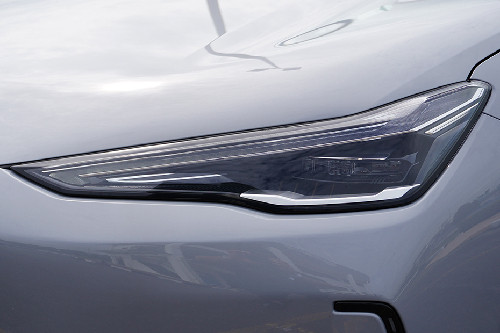
- Split headlamp layout with a full-width LED light bar
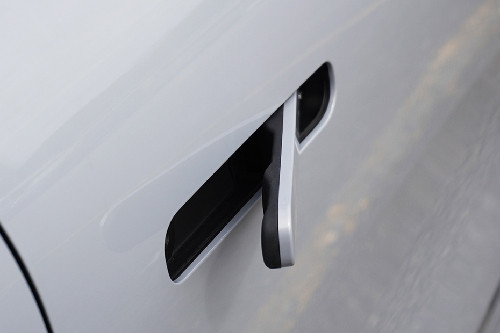
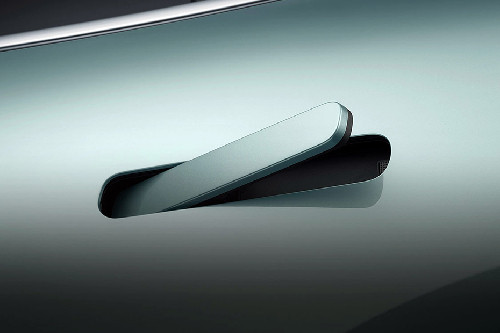
- Conventional door handles instead of flush pop-out items
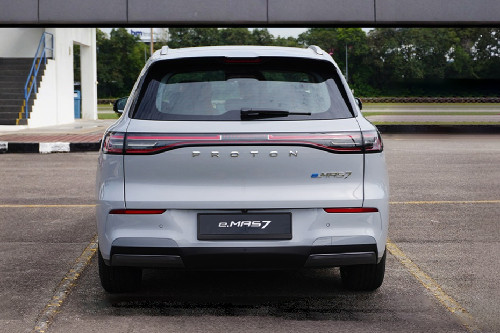
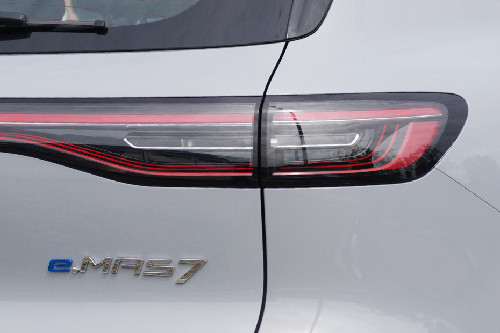
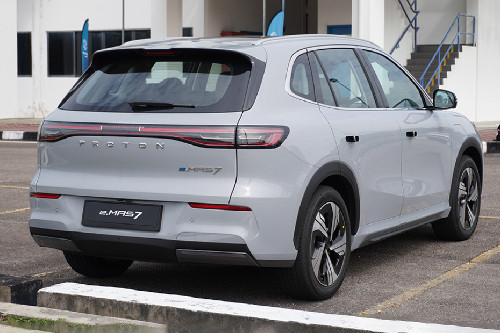
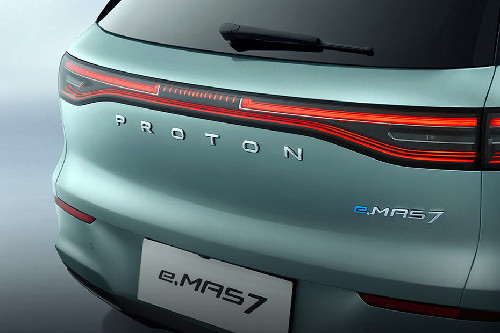
- A revised rear, with the number plate moved to the tailgate rather than the bumper
- A drag coefficient of 0.288 Cd, still close to the EV’s 0.275 Cd
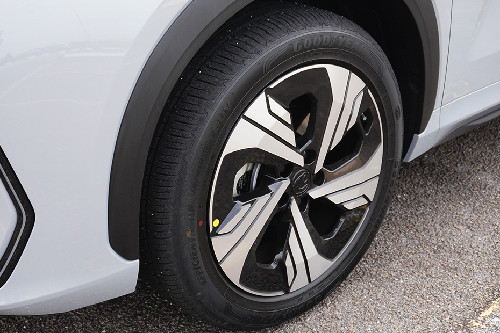
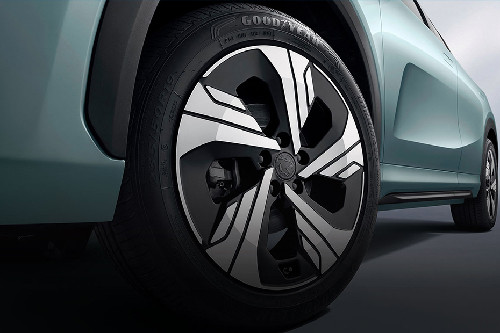
Wheel sizing follows the same logic as the EV:
- Prime, 18-inch wheels
- Premium and Premium Plus, 19-inch wheels
- Tyres: 225/55R18 and 235/50R19
Suspension is also familiar, with MacPherson struts up front and a multi-link rear.
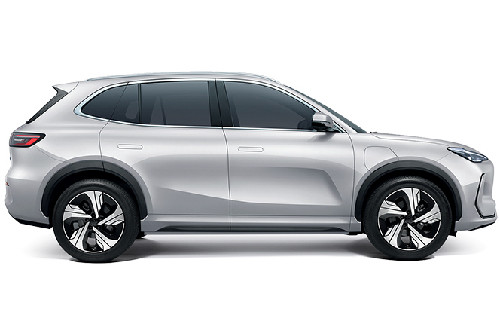
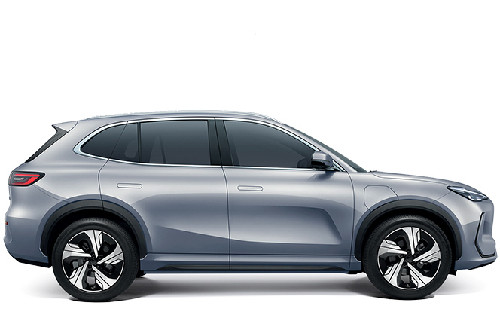
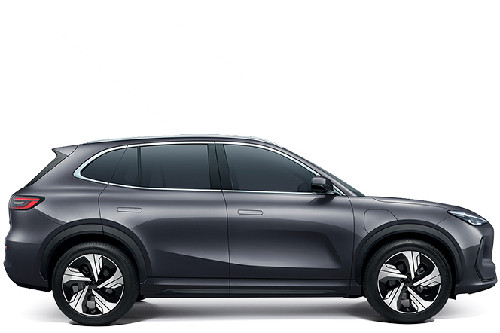
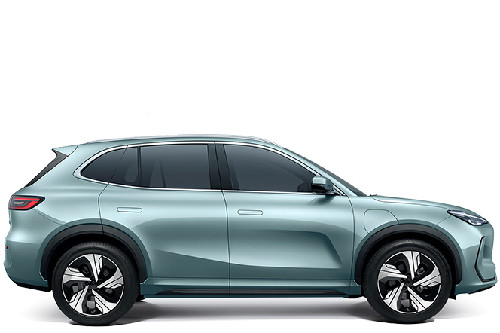
Exterior colour options listed for the Malaysian market include:
- Obsidian Black
- Lithium White
- Mercury Silver
- Galena Grey
- Azure Blue
Interior Colour options include
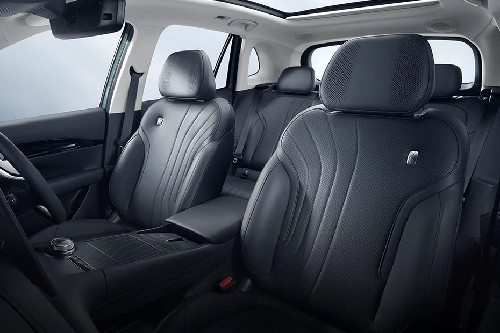
- Alabaster White
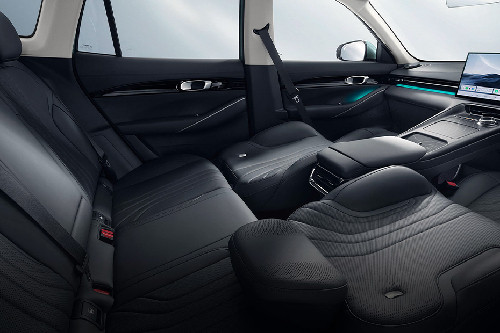
- Onyx Black
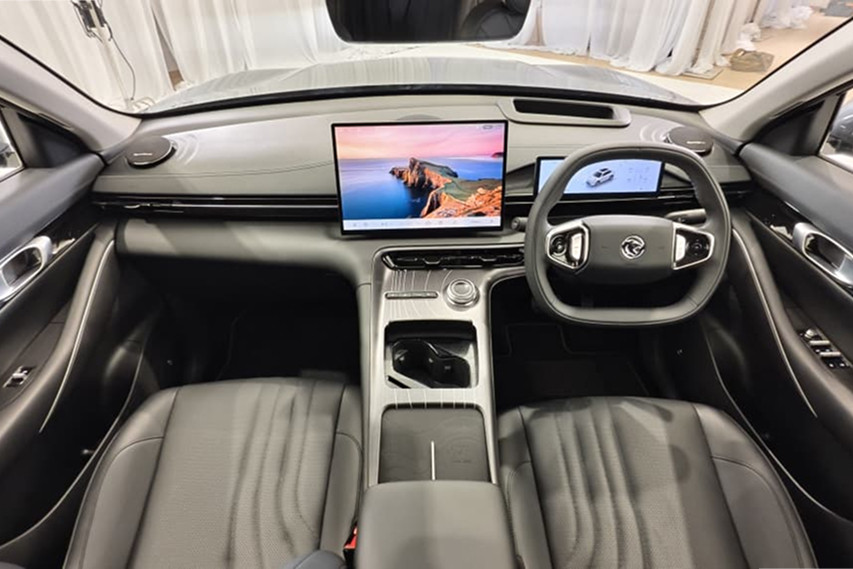 Photo by Adam Aubrey
Cabin tech, CarPlay and Android Auto included from launch
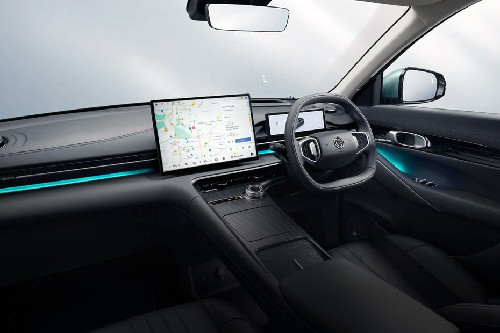
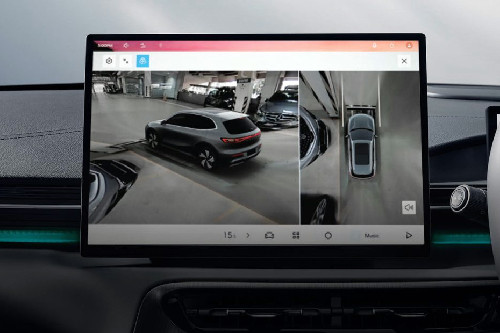
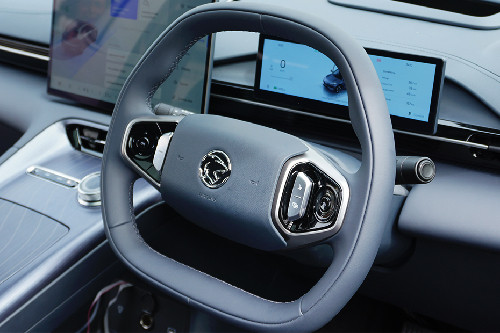
Inside, the e.MAS 7 PHEV carries the same general cabin concept as the e.MAS 7 EV, including the Flyme-based software ecosystem.
Key tech highlights include:
- Flyme OS infotainment, with English and Malay support
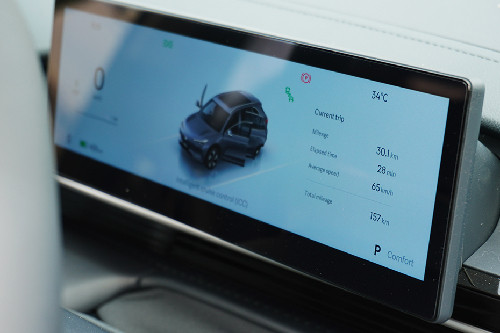
- 10.2-inch digital instrument cluster
- 15.4-inch central touchscreen with 2.5K resolution
- Apple CarPlay and Android Auto available from the start
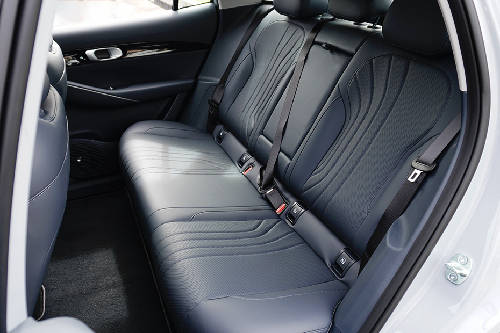
- Leatherette seats as standard
Variant equipment steps up in the expected direction:
- Prime gets a six-speaker audio system
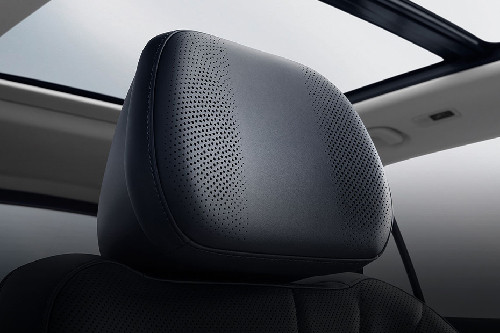
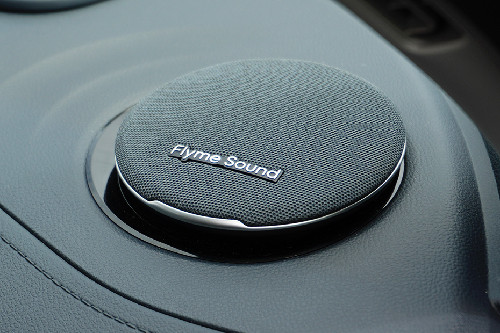
- Premium and Premium Plus get a 16-speaker Flyme Sound system
- Higher variants add a 13.8-inch head-up display
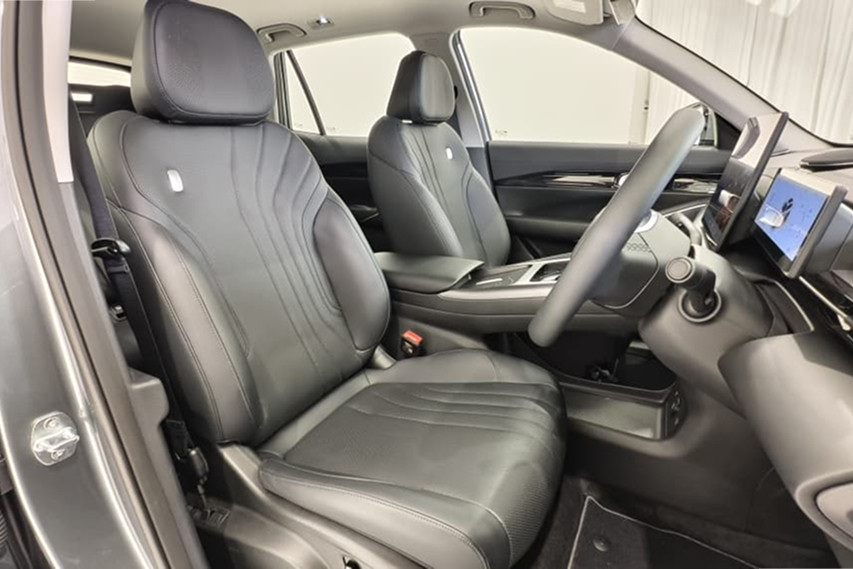 Photo by Adam Aubrey
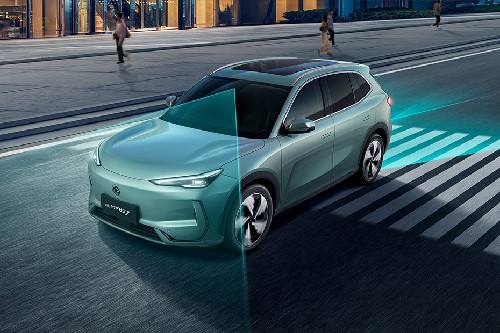
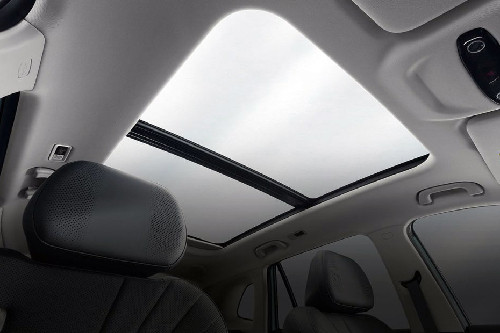
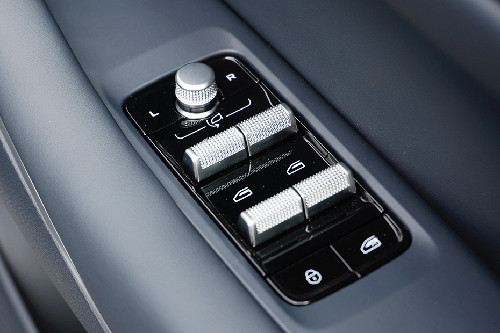
There are also a few practical changes versus the EV version, including physical sunroof controls and a built-in tonneau cover. The PHEV is also listed with seven airbags, including a front centre airbag, as well as 12 ADAS functions, just like the e.MAS 7 EV.
Service interval and efficiency figures
Fuel consumption is quoted on NEDC:
- 4.3 L/100 km (Prime, Premium)
- 4.4 L/100 km (Premium Plus)
Service interval is listed at 12 months or 20,000 km, with Proton positioning servicing costs between a conventional ICE model and a full EV, leaning closer to EV ownership in routine cost expectations.
The Proton e.MAS 7 PHEV lands as a practical, chargeable SUV option that aims to cover the middle ground between pure ICE convenience and EV daily driving.
Prime and Premium look geared for buyers who want plug-in capability without stretching too far on price, while the Premium Plus is the one that properly leans into the PHEV promise with the bigger battery, longer EV range, and quicker DC charging.
Also Read: Proton sold 9,549 EVs in 2025, announces special after-sales benefits

-
Explore Proton e.MAS 7
-

Proton e.MAS 7 Related Stories
- News
- Featured Stories
-
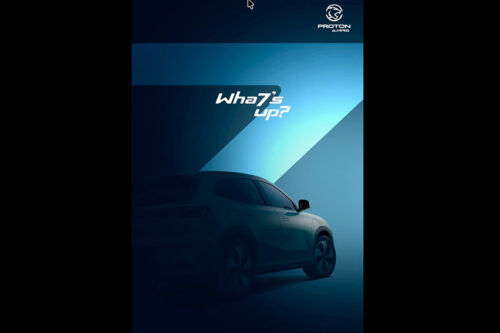
 Proton e.MAS 7 EV ready for an upgrade, teaser out
KUALA LUMPUR: The highly anticipated Kuala Lumpur International Motor Show 2026 is set to begin next week, showcasing a range...
Read MoreSippi Vig, Today -
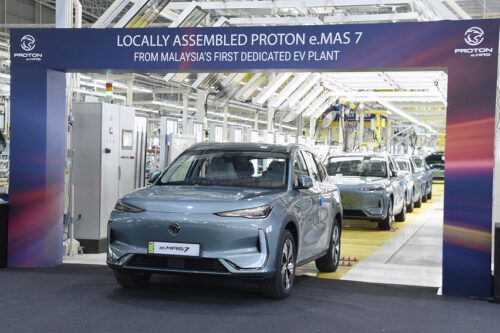
Proton to expand NEV plant capacity, e.MAS 5 CKD EV set to roll out soon
KUALA LUMPUR: As the demand for Proton e.MAS vehicles continue to rise, Proton has decided to expand the capacity of...
Read MoreSippi Vig, Jun 02, 2026 -
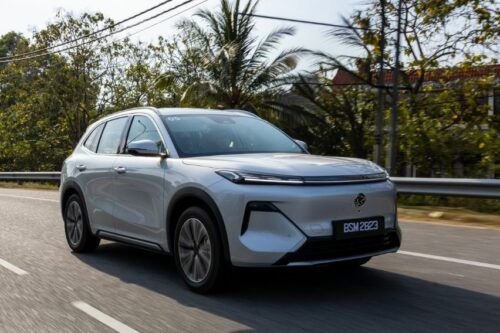
Proton introduces Malaysia’s first localised connected mobility platform
KUALA LUMPUR: As demand for e.MAS EVs continues to grow, Proton continues to make efforts to strengthen Malaysia’s electric vehicle...
Read MoreSippi Vig, May 28, 2026
-
Top 10 best-selling EVs in Malaysia for 2025
Malaysia's electric vehicle market has been growing at a fast rate, driven by the launch of exciting and affordable EVs,...
Read MoreSippi Vig, Dec 26, 2025 -
Proton e.MAS 7: What we love & what could be better
Proton has sold over 1000 units of the e.MAS 7, in just two months of its launch. It was the...
Read MoreSippi Vig, Mar 27, 2025 -
Leapmotor C10 vs Rivals: Specifications compared
Leapmotor is one of the most successful New Energy Vehicle (NEV) start-ups from China, which has been rapidly expanding into...
Read MoreSippi Vig, Feb 18, 2025
Proton Car Models
-

Proton S70 -
Proton Iriz -
Proton Persona -
Proton X90 -
Proton e.MAS 7 -
Proton X70 -
Proton e.MAS 5 -
Proton X50 -
Proton Saga -
Proton e.MAS 7 PHEV
Don't Miss
-
Proton e.MAS 7 EV ready for an upgrade, teaser out
-
Proton to expand NEV plant capacity, e.MAS 5 CKD EV set to roll out soon
-
Proton introduces Malaysia’s first localised connected mobility platform
-
Proton e.MAS hits 20,000-unit sales milestone; e.MAS 5 remains Malaysia’s top-selling EV
-
Malaysia EV policy 2026: Why EVs could become more expensive from July 1
Malaysia Autoshow


Trending & Fresh Updates
- Latest
- Popular
-

-
-
-
-
-
-
-
-
-
Electric Car: A comprehensive buying guidePurva Jain, Jul 01, 2024
-
Must watch automotive movies for enthusiastsPurva Jain, Feb 21, 2024
-
Car Rust-proofing 101: All you need to knowPurva Jain, Feb 15, 2024




You might also be interested in
- News
- Featured Stories


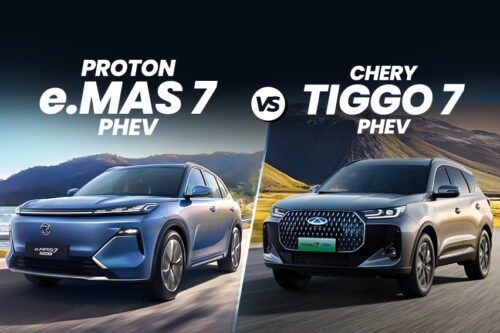
Proton Featured Cars
- Latest
- Popular
-
Proton X90RM 106,800 - 122,800 OTR Price Kuala LumpurEMI : RM 1,247 x 844.26 (27 Reviews) VIEW JUNE OFFERS
-
Proton e.MAS 7 PHEVRM 109,800 - 129,800 OTR Price Kuala LumpurEMI : RM 1,282 x 84Write a Review VIEW JUNE OFFERS
-
Proton X70RM 99,800 - 112,800 OTR Price Kuala LumpurEMI : RM 1,165 x 844.18 (80 Reviews) VIEW JUNE OFFERS
-
Proton SagaRM 38,990 - 49,990 OTR Price Kuala LumpurEMI : RM 455 x 844.23 (79 Reviews) VIEW JUNE OFFERS
-
Proton e.MAS 5RM 59,800 - 72,800 OTR Price Kuala LumpurEMI : RM 698 x 844.5 (2 Reviews) VIEW JUNE OFFERS
-
Proton X50RM 85,800 - 109,300 OTR Price Kuala LumpurEMI : RM 1,002 x 844.26 (71 Reviews) VIEW JUNE OFFERS
-
Proton S70RM 68,800 - 89,800 OTR Price Kuala LumpurEMI : RM 803 x 843.97 (30 Reviews) VIEW JUNE OFFERS
-
-
Proton PersonaRM 47,800 - 58,300 OTR Price Kuala LumpurEMI : RM 558 x 844.15 (75 Reviews) VIEW JUNE OFFERS
-
Proton X90RM 106,800 - 122,800 OTR Price Kuala LumpurEMI : RM 1,247 x 844.26 (27 Reviews) VIEW JUNE OFFERS
-
Proton X70RM 99,800 - 112,800 OTR Price Kuala LumpurEMI : RM 1,165 x 844.18 (80 Reviews) VIEW JUNE OFFERS
Latest Proton e.MAS 7 Car Videos on Zigwheels

-
Proton eMAS 7 launched | Walkaround | Driving impressions | Variant Comparison19 Dec, 2024 .
Compare & Recommended
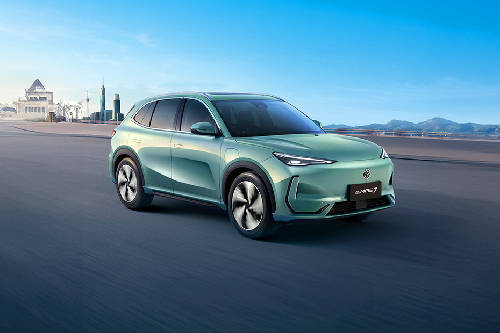
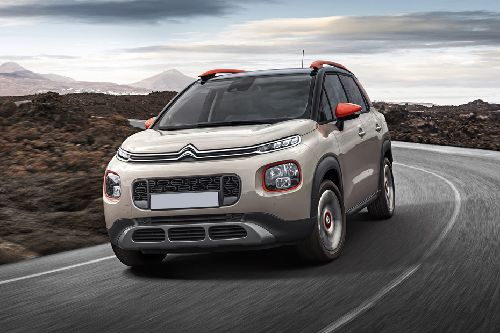
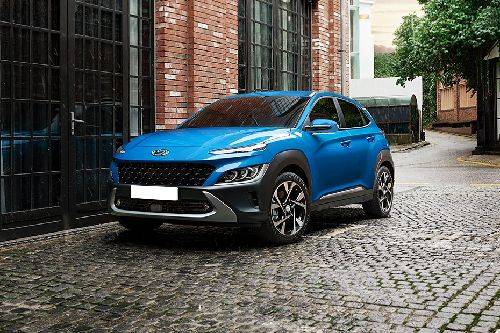
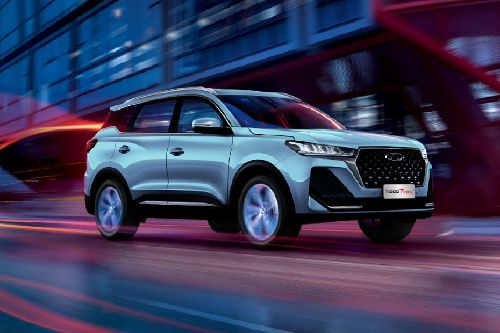
Proton e.MAS 7
RM 103,800 - 119,800
e.MAS 7 Price
|
|
|
|
|
|
Seating Capacity
5
|
7
|
5
|
5
|
5
|
|
Fuel Type
Electric
|
Petrol
|
Petrol
|
Petrol
|
Petrol
|
|
Power
215
|
104
|
110
|
147
|
194
|
|
Torque
320 Nm
|
136 Nm
|
205 Nm
|
180 Nm
|
290 Nm
|
|
Transmission Type
Automatic
|
Automatic
|
Automatic
|
CVT
|
Dual Clutch
|
|
Ground Clearance
-
|
220 mm
|
-
|
-
|
-
|
|
Engine
-
|
1496
|
1199
|
1999
|
1598
|
|
|
Trending SUV
- Latest
- Upcoming
- Popular
-
Denza B8RM 458,800 - 518,800 OTR Price Kuala LumpurEMI : RM 5,361 x 84Write a Review VIEW JUNE OFFERS
-
GWM Tank 300 HEVRM 259,800 OTR Price Kuala LumpurEMI : RM 3,035 x 84Write a Review VIEW JUNE OFFERS
-
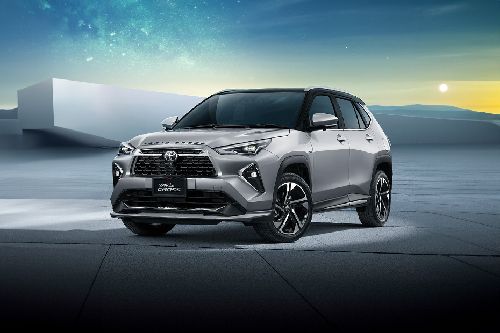
Toyota Yaris CrossRM 99,900 - 109,900 OTR Price Kuala LumpurEMI : RM 1,167 x 844 (1 Reviews) VIEW JUNE OFFERS
-
Mitsubishi XForceRM 109,980 - 119,980 OTR Price Kuala LumpurEMI : RM 1,285 x 84Write a Review VIEW JUNE OFFERS
-
-
JAECOO Omoda C9 PHEVRM 208,800 OTR Price Kuala LumpurEMI : RM 2,439 x 84Write a Review VIEW JUNE OFFERS


-
Peugeot 3008RM 138,000 OTR Price Kuala LumpurEMI : RM 1,612 x 844.35 (23 Reviews) VIEW JUNE OFFERS
-
Toyota Corolla CrossRM 130,900 - 146,000 OTR Price Kuala LumpurEMI : RM 1,529 x 844.26 (47 Reviews) VIEW JUNE OFFERS
-
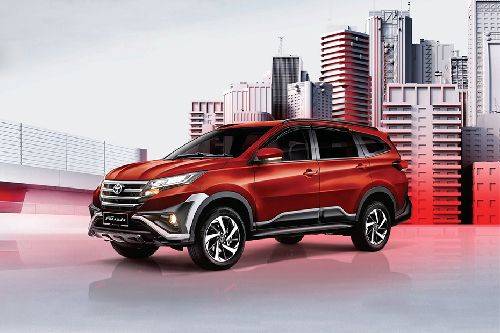
Toyota RushRM 93,000 - 97,000 OTR Price Kuala LumpurEMI : RM 1,086 x 844.27 (61 Reviews) VIEW JUNE OFFERS
-
Perodua AtivaRM 62,500 - 73,400 OTR Price Kuala LumpurEMI : RM 730 x 844.17 (46 Reviews) VIEW JUNE OFFERS
-
Mazda CX-5RM 143,300 - 187,200 OTR Price Kuala LumpurEMI : RM 1,674 x 844.36 (65 Reviews) VIEW JUNE OFFERS
-
Toyota Yaris CrossRM 99,900 - 109,900 OTR Price Kuala LumpurEMI : RM 1,167 x 844 (1 Reviews) VIEW JUNE OFFERS