Proton’s first PHEV under e.MAS, here’s how the e.MAS 7 PHEV variants splits
- KEY TAKEAWAYS
- Three variants, and they are not just “more speakers” upgrades
- Powertrain, same idea across the board, engine plus motor driving the front wheels
- Batteries and charging, this is where Premium+ changes the story
- Performance numbers, Premium+ is slightly slower, and there is a reason
- Wheels and tyres, Prime is the comfort-biased one
- Practicality, it is sized like a proper family SUV
- The real variant differences, what you gain as you move up
- Tech and software, Flyme-based infotainment plus an app, plus V2L and V2V
- Safety, Level 2 ADAS is in, and the higher variants push further
KUALA LUMPUR: Proton is about to enter plug-in hybrid territory for the first time, and it is doing it under the e.MAS banner.
KEY TAKEAWAYS
What is the Proton e.MAS 7 PHEV?
A plug-in hybrid SUV under Proton’s e.MAS line, it can be charged like an EV, run on electric power, then use petrol when needed.How many variants are there?
Three, Prime, Premium, and Premium+.What’s the main difference between Premium+ and the others?
Battery and charging, Premium+ gets a 29.8 kWh LFP battery and 60 kW DC fast charging, plus longer EV range.What are the EV range figures?
Prime and Premium are listed at 105 km (NEDC), Premium+ is listed at 170 km (NEDC).Officially, the company is calling the e.MAS 7 PHEV a “dual-powered EV”, which is a very Proton Marketing way of saying one thing, it is a plug-in hybrid SUV that can be charged like an EV, run as an EV for meaningful distances, then fall back on petrol when the battery is done.
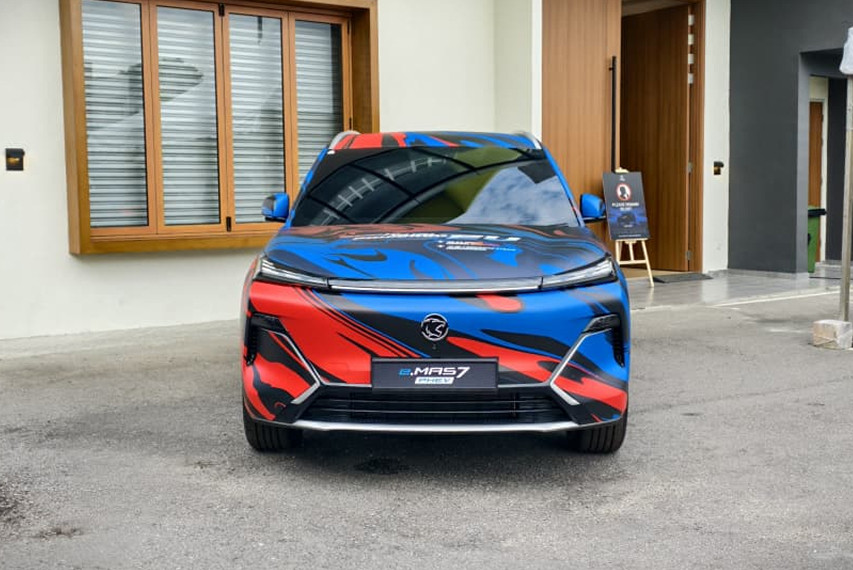 Photo by Adam Aubrey
Also Read: Proton sold 9,549 EVs in 2025, announces special after-sales benefits
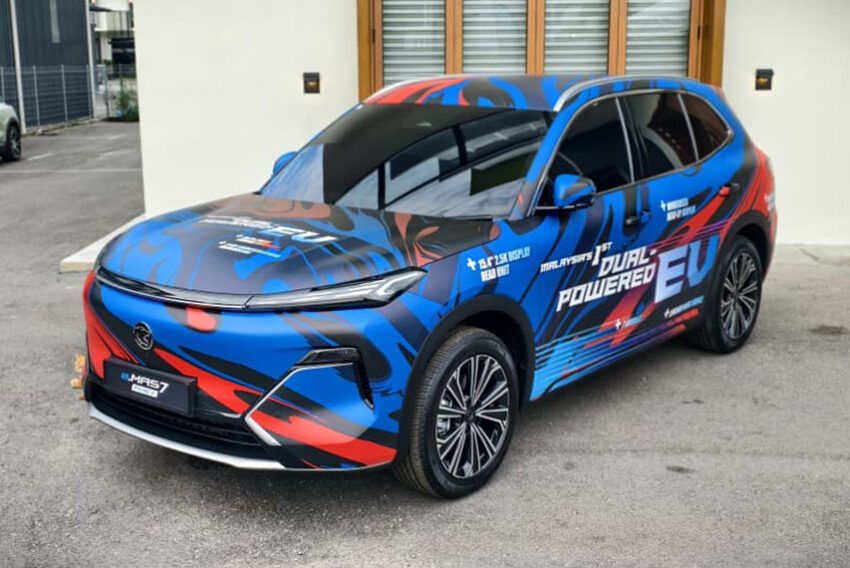
For now, Proton is keeping the exterior design under wraps. That is why the photos being released by us ahead of launch only show the SUV in camouflage, with the full reveal held back for launch day, which is happening this week.
Three variants, and they are not just “more speakers” upgrades
Proton is lining up the e.MAS 7 PHEV in three variants: Prime, Premium, and Premium+.
The important bit is that the range, charging performance, wheels, and key comfort and safety equipment actually moving with the variants, especially when you step up to Premium+.
Here is the clearest way to separate them.
Powertrain, same idea across the board, engine plus motor driving the front wheels
All three variants use the same core hybrid setup, a 1.5L 4-cylinder dedicated hybrid engine paired with a front electric motor, driving the front wheels through an 11-in-1 dedicated hybrid transmission.
Output figures are:
-
Engine: 73 kW and 125 Nm
-
Electric motor: 160 kW and 262 Nm
-
Combined: 193 kW (262PS) and 262 Nm
Drive modes available are PURE / HYBRID / POWER, which is Proton spelling out the intent, it can behave like an EV when you want it to, blend power sources when it makes sense, or prioritise performance when you ask for it.
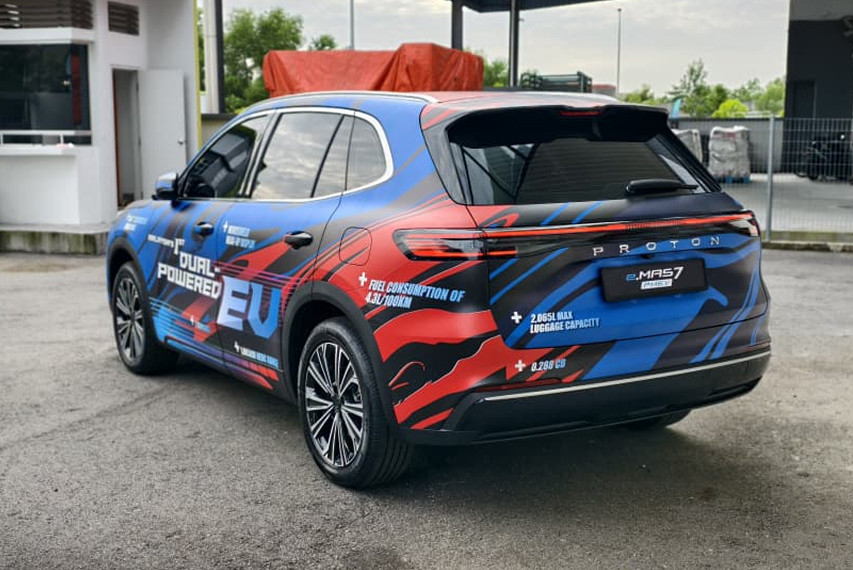 Photo by Adam Aubrey
Batteries and charging, this is where Premium+ changes the story
The range and charging split is simple.
Prime and Premium
-
18.4 kWh LFP battery
-
30 kW DC fast charging, 30–80% in less than 20 minutes
-
6.6 kW AC charging
-
EV driving range (NEDC): 105 km
-
Total driving range (NEDC): 1,000 km
Premium+
-
29.8 kWh LFP battery
-
60 kW DC fast charging, 30–80% in less than 16 minutes
-
6.6 kW AC charging
-
EV driving range (NEDC): 170 km
-
Total driving range (NEDC): 1,065 km
So yes, Prime and Premium are essentially the “same battery, same charging” pairing, while Premium+ is the one that meaningfully changes how often you need petrol at all, and how quickly you can top up on DC.
Performance numbers, Premium+ is slightly slower, and there is a reason
On paper, Prime and Premium are quoted at 0–100 km/h in 8.0 seconds, while Premium+ is 8.2 seconds, with 170 km/h max speed listed for all.
That small drop is not dramatic, but it lines up with one obvious difference, Premium+ is heavier. Kerb weight is listed at:
-
Prime: 1,735 kg
-
Premium: 1,760 kg
-
Premium+: 1,835 kg
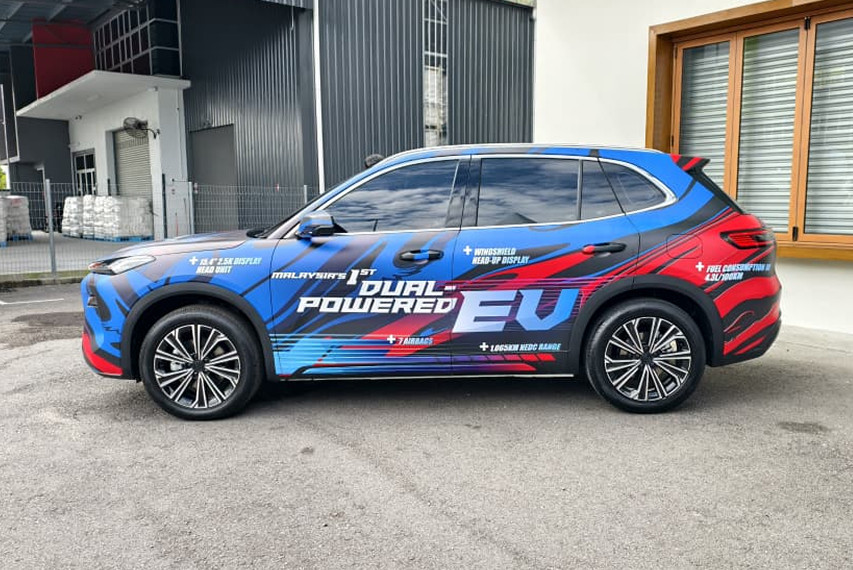 Photo by Adam Aubrey
Wheels and tyres, Prime is the comfort-biased one
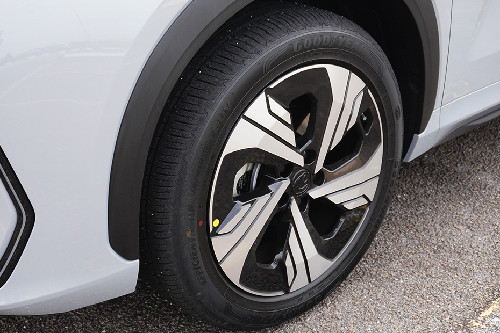
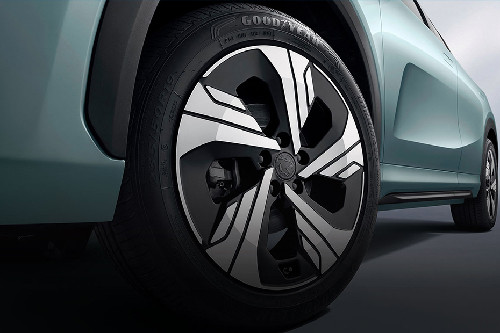
Prime is the only one on 18-inch tyres (225/55 R18), while Premium and Premium+ step up to 19-inch (235/50 R19).
In real ownership terms, that usually translates to Prime being the quieter, softer daily option, while the 19s lean more towards style and sharper response.
Practicality, it is sized like a proper family SUV
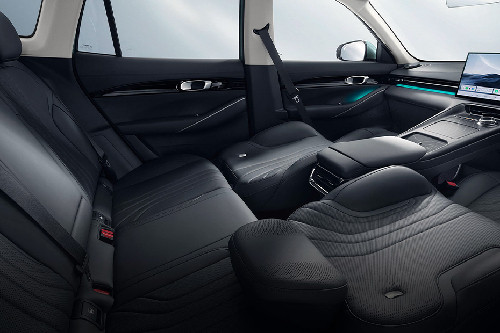
Just around the e.MAS 7's size, the dimensions are listed at 4,740 mm long, 1,940 mm wide, 1,685 mm tall, with a 2,755 mm wheelbase.
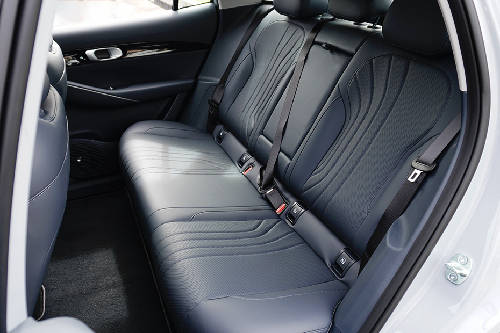
Boot space is quoted at 528 litres, expanding to 2,065 litres with the rear seats folded. There's no under boot storage like the e.MAS 7.
Other useful day-to-day numbers include a 5.2 m turning radius and a 51-litre fuel tank.
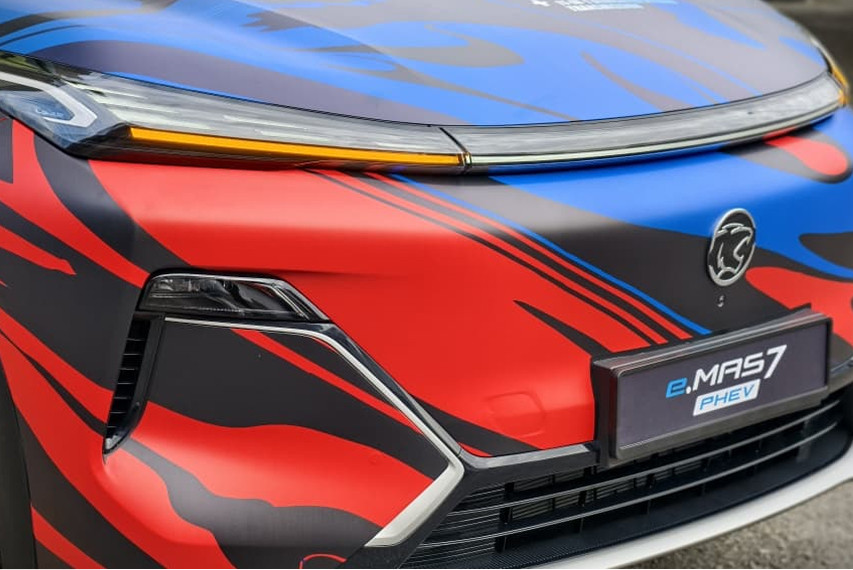 Photo by Adam Aubrey
The real variant differences, what you gain as you move up
This is perhaps the part that matters most when you consider which variant to buy.
Prime (entry)
-
Same hybrid outputs and drive modes as the rest
-
Smaller battery and 30 kW DC setup, EV range and total range
-
18-inch tyres (225/55 R18)
-
The line it draws in Proton’s own equipment list is clear, Prime is the “core tech and core hybrid” grade, before the comfort, premium audio, and additional safety conveniences pile on.
Premium (mid)
Premium is the sweet spot for buyers who want the same battery and charging as Prime, but with the cabin and safety experience feeling more “finished”.
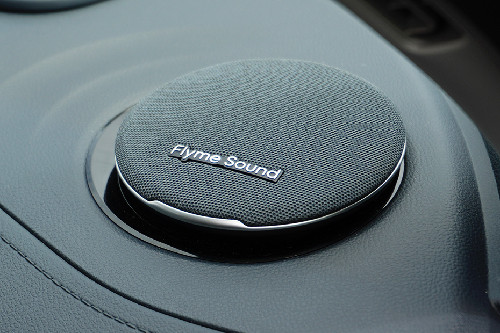
From the features Proton has listed, Premium is where you start seeing the upgraded day-to-day kit that tends to matter more than headline horsepower, the higher-grade infotainment and connectivity stack, plus additional convenience features such as HUD, wireless charging, premium audio, and the more advanced camera and driver assistance items being part of the overall package.
Premium+ (range and charging flagship)
Premium+ is the one you buy for the PHEV experience that feels closest to an EV lifestyle.
-
Bigger 29.8 kWh battery, more EV range, more total range, faster DC charging
-
Slightly heavier, slightly slower 0–100 figure
-
It sits as the “no compromises” spec where range and charging are the headline, and the rest of the cabin and safety stack follows the top-grade positioning.
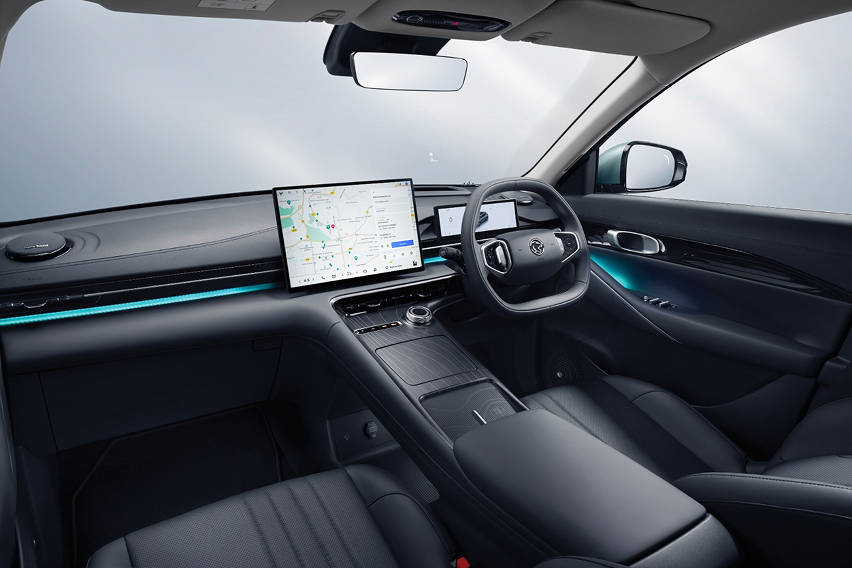 Photo from Proton
Tech and software, Flyme-based infotainment plus an app, plus V2L and V2V
Across the line, Proton is leaning hard into a software-led cabin experience.
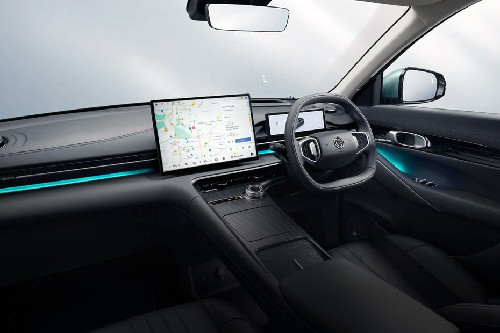
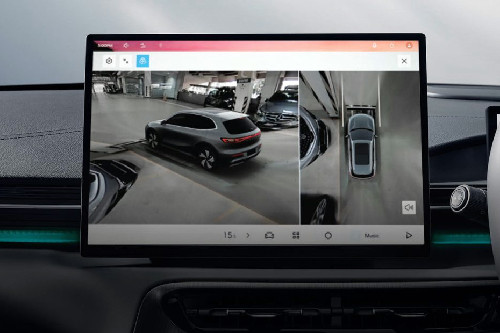
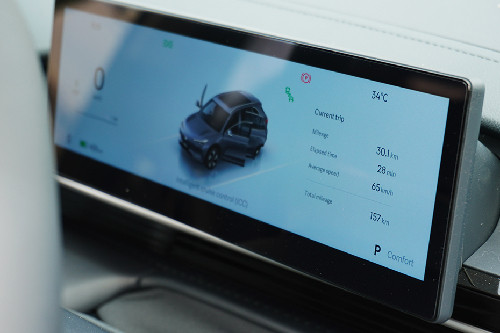
The infotainment is a 15.4-inch 2.5K touchscreen running the Flyme Auto operating system, with English and Malay interfaces, a 7 nm automotive-grade chip, 4G and WiFi connectivity, 2-zone voice control, and online navigation.
Smartphone connectivity includes Apple CarPlay and Android Auto from the get go , plus an app store and over-the-air updates.
There is also a Proton e.MAS app with vehicle status and remote functions, plus scheduled trip and scheduled charging features.
And yes, the PHEV keeps the EV party tricks, vehicle-to-load (V2L) is available, and so is vehicle-to-vehicle (V2V).
 Photo from Proton
Safety, Level 2 ADAS is in, and the higher variants push further
Proton has kitted the PHEV with a Level 2 ADAS suite that includes ICC, ACC, AEB, FCW, plus lane and sign support such as LDW, LDP, LVDA and TSR, alongside the usual stability and braking systems.
The safety list also includes multiple airbags, including a far-side airbag being part of the overall line-up.
If the e.MAS 7 EV was Proton’s opening statement for battery-electric, the e.MAS 7 PHEV is clearly aimed at the next group of buyers, people who want EV-style driving for daily use, but still want petrol as a safety net for long runs, Raya balik kampung, or simply not thinking about chargers all the time.
The key decision will come down to what you want the PHEV to be.
If you want a plug-in hybrid that behaves like a hybrid with a useful EV mode, Prime and Premium do that. If you want the plug-in hybrid to behave like an EV most of the week, Premium+ is the one that changes the experience, because battery size, EV range, and DC charging speed all move together.
And if you are wondering why the photos are still wrapped in camouflage, that is part of Proton’s launch choreography, the full design reveal is being kept for launch day, coming this week.
Also Read: 2026 Proton X70 launched in Malaysia, new i-GT 1.5TD + 7DCT, from RM99,800 after rebate

-
Explore Proton e.MAS 7
-

Proton e.MAS 7 Related Stories
- News
- Featured Stories
-
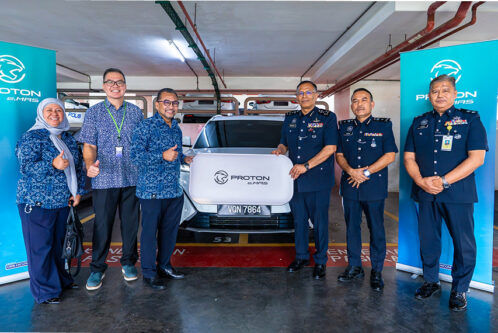
 PDRM tests three Proton e.MAS models, possible patrol duties under consideration
KUALA LUMPUR: The Proton e.MAS range could eventually find work with the police. Before any decision is made, though, PDRM...
Read MoreAdam Aubrey, Sep 18, 2026 -
Proton e.MAS sets new monthly sales record - one unit sold every 7 minutes
KUALA LUMPUR: Proton e.MAS has been creating new highs with each passing month. After becoming the fastest automotive brand in...
Read MoreSippi Vig, Sep 09, 2026 -
Proton records 14.9% growth in July 2026; exports reach a new high
KUALA LUMPUR: Proton has revealed its sales numbers for the month of July. During the first month of H2 2026,...
Read MoreSippi Vig, Aug 06, 2026

-
Malaysia’s automotive market in H1 2026: 6 Key trends and insights
The Malaysian Automotive Association (MAA) has released the data on total vehicle sales in the country from January to June...
Read MoreSippi Vig, Jul 24, 2026 -
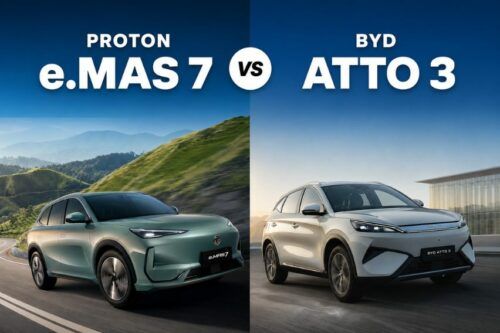
2026 Proton e.MAS 7 vs 2026 BYD Atto 3: Head-to-head comparison
The Malaysian electric SUV market has entered a new phase, with competition intensifying as leading brands step up their game...
Read MoreSippi Vig, Jul 09, 2026 -
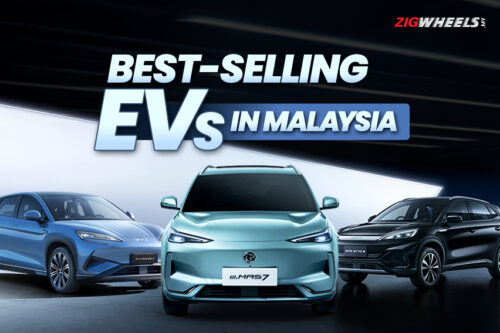
Top 10 best-selling EVs in Malaysia for 2025
Malaysia's electric vehicle market has been growing at a fast rate, driven by the launch of exciting and affordable EVs,...
Read MoreSippi Vig, Dec 26, 2025
Proton Car Models
-

Proton S70 -
Proton Iriz -
Proton Persona -
Proton X90 -
Proton e.MAS 7 -
Proton X70 -
Proton e.MAS 5 -
Proton X50 -
Proton Saga -
Proton e.MAS 7 PHEV
Don't Miss
-
PDRM tests three Proton e.MAS models, possible patrol duties under consideration
-
Proton e.MAS sets new monthly sales record - one unit sold every 7 minutes
-
Proton records 14.9% growth in July 2026; exports reach a new high
-
Proton e.MAS crosses 20k mark in less than 7 months, e.MAS 5 leading the charge
-
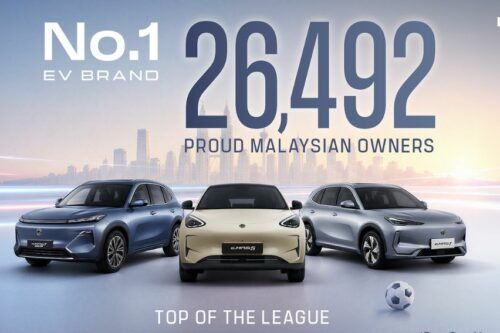
Proton e.MAS records 26,492 cumulative sales; remains No.1 EV brand in Malaysia

KLIMS 2026


Malaysia Autoshow
Trending & Fresh Updates
- Latest
- Popular
-

-
-
-
-
-
-
-
-
-
Electric Car: A comprehensive buying guidePurva Jain, Jul 01, 2024
-
Must watch automotive movies for enthusiastsPurva Jain, Feb 21, 2024
-
Car Rust-proofing 101: All you need to knowPurva Jain, Feb 15, 2024



You might also be interested in
- News
- Featured Stories
Proton Featured Cars
- Latest
- Popular
-
Proton X90RM 106,800 - 122,800 OTR Price SetapakEMI : RM 1,247 x 844.26 (27 Reviews) VIEW SEPTEMBER OFFERS
-
Proton e.MAS 7 PHEVRM 109,800 - 129,800 OTR Price SetapakEMI : RM 1,282 x 84Write a Review VIEW SEPTEMBER OFFERS
-
Proton X70RM 99,800 - 112,800 OTR Price SetapakEMI : RM 1,165 x 844.18 (80 Reviews) VIEW SEPTEMBER OFFERS
-
Proton SagaRM 38,990 - 49,990 OTR Price SetapakEMI : RM 455 x 844.23 (79 Reviews) VIEW SEPTEMBER OFFERS
-
Proton e.MAS 5RM 59,800 - 72,800 OTR Price SetapakEMI : RM 698 x 844.5 (2 Reviews) VIEW SEPTEMBER OFFERS
-
Proton S70RM 68,800 - 89,800 OTR Price SetapakEMI : RM 803 x 843.97 (30 Reviews) VIEW SEPTEMBER OFFERS
-
Proton IrizRM 42,800 - 57,300 OTR Price SetapakEMI : RM 499 x 844.01 (69 Reviews) VIEW SEPTEMBER OFFERS
-
Proton PersonaRM 47,800 - 58,300 OTR Price SetapakEMI : RM 558 x 844.15 (75 Reviews) VIEW SEPTEMBER OFFERS
-
Proton X90RM 106,800 - 122,800 OTR Price SetapakEMI : RM 1,247 x 844.26 (27 Reviews) VIEW SEPTEMBER OFFERS
-
Proton X70RM 99,800 - 112,800 OTR Price SetapakEMI : RM 1,165 x 844.18 (80 Reviews) VIEW SEPTEMBER OFFERS
Latest Proton e.MAS 7 Car Videos on Zigwheels

-
Proton eMAS 7 launched | Walkaround | Driving impressions | Variant Comparison19 Dec, 2024 .
Compare & Recommended
Proton e.MAS 7
RM 103,800 - 119,800
e.MAS 7 Price
|
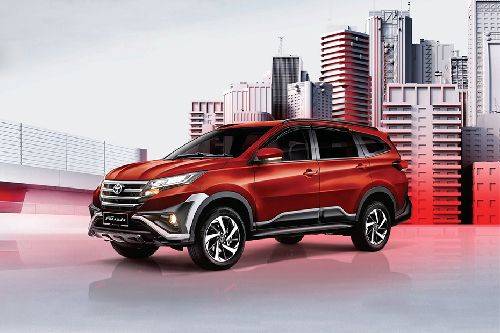
|
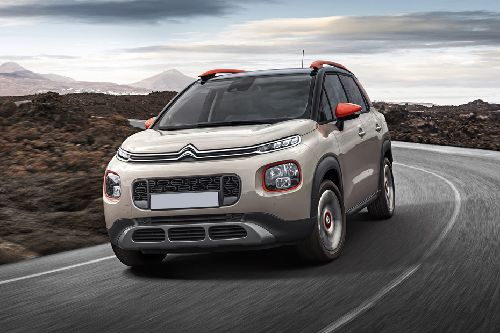
|
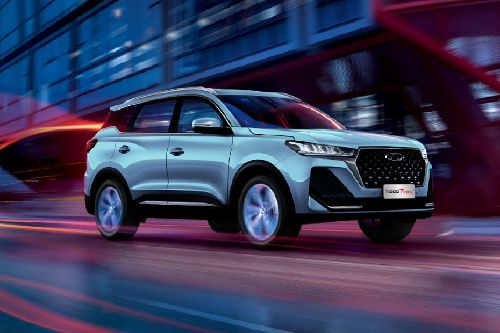
|
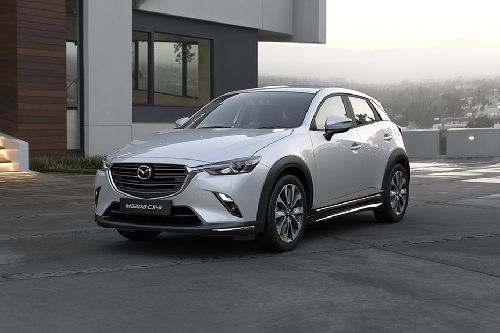
|
|
Seating Capacity
5
|
7
|
5
|
5
|
5
|
|
Fuel Type
Electric
|
Petrol
|
Petrol
|
Petrol
|
Petrol
|
|
Power
215
|
104
|
110
|
194
|
114
|
|
Torque
320 Nm
|
136 Nm
|
205 Nm
|
290 Nm
|
149 Nm
|
|
Transmission Type
Automatic
|
Automatic
|
Automatic
|
Dual Clutch
|
Automatic
|
|
Ground Clearance
-
|
220 mm
|
-
|
-
|
145 mm
|
|
Engine
-
|
1496
|
1199
|
1598
|
1496
|
|
|
Trending SUV
- Latest
- Upcoming
- Popular
-
Volvo EX30RM 198,888 - 218,888 OTR Price SetapakEMI : RM 2,324 x 844.33 (9 Reviews) VIEW SEPTEMBER OFFERS
-
-
Porsche Cayenne ElectricRM 699,000 - 999,999 OTR Price SetapakEMI : RM 8,169 x 84Write a Review VIEW SEPTEMBER OFFERS
-
-
Jetour T1RM 129,800 - 146,800 OTR Price SetapakEMI : RM 1,516 x 844 (2 Reviews) VIEW SEPTEMBER OFFERS
-
Volkswagen TayronRM 190,510 - 238,574 OTR Price SetapakEMI : RM 2,226 x 84Write a Review VIEW SEPTEMBER OFFERS
-
MINI John Cooper WorksRM 218,888 - 393,888 OTR Price SetapakEMI : RM 2,557 x 844.38 (13 Reviews) VIEW SEPTEMBER OFFERS
-
Peugeot 3008RM 138,000 OTR Price SetapakEMI : RM 1,612 x 844.35 (23 Reviews) VIEW SEPTEMBER OFFERS
-
Toyota Corolla CrossRM 130,900 - 146,000 OTR Price SetapakEMI : RM 1,529 x 844.26 (47 Reviews) VIEW SEPTEMBER OFFERS
-
Toyota RushRM 93,000 - 97,000 OTR Price SetapakEMI : RM 1,086 x 844.27 (61 Reviews) VIEW SEPTEMBER OFFERS
-
Perodua AtivaRM 62,500 - 73,400 OTR Price SetapakEMI : RM 730 x 844.17 (46 Reviews) VIEW SEPTEMBER OFFERS
-
Mazda CX-5RM 143,300 - 187,200 OTR Price SetapakEMI : RM 1,674 x 844.36 (65 Reviews) VIEW SEPTEMBER OFFERS