Could Geely Galaxy Starshine 6 become Proton e.MAS’ first sedan instead of the next S70?
- KEY TAKEAWAYS
- Why this feels more e.MAS than S70
- Larger than the current S70
- What is the Geely Galaxy Starshine 6?
- Interior, screens and cabin tech
- Brief drive impression, more EV than petrol sedan
- Torsion beam rear, but it handled well
- The rear floor is the main compromise
- Could this work in Malaysia?
- So, e.MAS sedan or next S70?
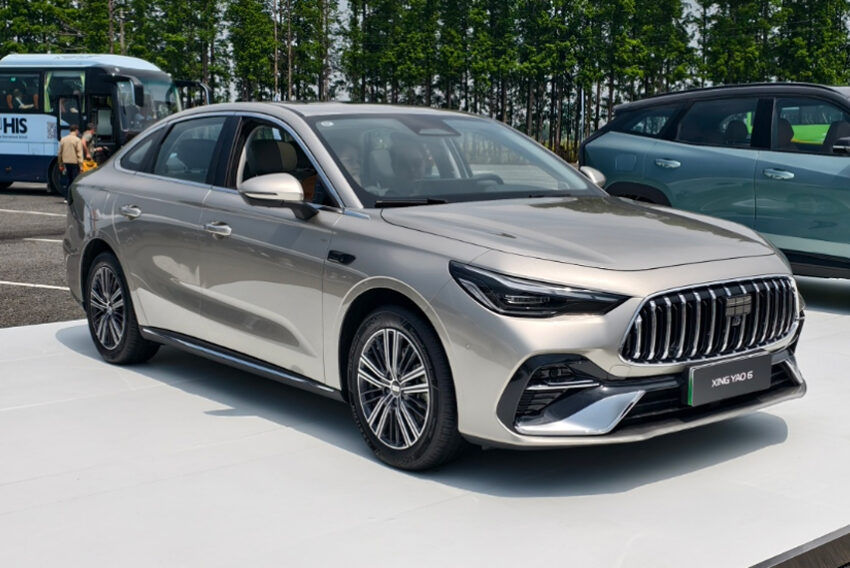
KUALA LUMPUR: It is tempting to look at the Geely Galaxy Starshine 6, also known in China as the Xing Yao 6, and immediately call it a future Proton S70.
KEY TAKEAWAYS
Is the Geely Galaxy Starshine 6 the same as the Proton S70?
No. The current Proton S70 is based on the Geely Emgrand, while the Galaxy Starshine 6 is a newer electrified sedan under Geely’s Galaxy family in China.Could the Geely Galaxy Starshine 6 become a Proton e.MAS sedan?
Nothing has been confirmed, but its PHEV powertrain, larger size and new-energy positioning make it feel more suitable as a possible e.MAS sedan than a direct S70 replacement.What powertrain does the Geely Galaxy Starshine 6 use?
China-market versions use Geely’s EM-i plug-in hybrid system, pairing a 1.5-litre naturally aspirated petrol engine with an electric motor, LFP battery pack and E-DHT transmission.After all, the current Proton S70 is based on the Geely Emgrand, and this new Galaxy sedan has clear links to Geely’s newer sedan family. On the surface, the connection is easy to make.
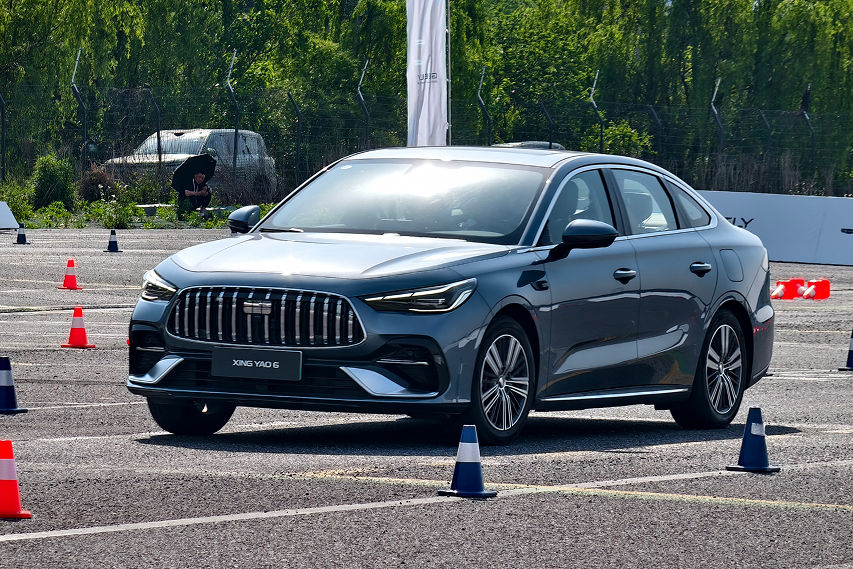 Photo by Adam Aubrey
But after seeing it up close, and getting a brief drive during Geely’s product sampling day arranged for the Proton media entourage, there may be a more interesting question to ask.
Also Read: Geely Galaxy M9 as Proton e.MAS 9? Can this from RM150k six-seat PHEV SUV idea make any sense?
Could this become Proton e.MAS’ first sedan instead?
The current Proton S70 is still a regular petrol sedan. It is positioned as a value-focused C-segment sedan, with pricing, running costs and familiarity being a big part of its appeal.
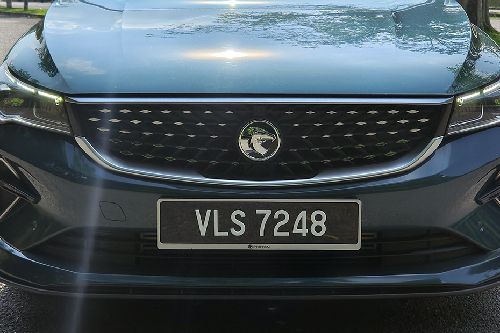
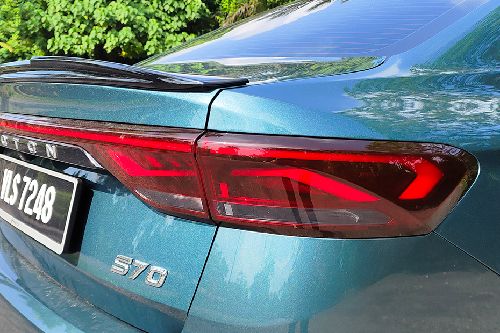
The Galaxy Starshine 6 feels like a very different proposition. It is ever so slightly larger, more electrified, more tech-focused, and more aligned with where Proton seems to be taking the e.MAS brand.
In simple terms, the Starshine 6 does not feel like a straightforward S70 replacement. It feels more like the sort of sedan Proton could use if it wants to expand e.MAS beyond electric hatchback, SUV and SUV plug-in hybrid.
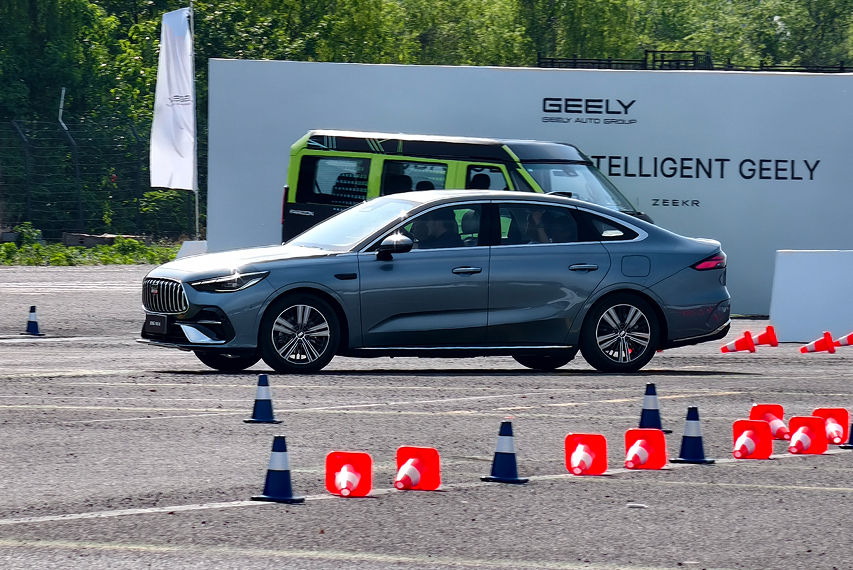 Photo by Adam Aubrey
Why this feels more e.MAS than S70
The biggest reason is the powertrain.
The Galaxy Starshine 6 is a plug-in hybrid sedan. It uses Geely’s EM-i hybrid system, pairing a 1.5-litre naturally aspirated four-cylinder petrol engine with an electric motor and a lithium iron phosphate battery pack.
Current China-market versions are listed with 8.5 kWh and 17 kWh LFP battery options, offering around 60 km and 125 km of CLTC-rated electric range respectively. The petrol engine produces 82 kW, while the front electric motor is rated at 120 kW, paired to an E-DHT transmission.
That already puts it closer in spirit to the Proton e.MAS 7 PHEV than the current Proton S70.
It also fits e.MAS’ identity better. Proton already uses e.MAS as its electrified sub-brand, so a PHEV sedan under that banner would be easier to explain than trying to force it into the regular S70 family.
The current S70 still has a clear job, to be Proton’s mainstream sedan. A Galaxy Starshine 6-based model would probably sit higher than that, especially if Proton wants to use its electrified powertrain, larger body and newer cabin technology properly.
So instead of asking whether this is simply the next Proton S70, perhaps the cleaner question is whether it could become the first Proton e.MAS sedan.
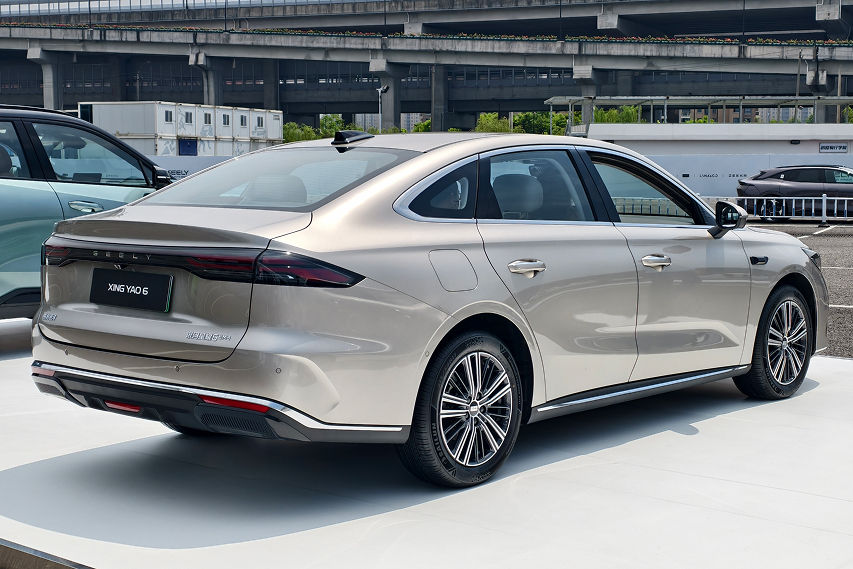 Photo by Adam Aubrey
Larger than the current S70
The Galaxy Starshine 6 is not small.
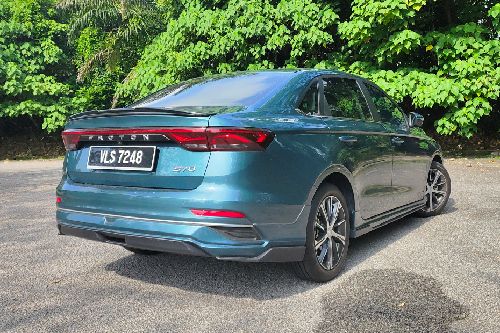
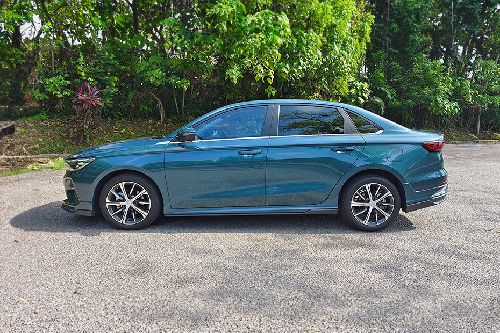
It measures 4,806 mm long, 1,886 mm wide and 1,490 mm tall, with a 2,756 mm wheelbase. That makes it slightly larger than the current Proton S70, which is already marketed as a C-segment sedan in Malaysia.
This is where the e.MAS argument becomes stronger. If Proton brought this in as a direct S70 replacement, the size, technology and electrified powertrain could push it away from the affordable sedan brief.
But as an e.MAS sedan, the larger footprint becomes an advantage.
It gives Proton something more spacious, more mature and more electrified, without disturbing the S70’s current positioning. In that sense, the Starshine 6 could sit as a more advanced sedan alternative for buyers who want lower fuel consumption, EV-like driving in town, and the reassurance of a petrol engine for longer trips.
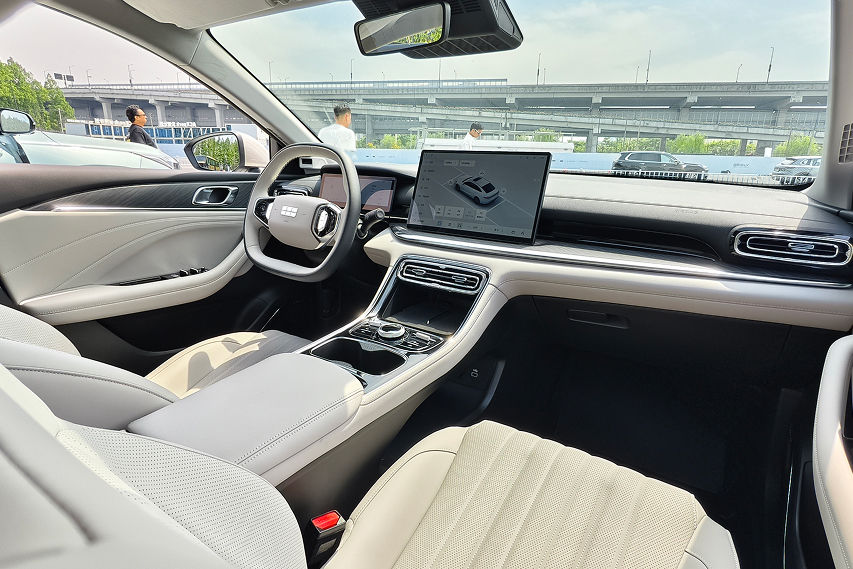 Photo by Adam Aubrey
What is the Geely Galaxy Starshine 6?
The Starshine 6 is part of Geely’s Galaxy family in China, which focuses heavily on electrified vehicles. It sits below the larger Starshine 8, and is positioned as a more attainable plug-in hybrid family sedan.
In China, prices reportedly start from 68,800 yuan, which is roughly RM45,000. That number should not be read as a possible Malaysian price, but it does show how aggressively Geely is positioning the car in its home market.
The car runs on Geely’s GEA global intelligent new energy architecture, with front-wheel drive and a fairly conventional suspension layout, MacPherson struts at the front and a torsion beam at the rear.
That torsion beam rear setup may not sound exciting on paper, especially in a sedan this size. But in our brief sampling, it did not immediately make the car feel cheap or unsettled. More on that later.
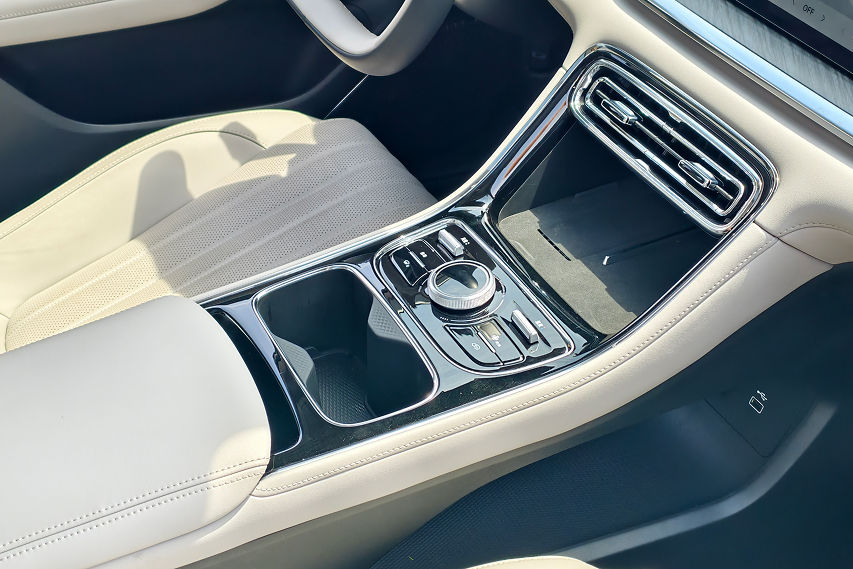 Photo by Adam Aubrey
Interior, screens and cabin tech
Inside, the Starshine 6 feels very much like a modern Geely Galaxy product.
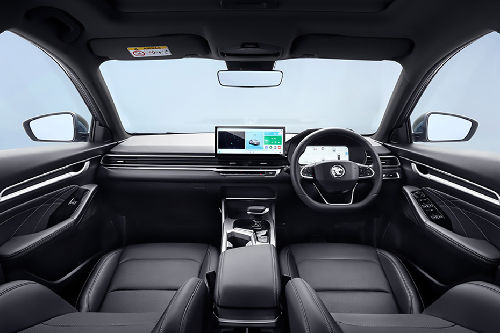
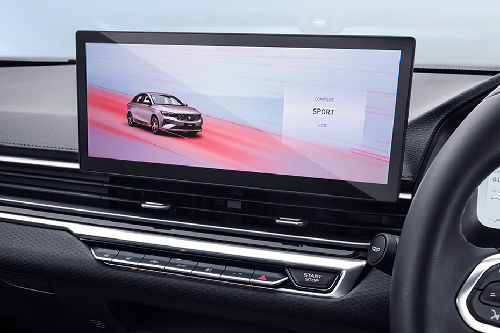
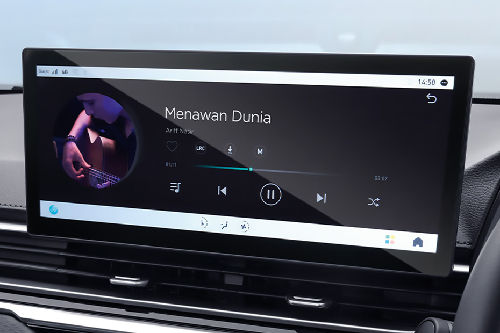
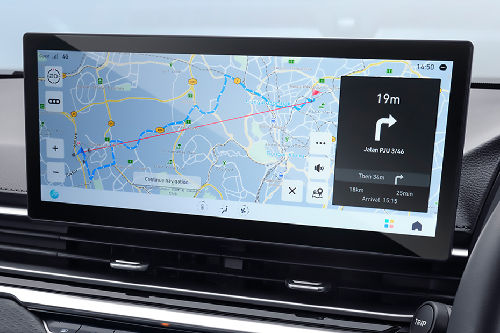
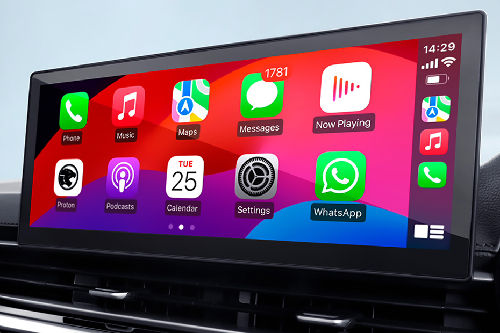
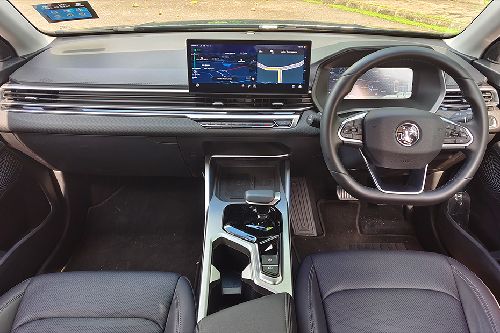
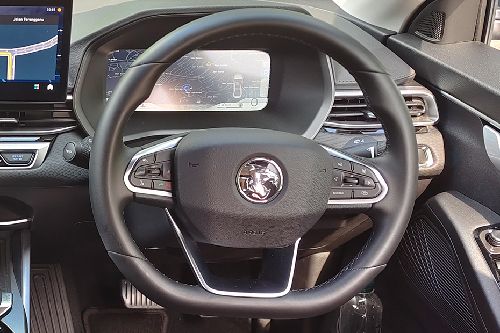
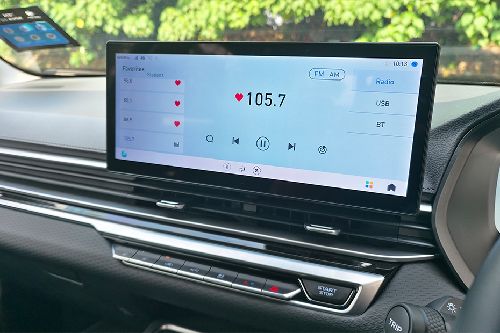
The dashboard is dominated by a 14.6-inch central infotainment screen, paired with a 10.25-inch digital instrument cluster. The car runs Geely’s Flyme Auto infotainment system, supported by Geely’s in-house 7 nm Longying-1 automotive-grade chip. Geely’s own China product page also mentions a 50W air-cooled wireless charging pad.
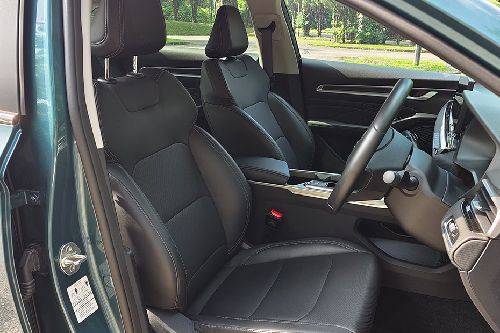
The layout is clean without going completely minimalist. There is still a practical family-sedan feel to it, rather than the full lounge-style cabin approach seen in some larger Chinese new energy vehicles.
Depending on variant, Chinese-market equipment also includes Geely’s Qianli Haohan H3 driver assistance system, with the official site mentioning 360-degree perception and 28 assisted-driving functions.
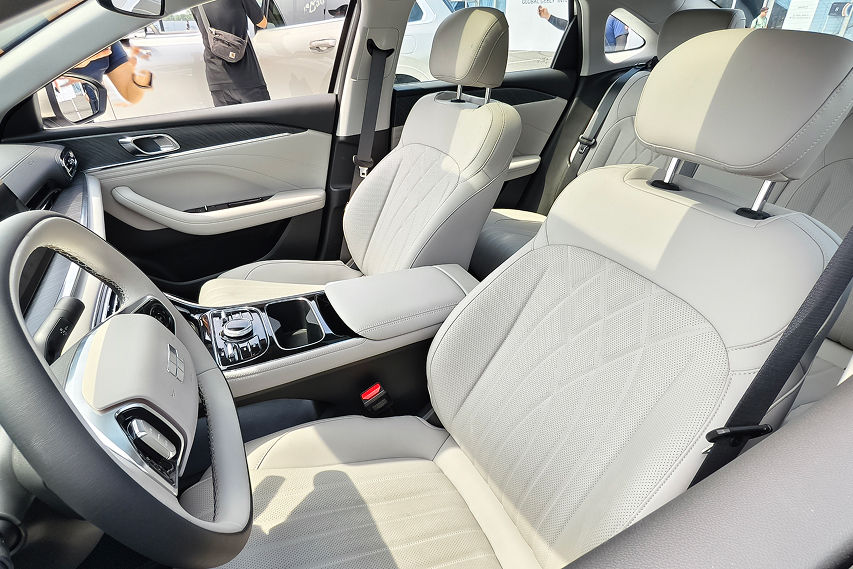 Photo by Adam Aubrey
Brief drive impression, more EV than petrol sedan
We only had a short go in the car during Geely’s product sampling day, so this is not a full review. But the first impression was clear, the Galaxy Starshine 6 feels more like an EV most of the time than a conventional petrol sedan.
That is probably the most important takeaway.
The power delivery is smooth and immediate, without the lag or mechanical fuss you sometimes get from regular petrol systems. It is not blisteringly fast, but it has more than enough punch for daily driving. The response feels clean, especially at low to medium speeds, which is where this sort of PHEV sedan will spend most of its life.
What stood out most was how little the petrol engine made itself known. Even though this is a plug-in hybrid and not a pure EV, we barely heard the engine during the short drive. The car simply moved with that familiar electric smoothness, which makes it feel much closer to an e.MAS product than a traditional Proton sedan.
That is also why the e.MAS framing feels natural. This does not feel like a petrol car with some electrification added on. It feels like an electrified sedan first, with the engine working quietly in the background.
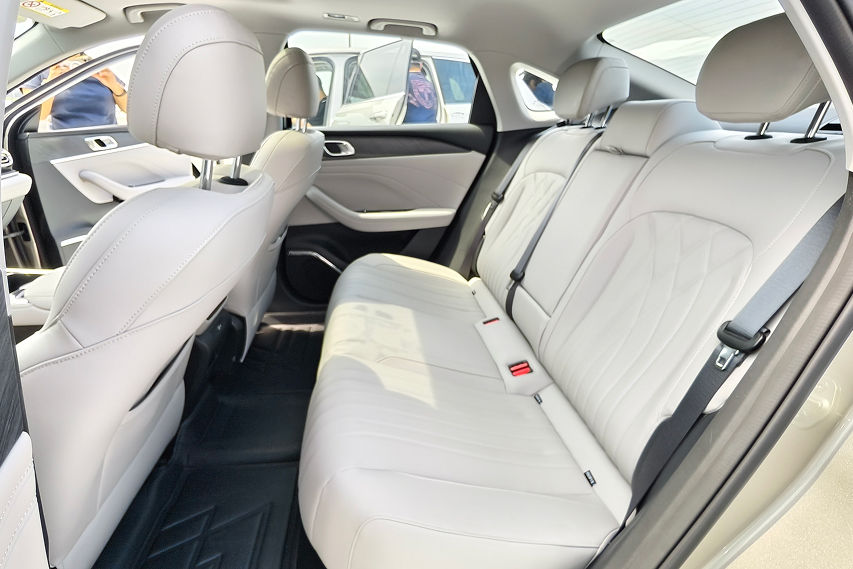 Photo by Adam Aubrey
Torsion beam rear, but it handled well
On paper, the rear suspension is one of the areas that might raise eyebrows.
A sedan measuring over 4.8 metres long with a torsion beam rear axle does not sound especially premium. Many buyers and enthusiasts would naturally expect a multi-link setup, especially if this were to be positioned above the regular S70.
But during our short drive, the Starshine 6 did not feel clumsy. It handled itself well enough, with decent body control and a generally settled attitude through the sampling route.
Of course, a curated test track session is not the same as a full Malaysian road test. We would still want to see how it behaves over our patchier roads, expansion joints, mid-corner bumps and fast highway undulations.
But first impressions were more positive than the spec sheet might suggest.
The torsion beam rear did not immediately dominate the experience. The car still felt composed, easy to drive and properly sorted for a family sedan. For the kind of buyer this car is targeting, that may be enough.
The rear floor is the main compromise
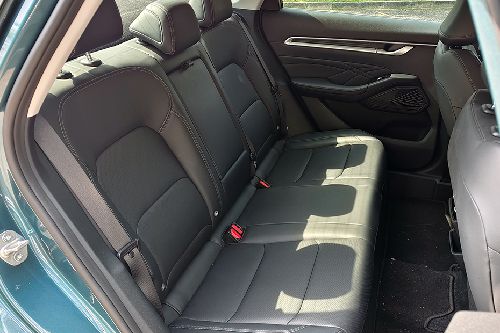
The one thing we did not like was the raised rear floorpan.
This is likely linked to battery placement, and it affects how the rear passenger area feels. In a car this large, you expect the rear section to feel properly spacious and relaxed, but the higher floor does slightly interrupt that impression.
It is not a deal-breaker, but it is noticeable.
For Malaysia, where sedans are often bought as family cars, rear comfort still counts. If Proton ever considered this for e.MAS, rear passenger packaging would be something worth studying closely.
The good news is that boot space is generous. The Starshine 6 has a big boot, which helps preserve its role as a practical family sedan despite the electrified hardware underneath.
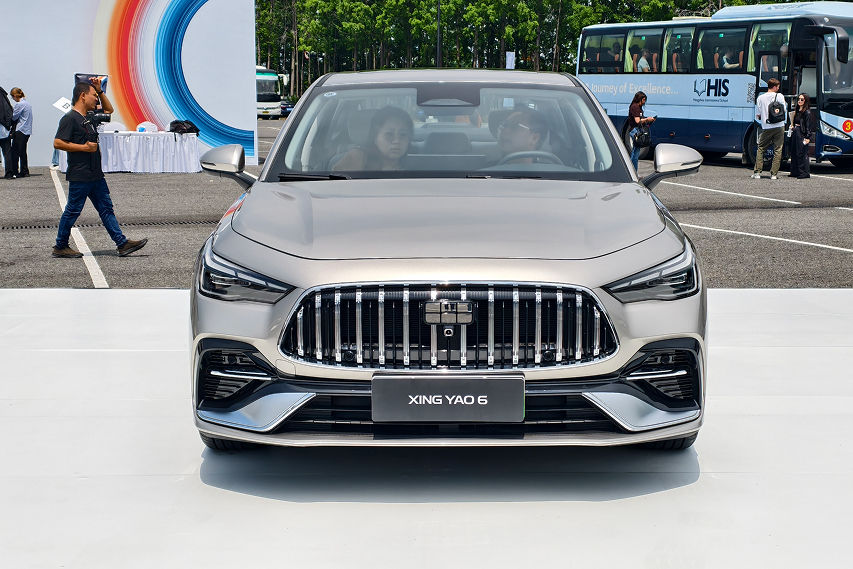 Photo by Adam Aubrey
Could this work in Malaysia?
As a regular Proton S70 replacement, the Galaxy Starshine 6 might be a bit too much of a jump.
It is larger, electrified and more technically complex. That could make pricing more difficult, especially when the current S70’s appeal depends heavily on being attainable.
But as an e.MAS sedan, the logic becomes cleaner.
Proton could keep the S70 as the mainstream petrol sedan, while an e.MAS sedan could serve a different buyer, someone who wants a sedan but also wants the smoothness, fuel-saving potential and modern feel of an electrified powertrain.
That would also give Proton something quite unique. The Malaysian sedan market is quieter than it used to be, but it is not dead. A well-priced PHEV sedan under e.MAS could offer something that the usual SUV-heavy electrified market does not.
It could appeal to buyers who are not ready for a full EV, do not want an SUV, but still want something modern, efficient and different from the usual petrol sedan choices.
So, e.MAS sedan or next S70?
The Galaxy Starshine 6 can be discussed in the same breath as the Proton S70 because of the Geely sedan connection.
But the more convincing angle is e.MAS.
It feels too electrified, too large and too new-energy focused to be viewed only as a future S70. Instead, it feels like a possible preview of how Proton could expand the e.MAS family into sedans.
Nothing has been confirmed, of course. Proton has not announced an e.MAS sedan based on this model, and the Galaxy Starshine 6 remains a China-market Geely Galaxy product for now.
But after seeing it in person and getting a short drive, the thought is hard to ignore.
The Geely Galaxy Starshine 6 may not be the next Proton S70 in the traditional sense. It could be something more interesting than that, a possible look at what Proton e.MAS’ first sedan could be.
Also Read: Geely Boyue L: Is this the SUV Proton will be using for the next X70?

-
Explore Proton S70
-

Proton S70 Related Stories
- News
- Featured Stories
-
 Weekly wrap-up: Proton S70 Prime images revealed, Volvo EX30 Cross Country launched, Perodua Aruz price cut, and more
The past seven days continued the busy momentum in the Malaysian automotive industry, with Proton unveiling the official images of...
Read MoreSippi Vig, Sep 18, 2026 -
2026 Proton S70 Prime shown in new official images
KUALA LUMPUR: Proton has released a new collection of official images showing what seems to be the upcoming S70 Prime,...
Read MoreAdam Aubrey, Sep 14, 2026 -
Weekly wrap-up: BYD Atto 3 Performance launched, Proton S70 Lite and Prime bookings open, Volvo EX90 updated, and more
The past week was exciting for electric vehicle enthusiasts in Malaysia, with BYD introducing the Atto 3 Performance with significantly...
Read MoreSippi Vig, Sep 11, 2026


-
Proton S70: Old vs New: What’s changed in the 2026 MC1 update?
First introduced in November 2023, the Proton S70 holds the number one spot in the C-segment (under RM100k) in the...
Read MoreSippi Vig, Mar 03, 2026 -
10 Most searched cars on Zigwheels Malaysia in 2025
The year 2025 was quite an eventful year for the Malaysian automotive industry, with several new launches, capturing attention from...
Read MoreSippi Vig, Jan 08, 2026 -
Malaysia’s 2026 new-car watchlist, 10 launches worth keeping tabs on
If 2025 felt like the year Malaysia finally settled into electrification, 2026 looks like the year brands start getting really...
Read MoreAdam Aubrey, Dec 26, 2025

Proton Car Models
-

Proton S70 -
Proton Iriz -
Proton Persona -
Proton X90 -
Proton e.MAS 7 -
Proton X70 -
Proton e.MAS 5 -
Proton X50 -
Proton Saga -
Proton e.MAS 7 PHEV
Don't Miss
-
Weekly wrap-up: Proton S70 Prime images revealed, Volvo EX30 Cross Country launched, Perodua Aruz price cut, and more
-
2026 Proton S70 Prime shown in new official images
-
Weekly wrap-up: BYD Atto 3 Performance launched, Proton S70 Lite and Prime bookings open, Volvo EX90 updated, and more
-
Proton S70 gets two cheaper NA variants, bookings now open, est under RM60k
-
Proton records 14.9% growth in July 2026; exports reach a new high
KLIMS 2026


Malaysia Autoshow
Trending & Fresh Updates
- Latest
- Popular
-

-
-
-
-
-
-
-
-
-
Electric Car: A comprehensive buying guidePurva Jain, Jul 01, 2024
-
Must watch automotive movies for enthusiastsPurva Jain, Feb 21, 2024
-
Car Rust-proofing 101: All you need to knowPurva Jain, Feb 15, 2024



You might also be interested in
- News
- Featured Stories

Proton Featured Cars
- Latest
- Popular
-
Proton e.MAS 7RM 103,800 - 119,800 OTR Price Kuala LumpurEMI : RM 1,212 x 844.19 (16 Reviews) VIEW SEPTEMBER OFFERS
-
Proton X90RM 106,800 - 122,800 OTR Price Kuala LumpurEMI : RM 1,247 x 844.26 (27 Reviews) VIEW SEPTEMBER OFFERS
-
Proton e.MAS 7 PHEVRM 109,800 - 129,800 OTR Price Kuala LumpurEMI : RM 1,282 x 84Write a Review VIEW SEPTEMBER OFFERS
-
Proton X70RM 99,800 - 112,800 OTR Price Kuala LumpurEMI : RM 1,165 x 844.18 (80 Reviews) VIEW SEPTEMBER OFFERS
-
Proton SagaRM 38,990 - 49,990 OTR Price Kuala LumpurEMI : RM 455 x 844.23 (79 Reviews) VIEW SEPTEMBER OFFERS
-
Proton e.MAS 5RM 59,800 - 72,800 OTR Price Kuala LumpurEMI : RM 698 x 844.5 (2 Reviews) VIEW SEPTEMBER OFFERS
-
Proton IrizRM 42,764 OTR Price Kuala LumpurEMI : RM 499 x 844.01 (69 Reviews) VIEW SEPTEMBER OFFERS
-
Proton PersonaRM 47,800 - 58,300 OTR Price Kuala LumpurEMI : RM 558 x 844.15 (75 Reviews) VIEW SEPTEMBER OFFERS
-
Proton X90RM 106,800 - 122,800 OTR Price Kuala LumpurEMI : RM 1,247 x 844.26 (27 Reviews) VIEW SEPTEMBER OFFERS
-
Proton e.MAS 7RM 103,800 - 119,800 OTR Price Kuala LumpurEMI : RM 1,212 x 844.19 (16 Reviews) VIEW SEPTEMBER OFFERS
-
Proton X70RM 99,800 - 112,800 OTR Price Kuala LumpurEMI : RM 1,165 x 844.18 (80 Reviews) VIEW SEPTEMBER OFFERS
Latest Proton S70 Car Videos on Zigwheels

-
2024 Proton S70 Review - Best bang for buck compact sedan?26 Jun, 2024 .
Compare & Recommended
Proton S70
RM 68,800 - 89,800
Proton S70 Price
|
|
|
Seating Capacity
5
|
5
|
|
Fuel Type
Petrol
|
Petrol
|
|
Engine
1499
|
1597
|
|
Power
179
|
108
|
|
Torque
290 Nm
|
150 Nm
|
|
Transmission Type
Dual Clutch
|
CVT
|
|
|
Trending Sedan
- Latest
- Upcoming
- Popular
-
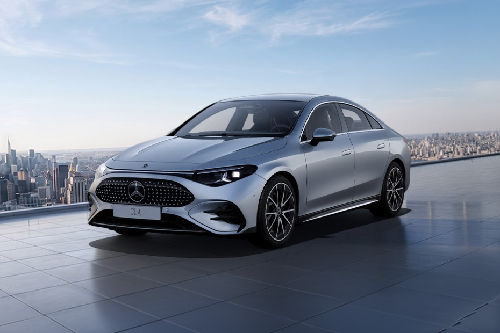
Mercedes Benz CLA ElectricRM 274,888 OTR Price Kuala LumpurEMI : RM 3,212 x 84Write a Review VIEW SEPTEMBER OFFERS
-
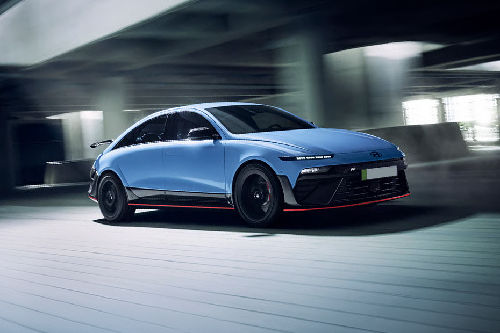
Hyundai Ioniq 6 NRM 449,888 OTR Price Kuala LumpurEMI : RM 5,257 x 84Write a Review VIEW SEPTEMBER OFFERS
-
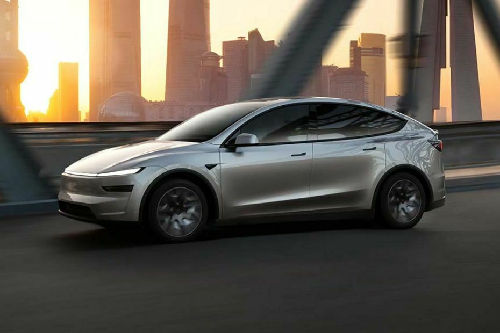
Tesla Model Y LRM 260,000 OTR Price Kuala LumpurEMI : RM 3,038 x 84Write a Review VIEW SEPTEMBER OFFERS
-
Dongfeng 007RM 169,888 - 195,888 OTR Price Kuala LumpurEMI : RM 1,985 x 84Write a Review VIEW SEPTEMBER OFFERS
-
Volvo ES90RM 339,888 OTR Price Kuala LumpurEMI : RM 3,971 x 84Write a Review VIEW SEPTEMBER OFFERS
-
Toyota Vios Hybrid ElectricRM 103,900 Expected Price Kuala LumpurEMI : RM 1,213 x 84Write a Review VIEW SEPTEMBER OFFERS
-
-
BMW 5 Series SedanRM 332,800 - 349,800 OTR Price Kuala LumpurExpected Launch TBA Alert Me When Launched
-
-
-
-
Perodua BezzaRM 34,580 - 49,980 OTR Price Kuala LumpurEMI : RM 404 x 844.19 (81 Reviews) VIEW SEPTEMBER OFFERS
-
Honda CityRM 84,900 - 111,900 OTR Price Kuala LumpurEMI : RM 991 x 844.23 (70 Reviews) VIEW SEPTEMBER OFFERS
-
Toyota ViosRM 89,600 - 95,500 OTR Price Kuala LumpurEMI : RM 1,047 x 844.17 (71 Reviews) VIEW SEPTEMBER OFFERS
-
Proton S70RM 68,800 - 89,800 OTR Price Kuala LumpurEMI : RM 803 x 843.97 (30 Reviews) VIEW SEPTEMBER OFFERS
-
Nissan AlmeraRM 83,888 - 95,888 OTR Price Kuala LumpurEMI : RM 980 x 844.13 (56 Reviews) VIEW SEPTEMBER OFFERS
-
Proton PersonaRM 47,800 - 58,300 OTR Price Kuala LumpurEMI : RM 558 x 844.15 (75 Reviews) VIEW SEPTEMBER OFFERS