Thinking about the Proton e.MAS 7 PHEV? Here’s what buyers should know before signing up
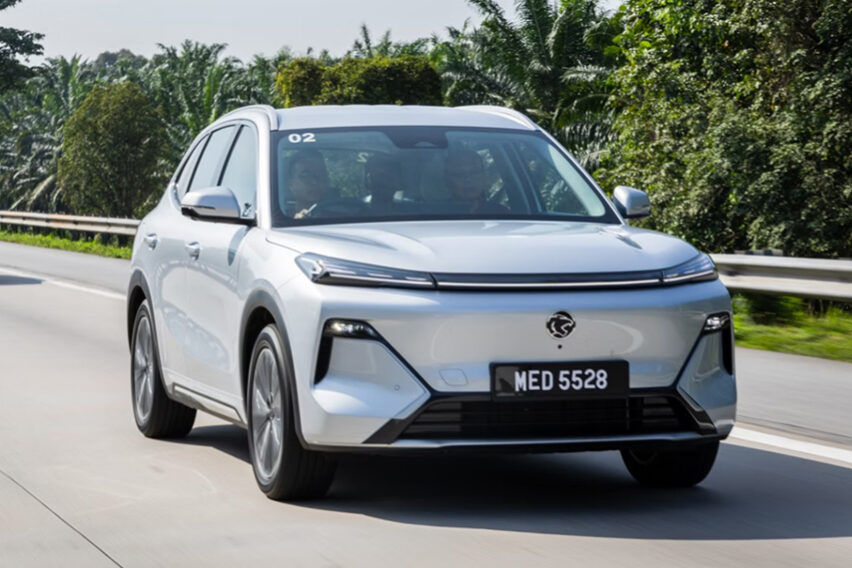
KUALA LUMPUR: Pro-Net recently sat down with members of the media to explain the thinking behind the Proton e.MAS 7 PHEV in greater detail.
KEY TAKEAWAYS
Is the Proton e.MAS 7 PHEV meant to be used like a normal petrol SUV?
Not really. From Pro-Net’s explanation, it makes the most sense when treated as an electrified SUV first, with the petrol engine acting as backup when needed.Do I need to charge the Proton e.MAS 7 PHEV regularly?
To get the best out of it, yes. Buyers with convenient home or office charging will likely enjoy more of its EV-style driving character and efficiency.What is the best mode to use in the Proton e.MAS 7 PHEV?
Hybrid mode appears to be the most sensible default for most owners, especially those without easy charging access. Pure mode sounds best for shorter, predictable routines with convenient charging.There were plenty of technical slides, covering everything from safety structures and battery protection to power management and drive modes, but for regular buyers, the more useful takeaway is much simpler.
The Proton e.MAS 7 PHEV looks like the sort of SUV that makes the most sense for people who like the idea of an EV, but are still not ready to rely on charging alone.
Also Read: Proton e.MAS 7 PHEV gets new Emerald Green colour, bookings now open
That is really the key to understanding this car.
It is not being pitched as a conventional hybrid in the old-school sense, and it is not meant to replace a full EV either. Instead, the e.MAS 7 PHEV appears to sit right in the middle, offering a driving experience that leans heavily on electrification, while keeping a petrol engine around as a safety net.
So if you are looking at this car, or have already bought one, here are the pointers that matter most.
1. This car makes the most sense if you want EV benefits without full EV commitment
The first thing buyers should understand is that the e.MAS 7 PHEV does not seem to have been developed for people who are completely uninterested in charging.
From the way Pro-Net explained it, this is a plug-in hybrid that is supposed to feel as EV-like as possible in normal driving, especially in town and at lower speeds, while using the petrol engine to reduce the stress that still comes with full EV ownership.
That makes it a potentially good fit for buyers who:
- like smooth and quiet EV-style driving
- want to save fuel in day-to-day use
- are still worried about long-distance travel
- do not want to be fully dependent on the charging network yet
If that sounds like your mindset, this car makes sense. If you already know you do not want to plug in at all, then you may not be getting the full point of it.
2. If you can charge regularly, you will probably enjoy this car more
This is one of the clearest practical lessons from the Pro-Net workshop.
Even though the e.MAS 7 PHEV has a petrol engine, Pro-Net’s entire presentation suggests the car is designed to reward owners who actually use the charging side of the equation. The more often you plug it in, the more likely you are to experience the quieter, smoother and more EV-like behaviour the car is meant to deliver.
So for prospective buyers, the question is not just “Can I live with a PHEV?”
It should also be: “Can I charge it often enough to make the most of what it is?”
If the answer is yes, whether at home or at work, then the car’s proposition becomes much stronger.
3. If you live in a condo or have uncertain charging access, it still may suit you
This is where the e.MAS 7 PHEV starts to look clever.
One of the more relatable details from the briefing was that Hybrid mode is the default mode, and Pro-Net specifically positions it for owners without convenient access to charging. That is a very realistic nod to Malaysian conditions.
Not every buyer has a landed house. Not every apartment building is charger-friendly. Not every owner wants to plan daily life around charging sessions.
So unlike a full EV, this car does not demand that you have everything sorted from day one. It gives you a way into electrified driving without making the charging question feel so all-or-nothing.
That could be a big selling point for buyers who are interested in EVs, but not yet ready to restructure their life around one.
4. Do not buy it if you plan to treat it exactly like a normal petrol SUV
This is probably the bluntest advice, but it is fair.
If a buyer is planning to buy the e.MAS 7 PHEV and then completely ignore charging, never learn the drive modes, and just use it like any normal petrol SUV, then chances are they will miss much of what makes the car interesting in the first place.
That does not mean the car becomes useless. It just means the ownership experience will likely be less special than what Pro-Net is trying to deliver.
This feels like a car that rewards owners who understand the basics:
- when to charge
- when to just leave it in Hybrid
- when it makes sense to preserve battery for later
- why the engine may cut in during some situations
It is not complicated, but it does ask the owner to meet it halfway.
5. Hybrid mode will probably be the one most owners use most of the time
For both owners and prospective buyers, this may be the most useful real-world point.
From the slides, Hybrid mode is not some fallback setting. It is the default mode, and it sounds like Proton expects it to carry most of the everyday workload. That means buyers should not overthink the different drive modes too much at first.
If you are the sort of owner who just wants to get in and drive, Hybrid mode is likely the most sensible everyday setting. It should allow the car to manage the balance between electric driving, petrol assistance, efficiency and drivability without constantly asking for input from the driver.
That makes the e.MAS 7 PHEV feel more approachable than some electrified cars, where the cleverness ends up becoming a burden.
6. Pure mode sounds best for shorter, predictable routines
It is also quite clear that Pure mode is for owners with convenient charging access, and it requires manual selection.
That tells you a lot about when it is likely to be useful.
If your daily routine is:
- short
- mostly urban
- predictable
- easy to recharge from later
then Pure mode probably makes a lot of sense.
But if your day is mixed, your route is unpredictable, or you are unsure when you can top up again, it sounds like Hybrid is still the safer and more relaxed option.
For prospective buyers, that means the e.MAS 7 PHEV can adapt to different lifestyles, but only if you are honest about how you actually drive.
7. One of the smartest features may be the charge-saving mode
This is one of the more interesting nuggets from the presentation, and it deserves more attention than it will probably get.
The e.MAS 7 PHEV has power preservation functions that allow it to hold on to battery charge for later use. That is a genuinely practical feature.
Think about it this way:
- long highway drive first, town driving later
- outstation travel, then quieter local running at destination
- wanting to save electric driving for stop-go traffic
- wanting battery energy in reserve for a later part of the day
That is a clever bit of flexibility, and it is one of the strongest signs that this car has been thought through around real usage rather than just test-cycle claims.
Owners who take the time to understand this function will probably get more out of the car than those who never explore it.
8. If the engine cuts in, that does not mean something is wrong
This is another important mindset point for buyers.
Based on the slides, the system is supposed to behave differently depending on speed, battery level and driving demand. In urban use, it is meant to feel more electric. On the highway, under stronger acceleration, or when charge is lower, the engine may become more involved.
That should not be read as the car “failing” to be an EV-style PHEV. It is simply the car doing what it was designed to do, blend both power sources according to the situation.
For first-time PHEV owners, this matters. Some people get overly sensitive the moment the engine comes in. But on a car like this, that is part of the logic, not a sign of compromise.
9. The headline numbers are good, but the real appeal is convenience
Yes, the figures presented are appealing enough: over 1,000 km of claimed combined range, 4.3 litres per 100 km, and 0-100 km/h in 8.0 seconds, based on NEDC testing.
But for many buyers, those numbers are not the main story.
The more important part is what those figures represent. The e.MAS 7 PHEV seems designed to let buyers enjoy a chunk of the EV experience without carrying the full mental load of EV ownership.
That is likely to be more important than the exact fuel figure. What people really want to know is:
- can I use this around town without it feeling like a normal petrol SUV?
- can I still travel far without worry?
- will this fit into my current lifestyle without too much adjustment?
From the way Pro-Net framed it, the answer it wants buyers to arrive at is yes.
10. The safety story is one of the stronger hidden selling points
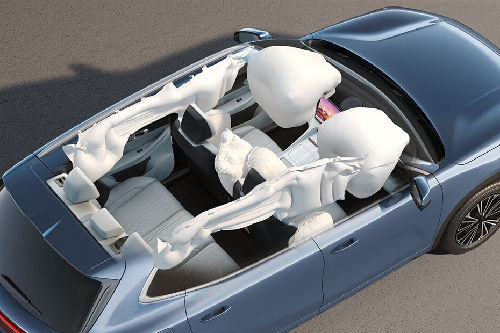
A lot of PHEV conversations end up focusing only on fuel economy and range, but one of the genuinely more interesting parts of the slides was how much detail Proton showed on fuel-electric packaging and protection.
For buyers, the important thing is not memorising terms like dedicated layout pathways or 140 mm fuel-electric safety distance. It is understanding the broader message: Proton knows combining a battery system and a fuel tank in one vehicle raises questions, and it is trying to show that these systems were packaged and protected deliberately, not casually.
That could be a stronger selling point than many buyers initially realise, especially for families who are still cautious about electrified vehicles.
11. This may be a better fit for families than hardcore tech heads
Interestingly, the e.MAS 7 PHEV may appeal less to people who are obsessed with electrification for its own sake, and more to people who simply want an easier family car.
Why?
Because the real benefit here is not that it is the most extreme or most futuristic electrified SUV. It is that it appears designed to remove friction.
Less worry about charging. Less worry about long-distance travel. Less worry about fully changing old habits overnight.
For many family buyers, that is exactly the sort of electrification they can live with.
12. The best way to think about it is this
If you are considering the Proton e.MAS 7 PHEV, do not think of it as a petrol SUV that happens to have a battery.
Think of it as an EV-style SUV that still carries petrol backup for reassurance.
That shift in mindset explains almost everything about the car, from its drive modes to its energy management logic and who it is supposed to appeal to.
And if you have already bought one, that same mindset is probably the best way to get the most out of it too.
The Proton e.MAS 7 PHEV looks best suited to buyers who want to step toward EV ownership without going all the way in one leap.
Charge it when you can. Use Hybrid when in doubt. Learn the charge-saving functions. Do not panic when the engine joins in. And most importantly, do not judge it like a normal petrol SUV, because that does not seem to be what it was built to be.
That, more than any one technical slide, is the point prospective buyers should understand.
Also Read: Proton Q1 2026 sales hit 22-year high, e.MAS 5 leads EV charge, X90 and S70 gain momentum
- KEY TAKEAWAYS
- 1. This car makes the most sense if you want EV benefits without full EV commitment
- 2. If you can charge regularly, you will probably enjoy this car more
- 3. If you live in a condo or have uncertain charging access, it still may suit you
- 4. Do not buy it if you plan to treat it exactly like a normal petrol SUV
- 5. Hybrid mode will probably be the one most owners use most of the time
- 6. Pure mode sounds best for shorter, predictable routines
- 7. One of the smartest features may be the charge-saving mode
- 8. If the engine cuts in, that does not mean something is wrong
- 9. The headline numbers are good, but the real appeal is convenience
- 10. The safety story is one of the stronger hidden selling points
- 11. This may be a better fit for families than hardcore tech heads
- 12. The best way to think about it is this

-
Explore Proton e.MAS 7 PHEV
-


Proton e.MAS 7 PHEV Related Stories
- News
- Featured Stories
- Expert Review
-
 Proton e.MAS sets new monthly sales record - one unit sold every 7 minutes
KUALA LUMPUR: Proton e.MAS has been creating new highs with each passing month. After becoming the fastest automotive brand in...
Read MoreSippi Vig, Sep 09, 2026 -
Proton fields 14 cars at Malaysia's Merdeka parade, including full CKD e.MAS range
KUALA LUMPUR: Proton and its EV arm PRO-NET took part in Malaysia's 69th National Day Parade yesterday with a 14-vehicle...
Read MoreAdam Aubrey, Sep 01, 2026 -
Proton records 14.9% growth in July 2026; exports reach a new high
KUALA LUMPUR: Proton has revealed its sales numbers for the month of July. During the first month of H2 2026,...
Read MoreSippi Vig, Aug 06, 2026


-
Proton e.MAS 7 PHEV vs Chery Tiggo 7 PHEV: Which offers the better deal?
The plug-in hybrid SUV market in Malaysia has been intensified with the introduction of the Proton e.MAS 7 PHEV, set...
Read MoreSippi Vig, Feb 17, 2026 -
Proton e.MAS 7 PHEV variants explained – Which one should you choose?
After disrupting Malaysia's BEV market, Proton has entered the hybrid category with the launch of the e.MAS 7 PHEV. Dubbed...
Read MoreSippi Vig, Feb 11, 2026
-
Review: e.MAS 7 PHEV - Really the best Proton on sale right now?
Let me start with something I didn't expect to say. After a week with the Proton e.MAS 7 PHEV Premium,...
Read MoreAdam Aubrey, Jun 09, 2026
Proton Car Models
-

Proton S70 -
Proton Iriz -
Proton Persona -
Proton X90 -
Proton e.MAS 7 -
Proton X70 -
Proton e.MAS 5 -
Proton X50 -
Proton Saga -
Proton e.MAS 7 PHEV
Don't Miss
-
Proton e.MAS sets new monthly sales record - one unit sold every 7 minutes
-
Proton fields 14 cars at Malaysia's Merdeka parade, including full CKD e.MAS range
-
Proton records 14.9% growth in July 2026; exports reach a new high
-
CKD Proton eMas 7 PHEV rolls out in Malaysia, massage seats added and specs unchanged
-
Proton e.MAS crosses 20k mark in less than 7 months, e.MAS 5 leading the charge

KLIMS 2026


Malaysia Autoshow
Trending & Fresh Updates
- Latest
- Popular
-

-
-
-
-
-
-
-
-
-
Electric Car: A comprehensive buying guidePurva Jain, Jul 01, 2024
-
Must watch automotive movies for enthusiastsPurva Jain, Feb 21, 2024
-
Car Rust-proofing 101: All you need to knowPurva Jain, Feb 15, 2024




You might also be interested in
- News
- Featured Stories
Proton Featured Cars
- Latest
- Popular
-
Proton e.MAS 7RM 103,800 - 119,800 OTR Price Petaling JayaEMI : RM 1,212 x 844.19 (16 Reviews) VIEW SEPTEMBER OFFERS
-
Proton X90RM 106,800 - 122,800 OTR Price Petaling JayaEMI : RM 1,247 x 844.26 (27 Reviews) VIEW SEPTEMBER OFFERS
-
Proton X70RM 99,800 - 112,800 OTR Price Petaling JayaEMI : RM 1,165 x 844.18 (80 Reviews) VIEW SEPTEMBER OFFERS
-
Proton SagaRM 38,990 - 49,990 OTR Price Petaling JayaEMI : RM 455 x 844.23 (79 Reviews) VIEW SEPTEMBER OFFERS
-
Proton e.MAS 5RM 59,800 - 72,800 OTR Price Petaling JayaEMI : RM 698 x 844.5 (2 Reviews) VIEW SEPTEMBER OFFERS
-
Proton S70RM 68,800 - 89,800 OTR Price Petaling JayaEMI : RM 803 x 843.97 (30 Reviews) VIEW SEPTEMBER OFFERS
-
Proton IrizRM 46,700 OTR Price Petaling JayaEMI : RM 499 x 844.01 (69 Reviews) VIEW SEPTEMBER OFFERS
-
Proton PersonaRM 49,600 OTR Price Petaling JayaEMI : RM 558 x 844.15 (75 Reviews) VIEW SEPTEMBER OFFERS
-
Proton X90RM 106,800 - 122,800 OTR Price Petaling JayaEMI : RM 1,247 x 844.26 (27 Reviews) VIEW SEPTEMBER OFFERS
-
Proton e.MAS 7RM 103,800 - 119,800 OTR Price Petaling JayaEMI : RM 1,212 x 844.19 (16 Reviews) VIEW SEPTEMBER OFFERS
-
Proton X70RM 99,800 - 112,800 OTR Price Petaling JayaEMI : RM 1,165 x 844.18 (80 Reviews) VIEW SEPTEMBER OFFERS
Latest Proton e.MAS 7 PHEV Car Videos on Zigwheels

-
Proton e.MAS 7 PHEV Premium — the smartest car buy in Malaysia right now?25 Jun, 2026 .

Compare & Recommended
Proton e.MAS 7 PHEV
RM 109,800 - 129,800
Write a Review
e.MAS 7 PHEV Price
|
|
|
|
|
|
Seating Capacity
5
|
7
|
5
|
5
|
5
|
|
Fuel Type
Petrol
|
Petrol
|
Petrol
|
Electric
|
Petrol
|
|
Engine
1498
|
1496
|
1199
|
-
|
1490
|
|
Power
98
|
104
|
110
|
174
|
160
|
|
Torque
125 Nm
|
136 Nm
|
205 Nm
|
280 Nm
|
260 nm
|
|
Transmission Type
Automatic
|
Automatic
|
Automatic
|
Automatic
|
Dual Clutch
|
|
Ground Clearance
-
|
220 mm
|
-
|
161 mm
|
-
|
|
|
Trending SUV
- Latest
- Upcoming
- Popular
-
JAECOO J5 EVRM 118,800 OTR Price Petaling JayaEMI : RM 1,387 x 84Write a Review VIEW SEPTEMBER OFFERS
-
Porsche Cayenne ElectricRM 699,000 - 999,999 OTR Price Petaling JayaEMI : RM 8,169 x 84Write a Review VIEW SEPTEMBER OFFERS
-
BMW iX3RM 317,360 OTR Price Petaling JayaEMI : RM 4,426 x 844.67 (18 Reviews) VIEW SEPTEMBER OFFERS
-
Jetour T1RM 129,800 - 146,800 OTR Price Petaling JayaEMI : RM 1,516 x 844 (2 Reviews) VIEW SEPTEMBER OFFERS
-
Volkswagen TayronRM 190,510 - 238,574 OTR Price Petaling JayaEMI : RM 2,226 x 84Write a Review VIEW SEPTEMBER OFFERS
-
Chery Tiggo 9RM 166,800 OTR Price Petaling JayaEMI : RM 1,948 x 84Write a Review VIEW SEPTEMBER OFFERS

-
MINI John Cooper WorksRM 218,888 - 393,888 OTR Price Petaling JayaEMI : RM 2,557 x 844.38 (13 Reviews) VIEW SEPTEMBER OFFERS
-
Peugeot 3008RM 147,090 OTR Price Petaling JayaEMI : RM 1,612 x 844.35 (23 Reviews) VIEW SEPTEMBER OFFERS
-
Toyota Corolla CrossRM 131,499 OTR Price Petaling JayaEMI : RM 1,529 x 844.26 (47 Reviews) VIEW SEPTEMBER OFFERS
-
Toyota RushRM 94,635 OTR Price Petaling JayaEMI : RM 1,086 x 844.27 (61 Reviews) VIEW SEPTEMBER OFFERS
-
Perodua AtivaRM 71,200 OTR Price Petaling JayaEMI : RM 730 x 844.17 (46 Reviews) VIEW SEPTEMBER OFFERS
-
Mazda CX-5RM 143,300 - 187,200 OTR Price Petaling JayaEMI : RM 1,674 x 844.36 (65 Reviews) VIEW SEPTEMBER OFFERS