Geely Galaxy M9 as Proton e.MAS 9? Can this from RM150k six-seat PHEV SUV idea make any sense?
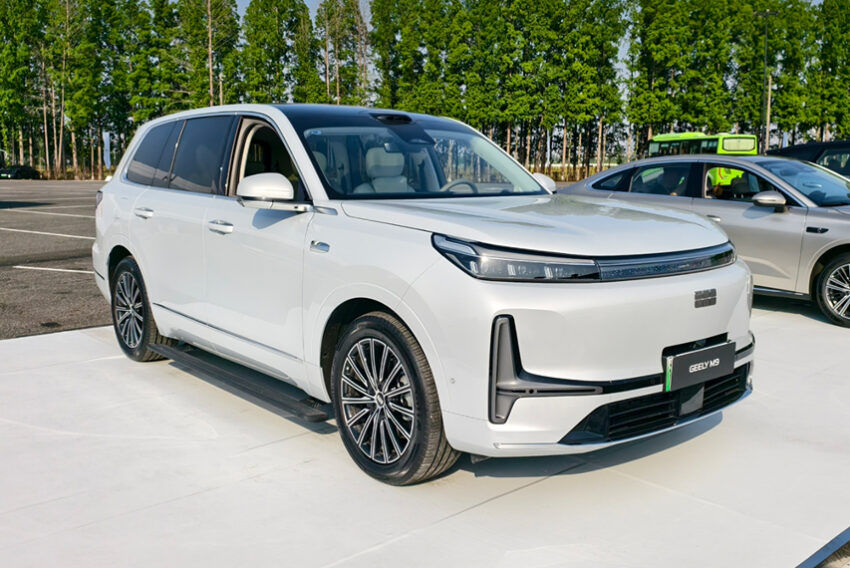
KUALA LUMPUR: What if Proton’s e.MAS line-up did not stop at the e.MAS 5, e.MAS 7, or even the e.MAS 7 PHEV?
KEY TAKEAWAYS
Is the Proton e.MAS 9 confirmed for Malaysia?
No. Proton has not announced the e.MAS 9, and there is no confirmation that the Geely Galaxy M9 will be sold in Malaysia under Proton or e.MAS.How much does the Geely Galaxy M9 cost in China?
The Geely Galaxy M9 is priced in China from 183,800 yuan to 248,800 yuan, with launch-period pricing from 173,800 yuan to 238,800 yuan.What powertrain does the Geely Galaxy M9 use?
The Geely Galaxy M9 uses Geely’s Thor EM-P plug-in hybrid system, built around a 1.5-litre turbocharged petrol engine with electric drive assistance. The top AWD version is said to produce up to 870 PS.That thought came to us during a curated media test track session organised for Proton-invited media, where we were given a short drive in the Geely Galaxy M9, a large six-seat plug-in hybrid SUV that sits right at the top end of Geely’s Galaxy range in China, even labeled as its flagship.
It was not a full road review, and certainly not enough to deliver a complete verdict. But it was enough to spark one very Malaysian question.
Also Read: Geely Boyue L: Is this the SUV Proton will be using for the next X70?
What if something like this eventually came to Malaysia under Proton’s e.MAS sub-brand, wearing a name like Proton e.MAS 9, with a price tag somewhere between RM150,000 and RM180,000?
No, Proton has not announced anything about bringing the Galaxy M9 here. There is no confirmation that it will be called the Proton e.MAS 9, either.
But as a purely speculative exercise, the idea is hard to ignore, because on paper, the Geely Galaxy M9 sounds almost too good for that kind of money.
In China, the Galaxy M9 is priced from 183,800 yuan to 248,800 yuan, with launch-period pricing bringing it down to 173,800 yuan to 238,800 yuan. Converted roughly, that puts it in the region of about RM103k to RM141k.
But that's of course before Malaysian taxes, localisation costs, logistics, equipment changes and distributor margins are factored in.
In other words, a Malaysian price of RM150k to RM180k sounds ambitious, but not entirely ridiculous if Proton and Geely ever decide to go big with a locally relevant PHEV SUV strategy.
The Geely Galaxy M9 is based on Geely’s GEA Evo platform, a new-energy architecture used for electrified models. In simpler terms, it is not a converted ICE SUV, it was developed around electrification from the start, which explains why it can package a large PHEV system, big battery options, six seats and still maintain proper cabin space.
And big is the correct word here.
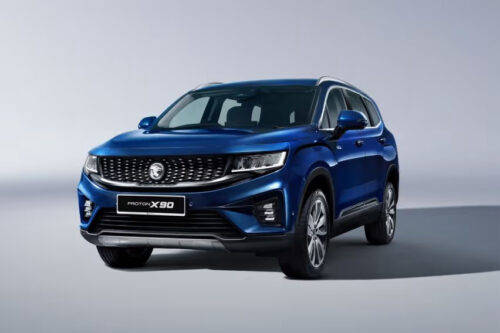
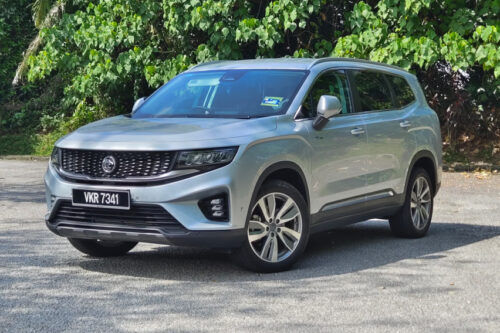
The Galaxy M9 measures 5,205 mm long, 1,999 mm wide and 1,800 mm tall, with a 3,030 mm wheelbase. That makes it a properly large SUV, not just a stretched C-segment model trying to act premium. It is longer than a Proton X90 by a huge margin, wider too, and it comes with a proper 2+2+2 six-seat cabin layout.
That last point is important, because many seven-seat SUVs in Malaysia technically have a third row, but once all seats are up, the boot becomes a handbag shelf. The Galaxy M9 feels different.
The third row is genuinely usable, not just for small children or emergency trips. Adults can fit back there without immediately regretting their life choices, and there is still decent boot space left for daily use.
The second row is where the M9 starts to feel properly expensive. The captain seats are big, cushy and lounge-like, with the kind of softness Chinese premium SUVs are now getting very good at delivering. You sit in it and immediately understand what Geely is trying to do with this car. It is not pretending to be a sharp European SUV. It is built around comfort, space and family travel.
Inside, the M9 also goes heavy on screens, with a 30-inch 6K integrated Sky Screen, a 12.66-inch digital instrument display, a 32-inch AR-HUD, and on higher variants, a 17.3-inch rear entertainment screen for the second row.
Underneath, the Galaxy M9 is not running a basic large-SUV suspension setup either. It uses double-wishbone front suspension and a five-link independent rear setup, with higher-spec variants gaining adaptive dampers.
The AWD version goes further with optional dual-chamber air suspension and camera-based predictive damping,
We're not too sure which variant we drove( most probably highest specification), but hat character also comes through in the way it drives.
We had a quick test drive in the Galaxy M9, and the first impression is that it feels typically soft and comfortable. The suspension has that plush, relaxed character that suits a big family SUV. It glides more than it attacks, which is probably exactly what buyers in this segment want.
But it is not sloppy. For something this large, it handles quite decently, with enough body control to stop it from feeling clumsy when you start asking more from it.
The more surprising bit is the powertrain.
The Galaxy M9 uses Geely’s Thor EM-P plug-in hybrid system, built around a 1.5-litre turbocharged four-cylinder petrol engine and electric drive assistance. Depending on variant, the M9 is offered with front-wheel drive or a high-output all-wheel-drive setup.
The top AWD version is said to produce up to 870 PS, which is frankly mad for a big family SUV. Geely also claims a 0-100 km/h time of around 4.5 seconds for the flagship version, which puts it in the realm of performance cars, even if the M9 itself is clearly tuned more for comfort than aggression.
That explains the way it moves. The M9 is a large SUV, but it does not feel lazy. The electric assistance gives it strong initial response, and once the powertrain wakes up properly, there is a lot of shove. It is not trying to be sporty in the traditional sense, but the effortless performance makes it feel expensive (electrification can do that to a car).
You do not need to work the car hard, and that is exactly the point.
Battery and range figures vary by variant. The Galaxy M9 is offered with different LFP battery options, with electric-only range figures ranging from around 100 km to over 200 km, depending on the Chinese test cycle and specification. Combined driving range is promoted at around 1,500 km in China for certain versions.
For Malaysia, that kind of setup could be very interesting.
A big PHEV SUV makes more sense here than a full EV for many families, especially those who still do long-distance interstate drives, balik kampung trips, or outstation work. You get EV-like smoothness for daily use, but you still have the petrol engine for longer journeys.
No need to plan every stop around chargers. No need to fight for a DC charger during peak holiday traffic. No need to explain to your family why the trip has become a charging strategy session.
This is where a hypothetical Proton e.MAS 9 could get interesting.
At RM150k to RM180k, it would not be cheap. But look at what Malaysians are already paying for large SUVs and premium MPVs. A well-specced six-seater PHEV SUV with proper road presence, a usable third row, strong performance and a long-distance hybrid powertrain could sit in a very attractive space.
It would not need to be a luxury car in the old-school badge sense. It would just need to deliver the right mix of space, comfort, technology and cost.
And that brings us to another question. Since the Proton X90 no longer quite carries the kind of flagship qualities one might expect from Proton’s most expensive SUV, could something like this become Proton’s true new flagship SUV instead?
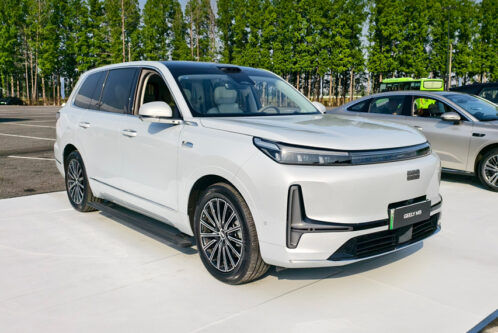
Visually, the Galaxy M9 helps its case. It has a handsome, confident look without being too strange. The front end is broad and clean, the body has enough mass to feel expensive, and the overall stance gives it real road presence.
It does not look like a budget large SUV. It looks like something that was designed to stand beside China’s new wave of premium family SUVs, and that gives it a certain appeal.
Of course, there are big questions.
Would Proton want to bring in something this large? Would a right-hand-drive version exist? Would it be sold under Proton, e.MAS, or left purely as a Proton?
Would Malaysian buyers accept a six-seat PHEV SUV from Proton at RM180k? And perhaps most importantly, would Proton be able to price it aggressively enough after local taxes, homologation and equipment changes?
Those are all unanswered questions for now.
But as a product idea, the Galaxy M9 is fascinating.
Proton already has the X90 as its current large family SUV, but the M9 plays in a very different space. It is larger, more premium, more electrified and more lounge-like. If the e.MAS brand is meant to represent Proton’s new-energy future, a vehicle like this would make a very strong flagship.
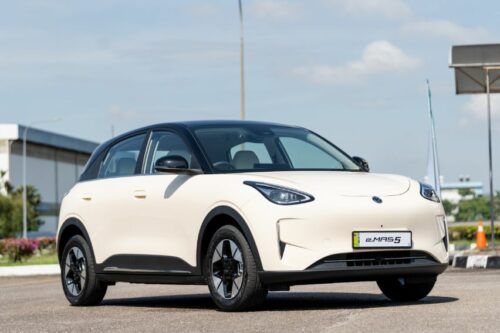
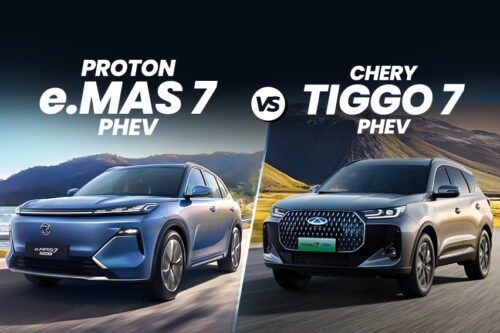
The e.MAS 7 can cover the electric SUV space. The e.MAS 5 can target affordable EV buyers. The e.MAS 7 PHEV can act as the bridge for Malaysians who want electrification without giving up petrol convenience.
But an e.MAS 9?
That would be the statement car. Maybe perhaps even fit enough for a Malaysian Prime Minister.
A large six-seat PHEV SUV, priced properly, with enough power to feel special, enough comfort to justify the badge, and enough practicality to make sense for Malaysian families.
It would not be a volume seller like a Saga or even an X50, but it could do something else. It could make people look at Proton’s electrified future with a different kind of seriousness.
At RM150k to RM180k, the question is not whether the idea is crazy.
The question is whether Proton and Geely are brave enough to try it.
Also Read: What’s next for Proton e.MAS? Geely battery roadmap hints at faster charging and longer range

-
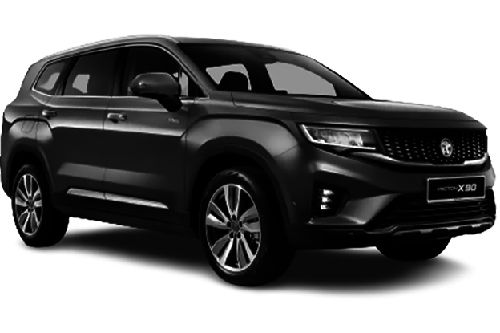
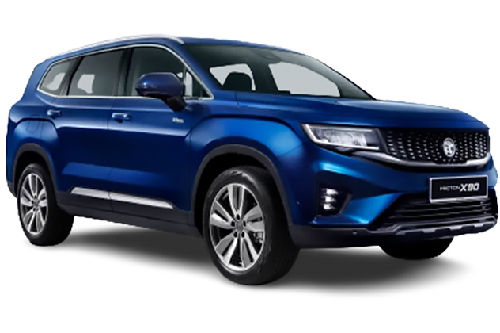
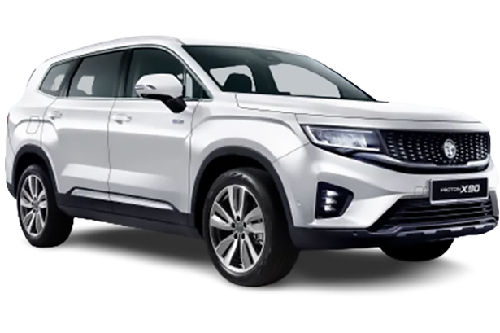
Explore Proton X90
-

Proton X90 Related Stories
- News
- Featured Stories
- Expert Review
-
 Proton’s April 2026 sales revealed - Saga & X50 lead, e.MAS 7 tops Malaysia’s PHEV charts
KUALA LUMPUR: Proton has revealed the sales numbers for April 2026. During the first month of the second quarter, the...
Read MoreSippi Vig, May 06, 2026 -
Proton Q1 2026 sales hit 22-year high, e.MAS 5 leads EV charge, X90 and S70 gain momentum
KUALA LUMPUR: Proton wrapped up March 2026 with another strong month, pushing its first-quarter tally to the brand’s best Q1...
Read MoreAdam Aubrey, Apr 03, 2026 -
Proton rolls out ‘Raya Stylo’ service campaign, offers free vehicle inspection and gold bar rewards
KUALA LUMPUR: As Hari Raya approaches, Proton has launched a new ‘Raya Stylo’ campaign to promote safe and smooth balik...
Read MoreSippi Vig, Mar 19, 2026

-
Proton X90: Old vs New: What’s changed in the 2026 update?
Proton introduced the X90 as its first electrified vehicle in 2023, bringing 48V mild hybrid tech, premium features and strong...
Read MoreSippi Vig, Mar 23, 2026 -
Jetour VT9 vs Proton X90: Spec-to-spec comparison
The 7-seater SUV is a go-to choice for families looking for comfort, space, and practicality without sacrificing style and performance....
Read MoreSippi Vig, May 15, 2025 -
Proton X90: Is it the best 7-seater SUV under RM 150k?
KUALA LUMPUR: A big brother to the X50 and X70, the Proton X90 is a seven-seater SUV that has been...
Read MoreSippi Vig, Mar 21, 2025
-
Review: 2024 Proton X90 Premium - The ultimate local 7-seater family SUV?
Embarking on a journey with the Proton X90 Premium, especially as we edge closer to the festive season of Hari...
Read MoreAdam Aubrey, Mar 07, 2024
Proton Car Models
-

Proton S70 -
Proton Iriz -
Proton Persona -
Proton X90 -
Proton e.MAS 7 -
Proton X70 -
Proton e.MAS 5 -
Proton X50 -
Proton Saga -
Proton e.MAS 7 PHEV
Don't Miss
-
Chery Malaysia turns three: anniversary deals from RM80,800 and a PHEV battery warranty that might surprise you
-
Proton’s April 2026 sales revealed - Saga & X50 lead, e.MAS 7 tops Malaysia’s PHEV charts
-
Geely Galaxy M9 as Proton e.MAS 9? Can this from RM150k six-seat PHEV SUV idea make any sense?
-
Proton Q1 2026 sales hit 22-year high, e.MAS 5 leads EV charge, X90 and S70 gain momentum
-
Proton rolls out ‘Raya Stylo’ service campaign, offers free vehicle inspection and gold bar rewards
KLIMS 2026


Malaysia Autoshow
Trending & Fresh Updates
- Latest
- Popular
-

-
-
-
-
-
-
-
-
-
Electric Car: A comprehensive buying guidePurva Jain, Jul 01, 2024
-
Must watch automotive movies for enthusiastsPurva Jain, Feb 21, 2024
-
Car Rust-proofing 101: All you need to knowPurva Jain, Feb 15, 2024


You might also be interested in
- News
- Featured Stories

Proton Featured Cars
- Latest
- Popular
-
Proton e.MAS 7 PHEVRM 109,800 - 129,800 OTR Price Kuala LumpurEMI : RM 1,282 x 84Write a Review VIEW JUNE OFFERS
-
Proton X70RM 99,800 - 112,800 OTR Price Kuala LumpurEMI : RM 1,165 x 844.18 (80 Reviews) VIEW JUNE OFFERS
-
Proton SagaRM 38,990 - 49,990 OTR Price Kuala LumpurEMI : RM 455 x 844.23 (79 Reviews) VIEW JUNE OFFERS
-
Proton e.MAS 5RM 59,800 - 72,800 OTR Price Kuala LumpurEMI : RM 698 x 844.5 (2 Reviews) VIEW JUNE OFFERS
-
Proton X50RM 85,800 - 109,300 OTR Price Kuala LumpurEMI : RM 1,002 x 844.26 (71 Reviews) VIEW JUNE OFFERS
-
Proton S70RM 68,800 - 89,800 OTR Price Kuala LumpurEMI : RM 803 x 843.97 (30 Reviews) VIEW JUNE OFFERS
-
-
Proton PersonaRM 47,800 - 58,300 OTR Price Kuala LumpurEMI : RM 558 x 844.15 (75 Reviews) VIEW JUNE OFFERS
-
Proton e.MAS 7RM 103,800 - 119,800 OTR Price Kuala LumpurEMI : RM 1,212 x 844.19 (16 Reviews) VIEW JUNE OFFERS
-
Proton X70RM 99,800 - 112,800 OTR Price Kuala LumpurEMI : RM 1,165 x 844.18 (80 Reviews) VIEW JUNE OFFERS
Latest Proton X90 Car Videos on Zigwheels

-
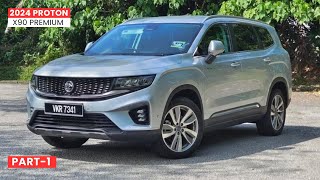
2024 Proton X90 Premium Part-319 Mar, 2024 .
-
2024 Proton X90 Premium Part-219 Mar, 2024 .
-
2024 Proton X90 Premium Part-119 Mar, 2024 .
Compare & Recommended
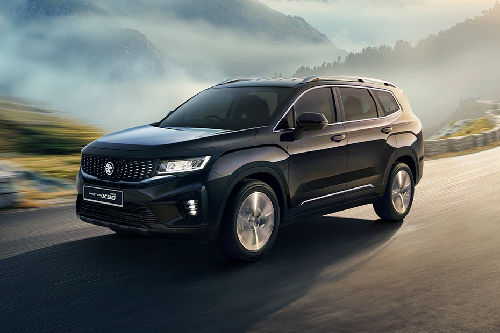
Proton X90
RM 106,800 - 122,800
Proton X90 Price
|
|
|
|
|
|
Seating Capacity
7
|
7
|
5
|
5
|
5
|
|
Fuel Type
Petrol
|
Petrol
|
Petrol
|
Electric
|
Petrol
|
|
Engine
1499
|
1496
|
1199
|
-
|
1999
|
|
Power
178
|
104
|
110
|
174
|
147
|
|
Torque
290 Nm
|
136 Nm
|
205 Nm
|
280 Nm
|
180 Nm
|
|
Transmission Type
Dual Clutch
|
Automatic
|
Automatic
|
Automatic
|
CVT
|
|
Ground Clearance
-
|
220 mm
|
-
|
161 mm
|
-
|
|
|
Trending SUV
- Latest
- Upcoming
- Popular
-
Lexus LXRM 1.54 - 1.72 Million OTR Price Kuala LumpurEMI : RM 17,997 x 844.48 (21 Reviews) VIEW JUNE OFFERS
-
GWM Tank 300 HEVRM 259,800 OTR Price Kuala LumpurEMI : RM 3,035 x 84Write a Review VIEW JUNE OFFERS
-
Denza B8RM 458,800 - 518,800 OTR Price Kuala LumpurEMI : RM 5,361 x 84Write a Review VIEW JUNE OFFERS
-
Toyota Yaris CrossRM 99,900 - 109,900 OTR Price Kuala LumpurEMI : RM 1,167 x 844 (1 Reviews) VIEW JUNE OFFERS
-
Mitsubishi XForceRM 109,980 - 119,980 OTR Price Kuala LumpurEMI : RM 1,285 x 84Write a Review VIEW JUNE OFFERS
-

-
Peugeot 3008RM 138,000 OTR Price Kuala LumpurEMI : RM 1,612 x 844.35 (23 Reviews) VIEW JUNE OFFERS
-
Toyota Corolla CrossRM 130,900 - 146,000 OTR Price Kuala LumpurEMI : RM 1,529 x 844.26 (47 Reviews) VIEW JUNE OFFERS
-
Toyota RushRM 93,000 - 97,000 OTR Price Kuala LumpurEMI : RM 1,086 x 844.27 (61 Reviews) VIEW JUNE OFFERS
-
Perodua AtivaRM 62,500 - 73,400 OTR Price Kuala LumpurEMI : RM 730 x 844.17 (46 Reviews) VIEW JUNE OFFERS
-
Mazda CX-5RM 143,300 - 187,200 OTR Price Kuala LumpurEMI : RM 1,674 x 844.36 (65 Reviews) VIEW JUNE OFFERS
-
Toyota Yaris CrossRM 99,900 - 109,900 OTR Price Kuala LumpurEMI : RM 1,167 x 844 (1 Reviews) VIEW JUNE OFFERS