2026 GWM WEY G9 HEV Review: The Boss might actually enjoy driving this one
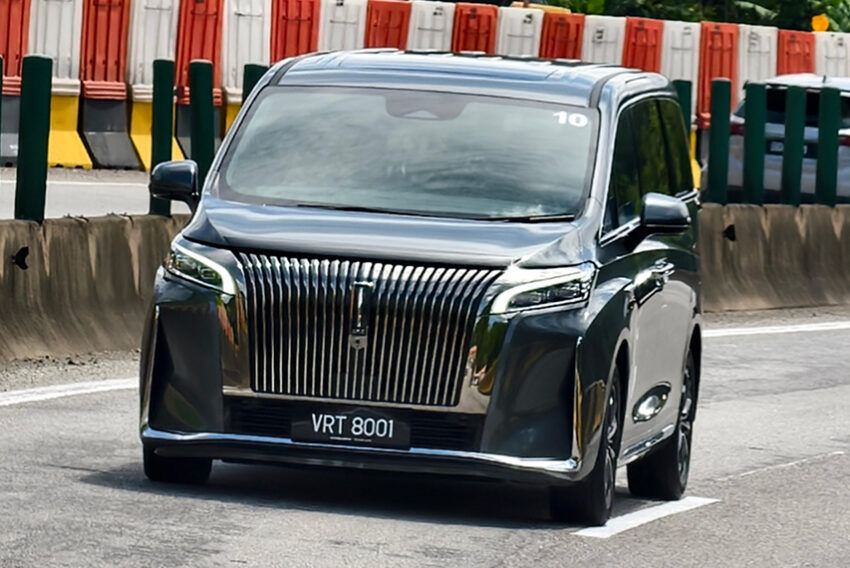
KUALA LUMPUR: There's something rather amusing about a seven-seater luxury MPV having 782 Nm of torque. That's a serious amount of twisting force, the kind of number that makes you wonder whether the passengers might need to hold on to their drinks every time you put your foot down.
KEY TAKEAWAYS
Does the GWM WEY G9 HEV need to be plugged in?
No. The HEV is a self-charging hybrid that uses its petrol engine and regenerative braking to replenish the battery. Unlike the PHEV, there's no provision for external charging, so owners can simply refuel it like a conventional petrol vehicle.Is the GWM WEY G9 HEV powerful?
With 358 PS and 782 Nm, it certainly has impressive specifications. Real-world acceleration is decent and more than adequate for a luxury MPV, although it feels less forceful than the numbers might suggest.What's the difference between the G9 HEV and PHEV?
The HEV has a larger 2.0-litre turbocharged petrol engine but a much smaller 1.67 kWh battery. The PHEV uses a 1.5-litre turbocharged engine with a 44.2 kWh rechargeable battery, allowing electric-only driving and stronger acceleration. The HEV is also RM20,000 cheaper.So when GWM handed the media keys to the new WEY G9 HEV for a drive around Karak and Genting Highlands area, I was rather looking forward to experiencing all that muscle.
Well, after about an hour behind the wheel, I can tell you that the acceleration wasn't quite what I expected. But strangely enough, that wasn't what stuck with me after the drive.
What surprised me was how genuinely pleasant this enormous MPV was to drive, particularly when you consider that the G9 is very clearly designed to make life wonderful for the people sitting behind the driver.
And that makes this new HEV version rather interesting.
Also Read: GWM Malaysia exports over 1100 G9 MPVs, local assembly crosses 10,000-unit milestone
Same luxury, different approach
The GWM WEY G9 isn't exactly a stranger to Malaysia anymore. We've already been introduced to the plug-in hybrid version, with its business-class-inspired seating arrangement and enough electronic conveniences to make a gadget enthusiast very happy.
Now GWM has introduced the WEY G9 Hi4 HEV, priced at RM249,800, making it RM20,000 cheaper than its plug-in hybrid sibling.
From the outside, you'd be hard-pressed to tell them apart. It still has that enormous chrome grille, imposing proportions and the sort of road presence that makes smaller cars look like they've accidentally wandered into the wrong parking bay. At 5,050 mm long and nearly two metres wide, this is not something you'd casually squeeze into a tight parking spot at an older shopping mall.
But the biggest difference is underneath. Instead of the PHEV's large rechargeable battery, the HEV uses a conventional self-charging hybrid system.
That means no plugging in, no wallbox installation and no wondering whether the charging station at your destination is working. Just fill it with petrol and drive, while the hybrid system takes care of the battery.
It's an appealing idea, particularly for people who want the benefits of hybrid technology without having to think about charging. And crucially, GWM hasn't turned the HEV into some stripped-down version of the G9 just to make it cheaper. As we'll discover later, most of the things that made the PHEV feel luxurious are still here.
782 Nm sounds ridiculous. So why doesn't it feel that way?
Let's start with the interesting bit. While the G9 PHEV uses a 1.5-litre turbocharged petrol engine, the HEV actually gets a larger 2.0-litre turbocharged four-cylinder.
Like the PHEV, it also has two electric motors, one at the front and another at the rear, giving it all-wheel drive through GWM's Hi4 hybrid system. Combined output stands at 358 PS and 782 Nm, with power managed through a four-speed Dedicated Hybrid Transmission.
Now, 782 Nm is quite a number, especially for something designed primarily to transport seven people in comfort. Naturally, I expected the G9 to launch forward with the sort of enthusiasm usually reserved for something considerably smaller and sportier. But when I pressed the accelerator, the response was rather more civilised than anticipated.
Don't misunderstand me, the G9 HEV is not slow. Acceleration is actually quite decent, and there's enough power to move this enormous MPV around without feeling like you're asking too much of the engine.
It's just that the acceleration doesn't have the punch I was expecting from those numbers. Instead of a dramatic shove into the seat, the power arrives in a more progressive manner, which is perfectly acceptable for a luxury MPV, even if it doesn't quite live up to the expectations created by that enormous torque figure.
Part of that could simply be down to weight. Even without the PHEV's enormous battery, the HEV still weighs 2,550 kg, which is two and a half tonnes of vehicle to get moving.
Then there's the hybrid battery itself. The HEV uses a relatively small 1.67 kWh battery, compared with the PHEV's 44.2 kWh unit. A smaller battery may limit how long strong electric assistance can be sustained, although battery capacity alone doesn't tell us the full story.
The system's power management, electrical output and transmission calibration also play a role, while the quoted combined torque figure doesn't necessarily represent the amount continuously available at the wheels.
Interestingly, the PHEV is considerably quicker, reaching 100 km/h in a claimed 5.7 seconds, compared with 7.5 seconds for the HEV. The PHEV also produces more combined power at 442 PS, despite having a lower quoted torque figure.
So perhaps the expectations created by the HEV's numbers are a little misleading. The performance is certainly sufficient for a vehicle of this nature, but don't expect fireworks every time you touch the accelerator.
Which brings me to something I liked considerably more.
It's actually quite nice to drive
Usually, with a luxury MPV this large, you expect the driving experience to be something you tolerate rather than enjoy. After all, the important people are supposed to be sitting in the back, enjoying their massage chairs while somebody else deals with traffic.
But the G9 HEV is surprisingly agreeable from behind the steering wheel, and our route around Karak and Genting Highlands provided a decent opportunity to find out just how well it manages its considerable size.
For starters, the steering feels quite decent. It's not going to deliver sports-car levels of communication, obviously, but there's enough feedback and accuracy to make placing the vehicle through corners feel natural.
The handling is also better than I expected, with the G9 responding to directional changes without feeling overly clumsy or reluctant. There's body movement, naturally, but not to the point where you feel as though the vehicle is constantly trying to catch up with what the steering wheel is doing.
The suspension deserves some credit here, too. One thing I've noticed with certain Chinese vehicles is that their manufacturers sometimes seem to confuse comfort with softness.
The suspension absorbs a bump beautifully, but the car then spends the next few moments gently bobbing up and down like a boat. It's comfortable initially, but not necessarily well controlled, especially when you're driving along a winding road with one uneven section after another.
Thankfully, the G9 doesn't seem to fall into that trap. Its suspension does a good job of absorbing imperfections in the road while keeping unwanted body movement reasonably well contained.
The G9 uses MacPherson struts at the front and a multi-link setup at the rear, together with Frequency Response Dampers. These dampers are designed to respond differently depending on the type and frequency of suspension movement, helping the vehicle balance ride comfort with body control.
Judging from my brief experience, the suspension engineers have done a respectable job. The G9 manages to feel soft enough to keep its passengers happy, but not so soft that the driver starts questioning their life choices every time the road gets twisty.
Would I describe it as sporty? Absolutely not. But for a vehicle of this size and purpose, it's surprisingly composed, and I certainly wouldn't mind being the person driving it.
A useful trick when coming down Genting
Another feature I particularly appreciated was the adjustable regenerative braking. Like other hybrids, the G9 can recover some energy when slowing down, using its electric motors to help replenish the battery.
But what I liked was being able to select a stronger regenerative braking setting, which proved useful during the downhill sections of our Genting drive.
Anyone familiar with the road knows that it's not simply a matter of pointing the vehicle downhill and letting gravity do the work. There are plenty of corners and steep sections where controlling your speed becomes important, especially in something weighing over 2.5 tonnes.
With stronger regeneration selected, the electric motors can provide additional deceleration, reducing how frequently you need to rely on the conventional brakes for smaller reductions in speed.
Of course, the G9's small hybrid battery means regenerative braking has its limits, particularly once the battery approaches its allowable charge level.
You still need the conventional braking system, especially during prolonged descents, and it's certainly not a substitute for driving appropriately on a steep mountain road. Nevertheless, I found this to be one of those hybrid features that offers genuine everyday usefulness rather than simply looking impressive on a specification sheet.
The second row is still the place to be
Now, having spent all this time praising the driving experience, I should probably point out that the driver's seat still isn't the best seat in the G9. That honour belongs to the second row, and it's not particularly difficult to understand why.
You get two individual captain's chairs with Zero Gravity functionality, electric adjustments, extendable leg rests, ventilation and a 10-point massage system, all wrapped in Nappa leather.
There are also foldable tray tables and window sunshades, making the second row feel more like a mobile lounge than a conventional passenger compartment. It's the sort of place where you'd be perfectly happy getting caught in a traffic jam, provided someone else is driving.
Recline the seat, extend the leg rest and switch on the massage function, and suddenly the Federal Highway on a Friday evening might not seem quite so dreadful.
The G9 also comes with a 21-speaker sound system, active noise cancellation, acoustic glazing and three-zone climate control. Up front, there's a 14.6-inch infotainment touchscreen, a 12.3-inch digital instrument display, head-up display, wireless Apple CarPlay and Android Auto, and a 50W wireless phone charger. Even the driver gets a massage function, which is rather thoughtful considering they're the one doing all the work.
The encouraging thing is that practically all the equipment that made the PHEV feel luxurious has been retained. What's missing? Well, the HEV doesn't get the PHEV's built-in refrigerator or its Vehicle-to-Load function, which allows you to power external appliances using the vehicle.
Personally, I'm not particularly bothered by either omission. Sure, having a refrigerator built into your MPV sounds fancy, especially when you're showing the car to your friends, and V2L could be useful if you regularly go camping or need to power electrical equipment.
But for most everyday use, both are more like party tricks than essential equipment. I'd much rather have comfortable seats and a properly sorted suspension, and thankfully, the HEV hasn't sacrificed either.
The third row is good too, but there's one problem
Another pleasant aspect of the G9 is its third-row accommodation. Unlike some seven-seaters where the final row feels like somewhere you'd send the family member you like the least, the G9 offers genuinely comfortable and spacious seating right at the back.
Its 3,085 mm wheelbase certainly helps, giving GWM plenty of room to work with. So if you regularly carry more than four or five people, the third row is actually usable without making everyone feel miserable. It's like you're seating in the back of a regular SUV.
There is, however, a catch, and that's boot space. With all seven seats in place, the G9 offers just 233 litres of luggage capacity, which isn't particularly generous when you consider how enormous this vehicle is.
The passengers may have plenty of room to stretch out, but their luggage might not be quite so fortunate. For a family heading out on holiday with all seven seats occupied, you'll probably need to be selective about what you bring along.
Of course, folding the rear seats opens up considerably more room, with capacity reaching up to 1,725 litres. But that doesn't help much when you've got seven people who all need somewhere to sit. It's one of the few practical compromises worth considering, particularly for larger families planning to use the G9 for frequent interstate journeys.
Is the HEV actually the G9 to buy?
This is where things become a little more interesting. At RM249,800, the G9 HEV costs RM20,000 less than the PHEV, yet retains most of the equipment and passenger comfort features. It also saves you the trouble of plugging in, which might be a bigger advantage for some Malaysian buyers than having a large battery and an electric-only driving mode.
But I wouldn't automatically say the HEV is the better purchase. If you have home charging and your daily driving falls comfortably within the PHEV's electric range, the plug-in hybrid could offer a very different ownership experience.
Its claimed 170 km NEDC electric range means many daily journeys could potentially be completed without using much petrol, provided you keep it charged regularly. It's also significantly quicker, which might appeal to buyers who want a little more excitement from their luxury MPV.
The HEV, meanwhile, is arguably the simpler proposition. You get in, drive, fill up when necessary and let the hybrid system take care of everything else. GWM quotes fuel consumption of 6.5 litres per 100 km and a combined driving range of 845 km under the NEDC test cycle, which are fairly attractive figures for something this large and heavy.
However, an hour around Genting Highlands isn't enough to determine what kind of fuel consumption owners can realistically expect. That's something I'd be particularly interested in exploring during a longer test, especially when you consider that this vehicle weighs 2.55 tonnes.
Hybrid technology can do wonders for efficiency, but there's still an enormous amount of metal, glass and leather being moved around.
Ultimately, the better choice will probably depend more on how you intend to use the vehicle. If you can make proper use of the PHEV's electric range, the extra RM20,000 could be worthwhile. If charging isn't convenient, the HEV gives you most of the same luxury experience without adding another task to your daily routine.
First impressions: A pleasant surprise, just not the one I expected
I'll admit that I went into this media drive with a rather specific expectation. With 358 PS and 782 Nm on tap, I thought the G9 HEV's performance would be the main talking point.
It wasn't, and not because the car is slow or lacking in power. Rather, its acceleration feels considerably less dramatic than the numbers suggest, which is slightly disappointing if you've been getting excited over the specification sheet.
Instead, what impressed me was the way the G9 goes about the more ordinary business of driving. The ride is comfortable without being excessively soft, the steering is decent, the handling is surprisingly composed, and the suspension does a good job of managing a very large and heavy vehicle.
These might not be the things that attract the most attention in a showroom, but they're certainly qualities that owners and passengers can appreciate every time they travel.
And when you eventually climb into the second row, you're reminded that the G9 hasn't forgotten its primary purpose. It's still a very comfortable luxury MPV, with an impressive collection of equipment and plenty of space for passengers.
Yes, the boot could be bigger, and yes, the performance doesn't quite have the excitement I expected. But at RM249,800, there's an awful lot of vehicle here.
Of course, a one-hour media drive tells us very little about long-term reliability, ownership costs or how well the vehicle will age. Those remain important questions, particularly for buyers considering something outside their usual choices. But based purely on this first encounter, the G9 HEV has made a rather positive impression.
The funny thing is, for a vehicle that puts so much effort into making the people in the back comfortable, I found myself enjoying the driver's seat more than I expected. And considering what this enormous MPV was designed to do, that's probably the biggest surprise of all.
Also Read: GWM Ora 5 bookings open in Malaysia, Estimated price from RM 115k
- KEY TAKEAWAYS
- Same luxury, different approach
- 782 Nm sounds ridiculous. So why doesn't it feel that way?
- It's actually quite nice to drive
- A useful trick when coming down Genting
- The second row is still the place to be
- The third row is good too, but there's one problem
- Is the HEV actually the G9 to buy?
- First impressions: A pleasant surprise, just not the one I expected

-
Explore GWM Wey G9
-


GWM Wey G9 Related Stories
- News
-
 Weekly wrap-up: New Honda City Hatchback, WEY G9 HEV launched in Malaysia, New Kia Sportage teased and more
The previous seven days were pretty busy in the world of cars. The Malaysian automotive industry saw the launch of...
Read MoreSippi Vig, Oct 23, 2026 -
GWM Malaysia exports over 1100 G9 MPVs, local assembly crosses 10,000-unit milestone
KUALA LUMPUR: GWM Malaysia has exported more than 1,100 locally assembled WEY G9 MPVs to Thailand and Indonesia, marking a...
Read MoreSippi Vig, Oct 21, 2026 -
GWM WEY G9 HEV launched in Malaysia, here’s all you need to know
KUALA LUMPUR: GWM Malaysia has expanded the WEY G9 luxury MPV lineup, with the addition of a new hybrid variant....
Read MoreSippi Vig, Oct 19, 2026

GWM Car Models
-

GWM Ora Good Cat -
GWM Haval H6 HEV -
GWM Ora 07 -
GWM Tank 300 -
GWM Tank 500 -
GWM Wey G9 -
GWM Tank 300 HEV



Don't Miss
-
2026 GWM WEY G9 HEV Review: The Boss might actually enjoy driving this one
-
New Denza 4S centre opens in Balakong
-
Weekly wrap-up: New Honda City Hatchback, WEY G9 HEV launched in Malaysia, New Kia Sportage teased and more
-
GWM Malaysia exports over 1100 G9 MPVs, local assembly crosses 10,000-unit milestone
-
GWM WEY G9 HEV launched in Malaysia, here’s all you need to know
KLIMS 2026


Malaysia Autoshow
Trending & Fresh Updates
- Latest
- Popular
-

-
-
-
-
-
-
-
-
-
Electric Car: A comprehensive buying guidePurva Jain, Jul 01, 2024
-
Must watch automotive movies for enthusiastsPurva Jain, Feb 21, 2024
-
Car Rust-proofing 101: All you need to knowPurva Jain, Feb 15, 2024



You might also be interested in
- News
- Featured Stories

-
-
-
-
Top 10 best-selling EVs in Malaysia for 2025Sippi Vig, Dec 26, 2025
-
-
Top car launches of 2025 in MalaysiaSippi Vig, Dec 17, 2025

GWM Featured Cars
- Latest
- Upcoming
- Popular
-
GWM Tank 300 HEVRM 259,800 OTR Price Sg BesiEMI : RM 3,035 x 84Write a Review VIEW OCTOBER OFFERS
-
GWM Ora Good CatRM 109,800 - 119,800 OTR Price Sg BesiEMI : RM 1,282 x 844.22 (9 Reviews) VIEW OCTOBER OFFERS

-
GWM Ora Good CatRM 109,800 - 119,800 OTR Price Sg BesiEMI : RM 1,282 x 844.22 (9 Reviews) VIEW OCTOBER OFFERS
-
GWM Haval H6 HEVRM 139,800 OTR Price Sg BesiEMI : RM 1,633 x 844.29 (7 Reviews) VIEW OCTOBER OFFERS
-
GWM Ora 07RM 169,800 - 189,800 OTR Price Sg BesiEMI : RM 1,983 x 844.17 (6 Reviews) VIEW OCTOBER OFFERS
-
-
Latest GWM Wey G9 Car Videos on Zigwheels

-
First Drive GWM WEY G9, MPV Premium Paling Berbaloi Sekarang?11 May, 2026 .
Compare & Recommended
GWM Wey G9
RM 249,800 - 269,800
Write a Review
Wey G9 Price
|
|
|

|
|
|
Ground Clearance
155 mm
|
172 mm
|
-
|
-
|
-
|
|
Seating Capacity
7
|
11
|
8
|
7
|
7
|
|
Fuel Type
Petrol
|
Diesel
|
Petrol
|
Electric
|
Electric
|
|
Engine
1998
|
2151
|
1987
|
-
|
-
|
|
Power
436
|
199
|
172
|
241
|
309
|
|
Torque
782 Nm
|
440 Nm
|
205 Nm
|
350 Nm
|
360 Nm
|
|
Transmission Type
DHT
|
Automatic
|
CVT
|
Automatic
|
Automatic
|
|
|
Trending MPV
- Latest
- Upcoming
- Popular
-
GWM Wey G9RM 249,800 - 269,800 OTR Price Sg BesiEMI : RM 2,918 x 84Write a Review VIEW OCTOBER OFFERS
-
Hyundai StargazerRM 99,800 - 121,800 OTR Price Sg BesiEMI : RM 1,165 x 84Write a Review VIEW OCTOBER OFFERS
-
XPENG X9 2026RM 279,888 - 333,888 OTR Price Sg BesiEMI : RM 3,270 x 844.33 (3 Reviews) VIEW OCTOBER OFFERS
-
Nissan Serena e-PowerRM 154,800 - 179,800 OTR Price Sg BesiEMI : RM 1,808 x 84Write a Review VIEW OCTOBER OFFERS
-
Kia CarnivalRM 188,888 - 248,888 OTR Price Sg BesiEMI : RM 2,207 x 844.31 (32 Reviews) VIEW OCTOBER OFFERS
-
Toyota Vellfire HEVRM 549,900 OTR Price Sg BesiEMI : RM 6,426 x 845 (1 Reviews) VIEW OCTOBER OFFERS
-
-
Perodua AlzaRM 62,500 - 75,500 OTR Price Sg BesiEMI : RM 730 x 844.19 (78 Reviews) VIEW OCTOBER OFFERS
-
Nissan SerenaRM 149,888 - 169,888 OTR Price Sg BesiEMI : RM 1,751 x 844.24 (51 Reviews) VIEW OCTOBER OFFERS
-
Toyota Innova ZenixRM 165,000 - 202,000 OTR Price Sg BesiEMI : RM 1,928 x 844.37 (19 Reviews) VIEW OCTOBER OFFERS
-
Toyota InnovaRM 138,880 - 146,880 OTR Price Sg BesiEMI : RM 1,622 x 844.31 (67 Reviews) VIEW OCTOBER OFFERS
-