Xiaomi SkyNomad revealed: a properly boxy seven-seat EREV SUV, and Malaysia can't have it yet
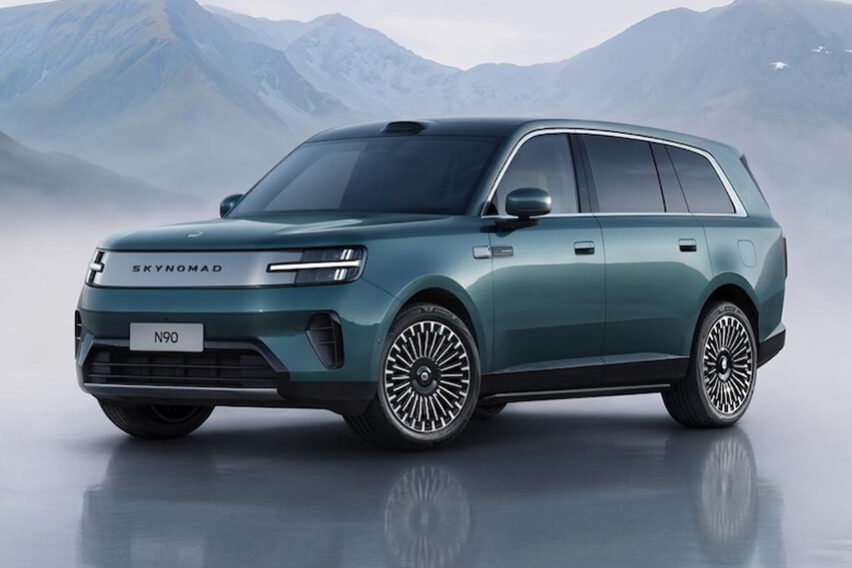
KUALA LUMPUR: Everyone assumed Xiaomi's third act would be another slippery, low-slung EV. Another SU7 derivative, maybe a coupe version of the YU7, something with a drag coefficient it could brag about on stage.
KEY TAKEAWAYS
Is the Xiaomi SkyNomad coming to Malaysia?
Not yet. Xiaomi does not currently sell cars in Malaysia. The company has said its global expansion starts from 2027, with right-hand-drive markets targeted for around the first half of 2028. It has also advertised for a government relations role tied to its automotive business in Malaysia, which suggests groundwork is being laid, but nothing has been confirmed.Is the Xiaomi SkyNomad a full EV?
No. It is an extended-range EV, meaning it drives on electric power with a petrol engine on board acting purely as a generator. That makes it a different proposition from the Xiaomi SU7 and YU7, which are pure electric.Instead, Xiaomi has spent the last stretch quietly building a big, upright, unapologetically square family SUV, and it looks better than it has any right to.
It's called the SkyNomad, and it launches as a separate series sitting alongside Xiaomi's pure EVs.
Two variants opened for pre-orders in China on 30 July 2026: the SkyNomad N90 Max, a seven-seat flagship at RMB 299,900, and the SkyNomad N70 Max, a five-seat all-wheel-drive version at RMB 259,900.
Straight conversion puts those at roughly RM181,000 and RM157,000 respectively, though that's before any duties, taxes or the pricing gymnastics that come with importing a car into Malaysia.
An RMB 1,000 deposit locks in a build slot. The official launch and first deliveries are set for September, with lower Pro and standard variants to follow, which almost certainly means the numbers you're reading now are the ceiling, not the floor.
The boxy thing is not a styling choice, it's the entire brief
Xiaomi's line is "form follows function", which is the sort of phrase every carmaker uses and almost none actually commit to. Here it seems to hold up.
The N90 Max measures 5,285 mm long, 1,998 mm wide and 1,825 mm tall on a 3,080 mm wheelbase. The N70 Max comes in at 4,960 mm x 1,998 mm x 1,765 mm with a 2,950 mm wheelbase.
Those are MPV numbers wearing SUV clothing, and the flat roofline, straight waistline and high sill exist because the interior needed them, not because a designer sketched them.
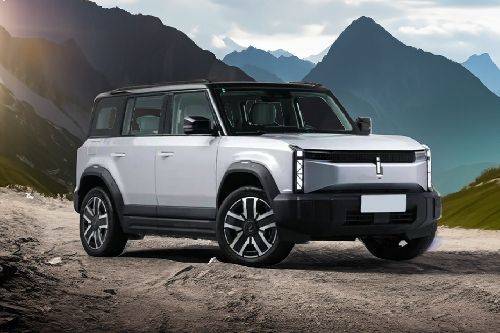
The details are where it gets genuinely likeable. Rounded-rectangle motifs repeat across the headlights, taillights, door handles and side cameras. The headlights are described as dragonfly-shaped, the taillight is an inverted U, and the whole thing manages to look modern without the usual Chinese-market habit of copying a Range Rover from three angles at once.
Xiaomi claims over 140 aerodynamic tweaks and a 0.255 Cd on the N90 Max, which is respectable for a shape this square. There's an active grille as standard, smart electric doors that open by touch or voice, rear doors that swing to nearly 90 degrees, and an optional powered side step rated to 300 kg per side.
The flat floor is the actual headline
Xiaomi built a new platform, Kunlun, specifically to get rid of the steps and humps that ruin most three-row SUVs.
Up front, a five-in-one EREV unit plus integrated cooling and HVAC hardware squeezes the front cabin down to 1,265 mm. At the rear, splitting the springs and dampers frees 15 mm of wheel-arch height for third-row shoulders.
A coaxial rear drive unit liberates 145 mm of vertical space, an H-arm suspension with the air spring mounted inside the arm drops the floor another 37 mm, and relocating the battery control module inside the pack cuts floor thickness by 180 mm.
The payoff is a floor that runs flat from the front footwell all the way to the boot, with a claimed 2.95-degree slope, nearly three metres of length and over 4.4 square metres of usable flat area. Every trim gets extra-long seat rails, up to 1,938 mm on the N90 Max, with 900 mm of travel for both the second and third rows.
That opens up the party tricks. Front seats that rotate to face the second row. A four-seat zero-gravity mode. Second-row legroom stretched to 1,550 mm in "first-class" configuration. Fold the second and third rows flat and rotate the fronts and you get a 2,300 mm bed.
Fold everything and boot volume hits 1,831 L, which Xiaomi says swallows 24 twenty-inch suitcases. With all seven seats occupied, it still takes seven cases, one per passenger.
There's also a sliding cabinet-style centre console with 50 W wireless charging, a 9-litre compressor fridge and USB-C, 34 storage compartments, up to 12 accessory ports and a 6.9-inch rear control screen.
Cabin tech runs on a Snapdragon 8 Gen 3 platform with dual 5G and Wi-Fi 7, a 15,000-nit head-up display and a 25-speaker audio system. Assisted driving hardware includes 700 TOPS of compute, forward LiDAR, 4D millimetre-wave radar, and on the N90 series a rear LiDAR accurate to 2 cm.
Notably, Xiaomi's own material makes no mention of a front boot. For a car obsessed with storage, that's an odd gap.
Where the excitement cools slightly
The powertrain is the least interesting part of the car. Both Max variants use a 76 kWh battery paired with a 1.5-litre turbo range extender producing 112 kW, driving through dual motors making a combined 310 kW.
Xiaomi quotes 505 km of CLTC electric range for the N70 Max and 464 km for the N90 Max, with combined range of 1,705 km on the bigger car. Depleted-battery consumption is claimed at 6.26 L/100 km, and service intervals stretch to three years or 30,000 km.
Those range figures are strong, though CLTC is generous and real-world numbers will land lower. The bigger point is that 310 kW is merely adequate by current Chinese standards, where rivals in this money throw considerably more power at the problem.
Xiaomi it seems has clearly optimised for smoothness and efficiency rather than a drag-race headline, which is arguably the correct call for a seven-seater, but it does mean the brand's performance halo doesn't carry over here.
Chassis hardware is solid: double wishbones up front, an H-arm multi-link rear, five-stage air springs and continuously variable damping. Braking from 100 km/h is quoted at 38.57 m, and the turning circle is a 5.95 m radius despite the length.
Safety gets the full treatment. High-strength steel and aluminium make up 90.4% of the N90 Max body, with 2,200 MPa steel at 16 critical points and a roll cage rated to nearly 14 tonnes of roof crush. There are 12 airbags as standard, nine collision sensors, third-row side airbags with a 3,200 mm curtain, triple-redundant door handles, dual emergency pull handles on the tailgate, and 750 mm of emergency wading capability.
Xiaomi also demonstrated a double tyre blowout test at 160 km/h with seven occupants on board, which is a bold thing to put on a stage.
Xiaomi cars headed for Malaysia?
Nothing immediate, and that's the frustrating part. Xiaomi still doesn't sell cars in Malaysia. Its global expansion is targeted from 2027, with right-hand-drive markets flagged for around 2028, and the company has been advertising for a government relations role tied to its automotive business here, which is the sort of hiring that happens well before any showroom does.
If it does land, the SkyNomad would drop into a segment that has moved fast. Malaysian buyers shopping for a large seven-seater already have the Chery Tiggo 9, the Tiggo 8 PHEV, the GWM Wey G9, the GAC M8 PHEV and the Denza D9 as well as Zeekr 009 covering the premium EV MPV end.
None of them are EREVs, which is a powertrain type Malaysia has barely touched, and none of them do the flat-floor, sliding-everything trick the SkyNomad is built around.
So for now, it's a car to watch from a distance. Which is a shame, because of everything Xiaomi has built so far, this is the one that would actually suit how Malaysian families use a car.

KLIMS 2026


Malaysia Autoshow
Trending & Fresh Updates
- Latest
- Popular
-

-
-
-
-
-
-
-
-
-
Electric Car: A comprehensive buying guidePurva Jain, Jul 01, 2024
-
Must watch automotive movies for enthusiastsPurva Jain, Feb 21, 2024
-
Car Rust-proofing 101: All you need to knowPurva Jain, Feb 15, 2024





You might also be interested in
- News
- Featured Stories

Featured Cars
- Latest
- Upcoming
- Popular
-
 Jetour T2 i-DMRM 162,800 OTR Price Pinang Barat DayaEMI : RM 1,902 x 84Write a Review VIEW SEPTEMBER OFFERS
 -
Volvo EX30RM 198,888 - 218,888 OTR Price Pinang Barat DayaEMI : RM 2,324 x 844.33 (9 Reviews) VIEW SEPTEMBER OFFERS
-
JAECOO J5 EVRM 118,800 OTR Price Pinang Barat DayaEMI : RM 1,387 x 84Write a Review VIEW SEPTEMBER OFFERS
-
Honda WR-VRM 94,900 - 104,900 OTR Price Pinang Barat DayaEMI : RM 1,108 x 843.95 (20 Reviews) VIEW SEPTEMBER OFFERS
-
Mitsubishi TritonRM 101,980 - 159,980 OTR Price Pinang Barat DayaEMI : RM 1,191 x 844.19 (52 Reviews) VIEW SEPTEMBER OFFERS
-
Toyota Hilux ChampRM 59,000 Expected Price Pinang Barat DayaExpected Launch TBA Alert Me When Launched
-
-
-
-
-
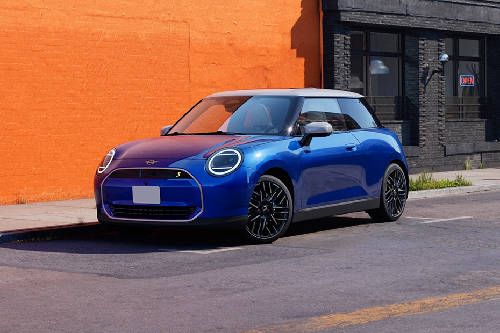
MINI ElectricRM 193,888 - 218,888 OTR Price Pinang Barat DayaEMI : RM 2,265 x 844.33 (15 Reviews) VIEW SEPTEMBER OFFERS
-
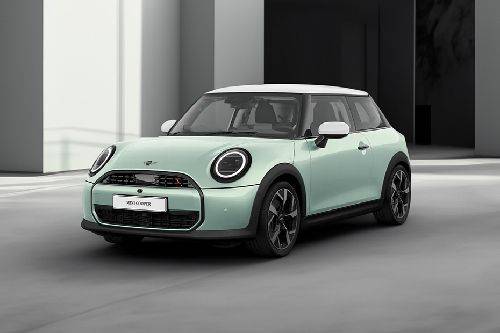
MINI 3 DoorRM 193,888 - 318,888 OTR Price Pinang Barat DayaEMI : RM 2,265 x 844.38 (26 Reviews) VIEW SEPTEMBER OFFERS
-
MINI John Cooper WorksRM 218,888 - 393,888 OTR Price Pinang Barat DayaEMI : RM 2,557 x 844.38 (13 Reviews) VIEW SEPTEMBER OFFERS
-
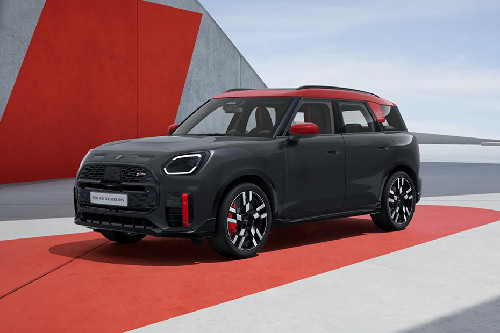
MINI Countryman ElectricRM 258,888 By Order Pinang Barat DayaEMI : RM 3,025 x 844.11 (8 Reviews) VIEW SEPTEMBER OFFERS
-
Perodua BezzaRM 34,580 - 49,980 OTR Price Pinang Barat DayaEMI : RM 404 x 844.19 (81 Reviews) VIEW SEPTEMBER OFFERS
Latest Car Videos on Zigwheels

-
Chery Tiggo 9 Review Malaysia – Is This the Best-Value 7-Seater AWD SUV?25 Aug, 2026 .
-
Jetour T1 1.5L: Tak laju, tapi tu bukan point dia | review Malaysia14 Aug, 2026 .
-
Proton e.MAS 7 PHEV Premium — the smartest car buy in Malaysia right now?25 Jun, 2026 .
-
Leapmotor B10 KL to Penang, Is This Sub-RM120k EV Enough for Everyone?11 May, 2026 .
-
First Drive GWM WEY G9, MPV Premium Paling Berbaloi Sekarang?11 May, 2026 .
-
2026 BMW i5 CKD Review Malaysia - Has BMW Built the EV for People Still Not Sold on EVs?10 Apr, 2026 .
-
Mitsubishi Xforce First Impressions Malaysia – Is This the Surprise SUV of 2026?24 Mar, 2026 .
-
2026 Perodua Traz Review – Is It Worth a Try?04 Feb, 2026 .
-
1 Tank, 3 Days, 1,200 KM… The Chery Tiggo 7 PHEV Actually Did It10 Dec, 2025 .
-
The Jaecoo J8 Might Be the Best SUV Under RM200k… Here’s Why!10 Dec, 2025 .