Omoda C7 first drive: Malaysia’s new 186 PS SUV looks sharp, but how does it ride?
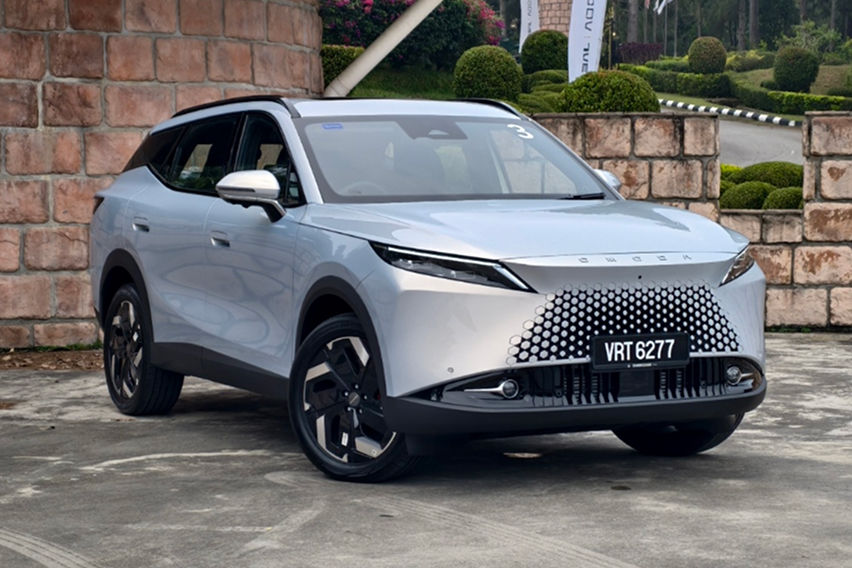
KUALA LUMPUR: I can see someone walking into an Omoda & Jaecoo showroom in Malaysia specifically to look at the Jaecoo J7, only to end up asking for the keys to the Omoda C7.
KEY TAKEAWAYS
What engine and gearbox does the Omoda C7 use?
The C7 1.6T FWD we drove uses a 1.6-litre turbocharged petrol engine producing 186 PS and 275 Nm of torque. A seven-speed Getrag wet dual-clutch transmission sends power to the front wheels. We found the performance adequate for everyday driving, although the gearbox isn’t the smoothest DCT we’ve tried.What do the Omoda C7’s hydraulic bushes and engine mounts do?
They address two different sources of vibration. The fluid-filled control-arm bushes help filter vibration coming through the suspension from the road. The two hydraulic engine mounts help limit how much vibration from the engine reaches the cabin.The J7 hasn’t suddenly stopped looking good. That upright, boxy shape is a big part of why people bought it in the first place. But you do see quite a few of them on the road now.
If you still like the idea of a J7 but would rather drive something a little less familiar, the C7 is the one likely to catch your eye.
What would make you choose it once the novelty wears off? After a first drive, I’d say the C7 makes the most sense as an SUV for someone who enjoys driving at a relaxed pace.
The power is sufficient, the gearbox works reasonably well with the engine, and the ride is good, although there’s a slight firmness to it that I wasn’t quite expecting.
Omoda has also put some effort into how the car deals with vibration, right down to the bushes in the suspension arms. That last bit is worth getting into, because “comfortable” doesn’t tell the whole story here.
Also Read: Omoda Jaecoo Malaysia tests aftersales technicians in 2026 skills competition
How does 186 PS feel in the Omoda C7?
The C7 tested here is the 1.6T FWD. Its 1.6-litre turbocharged petrol engine produces 186 PS and 275 Nm of torque, sent to the front wheels through a seven-speed Getrag wet dual-clutch transmission.
On paper, 186 PS sounds like it should give a family SUV a decent turn of speed. From behind the wheel, I’d call the performance adequate. There’s enough grunt for everyday driving, but pressing the accelerator harder doesn’t reveal some particularly exciting side to the car.
That’s fine by me. In something you’re likely to use for the school run, the drive to work and the occasional trip out of town, how the gearbox responds to your right foot is more relevant than how hard the car goes with the throttle pinned.
The engine and gearbox calibration here is okay. I’ve driven DCTs that feel a little more polished, but this pairing is more than acceptable. Neither the engine nor the transmission would be my main reason for buying the C7, and neither gave me much reason to look elsewhere.
For those keeping track of running costs, the quoted fuel consumption is 7.5 litres per 100 km on the NEDC cycle. That’s the official figure; this first drive wasn’t a fuel economy test. A week of school traffic, office commutes and a decent highway run would give a better idea of what a Malaysian owner could expect from a tank.
A good ride, though not an especially soft one
The distinction I’d make with the C7 is between how it feels when a wheel hits a rough patch and how the whole car moves through a bend. Over an uneven surface, you can feel the edge of the patch through the car. There’s a little firmness to that initial contact. It isn’t enough to make the ride uncomfortable, and on balance I thought the C7 rode well. It just isn’t quite as soft as you might imagine from all the emphasis on comfort.
A corner tells you something different. Ask the C7 to change direction and there’s a little wallow as the body moves across. That slight firmness over a bump hasn’t translated into particularly tight body control.
Take a bend at a more leisurely pace and the C7 feels much more in its element. If your idea of a good family SUV is one that encourages you to press on when the road gets interesting, I’d make sure your test drive includes a couple of changes of direction before deciding.
So where do the hardware changes come in? Start with the hydraulic control-arm bushes. A control arm helps locate the wheel as the suspension moves. Where the arm attaches to the car, a bush allows some movement while helping to isolate the body from vibration. In the C7, Omoda uses fluid-filled bushes.
The idea is to filter some of the vibration travelling from the road, through the arm and into the cabin. It’s a detail you won’t see by having a look around the showroom, but it helps explain what the engineers were trying to achieve.
Then there are the two hydraulic engine mounts. These deal with a different source of vibration: the engine itself. Their job is to support the engine while limiting how much of its movement reaches the body and, ultimately, the people sitting inside. Omoda also points to a one-piece steering knuckle, the component that carries the wheel hub and connects it to the suspension and steering. The stated aim there is to reduce road noise.
Why separate those three things? Because it’s entirely possible to filter out some vibration and still feel a bump. Equally, a hydraulic engine mount isn’t there to stop the body leaning in a corner. I couldn’t isolate the contribution of an individual bush or mount from the driver’s seat. What I could feel was the overall result: a generally comfortable SUV, a touch firm over uneven tarmac, with a little more body movement than its styling might suggest.
What’s the cabin like?
The interior makes a good first impression without any one feature having to do all the work. There’s a mix of textures and finishes across the dashboard and door panels that gives the cabin a more expensive feel.
Look and feel around lower down and you’ll find scratchier hard plastics. For me, that’s a fair description of the interior: nicely finished in the places you notice most, with more ordinary materials elsewhere.
The 15.6-inch central touchscreen is difficult to miss. It has a 2.5K display and runs on a Qualcomm Snapdragon 8155 chip, while the driver gets a separate 8.88-inch instrument display.
What I appreciate more is that Omoda has retained physical shortcuts for functions such as the air-conditioning and volume. A large screen is nice to have, but sometimes you just want to turn the sound down without interrupting the conversation you’re trying to hear.
The detail I’d change is right on top of the dashboard. The centre air vents can be adjusted left and right, but they can’t be tilted up or down. Picture getting back into the car after lunch on a hot afternoon.
You can turn up the fan, but if you want the air aimed a little lower towards your body, that adjustment simply isn’t there. The front seats are ventilated, which I’d happily have in Malaysia, but I’d still like to point the air where I want it.
There are a few useful touches for anyone who spends a fair part of the working day in their car. The 50W wireless phone charger has a ventilated pad, while the 65W USB-C port can charge a compatible laptop.
Of the two, it’s the latter I’d find particularly handy. If you’ve gone straight from one appointment to another and opened your laptop to find it nearly flat, being able to plug it into the car is more useful than another interior lighting colour.
Who does the C7 make sense for?
For a family, I’d start at the back. There are rear air vents, two USB charging ports and three individual headrests. The boot is quoted at 614 litres with the rear seats in place, expanding to 1,371 litres with the 60:40 rear seatbacks folded.
The first number is the one I’d pay more attention to. When the kids are coming along for the weekend, folding the seats to make room for luggage rather defeats the purpose. If you use a stroller, take it to the showroom and see what room is left for everyone’s bags. The C7 also comes with eight airbags and 21 driver assistance functions.
Which brings me back to that J7 buyer. Maybe you like the boxy looks, but most of your week is spent dropping the kids off, heading into work and sitting in traffic on the way home.
You’re buying a family SUV, you’d like something that still feels fresh, and you’re quite happy to take a winding road at the passengers’ preferred pace. That’s the buyer I can see giving the C7 serious thought.
My advice would be to drive it over the sort of road you use every day. Include that badly patched stretch on the way home and the bend where the kids usually tell you to slow down.
The C7 has enough power, a decent ride and useful space for a family. Whether you like how it takes those two bits of road will tell you more about living with it than another lap around the showroom.
Also Read: Jaecoo J5 EV launched in Malaysia at RM118,800 – 211 PS, 461 km range, 130 kW DC charging

-
Explore JAECOO Omoda C7
-

JAECOO Omoda C7 Related Stories
- News
- Featured Stories
-
 Omoda C7 and C7 PHEV bookings now open in Malaysia, estimated from RM160,000
KUALA LUMPUR: Omoda & Jaecoo Malaysia has started taking bookings for the all-new Omoda C7 and Omoda C7 PHEV, adding...
Read MoreAdam Aubrey, Aug 11, 2026 -
Weekly wrap-up: All-new BMW iX3 launched, Hyundai Stargazer X previewed, Omoda C7 bookings open, and more
This week was packed with one marquee event after another. From BMW launching the next-gen iX3 to Hyundai previewing the...
Read MoreSippi Vig, Aug 07, 2026 -
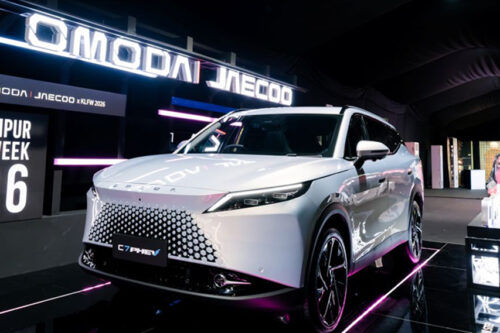
GEN-O Malaysia community launched for Omoda owners; Omoda C7 previewed
KUALA LUMPUR: Omoda | Jaecoo has launched the GEN-O Malaysia club, a lifestyle community designed to connect existing and future...
Read MoreSippi Vig, Jun 23, 2026


-
How OMODA built a clubhouse for its owners: inside GEN-O Malaysia
Walk into a car launch and this is usually what you can expect. Polite applause, a covered car, a spec...
Read MoreAdam Aubrey, Jul 01, 2026

JAECOO Car Models
-

JAECOO J7 -
JAECOO J8 -
JAECOO J7 PHEV -
JAECOO Omoda C9 -
JAECOO J5 -
JAECOO Omoda C9 PHEV -
JAECOO J5 EV


KLIMS 2026


Malaysia Autoshow
Trending & Fresh Updates
- Latest
- Popular
-

-
-
-
-
-
-
-
-
-
Electric Car: A comprehensive buying guidePurva Jain, Jul 01, 2024
-
Must watch automotive movies for enthusiastsPurva Jain, Feb 21, 2024
-
Car Rust-proofing 101: All you need to knowPurva Jain, Feb 15, 2024






You might also be interested in
- News
- Featured Stories




-
-
-
-
-
-
Top 10 best-selling EVs in Malaysia for 2025Sippi Vig, Dec 26, 2025


JAECOO Featured Cars
- Latest
- Upcoming
- Popular
-
GWM Wey G9RM 249,800 - 269,800 OTR Price Kuala LumpurEMI : RM 2,918 x 84Write a Review VIEW NOVEMBER OFFERS
-
Honda City HatchbackRM 95,900 - 112,900 OTR Price Kuala LumpurEMI : RM 1,120 x 844.24 (38 Reviews) VIEW NOVEMBER OFFERS
-
Wuling Porta EVRM 99,800 - 105,800 OTR Price Kuala LumpurEMI : RM 1,165 x 84Write a Review VIEW NOVEMBER OFFERS
-
Mazda CX-5 2026RM 168,510 - 171,510 OTR Price Kuala LumpurEMI : RM 1,969 x 844.36 (65 Reviews) VIEW NOVEMBER OFFERS
-
Mercedes Benz AMG GTRM 1.9 - 2.09 Million OTR Price Kuala LumpurEMI : RM 22,156 x 844.25 (12 Reviews) VIEW NOVEMBER OFFERS
-
MINI ElectricRM 193,888 - 218,888 OTR Price Kuala LumpurEMI : RM 2,265 x 844.33 (15 Reviews) VIEW NOVEMBER OFFERS
-
MINI 3 DoorRM 193,888 - 318,888 OTR Price Kuala LumpurEMI : RM 2,265 x 844.38 (26 Reviews) VIEW NOVEMBER OFFERS
-
MINI John Cooper WorksRM 218,888 - 393,888 OTR Price Kuala LumpurEMI : RM 2,557 x 844.38 (13 Reviews) VIEW NOVEMBER OFFERS
-
MINI Countryman ElectricRM 258,888 By Order Kuala LumpurEMI : RM 3,025 x 844.11 (8 Reviews) VIEW NOVEMBER OFFERS
-
Perodua BezzaRM 34,580 - 49,980 OTR Price Kuala LumpurEMI : RM 404 x 844.19 (81 Reviews) VIEW NOVEMBER OFFERS
Trending SUV
- Latest
- Upcoming
- Popular
-
Mazda CX-5 2026RM 168,510 - 171,510 OTR Price Kuala LumpurEMI : RM 1,969 x 844.36 (65 Reviews) VIEW NOVEMBER OFFERS
-
Jetour T2 i-DMRM 162,800 OTR Price Kuala LumpurEMI : RM 1,902 x 84Write a Review VIEW NOVEMBER OFFERS
-
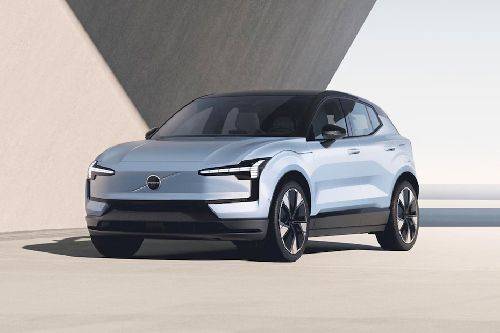
Volvo EX30RM 198,888 - 218,888 OTR Price Kuala LumpurEMI : RM 2,324 x 844.33 (9 Reviews) VIEW NOVEMBER OFFERS
-
JAECOO J5 EVRM 118,800 OTR Price Kuala LumpurEMI : RM 1,387 x 84Write a Review VIEW NOVEMBER OFFERS
-
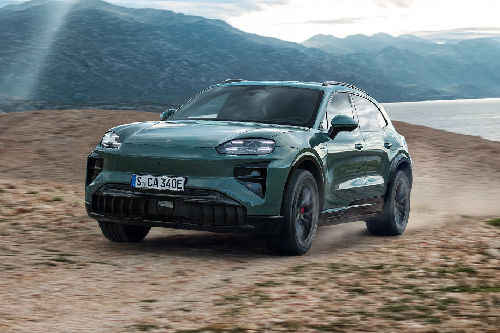
Porsche Cayenne ElectricRM 699,000 - 999,999 OTR Price Kuala LumpurEMI : RM 8,169 x 84Write a Review VIEW NOVEMBER OFFERS
-
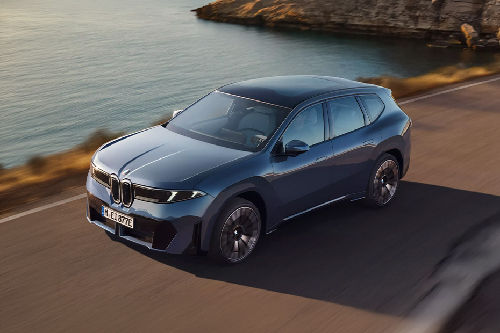
BMW iX3RM 378,800 OTR Price Kuala LumpurEMI : RM 4,426 x 844.67 (18 Reviews) VIEW NOVEMBER OFFERS
-
MINI John Cooper WorksRM 218,888 - 393,888 OTR Price Kuala LumpurEMI : RM 2,557 x 844.38 (13 Reviews) VIEW NOVEMBER OFFERS
-
Peugeot 3008RM 138,000 OTR Price Kuala LumpurEMI : RM 1,612 x 844.35 (23 Reviews) VIEW NOVEMBER OFFERS
-
Toyota Corolla CrossRM 130,900 - 146,000 OTR Price Kuala LumpurEMI : RM 1,529 x 844.26 (47 Reviews) VIEW NOVEMBER OFFERS
-
Perodua AtivaRM 62,500 - 73,400 OTR Price Kuala LumpurEMI : RM 730 x 844.17 (46 Reviews) VIEW NOVEMBER OFFERS
-
Toyota RushRM 93,000 - 97,000 OTR Price Kuala LumpurEMI : RM 1,086 x 844.27 (61 Reviews) VIEW NOVEMBER OFFERS
-
Mazda CX-5RM 143,300 - 187,200 OTR Price Kuala LumpurEMI : RM 1,674 x 844.36 (65 Reviews) VIEW NOVEMBER OFFERS
Compare
You can add 3 variants maximum*- Brand
- Model
- Variant


-
Link your google account
-
Link your facebook account