BMW iX5 goes deep on tech: two different motors, cell-to-pack battery, and more
- KEY TAKEAWAYS
- Two motors, two completely different designs
- New battery cells, and a cell-to-pack design
- Charging numbers, and the parts that don't show up in the spec sheet
- V2L, V2H, V2G: bidirectional charging in three flavours
- Heart of Joy: a control unit exclusive to the electric variants
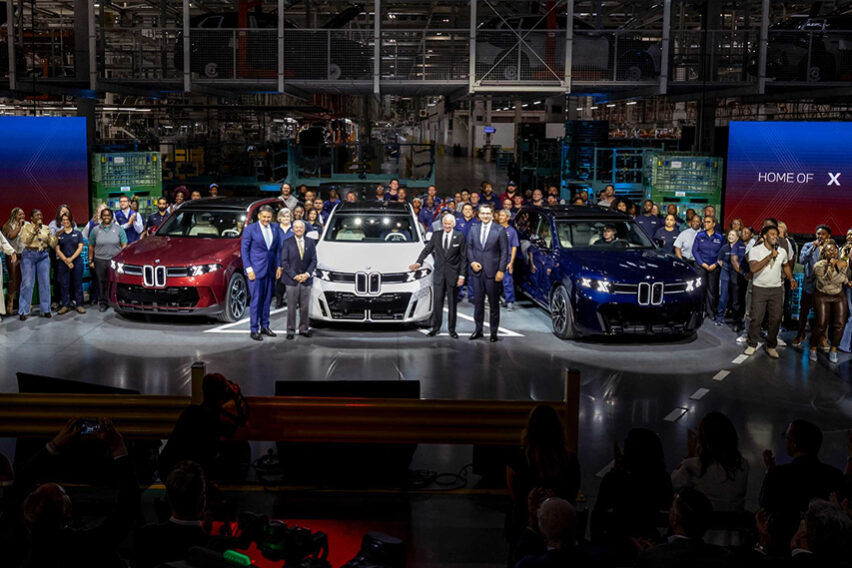
- Built at Spartanburg, a first for the plant
- Size and practicality
- What it might cost, if BMW Malaysia brings it in
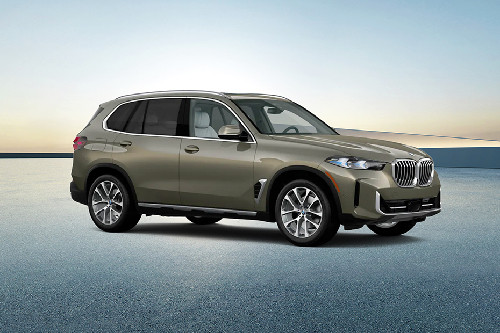
KUALA LUMPUR: The new BMW X5 comes in five flavours, but the iX5 is the one doing something the nameplate has never done before.
KEY TAKEAWAYS
What is the BMW iX5's electric range?
Up to 845 km on the WLTP cycle, from a 141 kWh net battery. Real-world range in Malaysian conditions would be lower, as with any EV.How fast does the BMW iX5 charge?
At a 460 kW DC fast charger, it goes from 10 to 80 percent in 23 minutes, or gains up to 350 km of range in 10 minutes. On a 22 kW AC charger, a full charge takes 7 hours 30 minutes.It's the first time you can buy an X5 with no engine at all.
Globally, the petrol and diesel variants arrive first, with the iX5 and the plug-in hybrids following from early 2027. Still, BMW's own technical material has enough detail to show this isn't just an X5 with a battery bolted in.
Here's what's actually going on under the skin.
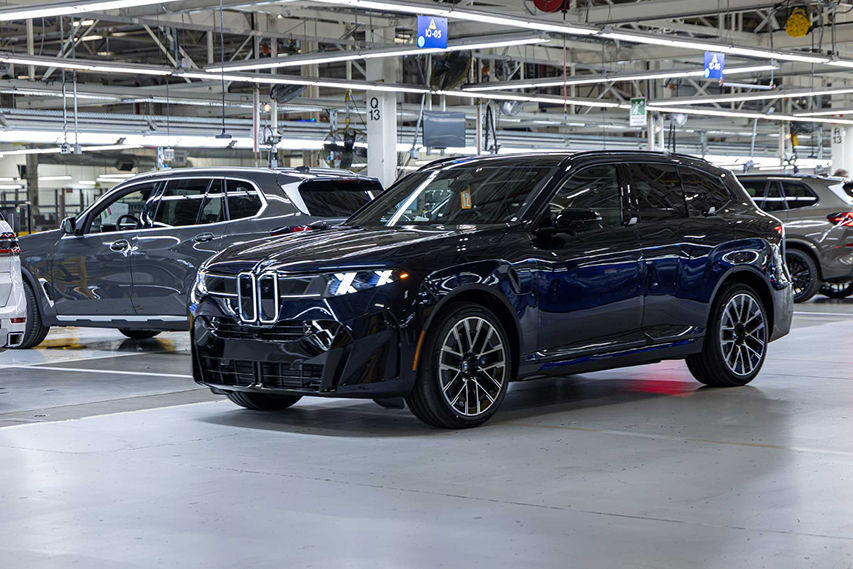 Photo from BMW
Also Read: New BMW X5 revealed: bigger screens, five powertrains, and a new name you'll need to learn (iX5)
Two motors, two completely different designs
Most dual-motor EVs use a matching pair, front and rear. The iX5 doesn't. The rear motor is an electrically excited synchronous motor (EESM), producing 242 kW (329 hp) and 500 Nm, and it's the primary drive unit.
The front is an asynchronous motor (ASM) making 183 kW (249 hp) and 305 Nm. Combined output is 425 kW (578 hp) and 805 Nm, good for a 4.6-second 0-100 km/h sprint.
The reason for mixing motor types comes down to efficiency. The EESM uses electromagnets instead of permanent magnets in the rotor, so BMW can dial the magnetic field up or down depending on load, strong for high torque, weaker (and less wasteful) when you're just cruising.
The ASM at the front, meanwhile, can fully decouple and stop spinning altogether at low loads since it doesn't generate drag when de-energised. In practice that means the front motor switches off completely a lot of the time, with the rear axle doing the work alone to save energy.
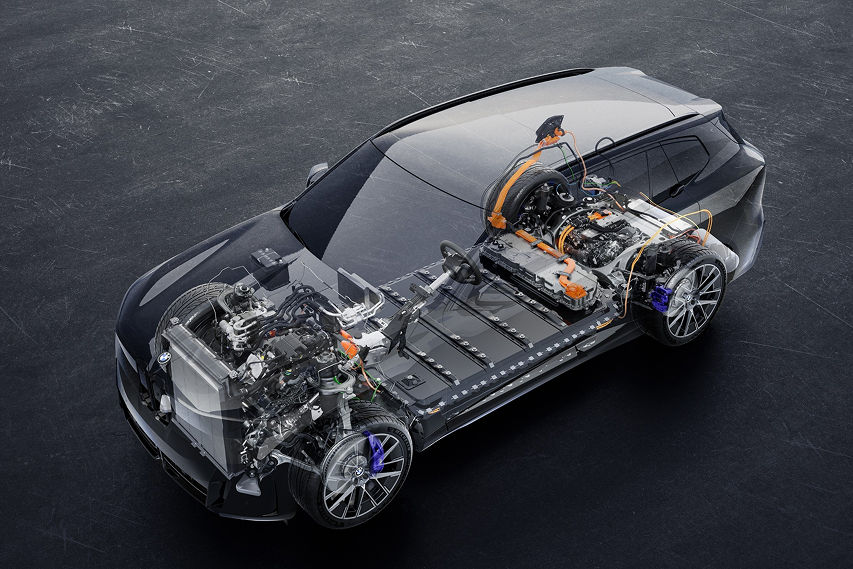 Photo from BMW
New battery cells, and a cell-to-pack design
The high-voltage battery uses new cylindrical cells, 46mm in diameter and 120mm tall, the first time this exact cell size has gone into a BMW.
They're based on the same chemistry as the 95mm-tall cells already in the iX3, but the extra height alone bumps usable energy per cell by almost 30 percent.
There's no modular structure either. The cells go straight into the pack (cell-to-pack design), which BMW says improves energy density while cutting weight and cost.
Net capacity comes out to 141 kWh, which is how BMW gets to a claimed WLTP range of up to 845 km. Worth noting this is a German-spec figure on the WLTP cycle, real-world range in Malaysian heat and traffic will be lower, same as every EV.
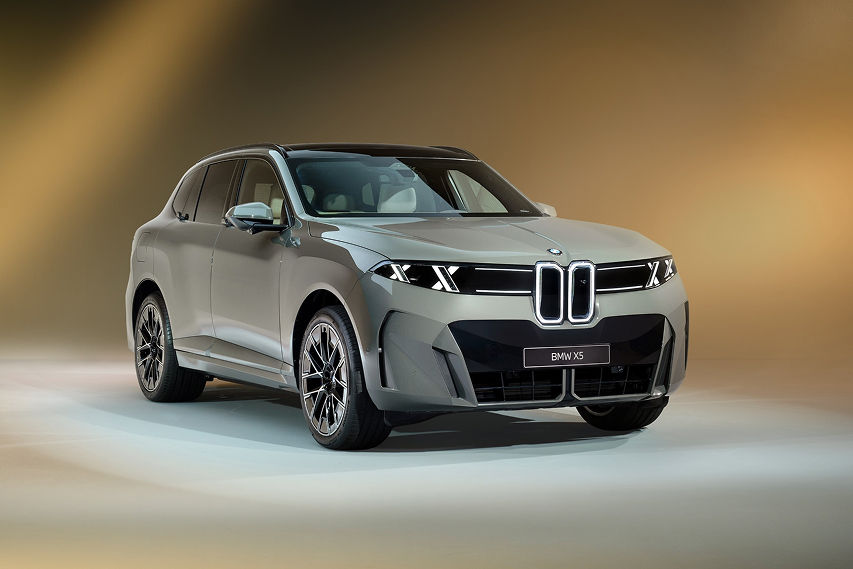 Photo from BMW
Charging numbers, and the parts that don't show up in the spec sheet
The headline figures: up to 460 kW DC charging, 10 to 80 percent in 23 minutes, or 350 km of range added in just 10 minutes. On AC, it tops out at 22 kW, good for a full charge in 7 hours 30 minutes.
What's less talked about is the software around it. The iX5 preconditions its own battery automatically when you navigate to a DC charging station using BMW Maps, warming or cooling it so it can accept a higher charge rate the moment you plug in.
There's also charging-optimised route planning that uses AI on the car's own past charging history to judge which stations along your route are actually reliable, rather than just picking the nearest one. Small thing, but the charging flap also opens and closes on its own when it senses you're about to plug in.
None of this matters much in Malaysia today given how thin our DC fast charging network still is compared to Germany, but it's a sign of where BMW's putting its engineering effort.
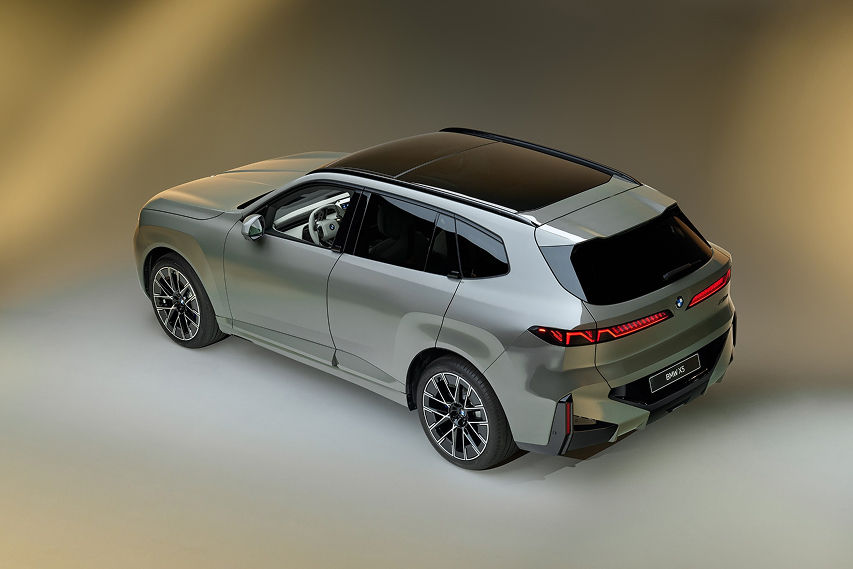 Photo from BMW
V2L, V2H, V2G: bidirectional charging in three flavours
The iX5 can push power back out, not just take it in.
- Vehicle-to-Load (V2L): turns the car into a power bank, up to 3.7 kW, enough to run an e-bike charger or an electric grill. Needs the Multifunction Charger with a V2L adapter.
- Vehicle-to-Home (V2H): with the BMW Wallbox Professional and a home solar setup, the car can offset household electricity use. BMW's own modelling claims savings of up to 530 euros a year, based on European tariffs and a specific usage profile, so treat that as a rough European benchmark, not a number that translates directly here.
- Vehicle-to-Grid (V2G): through a partnership with German utility E.ON, owners can get paid simply for keeping the car plugged in and the feature active, up to 720 euros a year, regardless of whether the car is actually charging or discharging at any given moment.
All three are interesting as a glimpse of where EV ownership is headed, but realistically irrelevant for Malaysian buyers until local infrastructure and utility partnerships catch up, which isn't happening soon.
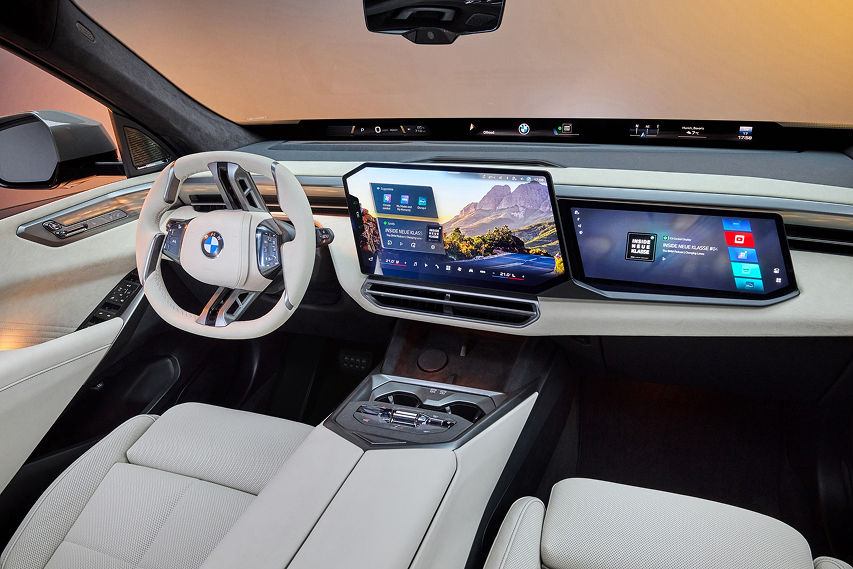 Photo from BMW
Heart of Joy: a control unit exclusive to the electric variants
The combustion and plug-in hybrid X5s use a system called Lateral Dynamics Management. The iX5 (and the upcoming iX5 Hydrogen) get something different: Heart of Joy, paired with BMW Dynamic Performance Control.
BMW claims it reacts ten times faster than the previous generation's systems, adjusting the drive system, brakes, steering and recuperation in milliseconds.
One result of this is BMW Soft Stop, a feature that's exclusive to the iX5 60 xDrive and the not-yet-launched iX5 Hydrogen. It uses the electric motors to bring the car to a stop without any jerkiness or brake noise, with the actual friction brakes only kicking in for hard or emergency braking.
Built at Spartanburg, a first for the plant
Spartanburg has built every generation of X5 since 1999, but the iX5 will be the first fully electric vehicle to come off that line. BMW's also built a new battery assembly plant next door specifically for this car, and says it runs without fossil fuels in normal operation.
On the sustainability side, BMW claims around a third of the iX5 60 xDrive's total weight, about 940 kg, comes from secondary (recycled) raw materials. Whether that number holds up to scrutiny once independent reviewers get hold of the car is a different question, but it's a specific enough figure that it's at least checkable.
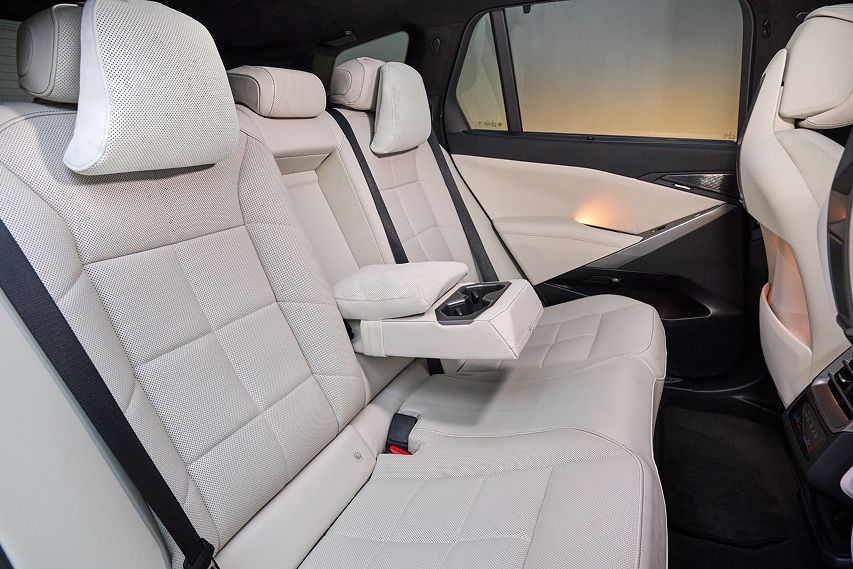 Photo from BMW
Size and practicality
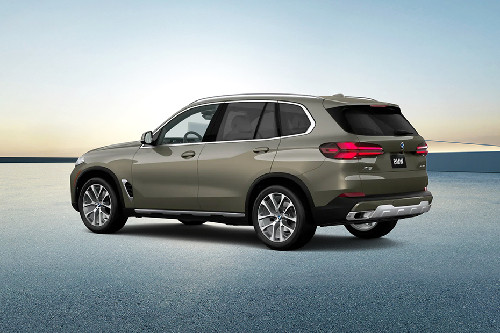
- Length/width/height: 4,994 / 2,000 / 1,748 mm
- Wheelbase: 3,035 mm
- Unladen weight: 2,900 kg
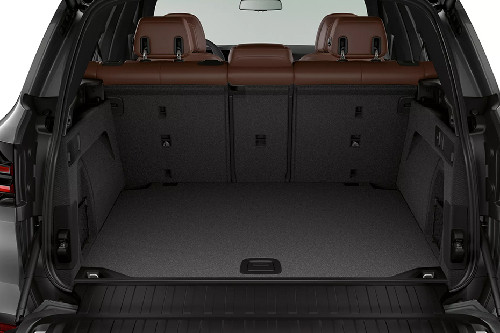
- Boot space: 655 to 1,850 litres, plus a 53-litre frunk under the bonnet
- Drag coefficient: 0.28, the lowest of any X5 variant
- Top speed: 210 km/h, electronically limited
What it might cost, if BMW Malaysia brings it in
There's no Malaysian pricing yet, and BMW Malaysia hasn't confirmed the iX5 is even coming. But it's worth looking at where BMW's existing EVs sit locally for context.
The BMW iX currently starts around RM418,630 and runs up to RM613,000 for the xDrive50 Sport. The closest non-BMW rival, the Mercedes-Benz EQE SUV, starts from RM485,888.
Given the iX5 sits on newer, more expensive 800V architecture with a bigger battery, expect it to land somewhere at or above the top of the iX range if and when it's confirmed for Malaysia, though that's an estimate based on positioning, not anything BMW has said.
For now, the iX5 stays as a global debut. We'll update this once BMW Malaysia actually says something concrete.
Also Read: Old BMW EV and PHEV batteries could soon power rural homes in Malaysia

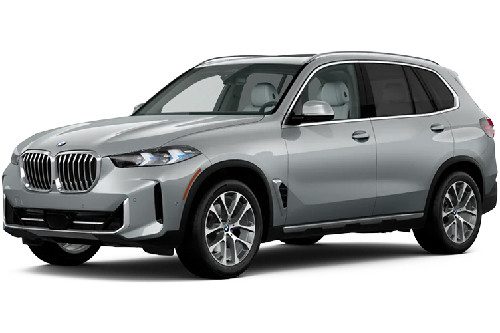

BMW X5 Related Stories
- News
-
 New BMW X5 revealed: bigger screens, five powertrains, and a new name you'll need to learn (iX5)
KUALA LUMPUR: BMW just pulled the wraps off the fifth-generation X5, and this isn't a mild refresh. It's the first...
Read MoreAdam Aubrey, Today -
Weekly wrapup: 2025 Proton X50, BMW X5, BYD Atto 2 launched, Chery Super Hybrid platform introduced, and more
It’s the third quarter of 2025, and the Malaysian auto industry looks as busy as ever, with a series of...
Read MoreSippi Vig, Jul 25, 2025 -
BMW brings new electric luxury SUVs to Malaysia; the iX xDrive60 M Sport Pro, iX xDrive45 Sport
KUALA LUMPUR: Are you ready to experience a whole new level of luxury on wheels? BMW Group Malaysia has once...
Read MorePurva, Jul 21, 2025

BMW Car Models
-

BMW X1 -
BMW 3 Series Sedan -
BMW X3 -
BMW 5 Series Sedan -
BMW 2 Series Gran Coupe -
BMW X4 -
BMW iX1 -
BMW iX2 -
BMW iX -
BMW X7
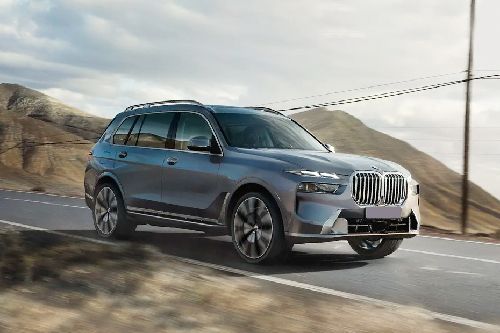
Don't Miss

KLIMS 2026


Malaysia Autoshow
Trending & Fresh Updates
- Latest
- Popular
-

-
-
-
-
-
-
-
-
-
Electric Car: A comprehensive buying guidePurva Jain, Jul 01, 2024
-
Must watch automotive movies for enthusiastsPurva Jain, Feb 21, 2024
-
Car Rust-proofing 101: All you need to knowPurva Jain, Feb 15, 2024




You might also be interested in
- News
- Featured Stories


BMW Featured Cars
- Latest
- Upcoming
- Popular
-
BMW iX1RM 250,800 - 275,800 OTR Price Kuala LumpurEMI : RM 2,930 x 844.09 (11 Reviews) VIEW JULY OFFERS
-
BMW iXRM 425,800 - 487,800 OTR Price Kuala LumpurEMI : RM 4,975 x 844.64 (22 Reviews) VIEW JULY OFFERS
-
BMW 5 Series SedanRM 332,800 - 349,800 OTR Price Kuala LumpurExpected Launch TBA Alert Me When Launched
-
-
BMW 3 Series SedanRM 265,800 - 388,800 OTR Price Kuala LumpurEMI : RM 3,105 x 844.38 (26 Reviews) VIEW JULY OFFERS
-
BMW X3RM 304,800 - 357,800 OTR Price Kuala LumpurEMI : RM 3,561 x 844.36 (25 Reviews) VIEW JULY OFFERS
-
BMW 5 Series SedanRM 332,800 - 349,800 OTR Price Kuala LumpurEMI : RM 3,888 x 844.56 (25 Reviews) VIEW JULY OFFERS
-
BMW 2 Series Gran CoupeRM 218,800 OTR Price Kuala LumpurEMI : RM 2,556 x 844.42 (31 Reviews) VIEW JULY OFFERS
-
Compare & Recommended
BMW X5
RM 469,800 - 494,800
BMW X5 Price
|
|
|
|

|
|
Seating Capacity
5
|
5
|
5
|
5
|
4
|
|
Fuel Type
Petrol
|
Petrol
|
Petrol
|
Petrol
|
Petrol
|
|
Engine
2998
|
1997
|
2360
|
3604
|
1998
|
|
Power
381
|
197
|
174
|
284
|
272
|
|
Torque
540 Nm
|
320 Nm
|
229 Nm
|
347 Nm
|
400 Nm
|
|
Transmission Type
Automatic
|
Automatic
|
Automatic
|
Automatic
|
Automatic
|
|
Ground Clearance
-
|
-
|
-
|
215 mm
|
223 mm
|
|
|
Trending SUV
- Latest
- Upcoming
- Popular
-
-
Proton e.MAS 7RM 103,800 - 119,800 OTR Price Kuala LumpurEMI : RM 1,212 x 844.19 (16 Reviews) VIEW JULY OFFERS
-
Lexus LXRM 1.54 - 1.72 Million OTR Price Kuala LumpurEMI : RM 17,997 x 844.48 (21 Reviews) VIEW JULY OFFERS
-
GWM Tank 300 HEVRM 259,800 OTR Price Kuala LumpurEMI : RM 3,035 x 84Write a Review VIEW JULY OFFERS
-
Denza B8RM 458,800 - 518,800 OTR Price Kuala LumpurEMI : RM 5,361 x 84Write a Review VIEW JULY OFFERS
-
Toyota Yaris CrossRM 99,900 - 109,900 OTR Price Kuala LumpurEMI : RM 1,167 x 844 (1 Reviews) VIEW JULY OFFERS

-
Peugeot 3008RM 138,000 OTR Price Kuala LumpurEMI : RM 1,612 x 844.35 (23 Reviews) VIEW JULY OFFERS
-
Toyota Corolla CrossRM 130,900 - 146,000 OTR Price Kuala LumpurEMI : RM 1,529 x 844.26 (47 Reviews) VIEW JULY OFFERS
-
Toyota RushRM 93,000 - 97,000 OTR Price Kuala LumpurEMI : RM 1,086 x 844.27 (61 Reviews) VIEW JULY OFFERS
-
Perodua AtivaRM 62,500 - 73,400 OTR Price Kuala LumpurEMI : RM 730 x 844.17 (46 Reviews) VIEW JULY OFFERS
-
Mazda CX-5RM 143,300 - 187,200 OTR Price Kuala LumpurEMI : RM 1,674 x 844.36 (65 Reviews) VIEW JULY OFFERS
-
Toyota Yaris CrossRM 99,900 - 109,900 OTR Price Kuala LumpurEMI : RM 1,167 x 844 (1 Reviews) VIEW JULY OFFERS