Leapmotor B10 KL to Penang drive, top things we learned about this sub-RM120k EV
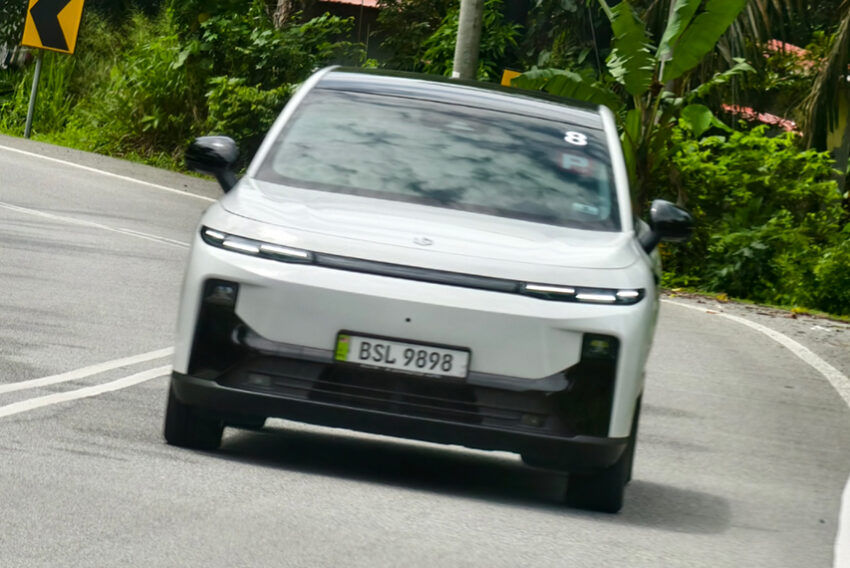
KUALA LUMPUR: The Leapmotor B10 Design did not reveal itself in one big dramatic moment. Instead, it started to make more sense over the course of a proper drive from Kuala Lumpur to Penang, where the combination of highway cruising, charging stops and smaller back roads gave a clearer picture of what this EV is really like to live with.
KEY TAKEAWAYS
What battery does the Leapmotor B10 Design use?
The Leapmotor B10 Design uses a 67.1 kWh LFP battery.What is the range of the Leapmotor B10 Design?
Its claimed WLTP range is up to 434 km.How fast can the Leapmotor B10 Design charge?
It supports up to 168 kW DC fast charging and 11 kW AC charging.That is probably the best way to understand this car. Not through one short media loop, not through one hard launch off the line, and certainly not by staring too long at a spec sheet.
Also Read: Review: Leapmotor B10 Design - The sub RM120k EV that refuses to be an appliance
Because yes, on paper the B10 Design already sounds like it should be fairly convincing, with a rear-mounted motor producing 218 PS and 240 Nm, a 67.1 kWh LFP battery, up to 434 km of WLTP range and DC charging of up to 168 kW.
But a trip like this shows whether those figures actually translate into something that feels cohesive once the car is asked to do a proper job.
It feels like a proper car first, EV second
That was the first thing that stood out.
Some EVs try to impress you immediately with their party tricks. Big screen, silent take-off, instant shove, futuristic cabin, maybe a general sense that everything was designed to look clever before it was designed to feel natural. The B10 Design does not really come across like that. It settles in more quietly.
Leaving KL, it felt easy almost straight away. Easy to place on the road, easy to drive smoothly, easy to get comfortable in. That might not sound like a dramatic compliment, but for a car that is supposed to cover most aspects of everyday life, it is one of the more important ones.
A car that feels awkward in the first few minutes tends to stay awkward in the back of your mind. The B10 Design never really gave that impression.
Its 218 PS and 240 Nm also suit the car’s character quite nicely. It is not trying to flatten your spine every time you pull away from a traffic light, but it has enough clean, immediate response to make traffic gaps, junctions and overtakes feel effortless.
The fact that it is rear-wheel drive gives it a slightly different flavour too. It does not feel radically exotic, but it does feel more sorted and more balanced than the many front-driven electric crossovers now piling into this part of the market.
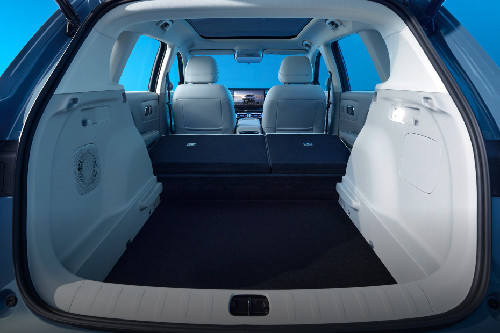
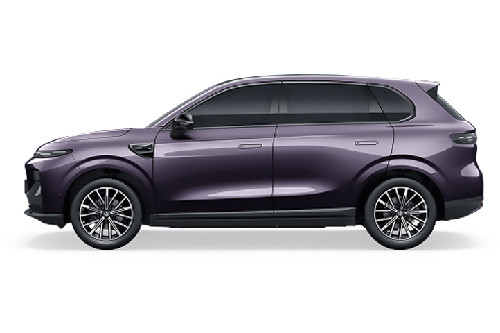
It also helps that this is a proper C-segment SUV. At 4,515 mm long with a 2,735 mm wheelbase, the B10 Design has enough size to feel substantial and useful, but not so much that it becomes annoying the moment the road narrows or the parking space looks a bit mean.
It never really feels like a budget EV on the move
This was another pleasant surprise.
Because once you hear that the B10 Design is priced at RM118,800 (and that's before rebates and discounts) in Malaysia, the natural question is where the compromises are hiding. Usually there is a clue somewhere.
Maybe the ride starts to feel thin and busy, maybe the cabin starts sounding hollow at speed, maybe the whole thing gives off that faintly cost-cut vibe that some affordable EVs struggle to mask.
Yet on this drive, the B10 Design never really came across like a cut-price special trying to bluff its way into a bigger conversation. It felt composed enough at highway speed, mature enough over distance and generally polished enough that you stop thinking too much about where it sits in the market.
That is one of its stronger qualities. It does not feel like an EV created simply to hit a number. It feels like one that was actually expected to go out and do normal car things, including driving to another state without turning the whole exercise into a test of patience.
That is also where the Design variant starts making more sense than simply being the pricier one. It is not more powerful than the lower-spec Life, but it is the one with the stronger long-distance brief.
The bigger 67.1 kWh battery, longer 434 km WLTP range and higher 168 kW DC charging ceiling are not just marketing garnish. On a drive like this, they are the bits that make the car easier to imagine living with beyond the daily commute.
It is more fun on B-roads than expected
This was perhaps the most likeable part of the trip.
Highway journeys do not always stay neat and predictable. Diversions happen, routes change, and suddenly you find yourself on narrower back roads with tighter corners and less room for lazy inputs. That was where the B10 Design showed a bit more personality than expected.
It felt nicely balanced, and the steering was precise enough to place the car with confidence. That rear-wheel-drive layout also gave it the sort of natural feel that just seems to suit twistier roads better. No, it is not trying to be a performance SUV, and it would be silly to oversell it as one. But there is a definite sense that the car is more than just an appliance with a battery pack underneath.
That matters because many affordable EVs are perfectly fine in a straight line and then feel a bit detached once the road gets interesting. The B10 Design did enough to feel engaging rather than merely competent, and that gives it a bit of character. An unexpected detour suddenly feels less like a delay and more like a small bonus.
The Design trim actually feels like the one to get
This trip also made the case for the top variant quite neatly.
Sometimes the range-topper exists mostly for showroom bragging rights. A few extra toys, a glass roof, maybe some shiny details, and that is about it. The B10 Design feels more useful than that. It comes across as the version where the car’s interstate brief really comes together.
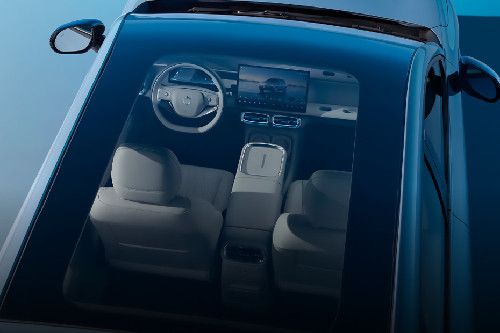
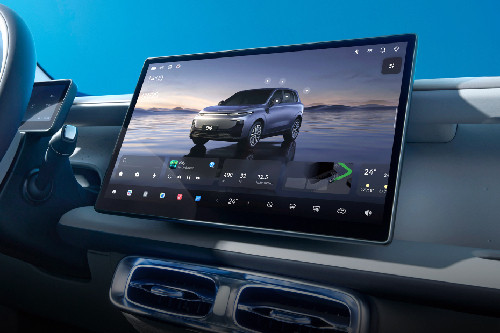
Yes, the bigger battery and stronger charging capability are the headline items, but the rest of the trim helps too. The Design gets a panoramic glass roof with an electric sunshade, adjustable ambient lighting and a more dressed-up cabin treatment, which all help it feel more complete rather than simply more expensive. It also packs in the B10’s broader tech-heavy brief, including a Snapdragon-powered interface, 11 kW AC charging and 3.3 kW V2L capability.
So the Design does not really feel like a vanity purchase. It feels like the one you buy because you actually intend to use the car properly.
The charging stop reminded us that chargers still shape the story
No interstate EV drive is complete without at least one moment where the charger becomes part of the plot.
At Tapah R&R, the B10 Design rolled into the Shell Recharge charger with 88 km of range left at 2:55 pm. By 3:30 pm, it had climbed to 247 km. So yes, the car can charge faster on paper than what happened here. The Design is quoted at under 20 minutes for a 30 to 80 percent top-up, and with a maximum DC charging rate of 168 kW, the hardware itself is clearly not the weak link.
What looked to be happening here was a charger-side limitation rather than a car-side one. There was also an AMG already plugged in next to us and apparently taking a healthy bite out of the available power, which would not have helped.
So this was a useful reminder that EV charging stories are never just about the car. They are also about the charger, the site, the load-sharing and whether the ecosystem decides to cooperate.
Even so, the stop still did its job. The B10 Design got enough charge to carry on without the trip turning into some range-anxiety drama.
The time loss felt manageable, which is half the battle
Charging delays always sound worse when reduced to one line.
Say “we lost about an hour” and it immediately sounds painful. But context does a lot of work here. Roughly half an hour of that was actual charging time, while the rest showed up in the delay to the destination. More importantly, it did not feel like dead time. There was a proper break in there, toilet stop, food, drinks, a bit of a reset, then back on the road.
So was half an hour at the charger and about a 45-minute delay to the destination acceptable? Honestly, it did not feel too bad at all. That said, luck played its part. There was no queue at the charging area, and that changes the tone of the whole story. If there had been a wait just to plug in, the mood would have turned sour much faster.
Still, the B10 Design helped itself by staying easy company everywhere else. When a car is comfortable enough and polished enough over the rest of the journey, a charging stop feels like something you work around rather than something that defines the ownership experience.
It quietly raises an awkward question for pricier long-range EVs
This was probably the most interesting thing the trip left hanging in the air.
Long-range EVs are great. More battery and fewer charging stops are never difficult things to like. But once you start chasing genuinely big-range EVs, the price usually climbs hard too, often well beyond RM150,000.
That is what makes the B10 Design interesting. Not because it beats those cars at their own game, but because it quietly suggests the game may not be quite as black and white as many people think. With 434 km of WLTP range, a 67.1 kWh battery and up to 168 kW DC charging, it already looks believable enough as an interstate EV without trying to wear the mega-range crown.
So the question after this drive is not whether a much more expensive long-range EV would be easier. Obviously it would. The more interesting question is whether it would be enough easier to justify the extra money for the way many people actually drive.
The Leapmotor B10 Design came out of this KL-to-Penang drive looking like a thoughtfully judged EV rather than a spec-sheet stunt. It has enough performance to feel lively, enough size to feel like a proper family SUV, enough balance to make smaller roads enjoyable, and enough battery and charging capability to make interstate travel feel realistic.
With 218 PS, 240 Nm, rear-wheel drive, a 67.1 kWh battery, 434 km of WLTP range, 11 kW AC charging and up to 168 kW DC charging, it reads well on paper. The more impressive part is that it also holds together well as an actual car once the drive gets longer and the road gets more varied.
That, more than anything, was the biggest thing learned from the trip. The B10 Design does not feel like an EV asking you to make excuses for it. It feels like one that already understands the job.
Also Read: Leapmotor C10 PLUS launched in Malaysia, 800V, 510 km Range, 299 hp from RM148k
- KEY TAKEAWAYS
- It feels like a proper car first, EV second
- It never really feels like a budget EV on the move
- It is more fun on B-roads than expected
- The Design trim actually feels like the one to get
- The charging stop reminded us that chargers still shape the story
- The time loss felt manageable, which is half the battle
- It quietly raises an awkward question for pricier long-range EVs

-
Explore LEAPMOTOR B10
-


LEAPMOTOR B10 Related Stories
- News
- Featured Stories
- Expert Review
-
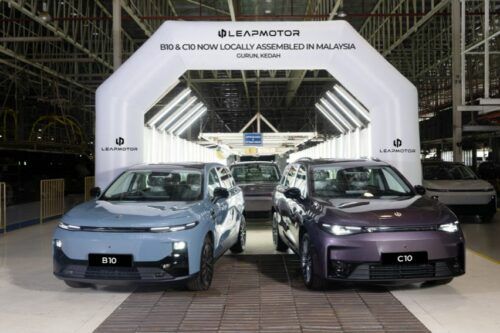
 Leapmotor C10 and B10 now locally assembled in Malaysia; optional Remote Key Fob introduced
KUALA LUMPUR: Stellantis officially introduced the Leapmotor brand in Malaysia in 2024, launching the fully imported C10 D-segment electric SUV...
Read MoreSippi Vig, Sep 08, 2026 -
Leapmotor strengthens global presence with record 103,129 deliveries in August
KUALA LUMPUR: Month after month, Leapmotor is solidifying its reputation as a global passenger brand in the new energy vehicle...
Read MoreSippi Vig, Sep 03, 2026 -
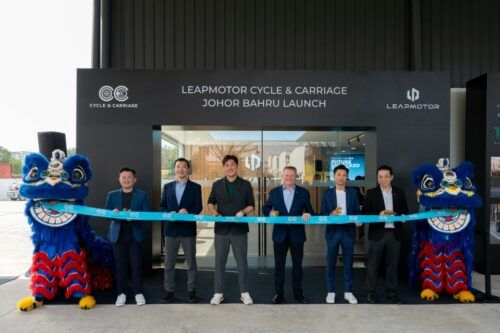
Leapmotor Cycle & Carriage 3S Centre opens in Johor Bahru
KUALA LUMPUR: After expanding in Selangor, Cycle & Carriage has now brought Leapmotor EVs closer to buyers in Johor. Cycle...
Read MoreSippi Vig, Aug 25, 2026
-
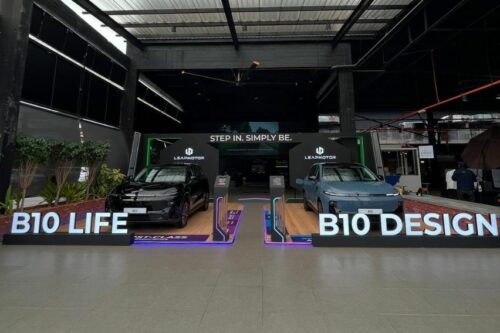
Leapmotor B10 variants explained - Life vs Design – Which one should you choose?
Stellantis-backed Leapmotor has launched the highly anticipated B10 electric SUV in Malaysia to set a new benchmark for accessible innovation...
Read MoreSippi Vig, Dec 11, 2025
-
Review: Leapmotor B10 Design - The sub RM120k EV that refuses to be an appliance
There’s a certain “RM100k plus EV SUV” vibe you can almost smell the moment you open the door. It’s the...
Read MoreAdam Aubrey, Mar 13, 2026
LEAPMOTOR Car Models
-

LEAPMOTOR C10 -
LEAPMOTOR B10
Don't Miss
-
Leapmotor C10 and B10 now locally assembled in Malaysia; optional Remote Key Fob introduced
-
Leapmotor strengthens global presence with record 103,129 deliveries in August
-
Leapmotor Cycle & Carriage 3S Centre opens in Johor Bahru
-
New Leapmotor showroom opens in Petaling Jaya
-
SAIC Motor Malaysia hosts MG Car Club Gathering at KLIMS 2026
KLIMS 2026


Malaysia Autoshow
Trending & Fresh Updates
- Latest
- Popular
-

-
-
-
-
-
-
-
-
-
Electric Car: A comprehensive buying guidePurva Jain, Jul 01, 2024
-
Must watch automotive movies for enthusiastsPurva Jain, Feb 21, 2024
-
Car Rust-proofing 101: All you need to knowPurva Jain, Feb 15, 2024




You might also be interested in
- News
- Featured Stories

LEAPMOTOR Featured Cars
- Upcoming
- Popular
-
LEAPMOTOR C10RM 129,000 OTR Price Kuala LumpurEMI : RM 1,507 x 844.43 (7 Reviews) VIEW SEPTEMBER OFFERS
Latest LEAPMOTOR B10 Car Videos on Zigwheels

-
Leapmotor B10 KL to Penang, Is This Sub-RM120k EV Enough for Everyone?11 May, 2026 .

Compare & Recommended
LEAPMOTOR B10
RM 107,800 - 118,800
Write a Review
LEAPMOTOR B10 Price
|
|
|
|
|
|
Ground Clearance
170 mm
|
220 mm
|
-
|
161 mm
|
-
|
|
Seating Capacity
5
|
7
|
5
|
5
|
5
|
|
Fuel Type
Electric
|
Petrol
|
Petrol
|
Electric
|
Petrol
|
|
Power
215
|
104
|
110
|
174
|
194
|
|
Torque
240 Nm
|
136 Nm
|
205 Nm
|
280 Nm
|
290 Nm
|
|
Transmission Type
Automatic
|
Automatic
|
Automatic
|
Automatic
|
Dual Clutch
|
|
Engine
-
|
1496
|
1199
|
-
|
1598
|
|
|
Trending SUV
- Latest
- Upcoming
- Popular
-
JAECOO J5 EVRM 118,800 OTR Price Kuala LumpurEMI : RM 1,387 x 84Write a Review VIEW SEPTEMBER OFFERS
-
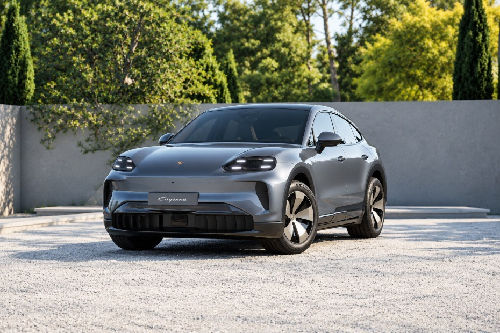
Porsche Cayenne ElectricRM 699,000 - 999,999 OTR Price Kuala LumpurEMI : RM 8,169 x 84Write a Review VIEW SEPTEMBER OFFERS
-
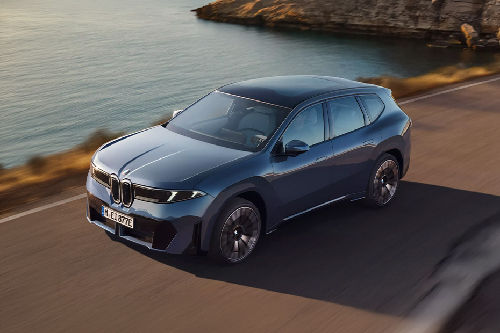
BMW iX3RM 378,800 OTR Price Kuala LumpurEMI : RM 4,426 x 844.67 (18 Reviews) VIEW SEPTEMBER OFFERS
-
Jetour T1RM 129,800 - 146,800 OTR Price Kuala LumpurEMI : RM 1,516 x 844 (2 Reviews) VIEW SEPTEMBER OFFERS
-
Volkswagen TayronRM 190,510 - 238,574 OTR Price Kuala LumpurEMI : RM 2,226 x 84Write a Review VIEW SEPTEMBER OFFERS
-
Chery Tiggo 9RM 166,800 OTR Price Kuala LumpurEMI : RM 1,948 x 84Write a Review VIEW SEPTEMBER OFFERS

-
MINI John Cooper WorksRM 218,888 - 393,888 OTR Price Kuala LumpurEMI : RM 2,557 x 844.38 (13 Reviews) VIEW SEPTEMBER OFFERS
-
Peugeot 3008RM 138,000 OTR Price Kuala LumpurEMI : RM 1,612 x 844.35 (23 Reviews) VIEW SEPTEMBER OFFERS
-
Toyota Corolla CrossRM 130,900 - 146,000 OTR Price Kuala LumpurEMI : RM 1,529 x 844.26 (47 Reviews) VIEW SEPTEMBER OFFERS
-
Toyota RushRM 93,000 - 97,000 OTR Price Kuala LumpurEMI : RM 1,086 x 844.27 (61 Reviews) VIEW SEPTEMBER OFFERS
-
Perodua AtivaRM 62,500 - 73,400 OTR Price Kuala LumpurEMI : RM 730 x 844.17 (46 Reviews) VIEW SEPTEMBER OFFERS
-
Mazda CX-5RM 143,300 - 187,200 OTR Price Kuala LumpurEMI : RM 1,674 x 844.36 (65 Reviews) VIEW SEPTEMBER OFFERS